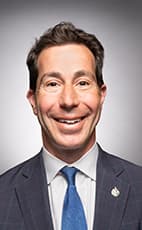
Anthony Housefather
In the 90 days to September 18, 2026, 4 organizations lobbied Anthony Housefather across 4 meetings — most often about Health. The most frequent visitor was Women's Network PEI (1 meeting, via Lynne Lund of Leading Impact Consulting Inc). Its registration describes the goal as “Guaranteed Livable Income as a solution to poverty in Canada”. That's fewer than the average MP, who had 6 meetings over the same period.
Based on federal lobbying registry data to September 18, 2026
In the House · Sep 21–25
Anthony Housefather this week
“First of all, my sympathies go out to all the people who were affected. I absolutely agree that we want to work with British Columbia every step of the way to deal with climate change and with the wildfires that are happening.”
- Spoke 5 times in the House · the average MP spoke 4 times
- FORC-266, second reading — Establish a national framework respecting skilled trades and labour mobility · passed 295–21
Get Anthony Housefather's week in your inbox every Monday
What they said, how they voted, and who lobbied them. Free, no ads, unsubscribe anytime.
How Anthony Housefather actually voted
Their recorded positions on the issues Canadians care about — pulled straight from the parliamentary record.
- Voted For
Labour & Employment
Establish a national framework respecting skilled trades and labour mobility
C-266 · Sep 2026 · Passed · Tell your MP what you think
- Voted For
Economy & Taxation
Implement certain provisions of the spring economic update tabled in Parliament on April 28, 2026
C-30 · Jun 2026 · Passed · Tell your MP what you think
- Voted For
Housing
Authorize certain payments to be made out of the Consolidated Revenue Fund for the purpose of improving housing supply
C-26 · Jun 2026 · Passed · Tell your MP what you think
- Voted For
Criminal Justice
Hate propaganda, hate crime and access to religious or cultural places
C-9 · Jun 2026 · Passed · Tell your MP what you think
- Voted For
Overall leanings
100%
voted with the Liberal line this Parliament
100%
vote attendance (174/174)
Who’s in Anthony’s ear
339
lobbying meetings
144
companies & groups
289
speeches in Parliament
Top lobbying relationship: The Centre for Israel and Jewish Affairs — met 90 times · most lobbied on Justice and Law Enforcement.
See who’s lobbying Anthony →Who's lobbying Anthony
Individual meeting records from the federal lobbying registry
| Date | Organization | |
|---|---|---|
| 2026-09-10 | Women's Network PEI | |
| 2026-08-04 | Canadian Fertility and Andrology Society | |
| 2026-07-02 | Tik Tok Canada | |
| 2026-06-22 | Loomex Group | |
| 2026-06-09 | Chicken Farmers of Canada |
Write to Anthony Housefather
Pick what it's about. You'll get a letter you can edit, then send it from your own email.
Other ways to reach Anthony
613-992-4211 is the House of Commons switchboard — ask to be connected to your MP's office. For constituency office contact details, or if anthony.housefather@parl.gc.ca bounces, visit their Parliament profile.
Committee Memberships
Top Lobbying Clients
Companies with the most meetings with this MP
What Anthony talks about
- Public Services and Procurement13 speeches · 2022–2023
- Situation in Israel, Gaza and the West Bank9 speeches · 2023
- Combatting Hate Act8 speeches · 2026
- Criminal Code8 speeches · 2021–2024
- Iran and the Middle East7 speeches · 2026
Recent Speeches
Mr. Speaker, since our government took office, keeping Canadians safe has been one of our top priorities. Since we were elected, we have passed three major pieces of legislation in collaboration with provincial governments and law enforcement agencies across Canada, all of which support these laws. … Read full speechShow less
Mr. Speaker, since our government took office, keeping Canadians safe has been one of our top priorities. Since we were elected, we have passed three major pieces of legislation in collaboration with provincial governments and law enforcement agencies across Canada, all of which support these laws. They are the Combatting Hate Act, the Bail and Sentencing Reform Act, and the Protecting Victims Act. It seems to me that the federal Conservatives are the only ones opposed to these laws.
Mr. Speaker, every one of us in this House has a loved one who has fought cancer, and all of us know how important it is that we continue to honour Terry Fox's legacy with bold ambition. Our investment in precision oncology is an investment in a more personalized approach to cancer care, one that re… Read full speechShow less
Mr. Speaker, every one of us in this House has a loved one who has fought cancer, and all of us know how important it is that we continue to honour Terry Fox's legacy with bold ambition. Our investment in precision oncology is an investment in a more personalized approach to cancer care, one that reduces harmful side effects and makes the treatment more likely to work. No one wants to lose a loved one to cancer, and this investment should give hope to all of us.
Mr. Speaker, first of all, my sympathies go out to all the people who were affected. I absolutely agree that we want to work with British Columbia every step of the way to deal with climate change and with the wildfires that are happening. That is why we have invested so much money this year, for ex… Read full speechShow less
Mr. Speaker, first of all, my sympathies go out to all the people who were affected. I absolutely agree that we want to work with British Columbia every step of the way to deal with climate change and with the wildfires that are happening. That is why we have invested so much money this year, for example, in water bombers. When provinces called upon us for assistance, we were able to provide extra aircraft. We have the Canadian humanitarian workforce program, where we were able to provide supplemental volunteers to assist British Columbians when British Columbia asked us for assistance. We have made it very clear to the B.C. government that we will work with British Columbia every step of the way.
Mr. Speaker, our government has taken action. Since taking office, we have passed three very important laws to fight crime. We have passed laws despite Conservative obstruction. In fact, the latest statistics show that crime is down across Canada, which is a testament to the efforts of law enforceme… Read full speechShow less
Mr. Speaker, our government has taken action. Since taking office, we have passed three very important laws to fight crime. We have passed laws despite Conservative obstruction. In fact, the latest statistics show that crime is down across Canada, which is a testament to the efforts of law enforcement officers from coast to coast to coast who work hard every day to keep our communities safe. We will continue to work with police services to keep Canadians across the country safe.
Mr. Speaker, just days after the House rose for the summer, an evil man crossed the country seeking to kill people in Montreal. While brave police officers limited casualties, two wonderful men were killed. Constable Mohamed Lamine Benredouane worked at one of our neighbourhood police stations. He w… Read full speechShow less
Mr. Speaker, just days after the House rose for the summer, an evil man crossed the country seeking to kill people in Montreal. While brave police officers limited casualties, two wonderful men were killed. Constable Mohamed Lamine Benredouane worked at one of our neighbourhood police stations. He was only 34 years old and was a devoted husband and father of a young son. He and his wife were expecting their second child. I remember him as a man who was always smiling and committed to serving the community he grew up in. Michel Moshe Mizrahi was my neighbour in Côte Saint-Luc. He was generous to a fault. A father and grandfather, Michel was deeply loved. In the midst of the shooting, he warned others of the danger and helped them find safety. Today, we remember two men, one Muslim and one Jewish, who, when faced with danger, thought of others. People are alive today because of them. May their courage never be forgotten and may their memories be a blessing.
Bills Sponsored
Recent activity
22 activities across speeches, bills, and lobbying communications.
September 2026
Oral Questions
Mr. Speaker, since our government took office, keeping Canadians safe has been one of our top priorities. Since we were elected, we have passed three major pieces of legislation in collaboration with … Read full speechShow less
Mr. Speaker, since our government took office, keeping Canadians safe has been one of our top priorities. Since we were elected, we have passed three major pieces of legislation in collaboration with provincial governments and law enforcement agencies across Canada, all of which support these laws. They are the Combatting Hate Act, the Bail and Sentencing Reform Act, and the Protecting Victims Act. It seems to me that the federal Conservatives are the only ones opposed to these laws.
Oral Questions
Mr. Speaker, every one of us in this House has a loved one who has fought cancer, and all of us know how important it is that we continue to honour Terry Fox's legacy with bold ambition. Our investmen… Read full speechShow less
Mr. Speaker, every one of us in this House has a loved one who has fought cancer, and all of us know how important it is that we continue to honour Terry Fox's legacy with bold ambition. Our investment in precision oncology is an investment in a more personalized approach to cancer care, one that reduces harmful side effects and makes the treatment more likely to work. No one wants to lose a loved one to cancer, and this investment should give hope to all of us.
Oral Questions
Mr. Speaker, first of all, my sympathies go out to all the people who were affected. I absolutely agree that we want to work with British Columbia every step of the way to deal with climate change and… Read full speechShow less
Mr. Speaker, first of all, my sympathies go out to all the people who were affected. I absolutely agree that we want to work with British Columbia every step of the way to deal with climate change and with the wildfires that are happening. That is why we have invested so much money this year, for example, in water bombers. When provinces called upon us for assistance, we were able to provide extra aircraft. We have the Canadian humanitarian workforce program, where we were able to provide supplemental volunteers to assist British Columbians when British Columbia asked us for assistance. We have made it very clear to the B.C. government that we will work with British Columbia every step of the way.
Oral Questions
Mr. Speaker, our government has taken action. Since taking office, we have passed three very important laws to fight crime. We have passed laws despite Conservative obstruction. In fact, the latest st… Read full speechShow less
Mr. Speaker, our government has taken action. Since taking office, we have passed three very important laws to fight crime. We have passed laws despite Conservative obstruction. In fact, the latest statistics show that crime is down across Canada, which is a testament to the efforts of law enforcement officers from coast to coast to coast who work hard every day to keep our communities safe. We will continue to work with police services to keep Canadians across the country safe.
Statements by Members
Mr. Speaker, just days after the House rose for the summer, an evil man crossed the country seeking to kill people in Montreal. While brave police officers limited casualties, two wonderful men were k… Read full speechShow less
Mr. Speaker, just days after the House rose for the summer, an evil man crossed the country seeking to kill people in Montreal. While brave police officers limited casualties, two wonderful men were killed. Constable Mohamed Lamine Benredouane worked at one of our neighbourhood police stations. He was only 34 years old and was a devoted husband and father of a young son. He and his wife were expecting their second child. I remember him as a man who was always smiling and committed to serving the community he grew up in. Michel Moshe Mizrahi was my neighbour in Côte Saint-Luc. He was generous to a fault. A father and grandfather, Michel was deeply loved. In the midst of the shooting, he warned others of the danger and helped them find safety. Today, we remember two men, one Muslim and one Jewish, who, when faced with danger, thought of others. People are alive today because of them. May their courage never be forgotten and may their memories be a blessing.
June 2026
Government Orders
Mr. Speaker, I will be sharing my time with the member for Saint‑Hyacinthe—Bagot—Acton. The combatting hate act has been before this House for nine months. During those nine months, we have had extens… Read full speechShow less
Mr. Speaker, I will be sharing my time with the member for Saint‑Hyacinthe—Bagot—Acton. The combatting hate act has been before this House for nine months. During those nine months, we have had extensive debate in this place, in the other place and at committee. This bill is important. I want to take members back to what started the process of amending our hate laws in a way that is broader than the way they have been amended in the last 30 years. In the spring of 2024, in my own riding of Mount Royal, the Jewish community centre, the Montreal Holocaust Museum and The Jewish Public Library were surrounded by demonstrators. They were surrounded by demonstrators yelling hateful things. They were surrounded by demonstrators carrying signs, some of which supported terrorist organizations. However, the police failed to arrest people. They failed to stop what was a demonstration that descended into illegality. They said at the time that they did not have clear enough instructions or clear enough rules related to when a demonstration outside of a community centre, a school, a temple, a church or a synagogue has crossed the line. The combatting hate act makes clear that these buildings deserve special protection. It creates new intimidation and obstruction offences related to protests outside of community centres, places of worship and schools that make it clear that these buildings deserve special protection. It makes it clear that a person cannot intimidate someone from entering that building to hear a speaker they want to hear, to worship as they want to worship or to attend their classes. It makes it clear that a person cannot obstruct people from entering or leaving the building, which is what happened that night in March 2024. At the time, I called for this change to the criminal law. I said that, because the police told me that they were unable to take action, the Parliament of Canada has a duty to act, to rewrite existing criminal laws so that they are clearer and so they provide more tools to police officers. The same thing happened with respect to Mr. Charkaoui. He said things that were absolutely hateful in the streets of Montreal, but the prosecutors did not take action. We ended up in a situation where the House set up a committee. I asked for the justice and human rights committee to study anti-Semitism. We did, and in December 2024, we put out a unanimous report, on most issues. Yes, there was dissent, but the dissent was not on the vast majority of issues, including the intimidation and obstruction offence. However, that has not stopped what the Prime Minister called the “crisis of anti-Semitism” that has overwhelmed the western world, including Canada, where over 70% of religious-based hate offences are against the Jewish community, which makes up 1.2% of the population, and where a Jewish Canadian has a 19 times greater chance of having a hate crime committed against them than the average Canadian. I want to point out that two weeks ago there was an attempted arson attack on a temple in Westmount, Temple Emanu‑El, where I joined the Minister of Canadian Identity, former senator Marc Gold, and the Secretary of State for Youth to support the community at services. This law has a stand-alone hate provision, which can be used alongside the arson charges that gentleman will face, to make sure the person who is charged will face more jail time than previously. We also have provisions in this bill to say that when people fly terrorist symbols, the Nazi hakenkreuz or the SS bolt, or now the noose, which was added by the Senate in its recent amendment, in a way that inspires hate against a community, they would now easily be charged by the police. The bill offers greater protection for minority communities across this country, and for majority communities, by the way. It offers greater protections to Christians as well, who are a majority. It delivers protections to all religious faiths. It delivers protections to the LGBTQ+ community, the indigenous communities and other communities that face hate. Why would anyone be against it? Why would anyone be against this bill? The only argument I have heard to date against this bill, the number one reason I have heard, is that the law is not being enforced and we should just enforce the existing law, as if the federal government was responsible for the enforcement of the Criminal Code. This is something that is in the hands of the provinces. The decisions on whether to charge people are made by local municipal police, in most cases, and provincial prosecutors, not the federal government. The argument that we should not give police the tools they say they need to prosecute these crimes, because we should just tell them to do what they are supposed to do, does not wash, because it is essentially saying that the federal government should do nothing. We have the ability to write the Criminal Code, and we are doing so. With this bill, when it is enacted, and with the new bail and sentencing reform bill, which just received royal assent, we can now, as the Minister of Public Safety confirmed, go to the provinces and territories, have a PT meeting with the provinces and territories, and say that we need to act together to train police and prosecutors. We need specialized hate crime prosecutors across this country, to be named by the provinces. We need, most importantly, to have prosecutorial directives or other measures, where police are told by the provincial attorneys general how they should prosecute these crimes. It should be consistent across this country. The passing of this flurry of justice bills is an opportunity for us. I also want to address some of the misinformation I heard earlier today in the debate. First, one member talked about parents being worried about what they can say at the dinner table. Private discussions are not covered under the wilful promotion of hatred provisions under section 319 of the Criminal Code. To have members tell people that they have to worry about what they say at their dinner table is knowingly false. It is not true. Second, there were claims that the government would go out there and charge people, that somehow one minister's comments would lead to a government that could go out and say that people should be charged. However, we live in a system where independent prosecutors, working with police, make these decisions. They are not influenced by what a government person tells them to do or not to do in any individual case. The only way for the government to have its view is prosecutorial directives that apply to an entire class of people, which would come from the provincial attorneys general, not the federal one usually. I am kind of shocked to hear these claims that are so far out of reality that it diminishes what we are trying to do in the law. Finally, let me be absolutely clear. We also inserted a provision for greater clarity, to make clear that this is not the case, but we should not have had to do that, because it is obvious that this is not the case. People will not be charged because they read, quote or preach the Bible, the Quran, the Torah or any other holy book. This is entirely made up. It is negated by the Charter of Rights. It is negated by the “for greater certainty” provision in the bill. This is a really important bill. As a member of the Jewish community who has felt this hate, I know that every major organization in my community supports this bill. It is a really important bill to get hate off our streets, to make sure criminals get off our streets and to make sure there is deterrence. I would call upon everyone to support this bill.
Government Orders
Mr. Speaker, the organizations that speak for the organized Jewish communities, all of them, support the bill, whether it is CIJA, B'nai Brith, the Friends of Simon Wiesenthal Center, the numerous gro… Read full speechShow less
Mr. Speaker, the organizations that speak for the organized Jewish communities, all of them, support the bill, whether it is CIJA, B'nai Brith, the Friends of Simon Wiesenthal Center, the numerous groups that Mark Sandler has assembled in Toronto or the Canadian Women Against Antisemitism. I do not know of any major Jewish organization in the country that does not support this bill, so I do not believe that to be true. Most of the Orthodox Jewish rabbis I know support this bill, so I do not believe that is true. There may be some who do not, just like there are some in every religion who do not, but the vast majority of Canadian Jews have been asking for this bill and want this bill. As to the question of religious freedom, there is nothing in this bill that would thwart religious freedom. We removed a defence that has never successfully been used in Canadian history.
Government Orders
Mr. Speaker, I believe that this will foster a sense of security for all communities, because no one wants to be the target of hatred. It is true that CJA-Québec said that it supports the Bloc Québéco… Read full speechShow less
Mr. Speaker, I believe that this will foster a sense of security for all communities, because no one wants to be the target of hatred. It is true that CJA-Québec said that it supports the Bloc Québécois and the proposal that it put forward a few years ago. We saw what was happening on the streets of Montreal and the fact that no prosecutor was taking action due to the potential use of this religious defence. If individuals promote hatred on the street, they should not be able to use their beliefs to justify hatred against groups. It is also very important to say that this defence has never been successful in a Canadian court since the law has been on the books.
Government Orders
Mr. Speaker, my very first conversation with the Prime Minister was about this issue. The very first time I talked to the Prime Minister was during the Liberal leadership race in 2025. Our very first … Read full speechShow less
Mr. Speaker, my very first conversation with the Prime Minister was about this issue. The very first time I talked to the Prime Minister was during the Liberal leadership race in 2025. Our very first conversation centred around intimidation, obstruction and the need to change the law to protect community buildings, and the Prime Minister, to his great credit, immediately said that, yes, he supported that. It was a part of the Liberal platform, and we are acting on our platform.
Government Orders
Mr. Speaker, I would like to start by seeking unanimous consent to share my time with the hon. member for Prescott—Russell—Cumberland.
Government Orders
Mr. Speaker, I am pleased to rise today at third reading of Bill C-16, the protecting victims act. This legislation reflects a simple but important principle: Our laws must keep pace with the realitie… Read full speechShow less
Mr. Speaker, I am pleased to rise today at third reading of Bill C-16, the protecting victims act. This legislation reflects a simple but important principle: Our laws must keep pace with the realities that Canadians face today. Crime evolves. Technology evolves. The experiences of victims evolve—
Government Orders
Mr. Speaker, crime evolves. Technology evolves. The experiences of victims evolve. Parliament has a responsibility to ensure that our criminal laws evolve as well. The protecting victims act responds … Read full speechShow less
Mr. Speaker, crime evolves. Technology evolves. The experiences of victims evolve. Parliament has a responsibility to ensure that our criminal laws evolve as well. The protecting victims act responds to the realities of modern victimization. It strengthens protections for victims and survivors. It addresses emerging forms of abuse and exploitation. It increases accountability for serious offenders. It provides law enforcement and the courts with additional tools to help keep Canadians safe. Throughout the debate, we have discussed public safety, violence against women, child protection, online exploitation and victims' rights. These are not abstract issues. This is about real people. This affects families in every part of the country. They deserve a meaningful response from Parliament. The protecting victims act directly addresses the concerns of victims, survivors, community organizations and justice system experts across the country. It aims to better protect vulnerable people and ensure that our laws reflect today's realities. One of the most significant measures in the legislation would be the creation of a new offence of coercive control. For many years, survivors and advocates have told us that abuse begins long before physical violence occurs. Very often it begins with intimidation, isolation, manipulation or threats. It begins with a pattern of behaviour designed to dominate another person's life. Victims may be cut off from family and friends. Their finances may be controlled, their communications may be monitored, and their independence may gradually be taken away. Taken together, these actions can create an environment of fear and control that has devastating consequences, yet too often, intervention occurs only after violence has escalated. Too often, warning signs are recognized only after a tragedy has occurred. The protecting victims act would represent an important step forward. By creating a new offence of coercive control, Parliament would recognize that abuse is not defined only by physical violence, but that psychological abuse, emotional abuse and patterns of domination and control matter, and that victims deserve protection before violence escalates. All too often, victims wonder why no one intervened sooner. Creating a new offence related to coercive control finally recognizes a reality that survivors have been describing for years. This measure gives authorities an additional tool to intervene earlier and better protect those at risk. Another major focus of the protecting victims act is the protection of children. I believe that every member of the House can agree that children deserve to be safe, protected, and free from exploitation. Unfortunately, criminals increasingly use digital platforms to groom victims, distribute exploitative materials, engage in sextortion and facilitate abuse. The Internet has created tremendous opportunities, but it has also created new risks. The law must keep pace with those risks. The protecting victims act would strengthen the legal framework related to child sexual exploitation and online abuse. It would make reporting requirements mandatory for social media companies when child sexual abuse material and exploitative content are identified. Canadians rightly expect digital platforms to act responsibly and to co-operate in protecting children from exploitation. Parents expect Parliament to respond when criminals use modern technology to target young people. The legislation would be exactly that response. Protecting children should never be a partisan issue. The fight against the sexual exploitation of children should never be a partisan issue. We all have a responsibility to act when the safety of young people is at risk. The protecting victims act would also respond to the growing threat of sexually explicit deepfakes and image-based abuse. Technology continues to evolve at an extraordinary pace. Artificial intelligence has created remarkable opportunities, but it can also be misused. We have seen disturbing images of sexually explicit images being created and distributed without consent. Women and girls have been disproportionately targeted by these harmful practices. No one should have to fear that their likeness will be manipulated and weaponized against them. No one should have to endure the trauma of discovering that sexually explicit images have been created or shared without their consent. The protecting victims act would modernize the Criminal Code to address these realities and ensure that victims are protected, regardless of whether abuse occurs online or off-line. Accountability is another important principle underlying the legislation. Canadians expect serious consequences for serious crimes. That expectation is reasonable and is reflected in the protecting victims act. The legislation would restore more than a dozen mandatory minimum penalties related to serious child sexual offences, would increase penalties for child predators and would strengthen the criminal justice response to some of the most serious crimes in our society. Children who experience sexual exploitation often carry that trauma throughout their life. Families are devastated. Communities are shaken. The consequences extend far beyond the immediate offence. Our justice system must respond accordingly. The legislation would also recognize that victims need support throughout the justice process. For many victims, the crime itself is only the beginning of a difficult journey. Participating in criminal proceedings can be intimidating, stressful and retraumatizing. The protecting victims act would expand access to testimonial aids and support measures to help victims and witnesses participate more fully in the justice process. The act would also expand access to support services for victims and witnesses. It would help make the justice system more accessible, more compassionate and more attuned to the needs of people who have already been through traumatic experiences. These reforms would help improve the experience of victims, while supporting the broader goal of ensuring that justice is both done and seen to be done. Yesterday, some members of the House voted against the protecting victims act at report stage. That was their decision, but they will have to explain to Canadians why they opposed legislation that would create a new offence of coercive control, strengthen protections for children and victims and restore minimum mandatory penalties for serious child sexual offences. For our part, we are proud to support the legislation. We are proud to support victims, we are proud to support survivors, and we are proud to support safer communities. At the end of the day, the questions before us are straightforward: Do we believe victims deserve stronger protections? Do we believe children deserve greater safeguards against exploitation? Do we believe survivors deserve to be heard? Do we believe our laws should evolve to meet emerging threats? Do we believe Parliament should act when change is needed? I believe that the answer to all these questions is yes, and that is why I encourage everyone in this place to support the bill at third reading.
Government Orders
Mr. Speaker, I always appreciate the parliamentary secretary's questions. The goal of the current government is for people to both be safe and feel safe, and for communities to be safer. That is why t… Read full speechShow less
Mr. Speaker, I always appreciate the parliamentary secretary's questions. The goal of the current government is for people to both be safe and feel safe, and for communities to be safer. That is why the government brought forward an ambitious agenda of criminal reforms that would make it tougher for bad people and repeat offenders to get bail, would make sure victims of hate crimes have better access to police tools to prosecute those hate crimes, and, in this case, would make sure victims are protected, particularly women and children, who, in many different instances, disproportionately bear the threat of coercive control or exploitation. The bill is an important piece of the tool kit, a tool in the tool kit for police and prosecutors. It is important for victims and other Canadians, and I encourage everyone to get on board and vote for the bill.
Government Orders
Mr. Speaker, there is no reasonable way that the bill can be interpreted as making mandatory minimums optional. What the bill would do is prevent courts from striking down minimum mandatory sentences … Read full speechShow less
Mr. Speaker, there is no reasonable way that the bill can be interpreted as making mandatory minimums optional. What the bill would do is prevent courts from striking down minimum mandatory sentences based on hypotheticals. This should be exactly the type of bill Conservatives would support. Conservatives have railed against what the courts have done to strike down minimum mandatory sentences based on hypotheticals. I refer to the Senneville decision last year. This bill would restore minimum mandatory sentences and prevent courts from doing what was done in Senneville, by allowing courts to assess only the individual before them and not to strike down the entire category based on one hypothetical situation. The hon. member should read the bill again.
Government Orders
Mr. Speaker, as my hon. colleague said, this legislation is a step forward. Everyone needs to be pragmatic. We will never get everything we want, but this bill is very good news for everyone who wants… Read full speechShow less
Mr. Speaker, as my hon. colleague said, this legislation is a step forward. Everyone needs to be pragmatic. We will never get everything we want, but this bill is very good news for everyone who wants safer communities in Canada. It was unfortunate to have to sit in committee hour after hour as our colleagues tried to derail this bill. Like the other justice bills that we introduced, this is something very important to Canadians.
Government Orders
Mr. Speaker, one easy example is that of an AI-created sexual image of a person. Our previous law had not advanced to the point of addressing a person's having sexual images of them shared from AI. Th… Read full speechShow less
Mr. Speaker, one easy example is that of an AI-created sexual image of a person. Our previous law had not advanced to the point of addressing a person's having sexual images of them shared from AI. The bill would now cover that circumstance to make sure we can prosecute people doing something like that.
Statements by Members
Madam Speaker, June is Filipino Heritage Month. It is a chance to celebrate the amazing Filipino Canadian community that has enriched our country in so many ways. It is a chance to celebrate the cultu… Read full speechShow less
Madam Speaker, June is Filipino Heritage Month. It is a chance to celebrate the amazing Filipino Canadian community that has enriched our country in so many ways. It is a chance to celebrate the culture and traditions of the Philippines. It is a chance to celebrate Dr. José Rizal, the founder of the modern Philippines, who championed patriotism, education, justice and civic duty, which are values shared by the Filipino community today. In my riding of Mount Royal, which is the heart of the Filipino community in Montreal, we will have a large number of events. I want to thank the Filipino Heritage Society of Montreal and its president, Al Abdon; the Council of Canadian Filipino Associations of Quebec and its leaders, Dario Boco and James de la Paz; the Filipino Association of Montreal and Suburbs and its president, Jojo Laud; and the Knights of Rizal and its regional commander Gerry Danzil for hosting these events. Let us all join together and say Mabuhay ang Pilipinas. Long live the Philippines.
Oral Questions
Madam Speaker, I would refer the member to this morning's non-partisan C.D. Howe Institute's Business Cycle Council bulletin to note that his comments are premature. The Canadian economy is actually i… Read full speechShow less
Madam Speaker, I would refer the member to this morning's non-partisan C.D. Howe Institute's Business Cycle Council bulletin to note that his comments are premature. The Canadian economy is actually in a very good position today, with 88,000 new jobs having been created. We can see that the government's plan is working. There is lower youth unemployment, lower unemployment for women and more and more jobs in construction and manufacturing. The government is building Canadians' economy, and I do not understand why the Conservatives do not want to build it with us.
Oral Questions
Mr. Speaker, to be told that I have abandoned my people, my Canadian people but presumably the Jewish people, to say that the member for Winnipeg South Centre abandoned his people, to me is incredibly… Read full speechShow less
Mr. Speaker, to be told that I have abandoned my people, my Canadian people but presumably the Jewish people, to say that the member for Winnipeg South Centre abandoned his people, to me is incredibly unparliamentary. It is unacceptable and I would ask the member to withdraw his comments.
May 2026
Oral Questions
Mr. Speaker, I agree with the member. There is a crisis of anti-Semitism in Canada. That is why the government denounced, through the Minister of Public Safety, what happened in Montreal last weekend.… Read full speechShow less
Mr. Speaker, I agree with the member. There is a crisis of anti-Semitism in Canada. That is why the government denounced, through the Minister of Public Safety, what happened in Montreal last weekend. That is why we put forward the combatting hate act to listen to the demands that the Jewish community has been making for the last three years. That is why we augmented funding for Jewish community security across the country. The Prime Minister and every single member of this caucus is committed to the safety of Jewish communities across the country.
February 2026
House of Commons
310 communications with 125 clients
Top clients: [{"name": "The Centre for Israel and Jewish Affairs", "count": 87}, {"name": "Qu…