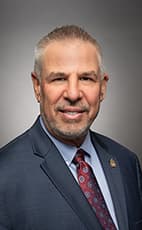
Dave Epp
In the 90 days to September 18, 2026, 10 organizations lobbied Dave Epp across 11 meetings — most often about Transportation. The most frequent visitor was Canadian Dental Association (2 meetings, via Lesli Hapak). Its registration describes the goal as “EXCISE TAX ACT: GST AND DENTAL SERVICES: Changes to the application of the GST (zero-rate) on Dental practices”. That's more than the average MP, who had 6 meetings over the same period.
Based on federal lobbying registry data to September 18, 2026
In the House · Oct 5–6
Dave Epp this week
“Across Canada, farmers are bringing in the harvest. The work that began months ago is coming down to these critical weeks where the weather, the crop and the clock all come together.”
- Spoke 8 times in the House · the average MP spoke 2 times
- FORC-218, second reading — Medical assistance in dying · defeated 141–187
- FOROpposition Motion (Diesel prices) · defeated 133–196
- AGAINSTFifth report of the Standing Committee on Health · passed 196–132
Get Dave Epp's week in your inbox every Monday
What they said, how they voted, and who lobbied them. Free, no ads, unsubscribe anytime.
How Dave Epp actually voted
Their recorded positions on the issues Canadians care about — pulled straight from the parliamentary record.
- Voted For
- Voted Against
Healthcare
Fifth report of the Standing Committee on Health
Oct 2026 · Passed
- Voted For
Labour & Employment
Establish a national framework respecting skilled trades and labour mobility
C-266 · Sep 2026 · Passed · Tell your MP what you think
- Voted Against
Economy & Taxation
Implement certain provisions of the spring economic update tabled in Parliament on April 28, 2026
C-30 · Jun 2026 · Passed · Tell your MP what you think
- Voted Against
Housing
Authorize certain payments to be made out of the Consolidated Revenue Fund for the purpose of improving housing supply
C-26 · Jun 2026 · Passed · Tell your MP what you think
Overall leanings
100%
voted with the Conservative line this Parliament
100%
vote attendance (177/177)
Who's lobbying Dave
Individual meeting records from the federal lobbying registry
| Date | Organization | |
|---|---|---|
| 2026-08-26 | Greater Toronto Airports Authority | |
| 2026-08-25 | CANADIAN HEALTH FOOD ASSOCIATION | |
| 2026-08-21 | Canadian Vehicle Manufacturers' Association | |
| 2026-08-18 | Canadian Dental Association | |
| 2026-08-05 | Gwich'in Tribal Council |
Write to Dave Epp
Pick what it's about. You'll get a letter you can edit, then send it from your own email.
Other ways to reach Dave
613-992-4211 is the House of Commons switchboard — ask to be connected to your MP's office. For constituency office contact details, or if dave.epp@parl.gc.ca bounces, visit their Parliament profile.
Committee Memberships
Top Lobbying Clients
Companies with the most meetings with this MP since July 2008
What Dave talks about
- The Budget17 speeches · 2021–2025
- Carbon Pricing15 speeches · 2023–2025
- The Economy12 speeches · 2021–2026
- Budget Implementation Act, 2021, No. 19 speeches · 2021
- Criminal Code9 speeches · 2021–2023
Recent Speeches
Mr. Speaker, across Canada, farmers are bringing in the harvest. The work that began months ago is coming down to these critical weeks where the weather, the crop and the clock all come together. There is no postponing the harvest because conditions are not perfect or the economics are unfavourable.… Read full speechShow less
Mr. Speaker, across Canada, farmers are bringing in the harvest. The work that began months ago is coming down to these critical weeks where the weather, the crop and the clock all come together. There is no postponing the harvest because conditions are not perfect or the economics are unfavourable. When the crop is ready, farmers have to get it off the field. Tractors and trucks, combines and harvesters, a swath of machinery has to run to bring in the crop. For the vast majority of that equipment, that means diesel. My brother, a farmer, is paying 84% more for diesel this September versus last. That is 24¢ per litre more than the American average. The Conservative emergency fuel relief plan proposes eliminating federal taxes on diesel until at least Canada Day 2027 and the removal of the industrial carbon tax and clean fuel standard. Longer term, it proposes emergency permitting for diesel refineries, production and distribution, and a strategic refined petroleum reserve. Will the government support our motion today to address these high diesel prices?
Madam Speaker, I want to thank my colleague for her excellent speech. I know she reviews legislation very carefully. Bill C-39 purports that it would build things at speeds that generations have not seen. Obviously, that would require the repeal of Bill C-69 and Bill C-48. Is that in part 1, part 2 … Read full speechShow less
Madam Speaker, I want to thank my colleague for her excellent speech. I know she reviews legislation very carefully. Bill C-39 purports that it would build things at speeds that generations have not seen. Obviously, that would require the repeal of Bill C-69 and Bill C-48. Is that in part 1, part 2 or part 3? I could not find it. In what part of this massive bill is the repeal of that legislation? Where is it contained?
Madam Speaker, I have appreciated serving with the member at times on FOPO, the Standing Committee on Fisheries and Oceans. I usually come from a freshwater perspective, and he is often a little saltier, I think from his surrounding water. He mentioned in his speech the port overhauls and the St. La… Read full speechShow less
Madam Speaker, I have appreciated serving with the member at times on FOPO, the Standing Committee on Fisheries and Oceans. I usually come from a freshwater perspective, and he is often a little saltier, I think from his surrounding water. He mentioned in his speech the port overhauls and the St. Lawrence authority overhauls. Did the transport minister consult with the local port authorities and municipal leaders before giving Ottawa expanded intervention powers over their operations? If he did not consult, why not?
Madam Speaker, it is always an honour to bring the voices of Chatham-Kent—Leamington to this chamber. Tonight, I am speaking to Bill C-39. It is certainly not a small piece of legislation before us. Bill C-39, the building Canada strong act, is a substantial omnibus bill covering major project appro… Read full speechShow less
Madam Speaker, it is always an honour to bring the voices of Chatham-Kent—Leamington to this chamber. Tonight, I am speaking to Bill C-39. It is certainly not a small piece of legislation before us. Bill C-39, the building Canada strong act, is a substantial omnibus bill covering major project approvals, transportation, trade and labour. At roughly 250 pages, it is legislation that deserves a great deal of careful review. Madam Speaker, I know I can speak with a piece of paper in my hand, but if I hold the bill, is it considered a prop?
It is not. It is fairly weighty and substantive, so I wanted to clarify that before I carry on. Some 15 months ago, the government brought forward Bill C-5, the Building Canada Act. It was an omnibus bill that established a framework intended to accelerate major projects and reduce duplication in fe… Read full speechShow less
It is not. It is fairly weighty and substantive, so I wanted to clarify that before I carry on. Some 15 months ago, the government brought forward Bill C-5, the Building Canada Act. It was an omnibus bill that established a framework intended to accelerate major projects and reduce duplication in federal reviews. The government said Canada needed to build “at speeds not seen in generations”. Does that sound familiar? Now, just over a year later, the government is back before the House with another major omnibus bill, once again promising greater speed, certainty and investment. The government says Bill C-39 would establish a one-year federal decision timeline, and this is important, once proponents have submitted a comprehensive application. It is not one year from entering into the system to a decision, but supposedly one year once all of the requirements have been submitted. That timeline does not include the additional pauses included at ministerial discretion, which are peppered throughout the legislation. The question Parliament should be asking is a very simple one. What has actually changed since Bill C-5 and what evidence do we have that Bill C-39 would deliver the results that Canadians can see? There has been progress from Bill C-5 to Bill C-39. I would not have said that last week. Only one project now has been approved of the 500 that sat on the Prime Minister's desk. That is 0.2%, or one-fifth of 1% of the projects, and that is in two years. However, the Liberals have succeeded in increasing one thing by 33%, and that is the title. They have added the word “strong”. The bill now reads, “the Building Canada Strong Act.” It is 33% longer than “building Canada strong”. The government describes this legislation as a major effort to accelerate projects, strengthen transportation corridors, modernize labour relations and create greater certainty for investment. The government says Bill C-39 would create a one project, one decision approach. Those are important objectives, and Canadians want Canada to build. We need infrastructure, investment and reliable transportation networks, and we need to develop our natural resources and get Canadian products to Canadian and international markets, but Canadians have heard these promises about faster approvals before. That is why the appropriate question is not simply whether Canada says this bill would accelerate projects. The question is whether the legislation would remove the barriers that have prevented projects from moving forward in the first place. Nowhere, as I referenced in the previous question, do I see where Bill C-69 and Bill C-48 are being repealed. If the government believes its approach will make Canada more competitive, Parliament should be able to examine the evidence behind that claim. Canadians should know which delays are being eliminated, how they are being proposed and what the expected economic benefits are. If a policy makes life cheaper, Canadians deserve to know how. If it makes life more expensive, Canadians deserve to know why. Therefore, I would ask the government if it has conducted an independent assessment of the economic impact of Bill C-39 on Canadian families, workers, farmers and businesses. What would this legislation mean for the cost of getting goods to market? What would it mean for investment? What would it mean for jobs? What would it mean for the cost of energy and transportation? These are reasonable questions for a government that is asking Canadians to trust another major omnibus bill. Agriculture provides an excellent example of why these questions matter. Bill C-39 proposes to continue extended rail interswitching for four years in Alberta, Saskatchewan and Manitoba. Extended interswitching allows a shipper to access a competing railway over longer regulated distances than the ordinary 30 kilometres. For western agriculture, rail transportation is part of the economic infrastructure that determines whether Canadian grain and other commodities reach domestic and international markets efficiently. Farmers need certainty. They make decisions months and years in advance. They purchase land and equipment, choose what to plant, enter contracts and make investments based on the expectation that they will have reliable access to transportation and markets. Why should we have another pilot? If extended interswitching is intended to improve competition and help Canadian goods move to market, Parliament should understand the government's evidence for limiting it geographically, first of all, and also for making it another four-year measure, rather than making it permanent. Why is the measure temporary, and why is it limited to the three prairie provinces? Agriculture needs certainty with longevity, and four years may or may not provide the certainty that the agri-food industry requires. That is precisely the kind of question that should be answered before Parliament passes this legislation. This issue brings us to a larger concern about how the government approaches consultation. We have seen significant concern from farmers and rural communities regarding the Alto high-speed rail project. On September 19, farmers and others from numerous political stripes gathered in Rigaud to protest the project and raise concerns about its impact on agricultural land and rural communities. On Friday, I attended the Transport Futures summit in Toronto, where speaker after speaker raised concerns about the lack of a business case for the Alto high-speed project. We talked about that again at the ag committee today. The government claims that it has consulted the public for this project, yet these farmers and municipalities in rural Canada in the proposed path are out there fighting to stop Alto. This does not sound like a government that is listening. The point is that consultation has to mean more than government officials meeting with people and proceeding exactly how they originally planned. I have another example. We have already seen what happens when Canadians and the agricultural industry come forward, provide evidence and ask the government to reconsider its decisions. The ag committee studied the planned closures of seven federal research stations and experimental farms. It heard from 27 witnesses and received 15 written briefs. The committee ultimately unanimously, all of us, recommended that the government reconsider the closures and conduct proper site-specific cost-benefit analyses before proceeding. The economic case for agricultural research is significant. Witnesses told the committee that agricultural research drives productivity, innovation and long-term economic growth. It is the foundation of a sector worth $150 billion in 2024 that supports 2.3 million jobs and is exporting more than $100 billion in products. Here is the question: If the government is serious about building a stronger Canadian economy, why would it close research capacity in a sector that contributes so significantly to our economy and our food security? This brings us back to consultation. The National Farmers Union and the Agricultural Union have now publicly criticized the government's response, saying that the committee's unanimous recommendations to reconsider the closures have not been acted upon. To industry leaders, it is as though the concerns of Canadian agriculture fell on deaf ears to a government that never intended to listen. That raises a very serious, reasonable question about Bill C-39 as well: When the government says it has consulted Canadians and stakeholders, what happens when the consultation provides recommendations that the government does not want to hear? That matters for Bill C-39 because the government is asking Parliament to consider major changes in several areas at the same time. This brings me to part 3 of the legislation. Part 3 proposes to change the Canada Labour Code involving collective bargaining, geographic certification, first collective agreements and the government's role in certain labour disputes. The substantial labour changes proposed in this bill deserve detailed examination. Canadians should not have to choose among infrastructure, public policy, transportation policy and labour policy as though they were a single question. They are three different issues that would affect Canadians in different ways. They require different witnesses, different expertise and different evidence. If the government is confident that every part of the bill is good public policy, then there should be no reason to fear giving each part the time and scrutiny it deserves. Canadians do not need another headline promising that everything is about to get better. They need evidence that government policy is actually improving their economic circumstances. Canadians need a government that listens when farmers speak and takes parliamentary considerations seriously. They need a government that can explain the costs and benefits of its legislation. They need Parliament to have enough time to examine legislation before it becomes law. Canadians deserve evidence and a Parliament of accountability. Canadians deserve a government whose actions match its promises. If not, we will be back here in another year debating another new act: the building Canada very strong act.