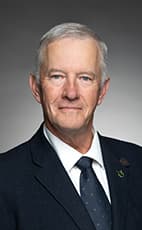
David Bexte
In the 90 days to September 18, 2026, 7 organizations lobbied David Bexte across 8 meetings — most often about Environment. The most frequent visitor was Canadian Animal Health Institute (2 meetings, via Kevin Bosch of Sandstone Group). Its registration describes the goal as “Communicating with the federal government on issues pertaining to animal health, and ensuring Canadians have access to animal health…”. That's more than the average MP, who had 6 meetings over the same period.
Based on federal lobbying registry data to September 18, 2026
In the House · Oct 5–6
David Bexte this week
- Spoke 5 times in the House · the average MP spoke 2 times
- FORC-218, second reading — Medical assistance in dying · defeated 141–187
- FOROpposition Motion (Diesel prices) · defeated 133–196
- AGAINSTFifth report of the Standing Committee on Health · passed 196–132
Get David Bexte's week in your inbox every Monday
What they said, how they voted, and who lobbied them. Free, no ads, unsubscribe anytime.
How David Bexte actually voted
Their recorded positions on the issues Canadians care about — pulled straight from the parliamentary record.
- Voted For
- Voted Against
Healthcare
Fifth report of the Standing Committee on Health
Oct 2026 · Passed
- Voted For
Labour & Employment
Establish a national framework respecting skilled trades and labour mobility
C-266 · Sep 2026 · Passed · Tell your MP what you think
- Voted Against
Economy & Taxation
Implement certain provisions of the spring economic update tabled in Parliament on April 28, 2026
C-30 · Jun 2026 · Passed · Tell your MP what you think
- Voted Against
Housing
Authorize certain payments to be made out of the Consolidated Revenue Fund for the purpose of improving housing supply
C-26 · Jun 2026 · Passed · Tell your MP what you think
Overall leanings
100%
voted with the Conservative line this Parliament
100%
vote attendance (177/177)
Who's lobbying David
Individual meeting records from the federal lobbying registry
| Date | Organization | |
|---|---|---|
| 2026-09-10 | Invasive Species Centre | |
| 2026-08-27 | Alberta Sugar Beet Growers | |
| 2026-08-17 | Association of Alberta Municipalities | |
| 2026-07-15 | Real Ice Development Company | |
| 2026-07-09 | Canadian Animal Health Institute |
Write to David Bexte
Pick what it's about. You'll get a letter you can edit, then send it from your own email.
Other ways to reach David
613-992-4211 is the House of Commons switchboard — ask to be connected to your MP's office. For constituency office contact details, or if david.bexte@parl.gc.ca bounces, visit their Parliament profile.
Committee Memberships
What David talks about
- Strengthening Canada's Immigration System and Borders Act11 speeches · 2025
- Bail and Sentencing Reform Act10 speeches · 2026
- Combatting Hate Act7 speeches · 2026
- Main Estimates, 2025-20265 speeches · 2025
- Making Life More Affordable for Canadians Act5 speeches · 2025
Recent Speeches
Mr. Speaker, I thank my colleague, the member for Long Range Mountains, for sharing her time with me. I truly appreciated the words she had to share with the House. They were fantastic. It is always an honour to rise on behalf of the people of Bow River. During the debate on Bill C-38, I invited the… Read full speechShow less
Mr. Speaker, I thank my colleague, the member for Long Range Mountains, for sharing her time with me. I truly appreciated the words she had to share with the House. They were fantastic. It is always an honour to rise on behalf of the people of Bow River. During the debate on Bill C-38, I invited the Prime Minister to Bow River. I asked him to stand in a field in southern Alberta at 10 o'clock at night, beside a farmer and his son facing the rain. That invitation still stands, even though the harvest is wrapping up in southern Alberta. It is probably the most expensive harvest these farmers have faced in their entire lifetime. At this time of year, the work on our farms does not end when the sun goes down. The crop still has to come off, trucks still have to run and the livestock still has to be fed. The harvest is when a family finds out what a year of work will bring. The seed has been paid for, the fertilizer has gone on the ground and the machinery payments keep coming, and now the family has to bring the crop home. They cannot leave the crop standing until diesel gets cheaper. They cannot ask the weather to wait while Ottawa makes up its mind. It is the harvest. A modern combine burns 60 to 80 litres of diesel an hour. Harvest days run 12 hours or more. That is 800 litres a day for one machine on one farm in one day. Diesel in this country now averages about $2.60 a litre, and it has hit record highs for weeks. It should not cost this much to fuel the country with the fourth-largest oil reserves on earth. Canada should have the most affordable diesel in the world. The government will point overseas, at the geopolitical and the Strait of Hormuz. Oh my. Wars and global turmoil affect fuel prices everywhere, but they do not explain the extra costs Canadians have to bear. Canadian diesel is now 24¢ a litre more than the American average and 31¢ a litre more than the global average. A wheat farmer in Montana, just a short drive south of Taber, Alberta, sells into the same world market as my neighbours, but an Alberta farmer is paying 24¢ a litre more for diesel. Before any seed is in the ground, our farmers are already starting the season at a competitive disadvantage. Canadian farmers are paying more for fuel than their competitors in the United States and other markets for three main reasons. These are high taxes, a weak Canadian dollar and an overreliance on American refineries. That is why I support this motion and our emergency fuel relief action plan. At the end of September, the national diesel price was around $2.60 a litre. For a farmer, this is a bill that grows with every hour the combine runs. The Grain Growers of Canada has put that cost into terms this House should understand. One large combine burning 70 litres an hour and working eight hours a day for 30 days, with bulk diesel rising from $1.10 to $2 a litre, has added to the harvest a bill of more than $15,000. This is the increase for one machine. It is not the increase for the tractor pulling the grain cart, it is not for the trucks hauling to the elevator and it is not for the truck delivering fuel. That money could pay down the operating loan. It could replace worn tires. It could help carry the farm through the winter. Instead, it goes into the fuel tank. From the fuel tank, it goes into government coffers. A farmer can work longer hours, but a farmer cannot bargain with an empty tank. This motion is not just for our farmers. It is for every Canadian family that sits down at the dinner table each night. Think about a loaf of bread. Before it reaches the shelf, someone has to grow the wheat, someone has to harvest it, someone has to haul it to be milled, the flour must reach the bakery and the bread must reach the store. Each of those trips requires fuel. The same is true of potatoes, corn, vegetables, meat and the feed that keeps livestock growing. Every step carries tax. The last stop is the family at the till. By the time that food reaches the checkout, the family buying it is paying the compounded cost of every tax along the way. The government cannot claim to care about food affordability and grocery prices by sending Canadians a few hundred dollars each year and ignoring what is driving those prices higher. It is the fuel for the farmers, truckers and businesses that produce and deliver our food. Parents feel it every week. They put groceries back at the till. They buy less meat. They skip fresh fruit. The Conservatives are not asking for anything complicated. Our emergency fuel relief plan has two parts. The first part would save Canadians money today. We would take every federal tax off diesel sales until at least Canada Day. That means extending the full excise tax cut until July 1, 2027, and taking off the GST. The government announced plans to keep the excise tax off only until January 31, 2027, and half the tax would return in February. The full tax would return on April 1, April Fool's Day, just as farmers are preparing for another growing season. Why bring the tax back just as the seeding bills start to arrive? It only goes to show that the government does not keep farmers in mind when it drafts policy and, by extension, it does not keep Canadians in mind. Farmers plan their year in the winter. They sit down with their families and then with their bank and work through the numbers before a single seed goes into the ground. They need to know what fuel will cost, because uncertainty at the pump becomes uncertainty on the entire farm. We would also take the tax out of making diesel, permanently scrap the federal industrial carbon tax and permanently scrap the clean fuel regulations. According to Environment and Climate Change Canada's projections, and as reported by the Parliamentary Budget Officer, the clean fuel regulations are projected to add up to 16¢ per litre to diesel and 17¢ per litre to gasoline by 2030. That is not small. Natural Resources Canada's agriculture sector energy use analysis indicates that 2023 fuel use on Canadian farms was roughly 3.8 billion litres of diesel and 1.5 billion litres of gasoline. That consumption would mean $613 million in additional diesel costs and another $254 million in gasoline costs for the agriculture sector alone. Altogether, that is nearly $870 million added in annual fuel costs. These are costs that farmers cannot simply absorb and that ultimately work their way through the entire food supply chain. That alone more than wipes out the $600-million benefit seen by increased canola sales. The second part of our motion today is about fuelling our country at home. Canadian workers should be turning Canadian oil into Canadian fuel. Instead, we rely too much on American refineries. We pay for that diesel in American dollars, and with a low Canadian dollar, every one of those litres costs more. We need to create shovel-ready zones and prepermit land for refineries, pipelines, rail and storage. A company that follows every safety and environmental rule should know it can build before even applying. We should let companies deduct 100% of their investment in the first year in new refineries, refinery expansions, pipelines, rail, diesel and crude storage and the equipment to run the oil through those plants. The Conservatives call on the government to build a strategic reserve for refined fuel. Today, Canada keeps no national emergency reserve. That is a problem, especially in a global crisis. The goal is clear. Boost Canadian diesel production to one million barrels a day, give every Canadian business and every Canadian family access to affordable Canadian diesel and close the price gap with the United States within five years. This comes back to two kitchen tables. At one table, a farm family is working through the bills. The farmers have had a long day in the field and the numbers are bigger than they have ever been before. At the other table, a family is working through a grocery receipt. That family is deciding what needs to be left off next week's list because the bills are higher than they have ever been before. The families might live hundreds of kilometres apart, but the relationship between the two cannot be ignored. The cost of fuel hits both of them. We should not ask either family to accept another speech about affordability without action to follow it. The Liberal government's actions have fallen short. They have made matters worse for Canadian families. Today, members have a choice. They can call on the government to extend tax relief. They can support making fuel easier to produce, store and move. They can stand with the people who grow our food and the people trying to afford it. The crop will not wait and the bills will not wait, and neither should this House. I urge all members to support this motion.
Mr. Speaker, I would have to say there is no such thing as a measured way with unreasonable policies. We get them out of the way. If they are bad policies, we put in good policies. Whether the Prime Minister has spent some of his life in Alberta or not, I do not think there is a direct connection be… Read full speechShow less
Mr. Speaker, I would have to say there is no such thing as a measured way with unreasonable policies. We get them out of the way. If they are bad policies, we put in good policies. Whether the Prime Minister has spent some of his life in Alberta or not, I do not think there is a direct connection between that and the understanding of what the lives of a common person and a common family on a limited budget are like today, with the costs increasing day after day. Limited tax relief is not the answer. Full tax relief is the answer.
Mr. Speaker, my esteemed colleague always has a great perspective on the world. The cost cannot be underestimated, and it is so easy to do, because it comes in what seems like small bits, but collectively and adding it up, it compounds into a massive impact on the budget of families and farmers. It … Read full speechShow less
Mr. Speaker, my esteemed colleague always has a great perspective on the world. The cost cannot be underestimated, and it is so easy to do, because it comes in what seems like small bits, but collectively and adding it up, it compounds into a massive impact on the budget of families and farmers. It is thousands and thousands of dollars in a year coming out of a budget and going to taxes. Thousands and thousands of dollars go into the system for compounding taxes that are seen at every step of the supply chain. That money does not contribute to a good economy. It is not additive. It is a burden on our society, it is a burden on the people and it just makes life more expensive.
Mr. Speaker, that is an interesting question from the member across the way. Should there be no taxation? In an ideal world, there would be none at all. There would be no income tax, no sales tax, no excise tax and no GST. However, we do not live in a world like that. It is not ideal yet, and it may… Read full speechShow less
Mr. Speaker, that is an interesting question from the member across the way. Should there be no taxation? In an ideal world, there would be none at all. There would be no income tax, no sales tax, no excise tax and no GST. However, we do not live in a world like that. It is not ideal yet, and it may never be, but taxes should be cut to the absolute minimum possible with the smallest possible government to deliver the minimum viable product. A small government means small taxes.
Mr. Speaker, it is about where I come from and what I live. The day-to-day experience of farmers is that every bill is more, and it is more by thousands of dollars, whether it is for the trucker delivering fertilizer, the fertilizer itself, the seed or the feed. It is all of it. Everything is more, … Read full speechShow less
Mr. Speaker, it is about where I come from and what I live. The day-to-day experience of farmers is that every bill is more, and it is more by thousands of dollars, whether it is for the trucker delivering fertilizer, the fertilizer itself, the seed or the feed. It is all of it. Everything is more, and it is thousands of dollars per day, per month and per year. I cannot overestimate how much money gets consumed in taxes.
Bills Sponsored
1 since 2001