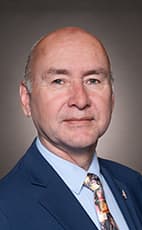
Ellis Ross
In the 90 days to September 18, 2026, 3 organizations lobbied Ellis Ross across 3 meetings — most often about International Relations. The most frequent visitor was Energy Council of Canada (1 meeting, via Keira Shaw (Hammond) of Temple Scott Associates). Its registration describes the goal as “Meetings with Government officials and representatives requesting funding to the Energy Council of Canada to establish and deliver Canada’s…”. That's fewer than the average MP, who had 6 meetings over the same period.
Based on federal lobbying registry data to September 18, 2026
In the House · Sep 21–25
Ellis Ross this week
“The member's speech made significant mention of aboriginal rights and title without actually talking about aboriginal rights and title.”
- Spoke 22 times in the House · the average MP spoke 4 times
- FORC-266, second reading — Establish a national framework respecting skilled trades and labour mobility · passed 295–21
Get Ellis Ross's week in your inbox every Monday
What they said, how they voted, and who lobbied them. Free, no ads, unsubscribe anytime.
How Ellis Ross actually voted
Their recorded positions on the issues Canadians care about — pulled straight from the parliamentary record.
- Voted For
Labour & Employment
Establish a national framework respecting skilled trades and labour mobility
C-266 · Sep 2026 · Passed · Tell your MP what you think
- Voted Against
Economy & Taxation
Implement certain provisions of the spring economic update tabled in Parliament on April 28, 2026
C-30 · Jun 2026 · Passed · Tell your MP what you think
- Voted Against
Housing
Authorize certain payments to be made out of the Consolidated Revenue Fund for the purpose of improving housing supply
C-26 · Jun 2026 · Passed · Tell your MP what you think
- Voted Against
Criminal Justice
Hate propaganda, hate crime and access to religious or cultural places
C-9 · Jun 2026 · Passed · Tell your MP what you think
- Voted Against
Overall leanings
99%
voted with the Conservative line this Parliament · broke ranks 1×
98%
vote attendance (170/174, missed 4)
Who’s in Ellis’s ear
63
lobbying meetings
52
companies & groups
168
speeches in Parliament
Top lobbying relationship: Kitasoo Xai'xais Nation — met 3 times · most lobbied on Environment.
See who’s lobbying Ellis →Who's lobbying Ellis
Individual meeting records from the federal lobbying registry
| Date | Organization | |
|---|---|---|
| 2026-08-17 | Energy Council of Canada | |
| 2026-08-11 | CANADIAN FOODGRAINS BANK | |
| 2026-06-29 | First Nations Education Steering Committee | |
| 2026-06-16 | Permolex Ltd. | |
| 2026-06-04 | PEMBINA INSTITUTE |
Write to Ellis Ross
Pick what it's about. You'll get a letter you can edit, then send it from your own email.
Other ways to reach Ellis
613-992-4211 is the House of Commons switchboard — ask to be connected to your MP's office. For constituency office contact details, or if ellis.ross@parl.gc.ca bounces, visit their Parliament profile.
Committee Memberships
What Ellis talks about
- Commissioner for Modern Treaty Implementation Act26 speeches · 2025–2026
- Building Canada Strong Act8 speeches · 2026
- Canadian Fuel Affordability Act7 speeches · 2026
- Indigenous Affairs6 speeches · 2025–2026
- The Budget6 speeches · 2025
Recent Speeches
Mr. Speaker, the member's speech made significant mention of aboriginal rights and title without actually talking about aboriginal rights and title. There are so many clauses in this bill that affect rights and title and affect the promises made under UNDRIP by the government. One in particular is a… Read full speechShow less
Mr. Speaker, the member's speech made significant mention of aboriginal rights and title without actually talking about aboriginal rights and title. There are so many clauses in this bill that affect rights and title and affect the promises made under UNDRIP by the government. One in particular is about enabling the designation of regions of national interest in areas such as energy corridors, transportation corridors and industrial corridors for the purposes of pre-approval. This is an interesting dilemma, because the courts have already said that we cannot have a pre-approval if we are aware of a decision that might infringe on rights and title. We must consult and accommodate. In this equation, we are asking two questions of rights and title: designation of land and the activity. How will the government proceed if it does not get consent on either of these activities?
Mr. Speaker, I will be splitting my time with the member for Sudbury. We are here talking about Bill C-39. It is another announcement, another 250-page bill to talk about what we already announced last year, basically rewrapped in a more complicated bill. We are trying to talk about building Canada … Read full speechShow less
Mr. Speaker, I will be splitting my time with the member for Sudbury. We are here talking about Bill C-39. It is another announcement, another 250-page bill to talk about what we already announced last year, basically rewrapped in a more complicated bill. We are trying to talk about building Canada strong when we really should be talking about how to rebuild Canada strong, because we were a country that was growing before 10 years ago, when the Liberal government decided to stall and stifle our economy with Bill C-69 and Bill C-48. To undo the damage done by these bills and the stifling of the economy, all we are getting now is announcements, whether we are talking about the Major Projects Office or Bill C-39. I was an MLA and was a chief councillor back in the days of LNG development 20 years ago, so this is where I come from. More specifically, I come from the processes of how to get projects approved, whether we are talking about environmental assessments provincially in B.C. or federally in Canada, and the regulations that go underneath them. Parallel to that is the consultation accommodation that must happen with aboriginal peoples. It is great to see the conversation that we need an economy being so universal. After 10 years, we need an economy, but the government is not admitting that it did not like the economy growing. It did not like LNG development. It did not like LNG exports. In fact, it was the Liberal government that said that there was no business case for LNG development. It was this government that let Germany, when it came knocking on the door of Canada to secure an LNG deal, go away with a hydrogen deal. I travelled to Ottawa to try to fix the record based on my experience of project development, whether we are talking about forestry, mining or LNG. The government did not take my request for a meeting. A member of the opposition did, and all I was here to say was that they were talking to the wrong people. The federal government has no idea what it is talking about. There is a huge business case for LNG. There is a huge demand, and if someone wants proof, they should come talk to the first nation leaders in B.C. They are the ones who put together the LNG export plan. They are the ones who fought for it and lobbied for it. In fact, a lot of the leaders who fought for it did so with no praise or recognition, which is a shame. These are people like Elmer Derrick and the people of Nisga'a. The leadership at the time, who were supporting my band in getting LNG off the ground, never got recognition. Now LNG is pursuing its own LNG facility, but all of that was with all the opposition from the provincial government in B.C. and the federal government. I did everything I could to understand environmental assessments, regulations and case law, and the only thing I can say now is that I wish I knew then what I know now in terms of how this place operates. We could have gotten it done quicker. It is a shame that Canada is in the position it is in now as a weak country, just because of the ideology of saying “no” to LNG development and exports. There were 18 major LNG projects in B.C. at a time when we just got started. All of them left. One major project from my territory, the only one that survived, was LNG Canada, and there are some minor floating LNG projects. If there had been no opposition to development back then, we would not be here having this conversation. We would not be talking about affordability, jobs or our young people leaving the country. We would not be talking about the need to cut taxes, because the economy would have been keeping up. Unfortunately, the damage that has been done in 10 years has brought us to a place where the most we can do now is try to send signals to the world about announcements: Let us repack what we announced last year into a 250-page bill and call it Bill C-39. However, I am glad that at a high level, the opinion of the Liberal government seems to be changing. It is a Festivus miracle, but will that translate into something of substance? Right now, it is going to take some time to understand how this 250-page bill fits with the fast-track approval of a project, given that we already had an announcement of a Major Projects Office that was supposed to do the same thing. That buzz over the Major Projects Office is now a fizzle. Now, partially, Bill C-39 is talking about the existing powers of the Canadian Impact Assessment Agency and how it is going to be amended but also how some is going to be transferred over to the energy regulator and some might be fast-tracked to the Major Projects Office. I have just one fundamental question that the government cannot answer. At the end of the day, who signs the environmental assessment certificate? Is it going to be the regulator, the Major Projects Office or the Canadian Impact Assessment Agency? Whoever does it is going to take responsibility for that signature going forward. The government cannot answer that. How is industry supposed to have the certainty to invest in Canada if the legislation and regulations are all over the map? Corporations, and first nations for that matter, are going to have to hire lawyers and consultants to pore over these new bills to find out exactly what the process is. By the way, I heard a number of the government members talking about indigenous consultation. There is a contradiction in terms of what they are saying about consultative duties to first nations people affected by major projects. I am talking about that pre-decision, pre-approval, to approve it in one year, but the courts have said it cannot do that. When the Crown is aware of a decision that might affect rights and title, the government has to consult and accommodate first nations before it makes the decision.
Shall I say it again? Before you make the decision, you must consult and accommodate, not after the fact, when you have made the decision. Your own policy says it. Read your policy on the Justice Canada site. It—
Mr. Speaker, Canada's own policy says that. Even though I am getting heckled by the parliamentary secretary to the government House leader, I am just reciting what Canada's policy says. How is the government going to square that? I have seen what has been done in the B.C. treaty process. The governm… Read full speechShow less
Mr. Speaker, Canada's own policy says that. Even though I am getting heckled by the parliamentary secretary to the government House leader, I am just reciting what Canada's policy says. How is the government going to square that? I have seen what has been done in the B.C. treaty process. The government makes the decision and then promises to continue consulting and accommodating. That is not what the court case said. Interestingly enough, though, back in the day, as first nations, we could only dream of planning our future. We had no money and no resources, and we were under the Indian Act. We could not plan a future under the Indian Act. It is a very punitive system for first nations, so it was very hard to plan a future. There are entities out there now, though, and I think the government should seriously consider this, that could help, not with the process itself of environmental assessments, rights and title, but could help a region, town or first nation plan for the future in light of what might be major project development in Canada. Specifically, I am talking about the Canadian Institute of Planners. I know they are here lobbying the government and members of the opposition. I can see my past, my history, in what they are talking about. It partly relates to what I wish I knew then as opposed to what I know now. It could have made life a lot easier not only for my first nations people but for the surrounding area. At the end of the day, as a judge said back in the day, “Let's face it, none of us are going anywhere. We're all in this together.”
Mr. Speaker, I thank the member for his confusion because I am confused as well. I know the existing process under the Canadian Impact Assessment Agency, but I do not understand the correlation to the Major Projects Office, and now we have a new bill that talks about a regulator being in charge. As … Read full speechShow less
Mr. Speaker, I thank the member for his confusion because I am confused as well. I know the existing process under the Canadian Impact Assessment Agency, but I do not understand the correlation to the Major Projects Office, and now we have a new bill that talks about a regulator being in charge. As far as I can see, it is a three-ring circus. If people do not understand the process, which should be a clear-cut process for investors, first nations and Canadians, then how are we going to build Canada strong? I understand your confusion.
Recent activity
22 activities across speeches, bills, and lobbying communications.
September 2026
Government Orders
Mr. Speaker, the member's speech made significant mention of aboriginal rights and title without actually talking about aboriginal rights and title. There are so many clauses in this bill that affect … Read full speechShow less
Mr. Speaker, the member's speech made significant mention of aboriginal rights and title without actually talking about aboriginal rights and title. There are so many clauses in this bill that affect rights and title and affect the promises made under UNDRIP by the government. One in particular is about enabling the designation of regions of national interest in areas such as energy corridors, transportation corridors and industrial corridors for the purposes of pre-approval. This is an interesting dilemma, because the courts have already said that we cannot have a pre-approval if we are aware of a decision that might infringe on rights and title. We must consult and accommodate. In this equation, we are asking two questions of rights and title: designation of land and the activity. How will the government proceed if it does not get consent on either of these activities?
Government Orders
Mr. Speaker, I will be splitting my time with the member for Sudbury. We are here talking about Bill C-39. It is another announcement, another 250-page bill to talk about what we already announced las… Read full speechShow less
Mr. Speaker, I will be splitting my time with the member for Sudbury. We are here talking about Bill C-39. It is another announcement, another 250-page bill to talk about what we already announced last year, basically rewrapped in a more complicated bill. We are trying to talk about building Canada strong when we really should be talking about how to rebuild Canada strong, because we were a country that was growing before 10 years ago, when the Liberal government decided to stall and stifle our economy with Bill C-69 and Bill C-48. To undo the damage done by these bills and the stifling of the economy, all we are getting now is announcements, whether we are talking about the Major Projects Office or Bill C-39. I was an MLA and was a chief councillor back in the days of LNG development 20 years ago, so this is where I come from. More specifically, I come from the processes of how to get projects approved, whether we are talking about environmental assessments provincially in B.C. or federally in Canada, and the regulations that go underneath them. Parallel to that is the consultation accommodation that must happen with aboriginal peoples. It is great to see the conversation that we need an economy being so universal. After 10 years, we need an economy, but the government is not admitting that it did not like the economy growing. It did not like LNG development. It did not like LNG exports. In fact, it was the Liberal government that said that there was no business case for LNG development. It was this government that let Germany, when it came knocking on the door of Canada to secure an LNG deal, go away with a hydrogen deal. I travelled to Ottawa to try to fix the record based on my experience of project development, whether we are talking about forestry, mining or LNG. The government did not take my request for a meeting. A member of the opposition did, and all I was here to say was that they were talking to the wrong people. The federal government has no idea what it is talking about. There is a huge business case for LNG. There is a huge demand, and if someone wants proof, they should come talk to the first nation leaders in B.C. They are the ones who put together the LNG export plan. They are the ones who fought for it and lobbied for it. In fact, a lot of the leaders who fought for it did so with no praise or recognition, which is a shame. These are people like Elmer Derrick and the people of Nisga'a. The leadership at the time, who were supporting my band in getting LNG off the ground, never got recognition. Now LNG is pursuing its own LNG facility, but all of that was with all the opposition from the provincial government in B.C. and the federal government. I did everything I could to understand environmental assessments, regulations and case law, and the only thing I can say now is that I wish I knew then what I know now in terms of how this place operates. We could have gotten it done quicker. It is a shame that Canada is in the position it is in now as a weak country, just because of the ideology of saying “no” to LNG development and exports. There were 18 major LNG projects in B.C. at a time when we just got started. All of them left. One major project from my territory, the only one that survived, was LNG Canada, and there are some minor floating LNG projects. If there had been no opposition to development back then, we would not be here having this conversation. We would not be talking about affordability, jobs or our young people leaving the country. We would not be talking about the need to cut taxes, because the economy would have been keeping up. Unfortunately, the damage that has been done in 10 years has brought us to a place where the most we can do now is try to send signals to the world about announcements: Let us repack what we announced last year into a 250-page bill and call it Bill C-39. However, I am glad that at a high level, the opinion of the Liberal government seems to be changing. It is a Festivus miracle, but will that translate into something of substance? Right now, it is going to take some time to understand how this 250-page bill fits with the fast-track approval of a project, given that we already had an announcement of a Major Projects Office that was supposed to do the same thing. That buzz over the Major Projects Office is now a fizzle. Now, partially, Bill C-39 is talking about the existing powers of the Canadian Impact Assessment Agency and how it is going to be amended but also how some is going to be transferred over to the energy regulator and some might be fast-tracked to the Major Projects Office. I have just one fundamental question that the government cannot answer. At the end of the day, who signs the environmental assessment certificate? Is it going to be the regulator, the Major Projects Office or the Canadian Impact Assessment Agency? Whoever does it is going to take responsibility for that signature going forward. The government cannot answer that. How is industry supposed to have the certainty to invest in Canada if the legislation and regulations are all over the map? Corporations, and first nations for that matter, are going to have to hire lawyers and consultants to pore over these new bills to find out exactly what the process is. By the way, I heard a number of the government members talking about indigenous consultation. There is a contradiction in terms of what they are saying about consultative duties to first nations people affected by major projects. I am talking about that pre-decision, pre-approval, to approve it in one year, but the courts have said it cannot do that. When the Crown is aware of a decision that might affect rights and title, the government has to consult and accommodate first nations before it makes the decision.
Government Orders
Shall I say it again? Before you make the decision, you must consult and accommodate, not after the fact, when you have made the decision. Your own policy says it. Read your policy on the Justice Cana… Read full speechShow less
Shall I say it again? Before you make the decision, you must consult and accommodate, not after the fact, when you have made the decision. Your own policy says it. Read your policy on the Justice Canada site. It—
Government Orders
Mr. Speaker, Canada's own policy says that. Even though I am getting heckled by the parliamentary secretary to the government House leader, I am just reciting what Canada's policy says. How is the gov… Read full speechShow less
Mr. Speaker, Canada's own policy says that. Even though I am getting heckled by the parliamentary secretary to the government House leader, I am just reciting what Canada's policy says. How is the government going to square that? I have seen what has been done in the B.C. treaty process. The government makes the decision and then promises to continue consulting and accommodating. That is not what the court case said. Interestingly enough, though, back in the day, as first nations, we could only dream of planning our future. We had no money and no resources, and we were under the Indian Act. We could not plan a future under the Indian Act. It is a very punitive system for first nations, so it was very hard to plan a future. There are entities out there now, though, and I think the government should seriously consider this, that could help, not with the process itself of environmental assessments, rights and title, but could help a region, town or first nation plan for the future in light of what might be major project development in Canada. Specifically, I am talking about the Canadian Institute of Planners. I know they are here lobbying the government and members of the opposition. I can see my past, my history, in what they are talking about. It partly relates to what I wish I knew then as opposed to what I know now. It could have made life a lot easier not only for my first nations people but for the surrounding area. At the end of the day, as a judge said back in the day, “Let's face it, none of us are going anywhere. We're all in this together.”
Government Orders
Mr. Speaker, I thank the member for his confusion because I am confused as well. I know the existing process under the Canadian Impact Assessment Agency, but I do not understand the correlation to the… Read full speechShow less
Mr. Speaker, I thank the member for his confusion because I am confused as well. I know the existing process under the Canadian Impact Assessment Agency, but I do not understand the correlation to the Major Projects Office, and now we have a new bill that talks about a regulator being in charge. As far as I can see, it is a three-ring circus. If people do not understand the process, which should be a clear-cut process for investors, first nations and Canadians, then how are we going to build Canada strong? I understand your confusion.
Government Orders
Mr. Speaker, that is great question, and it is an important issue. I mean, the labour is what actually builds Canada. It provides the jobs, the contracts and the subcontracts. Those are the people who… Read full speechShow less
Mr. Speaker, that is great question, and it is an important issue. I mean, the labour is what actually builds Canada. It provides the jobs, the contracts and the subcontracts. Those are the people who build the bridges, the buildings and the LNG plants. Really, this issue is so important that it has to go to committee. It cannot just stay the way it is. That is what committees were built for, and that is what I will be hoping the government does: send this issue to committee.
Government Orders
Mr. Speaker, without a doubt, we should not be here. We should be building on past successes. We should have been building 18 LNG projects out of B.C. We should not be having this discussion about Can… Read full speechShow less
Mr. Speaker, without a doubt, we should not be here. We should be building on past successes. We should have been building 18 LNG projects out of B.C. We should not be having this discussion about Canada being Canada strong in terms of breaking down the barriers. I mean, after that big announcement of one Canada, one economy, we still cannot sell wine from one province to another province. It has just been announcement after announcement. I agree that 10 years of damage to our economy trying to be undone by the people who actually did the damage is actually putting us far down the ladder in terms of economics.
Government Orders
Mr. Speaker, without a doubt, yes, I agree with one year, as long as the process is followed and is described clearly and, by the way, as long as the case law is followed that has been laid out by the… Read full speechShow less
Mr. Speaker, without a doubt, yes, I agree with one year, as long as the process is followed and is described clearly and, by the way, as long as the case law is followed that has been laid out by the courts on how to address rights and title. We cannot put an arbitrary time limit on the rights and title of first nations people. That is what I am talking about when I talk about the contradiction in Bill C-39. There is no answer to that.
Statements by Members
Mr. Speaker, Conservatives are back in Ottawa with a plan to save Canadians money and make life more affordable. We have identified more than $150 billion in savings by cutting wasteful bureaucracy, u… Read full speechShow less
Mr. Speaker, Conservatives are back in Ottawa with a plan to save Canadians money and make life more affordable. We have identified more than $150 billion in savings by cutting wasteful bureaucracy, unnecessary consultants, foreign aid, handouts to fraudulent asylum claimants, corporate welfare and money-losing boondoggles like Alto rail. These savings would bring down debt, taxes and inflation and put more money back in the pockets of Canadians. We would save Canadians money on housing by scrapping taxes on home construction and pressing local governments to speed up permits, free up land and reduce fees. Conservatives would save us money on fuel and groceries by scrapping all taxes on gas until at least Canada Day and save people money on vehicles while supporting the auto workers by removing the GST on vehicles made in Canada. I know families across Skeena—Bulkley Valley are hurting right now. That is why my Conservative colleagues and I are fighting hard to cut wasteful spending, lower costs and make life more affordable for Canadians.
Government Orders
Mr. Speaker, welcome to the chair. It is an honour for me to get up to talk about affordability on behalf of the constituents of Skeena—Bulkley Valley, specifically with respect to Bill C-38, the Cana… Read full speechShow less
Mr. Speaker, welcome to the chair. It is an honour for me to get up to talk about affordability on behalf of the constituents of Skeena—Bulkley Valley, specifically with respect to Bill C-38, the Canadian fuel affordability act. By the way, I am sharing my time with a member forFort McMurray—Cold Lake. The government has framed Bill C-38 as a collaboration among the parties and members within the House, which is not entirely accurate, because long before I came here, the leader of the Conservative Party, and the Conservatives as well, were talking about affordability and the pressures Canadians were under. In fact, the leader of the Conservative Party was actually pushing for this tax break at the pumps long before I came along, specifically through the campaign. It has just dawned on the Liberals this past year that, yes, maybe Canadians are having a tough time and that maybe they should save them some money at the gas pumps. Then they had the revelation that affordability has not gotten better in Canada but has gotten worse, and that they should extend the tax break to help Canadians. That was a Conservative idea, among many other Conservative ideas that the Liberals took. We applauded the idea of getting rid of the carbon tax, because that was a Conservative idea. Then the Liberals said they were taking away only the consumer carbon tax and keeping the industrial carbon tax, but that we should not worry as it is not going to affect affordability. Anybody will tell us that any kind of business that gets additional expenses, including taxes, will not absorb it. They eventually pass it on to the consumer. I agree there are a lot of different components that add to inflation and the cost of living. This is just one small component. Therefore, if anything, while I do applaud this measure because it is a Conservative measure, I will be asking the government to take more of our Conservative ideas to save Canadians money, not just at the pump but also to deliver the promise of actually making groceries affordable so we have something, as the Prime Minister requested, to judge him on: the prices at the grocery store. Overall, this one measure is not going to fix affordability, but it would help. It is assistance for families and especially for our young people when fuelling up at the gas pumps. I also agree with the members of the Liberal government who said that feeding children in schools is not a new initiative. My own band, for instance, started doing that not only for children in schools but also for seniors, because we had own-source revenue by engaging the economy. It is not new, but having to feed children in schools is at record levels in Canada, a first world country. Record levels of people are visiting food banks in Canada in a single month, over two million, of which approximately 30% are children. Given where I come from, I can understand that. I understand the hardship and heartbreak of a middle-class family. One in five of the people who are visiting a food bank has a job. This is what I noticed as an MLA in Victoria, when I used to walk to work. I walked past the food bank. Once a week it would have a food distribution. Slowly I started seeing minivans parking outside and people eating the food they had taken from the food bank. It was hard to ignore. This affordability issue is not what it was 20 years ago. The middle class is now affected. They are now struggling to the point where even our young, educated professionals are looking to leave Canada because of the cost of living. There is a lack of opportunity. There are no projects getting approved. Nothing is moving in Canada. In terms of our young people and our future, I do not know about the rest of the people here, but where I come from, we always looked to see what the future of our country is going to be, what our province is going to be, what our region is going to be and what our community is going to be, for the benefit of ourselves and, more importantly, for the benefit of our kids and our grandkids, especially in a place like Canada. What was the Liberal proposal at a convention? It was for those young people to try to find a better life elsewhere, abroad, maybe in the United States. The proposal was to think about a $500,000 exit tax. If they cannot afford life as it is in Canada, how are they going to afford $500,000 to leave Canada? That is cruel. It is not investing in the future. How can we invest in the future when we are not looking at how Canadians are struggling? The Liberals are praising their dental plan and are asking how come the Conservatives keep criticizing it. When I go back to my riding, seniors approach me and tell me how they do not qualify. They make too much money under their pension. I actually stopped a senior citizen in Kitimat, who was shopping. She had one item in her cart. It was bread at 50% off because it was old bread. She did not even go to the store for bread. She goes there regularly for the opportunity to find something on sale. She had one item. There are a lot more measures the Conservatives have proposed that the Liberal government should entertain and that should pass. The four or five proposals that the Liberals borrowed from the Conservatives and implemented in the last campaign were a good sign that the Liberals are finally waking up to how Canadians are struggling. The suspension of the fuel tax is one small measure that can help, but it is not going to be enough. We agree that there are global situations that are making this situation worse, things that we cannot control, but there are things in Canada that we can control, including what we are talking about here today: extending the fuel tax break. The government could stop the inflationary borrowing and budgets that are being proposed. It could stop some of the projects that will increase inflation, such as the $90-billion Alto high-speed rail project. That is $90 billion that we do not have. This is a great announcement, but it is certainly not enough. Will it affect affordability, especially for people who do not even have cars? This just keeps piling up. As we go through the debate, and I am sure a lot of members can see this, costs are continuing to go up, based on the Liberal government's own debates and based on global pressures. Can the government focus on affordability for Canadians? Within our own circle of what is Canada, can we focus on things we can do here now to help, such as what the Conservatives have been talking about since long before I got here? We will continue to fight for affordability for Canadians, fight for young people and fight for a better Canada, but the Liberal government has to take more of the direction that is coming from this side, not just the four or five ideas it has taken from the Conservatives over the last year.
Government Orders
Mr. Speaker, I would love to ask that senior why they do not qualify and why the government keeps getting up and trumpeting, as if this program were the best thing in the world, when a lot of the seni… Read full speechShow less
Mr. Speaker, I would love to ask that senior why they do not qualify and why the government keeps getting up and trumpeting, as if this program were the best thing in the world, when a lot of the seniors, especially in my riding, do not even qualify in the first place. Why are there two signals, two messages? When we are really talking affordability, why is the senior so confused that they cannot get the dental plan that the Liberals are championing as the best thing in the world since sliced bread? Just be honest with Canadians.
Government Orders
Mr. Speaker, it is as if every young person across Canada does not see a future here, not only in terms of the affordability of a house and the cost of living but also where their future is in a profe… Read full speechShow less
Mr. Speaker, it is as if every young person across Canada does not see a future here, not only in terms of the affordability of a house and the cost of living but also where their future is in a profession. We are talking around the issue of Canada's becoming an energy superpower, but there is no action. We have so many different issues with Canada, but the economy and affordability are probably number one in terms of how we move forward as a strong, independent country, because the last 10 years have actually put us in a situation where Canadians are struggling, and we are trying to figure out how we move into the new global geopolitical world we are moving into when we really do not have the strength to do it.
Government Orders
Mr. Speaker, that question is actually very relevant. In terms of what the governments are doing, not only federally but provincially as well, we are not adapting. We have all these measures that prop… Read full speechShow less
Mr. Speaker, that question is actually very relevant. In terms of what the governments are doing, not only federally but provincially as well, we are not adapting. We have all these measures that propose to lessen the risk, but they are not doing anything about adapting to what happening in our regions. There is no measure of activity for the provincial government of B.C., for instance, to talk about forestry management in terms of forest fire risk, but Canada should be setting an example. Canada has federal lands it is responsible for, and the Indian Act lands as well. We should be setting an example, and hopefully the Conservatives will be coming up with exactly that idea.
Government Orders
Mr. Speaker, the Liberals are acting like they discovered plutonium here and like this is the first time the idea has been brought up to actually suspend a tax that would reduce the cost of fuel. Howe… Read full speechShow less
Mr. Speaker, the Liberals are acting like they discovered plutonium here and like this is the first time the idea has been brought up to actually suspend a tax that would reduce the cost of fuel. However, when I look at the debate record, Conservatives have been asking this for well over a year. It came from listening to the stories of people who just could not afford life. However, this tax we are talking about is just one component of what it means to have an affordable life. Can I ask the member to talk about why the Conservatives came up with this idea to suspend taxes and cut them out altogether?
Government Orders
Mr. Speaker, it was just mentioned by one of the Liberal government members that it does not matter where the idea comes from. Yes, it does for the Liberal government, because this idea was brought up… Read full speechShow less
Mr. Speaker, it was just mentioned by one of the Liberal government members that it does not matter where the idea comes from. Yes, it does for the Liberal government, because this idea was brought up in April, and previous to that other measures were presented by the Conservatives. They were all voted down by a majority of the House. This is exactly what we are talking about today. To the member, if the Conservative proposal put on the floor back in April was actually approved in April, how much savings could that have brought to families and citizens across Canada?
Government Orders
Mr. Speaker, the Liberal government just cannot get it right. On one hand, its members say that affordability is the best it has been for 10 years. On the other side, they recognize the affordability … Read full speechShow less
Mr. Speaker, the Liberal government just cannot get it right. On one hand, its members say that affordability is the best it has been for 10 years. On the other side, they recognize the affordability crisis our constituents are facing in Canada. To the member, where are these stories coming from of Canadians struggling to put food on the table or gas in their gas tank?
Government Orders
Madam Speaker, I was a treaty chairman for eight years for my band. In all those years I was there, and even after my time being an MLA, these issues kept coming up in B.C. Given the chaos in B.C. for… Read full speechShow less
Madam Speaker, I was a treaty chairman for eight years for my band. In all those years I was there, and even after my time being an MLA, these issues kept coming up in B.C. Given the chaos in B.C. for the last 10 years or 15 years, Canada has blown an opportunity to have a true partnership with the first nations that signed treaties. From what we understand, the government is going to create another bureaucratic body that is going to cost tens of millions of dollars, with no obligation to follow up on any of the reports coming out of this new office. Am I correct?
Government Orders
Madam Speaker, it is good to be back in Ottawa to represent the good people of Skeena—Bulkley Valley. As mentioned earlier, I was a first nations leader. I was a councillor for eight years and a chief… Read full speechShow less
Madam Speaker, it is good to be back in Ottawa to represent the good people of Skeena—Bulkley Valley. As mentioned earlier, I was a first nations leader. I was a councillor for eight years and a chief councillor for six years, and then I moved on to be an MLA. I am very proud to say that I am representing Skeena—Bulkley Valley in the House today. During those eight years, I was the treaty chairman, which means that I was in charge of day-to-day negotiations for my band. We were at stage four, by the way. We were nowhere close to signing a treaty. In fact, we pulled ourselves out of treaty negotiations because economic development agreements were actually outpacing treaty negotiations at the time. However, all the issues we talked about in terms of treaty implementation are still there today. During the discussion we had at the summit in Vancouver, we talked about Canada's failure to show up to the table to implement modern day treaties. When I became an MLA, I was surprised to hear that all the reports over the last 15 to 20 years, all the letters, all the lobbying, had made their way to Ottawa but nothing was done. I was surprised to hear that an independent body such as the Auditor General actually reported to the House annually on the failure of the government to implement modern day treaties. As my work as an MP has unfolded, it has come out that those reports had no teeth to them. They had no backbone. There was no reason for the government to follow the Auditor General's report to follow up on implementing what should be a priority in B.C., if not in Canada. We are looking at the chaos in B.C. right now. We have heard the debate in the B.C. legislature. We have heard the debate in the House of Commons in Ottawa, talking about the need for certainty. We need the economy to be back on track. After 10 years of stifling the economy, the priority now is to get the economy moving, but for that we need first nations participation, as cited in the Haida court case of 2004 that laid out the framework on how to reconcile aboriginal rights and title with Crown statutory decision-making. It was working. From 2004 to 2017, it was working on a few points. Number one is that we had to resolve rights and title interests. On specific projects, that was working out okay. It was not in all cases, of course, but in most cases, especially if we are talking about the LNG development in Kitimat and especially if we are talking about the pipeline from Alberta to Vancouver, the Trans Mountain pipeline, and countless mining agreements. The majority of these agreements were done with first nations that had asserted aboriginal rights and title, not defined title such as we are talking about here today. By defined title, I mean there is a first nation that sat down and said, “We want to put down for the record our rights and title, and we want to coexist in the economy of Canada today and the society of today. We're going to reconcile our interests under the laws of Canada and B.C., under the regulations of Canada and B.C.” That is essentially what a treaty is. When we talk about Bill C-10, through which the government wants to create a commissioner for modern day treaty implementation, again it is just another announcement. It would be millions of dollars or more going towards a title, an office, not only to compile the list of complaints over the last 20 years but also to possibly amend those complaints with the complaints of today, which are basically the same complaints as the last 20 years. The last time I got up to speak to this, I told the House that everything is already there for the government to co-operate and partner with treaty first nations. Read the treaty. It talks about the Crown's obligations, department by department, on how to implement the treaty. More than ever before, the reason for that is what we talk about here every day, whether we are talking about tariffs, the economy or the cost of living. It is there. The government just needs to read the treaty and enforce it. The accountability is not only for the government, but every ministry under the government has an obligation to look at that treaty and find out exactly what their duties are to breathe life into it. The first nations are there. They want co-operation. They want to help build Canada. The complaint is that Canada just does not want to implement it. If the government does not want to read the treaty and understand its own obligations under the treaty, then it should look to its own website. There is a comprehensive set of guidelines and principles on the government website that talk about how to implement modern day treaties. It is already there. The government wrote it and amended it over the years. Just one publication is the “Guide for Federal Implementers of Comprehensive Land Claims and Self-Government Agreements”. It is on the Canadian government website. It has an executive summary and eight different clauses talking about treaty implementation. It gives the background of how we came to these treaties in the first place, coming from comprehensive land claims agreements and self-government agreements to modern day treaties in B.C. It talks about how to implement the treaties, the phases of implementation, how to plan for implementation, the committees that are set up for implementation, the implementing bodies and the obligations of all the parties. It also includes funding obligations, which we all know continue from Ottawa after a first nation signs a treaty. It is there. It talks about the roles and responsibilities of federal implementers. It talks about the principles of federal collaboration. The government does not need a new treaty commissioner to tell it its own principles of collaborating with first nations treaties. This is already written in its own document. If the Auditor General already told government annually, in their reports, how the government is failing at implementation, what good would a multi-million-dollar new office and budget do? There are also federal structures and processes, coordination, decision-making, information sharing, monitoring and reporting. There are annexes supporting these principles under treaty. It is a shame if government is just buying more time so more reports and more summaries can be presented to the House and shelved. The plan is there. The treaty is there. The government has its own guides to follow. It has the recommendations of the Auditor General. I assume the government's lead bureaucrats are telling it about the failures and how to fix them. More than ever, we need action, not another office, not another title and not more money being spent. The treaty first nations are there. They want to assist in building Canada. They want to do everything they can to make this economy stronger. The only one missing is the federal government. If the government does truly believe that we can build Canada strong, then it should get back to some of the fundamental partners that can help it, the first nations that have signed modern day treaties.
Government Orders
Madam Speaker, I would say to the member that I would love to get up in front of these communities and give them the exact same speech I just gave right now. There are too many processes being put in … Read full speechShow less
Madam Speaker, I would say to the member that I would love to get up in front of these communities and give them the exact same speech I just gave right now. There are too many processes being put in place right now that have been in place for 20 years and talk about the same exact thing. The only people who are failing to implement it are the members of the federal government.
Government Orders
Madam Speaker, there are so many processes put in place already to achieve the exact same goal. I think first nations should be made well aware of the time wasted talking about this, when really the s… Read full speechShow less
Madam Speaker, there are so many processes put in place already to achieve the exact same goal. I think first nations should be made well aware of the time wasted talking about this, when really the simple answer is that the government should have actually fulfilled its obligations when it signed the treaties five years, 10 years or 15 years ago. That was the number one promise made by the government.
March 2026
Rural Economic Development (Minister�s Office)
30 communications with 25 clients
Top clients: [{"name": "Canadian Association of Petroleum Producers", "count": 3}, {"name": "…
December 2025
House of Commons
6 communications with 6 clients
Top clients: [{"name": "Suncor Energy Inc.", "count": 1}, {"name": "Chiefs of Ontario", "coun…