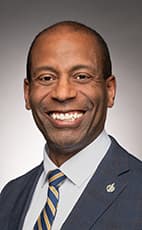
Greg Fergus
In the 90 days to September 18, 2026, 5 organizations lobbied Greg Fergus across 5 meetings — most often about Budget. The most frequent visitor was Women's Network PEI (1 meeting, via Lynne Lund of Leading Impact Consulting Inc). Its registration describes the goal as “Guaranteed Livable Income as a solution to poverty in Canada”. That's fewer than the average MP, who had 6 meetings over the same period.
Based on federal lobbying registry data to September 18, 2026
In the House · Sep 21–25
Greg Fergus this week
“Members of Council 5281 of the Knights of Columbus have been active in our community since 1962. Over the decades, the Aylmer Knights of Columbus have given generously of their time and energy to build a stronger, more caring and supportive community.”
- Spoke 9 times in the House · the average MP spoke 4 times
- FORC-266, second reading — Establish a national framework respecting skilled trades and labour mobility · passed 295–21
Get Greg Fergus's week in your inbox every Monday
What they said, how they voted, and who lobbied them. Free, no ads, unsubscribe anytime.
How Greg Fergus actually voted
Their recorded positions on the issues Canadians care about — pulled straight from the parliamentary record.
- Voted For
Labour & Employment
Establish a national framework respecting skilled trades and labour mobility
C-266 · Sep 2026 · Passed · Tell your MP what you think
- Voted For
Economy & Taxation
Implement certain provisions of the spring economic update tabled in Parliament on April 28, 2026
C-30 · Jun 2026 · Passed · Tell your MP what you think
- Voted For
Housing
Authorize certain payments to be made out of the Consolidated Revenue Fund for the purpose of improving housing supply
C-26 · Jun 2026 · Passed · Tell your MP what you think
- Voted For
Criminal Justice
Hate propaganda, hate crime and access to religious or cultural places
C-9 · Jun 2026 · Passed · Tell your MP what you think
- Voted For
Overall leanings
99%
voted with the Liberal line this Parliament · broke ranks 1×
100%
vote attendance (174/174)
Who’s in Greg’s ear
581
lobbying meetings
317
companies & groups
259
speeches in Parliament
Top lobbying relationship: Universities Canada — met 19 times · most lobbied on Industry.
See who’s lobbying Greg →Who's lobbying Greg
Individual meeting records from the federal lobbying registry
| Date | Organization | |
|---|---|---|
| 2026-09-10 | Women's Network PEI | |
| 2026-07-30 | 555 Carrière Holdings Inc. | |
| 2026-07-29 | Public Service Alliance of Canada | |
| 2026-07-28 | Temiscaming Precision Industries Inc. | |
| 2026-07-13 | UNICEF Canada |
Write to Greg Fergus
Pick what it's about. You'll get a letter you can edit, then send it from your own email.
Other ways to reach Greg
613-992-4211 is the House of Commons switchboard — ask to be connected to your MP's office. For constituency office contact details, or if greg.fergus@parl.gc.ca bounces, visit their Parliament profile.
Top Lobbying Clients
Companies with the most meetings with this MP
What Greg talks about
- Labour11 speeches · 2023
- Emergencies Act9 speeches · 2022
- Military Justice System Modernization Act9 speeches · 2025
- Lawful Access Act, 20268 speeches · 2026
- An Act for the Substantive Equality of Canada's Official Languages5 speeches · 2022
Recent Speeches
I, too, would like to thank my colleague from Ontario for his contribution to this debate. At the beginning of his speech, he pointed out that the safeguards will still be there but that we are going to find a way to reduce delays and make a decision, whether positive or negative. I would like him t… Read full speechShow less
I, too, would like to thank my colleague from Ontario for his contribution to this debate. At the beginning of his speech, he pointed out that the safeguards will still be there but that we are going to find a way to reduce delays and make a decision, whether positive or negative. I would like him to expand on that.
Mr. Speaker, members of Council 5281 of the Knights of Columbus have been active in our community since 1962. Over the decades, the Aylmer Knights of Columbus have given generously of their time and energy to build a stronger, more caring and supportive community. Their actions are guided by a simpl… Read full speechShow less
Mr. Speaker, members of Council 5281 of the Knights of Columbus have been active in our community since 1962. Over the decades, the Aylmer Knights of Columbus have given generously of their time and energy to build a stronger, more caring and supportive community. Their actions are guided by a simple conviction: to care for one another. Whether they are holding a fundraising campaign, helping a family, hosting a community activity or engaging in a quiet act of kindness, charity remains at the heart of their work. This way of doing things has been passed down from one generation to the next in Aylmer for 65 years. On October 17, let us celebrate all those who built this council and those who continue this work and ensure its future. I wish Aylmer's Council 5281 of the Knights of Columbus continued success and thank them for their 65 years of service to our community.
Madam Speaker, first of all, I want to commend my esteemed colleague from Berthier—Maskinongé. He is a person I respect so much. Before he became a politician, he was a member of a very noble profession. He taught history, if I recall our conversations correctly. I have a question for him as a man w… Read full speechShow less
Madam Speaker, first of all, I want to commend my esteemed colleague from Berthier—Maskinongé. He is a person I respect so much. Before he became a politician, he was a member of a very noble profession. He taught history, if I recall our conversations correctly. I have a question for him as a man who is very familiar with history. Would it be possible, in this day and age, to build something like the national railroad in a short period of time, in this country, with all the regulations and timelines we have today? Are we not capable of taking action to do things that are really important for Quebec and for Canada?
Madam Speaker, this is the first time I have risen in the House to give a speech since returning from the summer break. I have put questions to several of my colleagues, but this is the first time I have had the opportunity to rise in the House to present a speech. I am very pleased to rise during t… Read full speechShow less
Madam Speaker, this is the first time I have risen in the House to give a speech since returning from the summer break. I have put questions to several of my colleagues, but this is the first time I have had the opportunity to rise in the House to present a speech. I am very pleased to rise during this debate on Bill C-39, an act respecting certain measures to strengthen the economy. Admittedly, the bill is rather long. I managed to read it last night and this morning. I have to keep referring back to other existing laws to understand the situation better. However, as I was reading the bill, an image came to mind. It was a train. I love trains. If I have to choose between flying or taking a train, I always take the train, to go to Montreal, Toronto, Windsor or Quebec City, for example. That has been my preference since I was a young child. It is the best way to travel and get around our great country. However, there is something that I never did as a child or a young adult. I never travelled across the country by train. I had the opportunity to do so when I was 49 years old. It was very exciting. My adult children and I took the train from Toronto to Vancouver. It took four days and it was extraordinary. I recommend that all my colleagues take advantage of the opportunity to see the country by train. There is the Canadian train that goes from Toronto to Vancouver, the Ocean train from Halifax to Montreal and between the two, there is the Via Rail fleet that serves the Quebec City-Windsor corridor. Throughout my journey across the country, I thought about one thing. Could we build this railroad today? Historians and history teachers know that the Canadian Pacific Railway was basically built in four years, from 1881 to 1885. Yes, construction started a little earlier, but there were issues. The bulk of the construction was done during those four years. Could we do that today? I readily agree with the member for Berthier—Maskinongé that it is important to have modern standards. We are not about to use slaves or workers who are treated like slaves to build the train, as we did with the Chinese-Canadian population at the time. We have labour standards, thank goodness. In a modern country, we can build in a responsible manner and in a way that ensures worker safety as much as possible. That is very important. However, given these factors, would we be able to do that today? I am not so sure. That is one of the reasons I like the specific provisions in this bill. When a project is proposed and all the information is available, we promise that there will be an assessment and that it will be completed within a year. To me, that is key. Things need to change. Everything has become too complex. We are complicating things. Is that really necessary? We do not want to get rid of the standards we have established, including environmental standards or standards related to working conditions. We need to keep those. That being said, can we get organized and accomplish great things together, within a reasonable time frame? I hope that, through this bill, we are saying that we can. I am hoping that with the building Canada strong act, we are able to organize ourselves in a way that allows us to respect all the different elements that we have thought are important as a country, that we have put in our laws, but that we can do so in a reasonable time frame because, and I have to say it and I know we have heard it, we really are living in exceptional times. Never before have I felt that this country has been threatened in the way that we have been. Now it is time for us to put all the elements on our side, to take advantage of all the wealth in people and in natural resources and in our industrial capacity, to build big things. When I say “to build big things”, I want to make it very clear that I do not expect us to derogate from a lot of the important standards we have put in place. Still, can we do that evaluation quickly? Can we do so in respect of the Declaration on the Rights of Indigenous Peoples, which we have an obligation and a duty to consult and to work with? I think we can. I think we can get ourselves to that place because, again, from another example in history, another time when Canada felt as serious a challenge was during the Second World War. When we got into the war in 1939, Canada was far from being an industrial powerhouse as a country, but in a very short period of time, Canadians, recognizing the challenges that we had, came together and organized ourselves properly so that we transformed our entire economy to become a wartime economy. We did so quickly, without taking shortcuts or compromising on quality, but just saying to ourselves, “The challenge is great.” We have to meet this challenge, and we have planned accordingly to be able to do so. This is something I expect from Canada and from all members of the House. I know we will not agree on everything, but I can only control what I can control. I want to tell all my colleagues that I will listen to their concerns and support suggestions to improve the bill as much as possible. However, I do not want that to be used as an excuse to paralyze everything and not do the work. Personally, I think we are all up to the challenge before us.
Mr. Speaker, I would like to ask my esteemed colleague from Joliette a question about what he just said. He said that the government has gutted environmental regulations. I would like him to tell us where it says that. All we have asked our public servants to do is to act more quickly to provide a f… Read full speechShow less
Mr. Speaker, I would like to ask my esteemed colleague from Joliette a question about what he just said. He said that the government has gutted environmental regulations. I would like him to tell us where it says that. All we have asked our public servants to do is to act more quickly to provide a faster response. We are not cutting corners; we are continuing to do the assessments. Can my colleague tell us where in the text of the bill it says that we are gutting environmental protection regulations?
Recent activity
21 activities across speeches, bills, and lobbying communications.
September 2026
Government Orders
I, too, would like to thank my colleague from Ontario for his contribution to this debate. At the beginning of his speech, he pointed out that the safeguards will still be there but that we are going … Read full speechShow less
I, too, would like to thank my colleague from Ontario for his contribution to this debate. At the beginning of his speech, he pointed out that the safeguards will still be there but that we are going to find a way to reduce delays and make a decision, whether positive or negative. I would like him to expand on that.
Statements by Members
Mr. Speaker, members of Council 5281 of the Knights of Columbus have been active in our community since 1962. Over the decades, the Aylmer Knights of Columbus have given generously of their time and e… Read full speechShow less
Mr. Speaker, members of Council 5281 of the Knights of Columbus have been active in our community since 1962. Over the decades, the Aylmer Knights of Columbus have given generously of their time and energy to build a stronger, more caring and supportive community. Their actions are guided by a simple conviction: to care for one another. Whether they are holding a fundraising campaign, helping a family, hosting a community activity or engaging in a quiet act of kindness, charity remains at the heart of their work. This way of doing things has been passed down from one generation to the next in Aylmer for 65 years. On October 17, let us celebrate all those who built this council and those who continue this work and ensure its future. I wish Aylmer's Council 5281 of the Knights of Columbus continued success and thank them for their 65 years of service to our community.
Government Orders
Madam Speaker, first of all, I want to commend my esteemed colleague from Berthier—Maskinongé. He is a person I respect so much. Before he became a politician, he was a member of a very noble professi… Read full speechShow less
Madam Speaker, first of all, I want to commend my esteemed colleague from Berthier—Maskinongé. He is a person I respect so much. Before he became a politician, he was a member of a very noble profession. He taught history, if I recall our conversations correctly. I have a question for him as a man who is very familiar with history. Would it be possible, in this day and age, to build something like the national railroad in a short period of time, in this country, with all the regulations and timelines we have today? Are we not capable of taking action to do things that are really important for Quebec and for Canada?
Government Orders
Madam Speaker, this is the first time I have risen in the House to give a speech since returning from the summer break. I have put questions to several of my colleagues, but this is the first time I h… Read full speechShow less
Madam Speaker, this is the first time I have risen in the House to give a speech since returning from the summer break. I have put questions to several of my colleagues, but this is the first time I have had the opportunity to rise in the House to present a speech. I am very pleased to rise during this debate on Bill C-39, an act respecting certain measures to strengthen the economy. Admittedly, the bill is rather long. I managed to read it last night and this morning. I have to keep referring back to other existing laws to understand the situation better. However, as I was reading the bill, an image came to mind. It was a train. I love trains. If I have to choose between flying or taking a train, I always take the train, to go to Montreal, Toronto, Windsor or Quebec City, for example. That has been my preference since I was a young child. It is the best way to travel and get around our great country. However, there is something that I never did as a child or a young adult. I never travelled across the country by train. I had the opportunity to do so when I was 49 years old. It was very exciting. My adult children and I took the train from Toronto to Vancouver. It took four days and it was extraordinary. I recommend that all my colleagues take advantage of the opportunity to see the country by train. There is the Canadian train that goes from Toronto to Vancouver, the Ocean train from Halifax to Montreal and between the two, there is the Via Rail fleet that serves the Quebec City-Windsor corridor. Throughout my journey across the country, I thought about one thing. Could we build this railroad today? Historians and history teachers know that the Canadian Pacific Railway was basically built in four years, from 1881 to 1885. Yes, construction started a little earlier, but there were issues. The bulk of the construction was done during those four years. Could we do that today? I readily agree with the member for Berthier—Maskinongé that it is important to have modern standards. We are not about to use slaves or workers who are treated like slaves to build the train, as we did with the Chinese-Canadian population at the time. We have labour standards, thank goodness. In a modern country, we can build in a responsible manner and in a way that ensures worker safety as much as possible. That is very important. However, given these factors, would we be able to do that today? I am not so sure. That is one of the reasons I like the specific provisions in this bill. When a project is proposed and all the information is available, we promise that there will be an assessment and that it will be completed within a year. To me, that is key. Things need to change. Everything has become too complex. We are complicating things. Is that really necessary? We do not want to get rid of the standards we have established, including environmental standards or standards related to working conditions. We need to keep those. That being said, can we get organized and accomplish great things together, within a reasonable time frame? I hope that, through this bill, we are saying that we can. I am hoping that with the building Canada strong act, we are able to organize ourselves in a way that allows us to respect all the different elements that we have thought are important as a country, that we have put in our laws, but that we can do so in a reasonable time frame because, and I have to say it and I know we have heard it, we really are living in exceptional times. Never before have I felt that this country has been threatened in the way that we have been. Now it is time for us to put all the elements on our side, to take advantage of all the wealth in people and in natural resources and in our industrial capacity, to build big things. When I say “to build big things”, I want to make it very clear that I do not expect us to derogate from a lot of the important standards we have put in place. Still, can we do that evaluation quickly? Can we do so in respect of the Declaration on the Rights of Indigenous Peoples, which we have an obligation and a duty to consult and to work with? I think we can. I think we can get ourselves to that place because, again, from another example in history, another time when Canada felt as serious a challenge was during the Second World War. When we got into the war in 1939, Canada was far from being an industrial powerhouse as a country, but in a very short period of time, Canadians, recognizing the challenges that we had, came together and organized ourselves properly so that we transformed our entire economy to become a wartime economy. We did so quickly, without taking shortcuts or compromising on quality, but just saying to ourselves, “The challenge is great.” We have to meet this challenge, and we have planned accordingly to be able to do so. This is something I expect from Canada and from all members of the House. I know we will not agree on everything, but I can only control what I can control. I want to tell all my colleagues that I will listen to their concerns and support suggestions to improve the bill as much as possible. However, I do not want that to be used as an excuse to paralyze everything and not do the work. Personally, I think we are all up to the challenge before us.
Government Orders
Mr. Speaker, I would like to ask my esteemed colleague from Joliette a question about what he just said. He said that the government has gutted environmental regulations. I would like him to tell us w… Read full speechShow less
Mr. Speaker, I would like to ask my esteemed colleague from Joliette a question about what he just said. He said that the government has gutted environmental regulations. I would like him to tell us where it says that. All we have asked our public servants to do is to act more quickly to provide a faster response. We are not cutting corners; we are continuing to do the assessments. Can my colleague tell us where in the text of the bill it says that we are gutting environmental protection regulations?
Government Orders
Madam Speaker, I listened to my colleague with great interest, and I congratulate him. I would like to warmly welcome my hon. colleague back to the House. He talked about what is worth discussing. I h… Read full speechShow less
Madam Speaker, I listened to my colleague with great interest, and I congratulate him. I would like to warmly welcome my hon. colleague back to the House. He talked about what is worth discussing. I have two very clear questions to ask him, and I hope he can answer them very clearly and unequivocally. First, I believe that the Parti Québécois supports or is calling for the suspension of the excise tax on gasoline. Will the Bloc Québécois support the Parti Québécois on this issue? I also have a second very quick question. He spoke at great length and in great detail, but I would just like to know how he is going to vote.
Government Orders
Mr. Speaker, a permanent tax reduction is the Conservatives' go-to response in every situation. How would that improve affordability? How is that going to help people, when the reality is that if the … Read full speechShow less
Mr. Speaker, a permanent tax reduction is the Conservatives' go-to response in every situation. How would that improve affordability? How is that going to help people, when the reality is that if the Government of Canada permanently reduces taxes, the oil companies will jack up their prices?
Government Orders
Mr. Speaker, I am glad to hear the hon. member recognize the importance of affordability at this particular time with regard to this particular measure, but I would like to know more. How come the mem… Read full speechShow less
Mr. Speaker, I am glad to hear the hon. member recognize the importance of affordability at this particular time with regard to this particular measure, but I would like to know more. How come the member has refused to support so many other affordability measures that have come before Parliament, where he had an opportunity to support them but he chose each time not to?
Government Orders
Mr. Speaker, I am perplexed by the answer that my hon. colleague gave, two questions ago, to my colleague from Quebec, when she had said that she would always support affordability measures but not al… Read full speechShow less
Mr. Speaker, I am perplexed by the answer that my hon. colleague gave, two questions ago, to my colleague from Quebec, when she had said that she would always support affordability measures but not all of them. She is happy to support this one. I would like to congratulate her for supporting this piece of legislation going to committee. When else has she supported affordability measures? I am thinking of the tax cuts for 22 million Canadians. She did not support that then. When it came to providing seniors with a dental care program, she did not support that. When it came to helping our young kids to be able to have access to good food so that they could learn in school, she did not support that either. I think that this is the first time that she is supporting an affordability measure. I wonder if the hon. member would like to comment on why is it that this is now the first time that she is doing it, although I should not look a gift horse in the mouth. I am quite happy that she is supporting this going to second reading.
June 2026
Oral Questions
Mr. Speaker, Canada is one of the world's largest food producers. However, too much of the food we produce is processed abroad, and too many Canadians still rely on high‑priced imports. Canadian farme… Read full speechShow less
Mr. Speaker, Canada is one of the world's largest food producers. However, too much of the food we produce is processed abroad, and too many Canadians still rely on high‑priced imports. Canadian farmers deserve more options for selling their products, and Canadians deserve more choices about where they buy their food. Could the Minister of Finance tell us how the first‑ever national food security strategy will help us produce and process more food right here in Canada, so that more Canadian food ends up on our plates and more money—
Government Orders
Mr. Speaker, I would also like to wish the hon. member for Yorkton—Melville all the best, a woman I got to know through the National Prayer Breakfast. We have sat together. We have talked together. I … Read full speechShow less
Mr. Speaker, I would also like to wish the hon. member for Yorkton—Melville all the best, a woman I got to know through the National Prayer Breakfast. We have sat together. We have talked together. I wish the very best to her and her family for having served her constituents of Yorkton—Melville with great honour. Working in Parliament is a very unforgiving job, but she has acquitted herself well. I wish her the very best.
Government Orders
Madam Speaker, the hon. parliamentary secretary made reference to one of the symbols noted in the amendment, which is the noose. As he knows, it is an issue of particular importance to Black Canadians… Read full speechShow less
Madam Speaker, the hon. parliamentary secretary made reference to one of the symbols noted in the amendment, which is the noose. As he knows, it is an issue of particular importance to Black Canadians. I wonder if he could discuss why it is important to list symbols such as the noose as hate symbols.
Statements by Members
Mr. Speaker, as Pride season kicks off, I am pleased to stand up and celebrate the 30th anniversary of Jeunesse Idem. For 30 years, young people in the Outaouais 2SLGBTQIA+ community have had a place … Read full speechShow less
Mr. Speaker, as Pride season kicks off, I am pleased to stand up and celebrate the 30th anniversary of Jeunesse Idem. For 30 years, young people in the Outaouais 2SLGBTQIA+ community have had a place where they are respected, affirmed and loved. For 30 years, queer youth in the Outaouais have had a place to thrive, grow, and find a community. It is a place to find oneself. For 30 years, Jeunesse Idem has been visiting schools in the Outaouais to teach our youth about loving others and loving themselves. As we see a rise in homophobia, transphobia and violence against queer people, the work that Jeunesse Idem does, day in and day out, remains as important and relevant as ever. On behalf of myself and the people of Hull—Aylmer, I thank and commend Jeunesse Idem for 30 years of dedicated service.
Government Orders
Mr. Speaker, I have a question for my hon. colleague from Laval—Les Îles. Did I understand my hon. colleague correctly when he said that the official opposition had engaged in filibustering despite th… Read full speechShow less
Mr. Speaker, I have a question for my hon. colleague from Laval—Les Îles. Did I understand my hon. colleague correctly when he said that the official opposition had engaged in filibustering despite the serious challenges we face in Canada and in the Standing Committee on Finance? Furthermore, the amendments they proposed to the bill's provisions were reportedly made only in English.
Statements by Members
Mr. Speaker, I rise today to recognize the contributions of Johanna Mizgala, chief curator of the House of Commons, who will leave the House at the end of September. A few months after she started wor… Read full speechShow less
Mr. Speaker, I rise today to recognize the contributions of Johanna Mizgala, chief curator of the House of Commons, who will leave the House at the end of September. A few months after she started working in the House, Ms. Mizgala showed leadership and grace under actual fire, keeping a group of parliamentary guides calm as shots rang out and she led them to safety. As Speaker, I saw her love and passion first-hand as she worked to preserve our history and heritage for all Canadians. She helped bring our history to life through interviews and reports on significant milestones, such as the centenary of the Parliament Hill fire, and key events in our history, such as the 20th anniversary of Nunavut and the 150th anniversary of Confederation. She also helped create the Room of Remembrance in West Block. Many of us know her personally, as she shared her expertise widely. We thank her for her remarkable service and wish her every success in her next chapter.
Government Orders
Mr. Speaker, I rise today not only as a member of Parliament, but also as co-chair of the Parliamentary Black Caucus, a position I share with my dear colleague from Terrebonne, who just gave a very go… Read full speechShow less
Mr. Speaker, I rise today not only as a member of Parliament, but also as co-chair of the Parliamentary Black Caucus, a position I share with my dear colleague from Terrebonne, who just gave a very good speech. I would like to bring a slightly different perspective to our discussion this evening on Bill C-9. The Senate amendment, which seeks to designate the noose as a symbol of hatred, is very important. The Senate did excellent work that deserves our support. I would like to speak about what this bill means to the Black communities that I speak with every week, about what this bill means to us and about what it means that Parliament is finally doing it. The word that comes back every time I have a discussion about this is “finally”. Finally, we are dealing with an issue that is of great symbolic importance and is a real symbol of hate for our community. I have been in and around public life for a long time, and for as long as I can remember, Black communities have been telling governments the same thing. They have described a noose left on a workplace, a drawing on a wall or an actual noose being held at a construction site, for example, and what that means to them. They are threats that police have had trouble categorizing, or incidents reported and then quietly filed away because the law had no clear box to categorize them in. They told these stories to commissions, to committees, to ministers and to members of Parliament from every party, and they have told them with a patience, frankly, that these communities should have never needed. For most of that time, the answer they got was sympathy. Sympathy is welcome. Sympathy is appreciated. Sympathy also costs nothing, and communities know the difference between a government that feels for them and a government that legislates for them. Bill C-9 legislates. As I mentioned, as co-chair of the parliamentary Black caucus, I hear from Black Canadians from across this country. They are parents, workers, students, children and elders. When the subject of hate incidents comes up, the pain in those conversations rarely centres on the incidents alone. It centres on what happens afterward, because it is not what happens to someone but what happens afterward that is most important, and the legal process takes what is a racist act and changes it into a generic file. People can carry a great deal. What wears them down is carrying it while institutions look away. When this bill names the noose explicitly in the law of Canada, I want this House to understand how that lands in our communities. The noose has a very specific and painful history for Black Canadians. My hon. colleague talked about the symbol of lynchings. I do not want to be too explicit, but I have to say that hanging, lynching, is not something that just happens by accident. It is often an act that follows torture and terror. It gives a very different perspective. When that symbol appears at a Canadian work site, the person who finds it instantly understands what it means. They know that they could never hold into themselves what the law does not do to protect them. This bill would change that. The law of this country would say in plain text that this symbol, used wilfully to promote hatred and terror, has no place in this country. It would be a message for Black Canadians. This sentence in the Criminal Code would be a recognition that decades of telling the truth about their experience has registered somewhere, that it registered here in this Parliament. Confronting anti-Black hate means naming it, and this Parliament is about to name it. The noose is a symbol that everyone recognizes, and the daily reality of anti-Black hate is usually quieter. It looks like threats, harassment, vandalism and intimidation, and it builds over months. The stand-alone hate crime offence at the heart of Bill C-9 is what would give the justice system the means to treat those acts as what they are. I will leave the legal mechanics to the colleagues who have covered them and will cover them. I just want to say that communities have learned to measure laws by whether anything changes. If they call the police, will actions be taken? That is how people measure whether there is really justice in this country. This bill is built to change what happens when they call. Parliament, as members know, moves slowly, and in moving slowly, often there is wisdom, but sometimes it is the symbol of avoidance; it is an act of avoidance. Regarding the question of hate-motivated crime, I believe we have been slow in the second way. The evidence has been in front of us for years, if not generations. Statistics Canada has documented the rise of anti-Black hate crimes and of police-reported hate crimes year after year. Community organizations have produced report after report. The gap between what communities experience and what the law can capture was identified long ago, and it was identified by people far less powerful than any one of us in this chamber. However, they kept on raising it anyway. It should not have taken this long. I say that as a member of the governing party, and I say that because communities that are watching at home know this to be true, and we need to be honest about what this legislation would do. What I have also learned is that the second-best time to act is now, so let us all support this bill. Bill C-9, finally, would catch up to where people are. I will end with what I started with. Somewhere in the country tonight, there may be a worker going into his workplace and seeing the symbol of the noose being displayed or seeing a drawing of it. Right now, there is a parent explaining to their child what these various symbols of hate represent, having that difficult conversation that so many Canadians have to have with their children and their family. There are people right now deciding whether or not their place of worship, whether it is a church, a synagogue, a mosque or a gurdwara, their holy place, needs security equipment installed to ensure the safety of the people who come to worship. These Canadians are owed many things by their country and by their Parliament. One of them is a criminal law that sees what is happening to them clearly and responds firmly. Black Canadians deserve to know that their government sees that reality and is taking it seriously. So do all the communities that hate has touched, and this bill is how we show it to them. In conclusion, on behalf of the parliamentary Black caucus and on behalf of Black Canadians around this country, I ask every member of this House to please support this bill.
Government Orders
Mr. Speaker, education is officially a provincial responsibility. However, in a sociological sense, education belongs to all of us. Today's bill gives us the opportunity to clearly explain to Canadian… Read full speechShow less
Mr. Speaker, education is officially a provincial responsibility. However, in a sociological sense, education belongs to all of us. Today's bill gives us the opportunity to clearly explain to Canadians what hate is and how we can ensure that we live together harmoniously, which is in our country's nature. My hon. colleague from Repentigny referred to an amendment that he had supported that was withdrawn from the bill. I recognize that it was very important to have the Bloc Québécois's support, but I would also like to say that, honestly, it did not change anything in terms of the scope of the bill. Even if we are talking about a religious person, the line that is crossed when inciting hatred remains the same. Nothing has changed in that regard, regardless of whether this exemption exists or not. Hatred—
Government Orders
Mr. Speaker, there has been a lot of information and disinformation with regard to this bill. One of the pieces clearly is that we would be taking away the rights of people of faith, people such as me… Read full speechShow less
Mr. Speaker, there has been a lot of information and disinformation with regard to this bill. One of the pieces clearly is that we would be taking away the rights of people of faith, people such as me, who attend church weekly and would feel that this would somehow impede them from speaking openly about their faith. Nothing could be farther from the truth. I can speak the words of sacred text, which for me is the Holy Bible and for others could be the Torah, the Koran or whatever text they have, but the fact is that I still have no right to preach for hate. That is a very high level. Just quoting the Bible, or any sacred text, at all is not what would put it in danger. The problem is when people call for the eradication of an identified group. That remains there regardless of—
Government Orders
Madam Speaker, I, too, want to wish our dear colleague from Côte-du-Sud—Rivière-du-Loup—Kataskomiq—Témiscouata a speedy recovery. I would also like to thank my colleague from Moncton—Dieppe for her sp… Read full speechShow less
Madam Speaker, I, too, want to wish our dear colleague from Côte-du-Sud—Rivière-du-Loup—Kataskomiq—Témiscouata a speedy recovery. I would also like to thank my colleague from Moncton—Dieppe for her speech. My question relates to amending the Criminal Code to make it illegal for intimate, non-consensual images to be shared. As the member spoke about, and as I know from participating in committee work, this is a particularly terrible scourge for women who have deepfake images or non-consensual sexual images distributed by former partners. Can the member talk about the importance of having this issue corrected and made illegal in Bill C-16?
Statements by Members
Mr. Speaker, I rise to pay tribute to a true mother of Confederation, the Hon. Jean Augustine. Jean is in Ottawa today to receive the Pearson Laureate Award, its highest honour, joining such past hono… Read full speechShow less
Mr. Speaker, I rise to pay tribute to a true mother of Confederation, the Hon. Jean Augustine. Jean is in Ottawa today to receive the Pearson Laureate Award, its highest honour, joining such past honourees whose leadership has helped make Canada a better country, including Jean Chrétien, Joe Clark and Irwin Cotler. Born in Grenada, she emigrated to Canada in 1960 under the West Indian domestic scheme, the same scheme under which my mother came to Canada. She worked in education, and later served on the founding committee to organize Caribana, now known as the Toronto Caribbean Carnival. Jean Augustine was the first Black woman elected to the House of Commons in 1993, and became the first Black woman to serve in a federal cabinet. She introduced the motion to recognize February as Black History Month. She also introduced a motion to have the Famous Five monument erected on Parliament Hill. On behalf of the entire House, I would like to salute Jean Augustine for her life of public service, and thank her for helping make Canada the modern and inclusive country we enjoy today. I hope all members will join us this evening—
February 2026
House of Commons
557 communications with 301 clients
Top clients: [{"name": "Universities Canada", "count": 18}, {"name": "null", "count": 16}, {"…