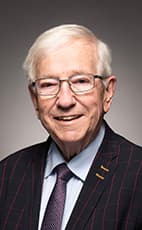
Louis Plamondon
In the 90 days to September 18, 2026, the federal lobbying registry records no lobbying meetings with Louis Plamondon — the average MP had 6 meetings over the same period.
Based on federal lobbying registry data to September 18, 2026
In the House · Sep 21–25
Louis Plamondon this week
- No speeches in the House · the average MP spoke 4 times
- AGAINSTC-266, second reading — Establish a national framework respecting skilled trades and labour mobility · passed 295–21
Get Louis Plamondon's week in your inbox every Monday
What they said, how they voted, and who lobbied them. Free, no ads, unsubscribe anytime.
How Louis Plamondon actually voted
Their recorded positions on the issues Canadians care about — pulled straight from the parliamentary record.
- Voted Against
Labour & Employment
Establish a national framework respecting skilled trades and labour mobility
C-266 · Sep 2026 · Passed · Tell your MP what you think
- Voted Against
Economy & Taxation
Implement certain provisions of the spring economic update tabled in Parliament on April 28, 2026
C-30 · Jun 2026 · Passed · Tell your MP what you think
- Voted For
Housing
Authorize certain payments to be made out of the Consolidated Revenue Fund for the purpose of improving housing supply
C-26 · Jun 2026 · Passed · Tell your MP what you think
- Voted For
Criminal Justice
Hate propaganda, hate crime and access to religious or cultural places
C-9 · Jun 2026 · Passed · Tell your MP what you think
- Voted Against
Criminal Justice
Child protection, gender-based violence, delays and other measures
C-16 · Jun 2026 · Passed · Tell your MP what you think
Overall leanings
100%
voted with the Bloc Québécois line this Parliament
99%
vote attendance (172/174, missed 2)
Who’s in Louis’s ear
134
lobbying meetings
67
companies & groups
35
speeches in Parliament
Top lobbying relationship: Unknown — met 19 times · most lobbied on International Trade.
See who’s lobbying Louis →Who's lobbying Louis
Individual meeting records from the federal lobbying registry
| Date | Organization | |
|---|---|---|
| 2026-05-07 | Breakthrough T1D | |
| 2026-04-28 | Canadian marine pilots' Association | |
| 2026-04-21 | CANADIAN CANCER SOCIETY | |
| 2026-03-24 | Unifor | |
| 2026-01-15 | Canadian Steel Producers Association |
Write to Louis Plamondon
Pick what it's about. You'll get a letter you can edit, then send it from your own email.
Other ways to reach Louis
613-992-4211 is the House of Commons switchboard — ask to be connected to your MP's office. For constituency office contact details, or if louis.plamondon@parl.gc.ca bounces, visit their Parliament profile.
Top Lobbying Clients
Companies with the most meetings with this MP
What Louis talks about
- Federal-Provincial Fiscal Arrangements Act7 speeches · 2022
- Fall Economic Statement Implementation Act, 20224 speeches · 2022
- Department of Foreign Affairs, Trade and Development Act2 speeches · 2021
- 10th Anniversary of Attack on Parliament Hill1 speeches · 2024
- 30th Anniversary of the Bloc Québécois1 speeches · 2021
Recent Speeches
Mr. Speaker, I have the honour of tabling a petition today on recognition and support for family caregivers. These women and men play a vital role in supporting people with health conditions who are in the process of losing their autonomy or living with a disability. Their work eases some of the pre… Read full speechShow less
Mr. Speaker, I have the honour of tabling a petition today on recognition and support for family caregivers. These women and men play a vital role in supporting people with health conditions who are in the process of losing their autonomy or living with a disability. Their work eases some of the pressure on our health care system. This petition is the outcome of a remarkable grassroots movement led by Geneviève Coutu of Sorel-Tracy, who I am happy to say is here in the gallery today. The petition gathered 13,035 electronic signatures and more than 3,600 paper signatures. As a family caregiver of many years to her husband, who has Alzheimer's disease, she embodies the reality faced by so many families. The petitioners call upon the federal government to provide better recognition for caregivers while respecting the jurisdictions of the provinces, including Quebec. The Bloc Québécois fully supports these demands, and I invite all the parties to do the same.
Mr. Speaker, I would like to begin by sincerely thanking you for your work, your patience and your remarkable ability to remain calm. I would also like to thank all the members of the political parties for their tributes, which I thought were almost too generous. I want to thank my leader, the membe… Read full speechShow less
Mr. Speaker, I would like to begin by sincerely thanking you for your work, your patience and your remarkable ability to remain calm. I would also like to thank all the members of the political parties for their tributes, which I thought were almost too generous. I want to thank my leader, the member for Beloeil—Chambly, the member for Ville‑Marie—Le Sud‑Ouest—Île‑des‑Soeurs and the member for Lévis—Lotbinière, whose riding is next to mine and who is also a friend. I also want to thank the member for Vancouver Kingsway and the member for Saanich—Gulf Islands. I thank them for their kind words. They were very generous. I was genuinely moved by all the fine speeches. I thank them for their kindness, which will remain engraved in my memory. I also want to thank the members of the Bloc Québécois team, with whom I have the privilege of working. Their diligence, creativity, sense of duty and, above all, their ability to tolerate stories from a veteran politician like myself, deserve special recognition. I want to thank them for standing with me, for advising me, and sometimes, I admit, for bringing me back on topic. Today, I am speaking not only as a member of Parliament, but also as a witness to a journey that, I admit, even exceeds what I could have imagined at the start of my career. Here is what my 42 years as a member of Parliament represent: more than 15,059 days of parliamentary service, majority governments, minority governments, governments that were defeated, governments that were rebuilt, 12 federal prime ministers, reforms, economic crises, impassioned debates, thousands of speeches, a historic referendum, major reforms and, quite likely, enough red tape to cover the Champlain Bridge twice. I have seen the House at its best, and sometimes at its loudest, but I have always been witness to the fact that democracy, although imperfect, remains essential and invaluable. When I arrived here in 1983, some of the current members were learning their colours, others were starting their first day of school and some were not even a twinkle in their parents' eyes. I say this with humour, but also with deep humility. Having the honour of serving for so long is a privilege that I have never taken for granted. I will not hide the fact that when I started, many people told me to serve my term and then move on as best I could. They thought I would get tired of it and not stay very long. A few years turned into a quarter of a century, then three decades, and I will let my colleagues finish that list. However, I can say without hesitation that I have never been bored. What is fascinating about a political career is that the years go by, the debates change, governments come and go, but the passion remains. I would say that I still have the energy, the will—and the enthusiasm, even—to get up every morning to serve the people of Bécancour—Nicolet—Saurel—Alnôbak because this role remains, even today, the greatest honour of my life. Being elected for a year is a gesture of trust. Being elected for a decade is a responsibility, but being elected for 42 years is an honour that words cannot describe. If I have persevered, it is first and foremost thanks to the people of Bécancour—Nicolet—Saurel—Alnôbak, thanks to their trust, renewed year after year; thanks to their advice, sometimes gentle, sometimes very direct; and thanks to their devotion to a representative who has always tried to be warm, accessible and down to earth. I owe it all to them. Serving as a member of Parliament for four decades means witnessing the change in our people, debates, institutions, and technology. When I first arrived, we had no cell phones, no email, no fax machines, no social media. We only had typewriters and notepads. Today, everything moves faster, but the essence of the job remains the same. It involves the duty to listen, understand and represent. When I think back to my early days, I remember a Parliament where speeches were still typed on typewriters. Some of my colleagues were not even born yet, and the press gallery was packed. Since then, I have seen caucuses form, transform, split up, and sometimes heal. I have seen colleagues become friends, and others become history. I have witnessed Quebec struggle, grow, assert its rights and showcase the richness of its French language. Over the years, I have become the dean of the House of Commons and the longest-serving member of Parliament in Canadian history. This fact still surprises me because it was not a goal of mine. Being the dean of the House is also a strange position. It comes with certain responsibilities, like opening the new legislative session and, above all, recounting memories that no one else remembers but me. It is also a privilege to witness the cycles of our democracy and the continuity of our institutions. The young members who arrive each year remind me of two things, that time passes very quickly and that the next generation is bright, idealistic and determined, which reassures me tremendously. I am often asked what keeps me going after all this time. I always answer that it is the people, the folks back home. I have never forgotten that behind every debate, every vote and every speech, there is a farmer who gets up before dawn; a single mother who works miracles to make ends meet; an entrepreneur who risks it all for the sake of a dream; a young person who wants a greener, prouder and fairer nation; or a senior who wants what he is owed after a lifetime of toil and hard work. These are the people who guided me, encouraged me and got me through 15,059 days with the same unwavering conviction that a member of Parliament is never greater than the people they represent. There is also something profoundly human about this job: We age together. I want to emphasize the important role that Quebec has played in my political career. Since the Bloc Québécois was first established, I have had the immense privilege of helping to defend the interests, values and aspirations of the Quebec nation here in Ottawa. I have watched our party grow, reinvent itself and welcome new generations of elected officials. To promote the French language all these years, to pass it on, defend it and hear it resonate in the House is something that I have always considered to be my highest calling. I still remember my early days and my first caucus meetings, where we had more passion than knowledge, where we built a party with conviction as our main fuel and with hope as our compass. Today, I look at my colleagues, the new generation of the Bloc Québécois, and I know that the flame is still burning. The torch has been passed on, but the flame never goes out. I would like to think that these 42 years have made me wiser. That is partly true. I have learned that listening goes further than anger, that bridges are often more useful than walls, that humour can save nearly any situation and that respect, even when two people disagree, is the key to a healthy democracy. I have also learned that it is important to remain true to oneself and to always be authentic, consistent and faithful to those who elected us to this place. I will conclude by saying that I have never taken this job for granted. I see every election, every speech and every intervention as a renewed privilege. As long as the people of Bécancour—Nicolet—Saurel—Alnôbak place their trust in me, I will continue to serve with passion, consistency, humour—sometimes a little too much, some might say—and, above all, with unwavering loyalty to our democracy. Today, as we mark these 42 years of service, as we acknowledge this record of 15,059 days, I want to make it clear that this is not a personal accomplishment. It is a tribute to the collective work of my staff, my Bloc Québécois colleagues, my family and the people who supported me. It is also a tribute to this institution, the House of Commons, that I deeply respect. It is not perfect; no parliament is. However, it remains a place where the will of the people is expressed, where ideas are debated and where the future is built. I have had the privilege of participating in this process for over four decades. I want to thank the citizens who elected me. I thank my Bloc Québécois colleagues, past and present, who have supported me. I thank everyone here, from all parties, with whom I have shared debates, disagreements, compromises and sometimes real friendships. I thank my family, who have agreed to share my life with politics, which requires more patience than anyone can imagine. I thank my team, my employees who have helped me with my office work and in Parliament, including Rita, Carole, Michel, France, Jocelyne, Maxime, Caroline, Jacqueline, Denis and Charbel. I thank the House of Commons staff, the security and transportation staff, the interpreters and everyone who keeps our democracy running smoothly. I want to thank my former leaders, Mr. Bouchard, Mr. Duceppe, Mr. Paillé and, of course, my current leader, the member for Beloeil—Chambly. Thank you for allowing me to keep doing today what I love the most, that is, representing my constituents with heart, pride and determination. Despite my 42-year long career, I do not see myself as reaching the end of a chapter; I see myself at the centre of a book still being written. As long as I have the strength and the trust of my constituents, I will keep rising proudly, day after day, as a member of Parliament. Thank you for the past 42 years, and for being here with me to mark these 15,059 days that have marked my entire life.
I will now call upon Mr. Francis Scarpaleggia, the hon. member for Lac-Saint-Louis.
I will soon suspend the sitting for 30 minutes. Before I do that, I would like to thank my entire team of volunteers for helping me get elected for the 13th time. I thank them for this exalted throne. I also want to thank my whole family. I do love this throne, but I will have to let the King borrow… Read full speechShow less
I will soon suspend the sitting for 30 minutes. Before I do that, I would like to thank my entire team of volunteers for helping me get elected for the 13th time. I thank them for this exalted throne. I also want to thank my whole family. I do love this throne, but I will have to let the King borrow it tomorrow. The King is welcome to it. Actually, he will be sitting on the throne in the Senate. I wish to remind hon. members that the bells to call the members back to the House will be sounded for not more than five minutes. The sitting is suspended to the call of the Chair. (The sitting of the House was suspended at 9:28 a.m.)
Pursuant to the Standing Orders, the House will now proceed to elect a Speaker. After the Clerk has opened the envelope containing the ballots, I will suggest a method of proceeding that will help accelerate the voting process. We will now begin to vote pursuant to Standing Order 4. Please allow me … Read full speechShow less
Pursuant to the Standing Orders, the House will now proceed to elect a Speaker. After the Clerk has opened the envelope containing the ballots, I will suggest a method of proceeding that will help accelerate the voting process. We will now begin to vote pursuant to Standing Order 4. Please allow me to outline the procedure for all hon. members. The names of the candidates for the election are listed on the ballot in alphabetical order. To vote, you must rank the candidates in order of preference, placing the number “1” in the space next to your first-choice candidate, the number “2” next to your second-choice candidate, and so on, until you have ranked all candidates for whom you wish to vote. Please note that it is not necessary to rank all candidates. Members can vote for a single candidate, if they so desire. In order to vote, I will ask that members leave their desks, exit through the curtains and come to the table using the doors behind me on the left and right sides of the chair on their respective sides of the House. The clerk will issue a ballot paper to each member. After casting their ballots, members are asked to leave the voting area. The polling booths on both sides are now open for voting. (Members were issued ballots and marked their ballots in secret at voting stations)
Bills Sponsored
Recent activity
26 activities across speeches, bills, and lobbying communications.
February 2026
Routine Proceedings
Mr. Speaker, I have the honour of tabling a petition today on recognition and support for family caregivers. These women and men play a vital role in supporting people with health conditions who are i… Read full speechShow less
Mr. Speaker, I have the honour of tabling a petition today on recognition and support for family caregivers. These women and men play a vital role in supporting people with health conditions who are in the process of losing their autonomy or living with a disability. Their work eases some of the pressure on our health care system. This petition is the outcome of a remarkable grassroots movement led by Geneviève Coutu of Sorel-Tracy, who I am happy to say is here in the gallery today. The petition gathered 13,035 electronic signatures and more than 3,600 paper signatures. As a family caregiver of many years to her husband, who has Alzheimer's disease, she embodies the reality faced by so many families. The petitioners call upon the federal government to provide better recognition for caregivers while respecting the jurisdictions of the provinces, including Quebec. The Bloc Québécois fully supports these demands, and I invite all the parties to do the same.
January 2026
House of Commons
126 communications with 63 clients
Top clients: [{"name": "Dairy Farmers of Canada", "count": 9}, {"name": "Canadian Egg Marketi…
November 2025
Oral Questions
Mr. Speaker, I would like to begin by sincerely thanking you for your work, your patience and your remarkable ability to remain calm. I would also like to thank all the members of the political partie… Read full speechShow less
Mr. Speaker, I would like to begin by sincerely thanking you for your work, your patience and your remarkable ability to remain calm. I would also like to thank all the members of the political parties for their tributes, which I thought were almost too generous. I want to thank my leader, the member for Beloeil—Chambly, the member for Ville‑Marie—Le Sud‑Ouest—Île‑des‑Soeurs and the member for Lévis—Lotbinière, whose riding is next to mine and who is also a friend. I also want to thank the member for Vancouver Kingsway and the member for Saanich—Gulf Islands. I thank them for their kind words. They were very generous. I was genuinely moved by all the fine speeches. I thank them for their kindness, which will remain engraved in my memory. I also want to thank the members of the Bloc Québécois team, with whom I have the privilege of working. Their diligence, creativity, sense of duty and, above all, their ability to tolerate stories from a veteran politician like myself, deserve special recognition. I want to thank them for standing with me, for advising me, and sometimes, I admit, for bringing me back on topic. Today, I am speaking not only as a member of Parliament, but also as a witness to a journey that, I admit, even exceeds what I could have imagined at the start of my career. Here is what my 42 years as a member of Parliament represent: more than 15,059 days of parliamentary service, majority governments, minority governments, governments that were defeated, governments that were rebuilt, 12 federal prime ministers, reforms, economic crises, impassioned debates, thousands of speeches, a historic referendum, major reforms and, quite likely, enough red tape to cover the Champlain Bridge twice. I have seen the House at its best, and sometimes at its loudest, but I have always been witness to the fact that democracy, although imperfect, remains essential and invaluable. When I arrived here in 1983, some of the current members were learning their colours, others were starting their first day of school and some were not even a twinkle in their parents' eyes. I say this with humour, but also with deep humility. Having the honour of serving for so long is a privilege that I have never taken for granted. I will not hide the fact that when I started, many people told me to serve my term and then move on as best I could. They thought I would get tired of it and not stay very long. A few years turned into a quarter of a century, then three decades, and I will let my colleagues finish that list. However, I can say without hesitation that I have never been bored. What is fascinating about a political career is that the years go by, the debates change, governments come and go, but the passion remains. I would say that I still have the energy, the will—and the enthusiasm, even—to get up every morning to serve the people of Bécancour—Nicolet—Saurel—Alnôbak because this role remains, even today, the greatest honour of my life. Being elected for a year is a gesture of trust. Being elected for a decade is a responsibility, but being elected for 42 years is an honour that words cannot describe. If I have persevered, it is first and foremost thanks to the people of Bécancour—Nicolet—Saurel—Alnôbak, thanks to their trust, renewed year after year; thanks to their advice, sometimes gentle, sometimes very direct; and thanks to their devotion to a representative who has always tried to be warm, accessible and down to earth. I owe it all to them. Serving as a member of Parliament for four decades means witnessing the change in our people, debates, institutions, and technology. When I first arrived, we had no cell phones, no email, no fax machines, no social media. We only had typewriters and notepads. Today, everything moves faster, but the essence of the job remains the same. It involves the duty to listen, understand and represent. When I think back to my early days, I remember a Parliament where speeches were still typed on typewriters. Some of my colleagues were not even born yet, and the press gallery was packed. Since then, I have seen caucuses form, transform, split up, and sometimes heal. I have seen colleagues become friends, and others become history. I have witnessed Quebec struggle, grow, assert its rights and showcase the richness of its French language. Over the years, I have become the dean of the House of Commons and the longest-serving member of Parliament in Canadian history. This fact still surprises me because it was not a goal of mine. Being the dean of the House is also a strange position. It comes with certain responsibilities, like opening the new legislative session and, above all, recounting memories that no one else remembers but me. It is also a privilege to witness the cycles of our democracy and the continuity of our institutions. The young members who arrive each year remind me of two things, that time passes very quickly and that the next generation is bright, idealistic and determined, which reassures me tremendously. I am often asked what keeps me going after all this time. I always answer that it is the people, the folks back home. I have never forgotten that behind every debate, every vote and every speech, there is a farmer who gets up before dawn; a single mother who works miracles to make ends meet; an entrepreneur who risks it all for the sake of a dream; a young person who wants a greener, prouder and fairer nation; or a senior who wants what he is owed after a lifetime of toil and hard work. These are the people who guided me, encouraged me and got me through 15,059 days with the same unwavering conviction that a member of Parliament is never greater than the people they represent. There is also something profoundly human about this job: We age together. I want to emphasize the important role that Quebec has played in my political career. Since the Bloc Québécois was first established, I have had the immense privilege of helping to defend the interests, values and aspirations of the Quebec nation here in Ottawa. I have watched our party grow, reinvent itself and welcome new generations of elected officials. To promote the French language all these years, to pass it on, defend it and hear it resonate in the House is something that I have always considered to be my highest calling. I still remember my early days and my first caucus meetings, where we had more passion than knowledge, where we built a party with conviction as our main fuel and with hope as our compass. Today, I look at my colleagues, the new generation of the Bloc Québécois, and I know that the flame is still burning. The torch has been passed on, but the flame never goes out. I would like to think that these 42 years have made me wiser. That is partly true. I have learned that listening goes further than anger, that bridges are often more useful than walls, that humour can save nearly any situation and that respect, even when two people disagree, is the key to a healthy democracy. I have also learned that it is important to remain true to oneself and to always be authentic, consistent and faithful to those who elected us to this place. I will conclude by saying that I have never taken this job for granted. I see every election, every speech and every intervention as a renewed privilege. As long as the people of Bécancour—Nicolet—Saurel—Alnôbak place their trust in me, I will continue to serve with passion, consistency, humour—sometimes a little too much, some might say—and, above all, with unwavering loyalty to our democracy. Today, as we mark these 42 years of service, as we acknowledge this record of 15,059 days, I want to make it clear that this is not a personal accomplishment. It is a tribute to the collective work of my staff, my Bloc Québécois colleagues, my family and the people who supported me. It is also a tribute to this institution, the House of Commons, that I deeply respect. It is not perfect; no parliament is. However, it remains a place where the will of the people is expressed, where ideas are debated and where the future is built. I have had the privilege of participating in this process for over four decades. I want to thank the citizens who elected me. I thank my Bloc Québécois colleagues, past and present, who have supported me. I thank everyone here, from all parties, with whom I have shared debates, disagreements, compromises and sometimes real friendships. I thank my family, who have agreed to share my life with politics, which requires more patience than anyone can imagine. I thank my team, my employees who have helped me with my office work and in Parliament, including Rita, Carole, Michel, France, Jocelyne, Maxime, Caroline, Jacqueline, Denis and Charbel. I thank the House of Commons staff, the security and transportation staff, the interpreters and everyone who keeps our democracy running smoothly. I want to thank my former leaders, Mr. Bouchard, Mr. Duceppe, Mr. Paillé and, of course, my current leader, the member for Beloeil—Chambly. Thank you for allowing me to keep doing today what I love the most, that is, representing my constituents with heart, pride and determination. Despite my 42-year long career, I do not see myself as reaching the end of a chapter; I see myself at the centre of a book still being written. As long as I have the strength and the trust of my constituents, I will keep rising proudly, day after day, as a member of Parliament. Thank you for the past 42 years, and for being here with me to mark these 15,059 days that have marked my entire life.
May 2025
First Session—45th Parliament
I will now call upon Mr. Francis Scarpaleggia, the hon. member for Lac-Saint-Louis.
First Session—45th Parliament
I will soon suspend the sitting for 30 minutes. Before I do that, I would like to thank my entire team of volunteers for helping me get elected for the 13th time. I thank them for this exalted throne.… Read full speechShow less
I will soon suspend the sitting for 30 minutes. Before I do that, I would like to thank my entire team of volunteers for helping me get elected for the 13th time. I thank them for this exalted throne. I also want to thank my whole family. I do love this throne, but I will have to let the King borrow it tomorrow. The King is welcome to it. Actually, he will be sitting on the throne in the Senate. I wish to remind hon. members that the bells to call the members back to the House will be sounded for not more than five minutes. The sitting is suspended to the call of the Chair. (The sitting of the House was suspended at 9:28 a.m.)
First Session—45th Parliament
Pursuant to the Standing Orders, the House will now proceed to elect a Speaker. After the Clerk has opened the envelope containing the ballots, I will suggest a method of proceeding that will help acc… Read full speechShow less
Pursuant to the Standing Orders, the House will now proceed to elect a Speaker. After the Clerk has opened the envelope containing the ballots, I will suggest a method of proceeding that will help accelerate the voting process. We will now begin to vote pursuant to Standing Order 4. Please allow me to outline the procedure for all hon. members. The names of the candidates for the election are listed on the ballot in alphabetical order. To vote, you must rank the candidates in order of preference, placing the number “1” in the space next to your first-choice candidate, the number “2” next to your second-choice candidate, and so on, until you have ranked all candidates for whom you wish to vote. Please note that it is not necessary to rank all candidates. Members can vote for a single candidate, if they so desire. In order to vote, I will ask that members leave their desks, exit through the curtains and come to the table using the doors behind me on the left and right sides of the chair on their respective sides of the House. The clerk will issue a ballot paper to each member. After casting their ballots, members are asked to leave the voting area. The polling booths on both sides are now open for voting. (Members were issued ballots and marked their ballots in secret at voting stations)
October 2024
Oral Questions
Mr. Speaker, ten years ago today, on Wednesday, October 22, 2014, Parliament experienced one of the darkest days in its long history, a day that would forever change life in the House of Commons. Ten … Read full speechShow less
Mr. Speaker, ten years ago today, on Wednesday, October 22, 2014, Parliament experienced one of the darkest days in its long history, a day that would forever change life in the House of Commons. Ten years ago, a terrorist killed a man just steps from Parliament before bursting into Centre Block targeting elected representatives with deadly intentions. Ten years ago, Corporal Nathan Cirillo lost his life in a completely senseless attack, when he was shot by a deranged jihadist sympathizer. The Bloc's thoughts go out to Corporal Cirillo's loved ones. His life should never have ended that day, at the age of 24, because of a senseless act. As Quebeckers, we cannot help but remember that the Ottawa attack came barely two days after another traumatic incident in Saint-Jean-sur-Richelieu. Just two days earlier, another individual inspired by radical Islamism mowed down two soldiers in a parking lot. One survived but the other, Warrant Officer Patrice Vincent, lost his life. We remember him today, too. Our thoughts are still with his loved ones, ten years later. All parliamentarians, all staff and even people who were working in the area around the Hill will remember October 22, 2014, for the rest of their lives. That was the day all of downtown Ottawa wondered whether we were safe, as we were all locked down in our offices until the end of the day. It was the day a madman killed a soldier and then stole a minister's limo to get to Centre Block. It was a Wednesday, a caucus day, when Parliament is more crowded than any other day of the week. That was the day this man started a shootout with parliamentary security in the Hall of Honour, right by the library. It was the day Sergeant-at-Arms Kevin Vickers and the police heroically opened fire and brought down the shooter. History will always remember the heroism demonstrated that day by Mr. Vickers and by members of Parliament's law enforcement service, particularly Corporal Curtis Barrett and Constable Son. It was a very heroic moment, but it did not mark the end of the crisis because nobody knew at that time that the shooter was acting alone. It was the end of the threat to Parliament, but the beginning of a long day for all MPs, staffers and House personnel, who feared for their safety. No one knew what was really going on. We were told to keep our offices locked, to stay away from the windows and to close the curtains. We called our loved ones, our spouses, our children. We wanted to reassure them. It is very difficult to reassure loved ones when we have no idea what is actually going on. Finally, though, we were told that it was safe to leave and go home. Life in the House of Commons changed that day. It changed for the many people who suffered post-traumatic stress following that horrible event, which continues to leave a mark 10 years on. It also changed with the creation, the following year, of the Parliamentary Protective Service in its current form and with the heavily tightened security measures around the Hill, which are still in place this fall. Most of all, Parliament lost a lot of its innocence that day. Gone are the days when we believed such things would not happen here on Parliament Hill, which used to be more like a tourist attraction with a laid-back atmosphere. The change is probably for the best, considering the current climate of hostility and threats against elected members. It will forever be deplorable and tragic that, in order to get to this point, Nathan Cirillo, a young man in the prime of his life, had to lose his life to a terrorist. We will never forget him or what happened on Wednesday, October 22, 2014. In closing, on behalf of the Bloc Québécois, I want to thank all the Parliamentary Protective Service officers who are here with us every day and who put themselves at risk to keep us, our employees and all the dedicated House of Commons staff safe, as this commemoration clearly reminds us. We thank them.
May 2024
Oral Questions
Mr. Speaker, I too would like to honour John Fraser today, whom I had the honour of working with for many years when he was a minister and when he was Speaker of the House. He was the proud representa… Read full speechShow less
Mr. Speaker, I too would like to honour John Fraser today, whom I had the honour of working with for many years when he was a minister and when he was Speaker of the House. He was the proud representative of the riding of Vancouver South from 1972 to 1993. In 1986, Mr. Fraser was the first MP elected Speaker of the House of Commons by secret ballot. Prior to this first election in the House, the Prime Minister appointed the Speaker, and the leaders of the other parties simply gave their approval. As was mentioned earlier, in this election, it took 11 rounds before he was elected. We finished at around 1:30 a.m., and the procedure was subsequently changed. He held this position continuously until his retirement in 1993. Decisions made at the time by Speaker Fraser are still cited today. I want to tell a little story. Speaker John Fraser was very clever. At one point, when I was serving as an independent member, I asked a question that he found to be a bit radical, I guess. He asked me to withdraw some of my comments, which, being a good MP, I willingly agreed to do. To my great surprise, two or three weeks later, the Prime Minister used the same expression and so I asked the Speaker if he was also going to ask the Prime Minister to withdraw his remarks, since that is what I had done. He told me that he would think about it. That is when I understood that he was very clever. He gave his answer when I was absent, even though I had been there every day to hear what he had to say on the matter. He decided that it was fine for the Prime Minister to have said what he did, so I went to the Speaker's office to meet with him and ask him why it was okay for the Prime Minister to have made those comments. He said that the reason was very simple. It was that my tone was aggressive, whereas the Prime Minister's tone was humorous, and so it was more understandable. We can see how clever and original Speaker Fraser was. I remember him as a charming man, and we liked to call him John outside his official duties. He was such a pleasure to be around. He would invite everyone to a cocktail party at the end of the year, where he would wear a kilt and serve a good Scotch from the same region. He was also an honest, articulate and dedicated man. He could be authoritarian at times, but always eager to serve all members effectively. His re-election as Speaker was merely a procedural matter, because he was so well liked by all members of the House. Of course, he is being remembered as Speaker of the House, but he was also an excellent environment minister and served as minister of fisheries and oceans. He got in a bit of hot water at the time and, apparently, he did not eat tuna for several months. Anyone who looks it up will understand what I mean. After retiring from Parliament, he continued to be a strong advocate for Pacific salmon conservation in British Columbia and with a number of groups. He also served as an ambassador. On behalf of the Bloc Québécois, I extend our sincere condolences to his entire family. Farewell, Mr. Speaker. He was a dedicated member of Parliament, a capable minister and an exceptional Speaker.
April 2024
Oral Questions
Mr. Speaker, what can I say after all those kind words? I would like to thank the five speakers from the various political parties who spoke so kindly of me. I have served in the governing party, I ha… Read full speechShow less
Mr. Speaker, what can I say after all those kind words? I would like to thank the five speakers from the various political parties who spoke so kindly of me. I have served in the governing party, I have served as an independent, I have served in the official opposition, and I have served as a member of the third party. I have known just about every trend and experienced all the highs and lows. I would like to thank my constituents for supporting me in 12 elections with handsome majorities. The one in 2011 was harder because of the orange wave, but four of us got elected, including me. I would like to thank all the people who helped me get elected, including the organizers, my riding executive, and my 1,000 members who renew their cards every year and who are also starting to get older too. I would like to thank my loyal and long-serving office staff as well. I would also like to thank the research and communications teams that support the parties and members. They are invaluable in helping us better serve our constituents and give them the answers they are looking for. I thank my family and my children for understanding why I had to be away so much. I thank my partner Manon, who has been courageously battling cancer for two years. Despite her many treatments, she encourages me to continue my work here to help my constituents. She is very supportive. Many people here in this beautiful chamber will no doubt break my record, since many of them were elected at a very young age. However, I would like to warn them right now that I hope I still have two or three more terms to serve. That is my intention. This time, it will be within the same party; there will be no changes. I have often enjoyed hearing O Canada because, as Gilles Vigneault once said, I have always loved hearing foreign national anthems. What I like about O Canada is that it was sung for the first time at a separatist gathering in Quebec. We sang O Canada because we did not want to sing God Save the Queen. However, one day, Canada decided to adopt it so that it could have its own national anthem. That was a bit of history, but I will stop there. Once again, I thank all my colleagues for their kind words. I am not sure I have been that worthy of them, but I look forward to continuing my work.
March 2024
Routine Proceedings
Mr. Speaker, I have fond memories when I talk about this prime minister. I was elected with him as part of his team on September 4, 1984. He was a great Canadian, a great Quebecker and a great prime m… Read full speechShow less
Mr. Speaker, I have fond memories when I talk about this prime minister. I was elected with him as part of his team on September 4, 1984. He was a great Canadian, a great Quebecker and a great prime minister. On behalf of the Bloc Québécois, I would first like to offer my deepest condolences to his wife, Mila, his daughter, Caroline, his sons, Ben, Mark and Nicolas, and his grandchildren. I remember Brian Mulroney as a family man first. He loved Mila, his wife and lifelong companion. He was proud of his children and cherished his role as a grandfather. He was always only a phone call away from his loved ones and delighted in spending quality time with the whole family. Born to a working-class family, Mr. Mulroney grew up in Baie-Comeau, a paper mill town on Quebec's north shore. Thanks to a strong work ethic, Mr. Mulroney rose to the highest ranks in the legal and business communities of 1970s Montreal. He even became president and CEO of a large company before the age of 40. Early on, however, he took an interest in Quebec and Canadian politics. Motivated by a deep desire to build a modern Quebec and Canada, he left the sidelines to play an active role in the political arena. In 1984, Mr. Mulroney was the leader of the Progressive Conservative Party, a party that no longer exists. He won the biggest election victory in history. He immediately set about instituting major reforms to the Canadian economy, including the North American Free Trade Agreement, or NAFTA; the privatization of Crown corporations; policies to keep inflation low, deregulate and cut spending; and the GST. As the father of North American free trade, which would play a pivotal role in the economic vitality of Quebec as a producing and exporting nation, he is credited with reducing Quebec's unemployment rate from 12% to 6% within two years of NAFTA being implemented. He will be remembered for his engaging personality, which was key to strengthening the important relationship between Canada and the United States. Who could forget how Mr. Mulroney strengthened ties with the U.S. at an evening out with President Ronald Reagan at the Grand Théâtre de Québec in Quebec City on St. Patrick's Day, which some people were celebrating yesterday. True to their roots, both Quebec and Irish, the two heads of state solidified their friendship when they sang When Irish Eyes are Smiling on stage. Brian Mulroney persisted and successfully negotiated NAFTA. Another thing I remember about that time is that the then premier of Ontario was strongly opposed to NAFTA throughout the negotiations. He gave countless speeches on the subject. Three months after NAFTA was signed, Mr. Mulroney showed up to a caucus meeting with an American business magazine. He used to always give a little pep talk at those meetings. He opened the magazine to page six or seven to show everyone the picture of the premier of Ontario next to a message saying that thanks to free trade, Americans could now invest in Ontario. It was with a hint of humour that Mr. Mulroney showed us that photo, but he made no comment about the premier of Ontario. He had a deep respect for his opponents, but he also had a very refined sense of humour. Opposition to the GST was fierce. It came from all sides, even within our Progressive Conservative caucus. Some caucus members went so far as to resign and sit as independents. They were sure they would be re-elected as independents just by saying the word GST, because they sensed that many Canadians were opposed to this reform. Brian Mulroney did not waver. He persisted and implemented the GST. Today, no one would want to turn back the clocks on the GST. Let us not forget that, at the time, exporting companies paid a tax on the goods they exported. It was totally abnormal. Brian Mulroney promised to correct that and he succeeded. He will be remembered for reconciling an open economic approach and confidence in the markets with global leadership on the environment. He signed the Canada-U.S. acid rain treaty and initiated the Montreal protocol on ozone-depleting substances. This made him the greenest prime minister ever. The international relations he developed, his negotiating talents and his unwavering determination to build consensus gave him influence on the international scene. He was one of the first to respond to the 1984 famine in Egypt. He led the campaign against apartheid in South Africa. Canada was the first country to impose economic sanctions on that country, despite opposition from Mrs. Thatcher and the U.S. President, action that eventually led to Mandela's release. He also played an active, if not a leading role in the Organisation internationale de la Francophonie. He was awarded highest honours not only by Quebec and Canada, but also by a long list of countries, including France, which named him Commander of the Order of Legion of Honour, South Africa, which appointed him Supreme Companion of O.R. Tambo, Japan, which honoured him with the Grand Cordon of the Order of the Rising Sun, Haiti, which gave him the Grand Cross of the National Order of Honour and Merit, and Ukraine, which awarded him the Order of King Yaroslav the Wise. He was a person of international renown. There are aspects of Brian Mulroney's political life that the Quebec nation will always remember more than anyone else, and that too many others have since forgotten, if not swept under the rug. He took it upon himself to transform, almost single-handedly, the then historically difficult and distrustful relationship between Quebec and his party. Quebeckers will never forget that, when he was prime minister, from 1984 to 1993, he was the last to make a sincere and ardent attempt to reconcile Quebec and Canada. Brian Mulroney had the courage to build his winning campaign in 1984 on respect for Quebeckers and their pride. He won with the support of the most nationalistic among us. René Lévesque placed his trust in him the day after the 1980 referendum. Lucien Bouchard placed his trust in him as well, and the news of their recent reconciliation, a few months before his death, brought comfort to the hearts of many Quebeckers. The majority of Quebeckers placed their trust in him, as did I when I was elected to the House alongside him in 1984. Like most Quebeckers, I was confident that his was the steady hand that would lead the government to do right by Quebec's aspirations. He promised himself and the rest of us that the trickery marring the repatriation of the Constitution in 1982 would not set the tone for future Canada-Quebec relations. He pledged to bring Quebec into the Constitution and the federation with “honour and enthusiasm”, as a people. He said that Quebec had “an option”, to paraphrase the words he fired off at John Turner during the first debate. I am sure we all remember that. Mr. Mulroney's openness to Quebeckers did not hurt him. On the contrary, in his first election as leader, his commitment to nationalism won him no fewer than 211 of the 282 available seats, including 57 in Quebec. He won another majority in 1988. It was the first time since Confederation that the Progressive Conservative Party won a majority twice in a row, both times on a promise that no federal party would make in 2024. Nowadays, nobody is promising to reform Canada in a way that includes Quebec with dignity. Just a few kilometres from the House of Commons, at Meech Lake, he managed to convince every premier from the Canadian provinces and every federal opposition leader to take this chance with him. Everyone was ready to recognize Quebec as a distinct nation. Everyone was ready to limit the federal government's spending power. Everyone was ready to guarantee Quebec the right to withdraw from federal programs with full compensation. Brian Mulroney loved Canada deeply, just as he loved Quebec deeply. That is why he did everything he could to make Quebec feel at home. He did everything and tried everything to carve out a better Canada, a real federation, united in mutual respect and in celebration of its founding identities. Unfortunately, no one has tried to take that on since. For the years that I had the honour and privilege of sitting under his leadership, I rubbed shoulders with a true statesman, a man of vision who was undaunted in achieving the goals he set for himself, an affable man who was respectful of his opponents and who had one goal: to improve the lives of Quebeckers and Canadians. My dear Brian, we etched your name on the trees on the Hill, but over time the bark wore off. We etched your name on the sidewalks of the Hill, but over time the concrete broke down. Fortunately, we etched your name in our hearts and time will keep it there forever. Adieu, Mr. Prime Minister, and thank you.
January 2024
Oral Questions
Mr. Speaker, on behalf of the Bloc Québécois and as the dean of the House, I have the honour to rise to celebrate the memory of Ed Broadbent, the third leader of the New Democratic Party, who passed a… Read full speechShow less
Mr. Speaker, on behalf of the Bloc Québécois and as the dean of the House, I have the honour to rise to celebrate the memory of Ed Broadbent, the third leader of the New Democratic Party, who passed away at the age of 87. Canada's big NDP family lost more than a former leader on January 11. It lost the embodiment of a vision that, 35 years after his time as leader of the party, has virtually become its identity. Believe it or not, I served with Ed Broadbent in the House for five years, from 1984 to 1989, when he was the leader of the NDP. Today, I also have the honour of serving alongside a caucus of 25 of his successors. I can see that the influence of the man who was known as “Honest Ed” has not faded over the years. That is most probably because he was the longest serving leader in the party's history, from 1975 to 1989. During the four elections he was at the helm, the NDP secured a more solid footing in Ottawa and experienced its greatest electoral successes. His engaging personality certainly played a part in these accomplishments. At the pinnacle of his career, he led the polls as Canadians' favourite politician. It is, however, his vision for a more egalitarian Canada that carried his influence over the decades. Born in a working-class family in Oshawa—a riding he later represented in the House starting in 1968—Mr. Broadbent made it a mission to represent workers and ordinary people on the federal stage. He fought for democracy, but a type of democracy that went beyond individual and political freedoms to include every person's social and economic rights, a type of democracy that affords every individual the right to live in dignity and the opportunity to realize their full potential. His vision of social justice played a major part in strengthening the bonds between his political party and the union movement. It also enabled the NDP to stand out on the left of the political spectrum and to find long-lasting support among the Canadian people. Ed was a formidable parliamentarian. With his rich vocabulary, keen analytical mind and outstanding oratory talents, he could make ministers tremble in their boots during question period. If I may, I would like to share a memory. Ed always prepared his two questions very carefully and enunciated them very clearly. At one point, during a big strike in Canada, he came to the House with a very carefully crafted question for the minister responsible for this file. The minister rose and said that he wished to inform the leader of the New Democratic Party that an agreement had been reached and that the strike had ended half an hour previously. Everyone thought that Mr. Broadbent was sunk for his second question. With great dignity, he rose and said that the minister had worked very hard on this file and deserved a round of applause. He saved face, and everyone was deeply impressed by his unscripted but very fair reaction to the minister on the strike matter. In 1988, for the first time in its history, the NDP, under Canada's most popular leader of the day, became a credible option across Canada. Being the most popular leader in Canada, however, did not translate into success in every part of the country. Ed Broadbent stepped down as leader of the NDP in 1989, but it was only the leadership role that he left. He never left the NDP or politics. As members will recall, he made a brief return to the House of Commons as an MP from 2004 to 2006. However, it was mainly behind the scenes that he would continue contributing to his political party and to political thinking across Canada for the rest of his life. The highlight of his second career was, without a doubt, the founding of the institute that bears his name in 2011. The creation of the Broadbent Institute, a think tank, will ensure the legacy of his vision of politics. Equipped with its own media outlet and offering activist training, the Institute will continue to disseminate Mr. Broadbent's ideas among new generations of political influencers, including people like Montreal Mayor Valérie Plante, who once sat on its board of directors. Mr. Broadbent is no longer with us, but his influence will live on, just as his memory will live on in the hearts and minds of those who loved him. On behalf of the Bloc Québécois, I would like to offer my sincere condolences to John Edward Broadbent's partner, two children, grandchildren and great-grandchildren. I also offer my condolences to his NDP political family and to everyone who knew him professionally or personally. I thank Ed Broadbent for dedicating his life to public service.
December 2023
Statements by Members
Mr. Speaker, allow me to take a few moments to pay tribute to Danielle Gamelin, director general of Fondation Santé Bécancour–Nicolet–Yamaska. From the time she started running that organization eight… Read full speechShow less
Mr. Speaker, allow me to take a few moments to pay tribute to Danielle Gamelin, director general of Fondation Santé Bécancour–Nicolet–Yamaska. From the time she started running that organization eight years ago, she proceeded to restructuring internal operations to improve efficiency and organizing fundraisers to stabilize the organization's financial health. What is more, she has reached out many times to the municipalities, the two RCMs, the chamber of commerce and every organization that offers health care services or community services so that the foundation can effectively meet their needs. Ms. Gamelin is a woman of conviction. She is persuasive, inspiring, genuine, audacious and extremely disciplined. May she stay at the head of the Fondation Santé Bécancour–Nicolet–Yamaska for a long time to come. This entire beautiful region thanks her very much.
October 2023
Statements by Members
Mr. Speaker, Hélène Alarie, the Bloc Québécois member for the riding of Louis-Hébert from 1997 to 2000, passed away last week. Without ever raising her voice or losing her cheerful demeanour, Hélène w… Read full speechShow less
Mr. Speaker, Hélène Alarie, the Bloc Québécois member for the riding of Louis-Hébert from 1997 to 2000, passed away last week. Without ever raising her voice or losing her cheerful demeanour, Hélène was a calm but forceful presence and a trailblazer. In fact, she was the first woman agronomist in Quebec. While the pesticide industry was in its heyday, she promoted a kind of agriculture that was more respectful of the Quebec lands she loved so deeply. As a member of Parliament, she championed the debate on genetically modified organisms and introduced a bill on mandatory GMO labelling at a time when no one had heard of GMOs before. As vice-president of the Bloc Québécois from 2001 to 2007, she reminded us about the importance of rural and remote Quebec. After retiring, she took up the cause of the Scottish separatist movement, seeing the obvious parallels with Quebec. On behalf of the Bloc Québécois, I would like to thank Hélène Alarie and offer our deepest sympathies to her loved ones and to everyone else fortunate enough to have known such a remarkable woman.
Pursuant to order made on Tuesday, September 26, the House will now proceed to the election of the Speaker. Before I begin, I would like to tell my predecessor, Mr. Rota, how much I admire all of the … Read full speechShow less
Pursuant to order made on Tuesday, September 26, the House will now proceed to the election of the Speaker. Before I begin, I would like to tell my predecessor, Mr. Rota, how much I admire all of the work he did during his two terms as Speaker. He was a great Speaker, and he will be remembered for a job well done. I thank Mr. Rota. I was very pleased to fill in as Speaker temporarily. My term will end today. I had a lot of work to do, so much so that I still have not found the limousine, the keys to the official residence, the keys to the wine cellar or the form to increase my salary. I will be remembered as the Speaker with the shortest-lived career who spent the least. All members should have received by email last night the list of candidates for the speakership. This list is also available at the table and on ourcommons.ca if members wish to consult it before the vote. Before proceeding, I want to invite any member whose name is on the list of candidates but who does not want to stand for election to rise and inform the Chair accordingly. The member for Argenteuil—La Petite‑Nation.
Further to that statement, the list of candidates is revised accordingly. Pursuant to Standing Order 3.1, the House must proceed to the speeches from each candidate for Speaker. Notwithstanding any St… Read full speechShow less
Further to that statement, the list of candidates is revised accordingly. Pursuant to Standing Order 3.1, the House must proceed to the speeches from each candidate for Speaker. Notwithstanding any Standing Order, any procedure or any practice adopted by this House, and to help the newly elected members identify the candidates for the office of Speaker, I will recognize in alphabetical order each candidate by name and electoral district. When the last candidate to address the House completes his or her speech, I will leave the chair for 30 minutes, after which members will proceed to the election of the Speaker. I will now call upon Mr. Sean Casey, the hon. member for Charlottetown, to speak for not more than five minutes.
I will now call upon Mr. Chris d'Entremont, the hon. member for West Nova.
I will now call upon the hon. member for Hull—Aylmer.
I will now call upon the member for Algoma—Manitoulin—Kapuskasing.
I will now call upon Ms. Elizabeth May, the hon. member for Saanich—Gulf Islands. She is not here with us today, but we can watch her on the screen.
I will now call upon the hon. member for Brossard—Saint‑Lambert.
I will now call upon Peter Schiefke, the member for Vaudreuil—Soulanges, to speak.