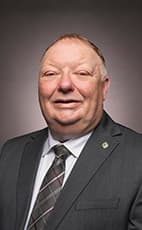
Paul Connors
In the 90 days to September 18, 2026, 9 organizations lobbied Paul Connors across 11 meetings — most often about Telecommunications. The most frequent visitor was Ligado Networks Corp. (2 meetings, via Sabrina Grover of NorthStar Public Affairs). Its registration describes the goal as “Engaging in discussions with government on the benefits of a proposed satellite network”. That's more than the average MP, who had 6 meetings over the same period.
Based on federal lobbying registry data to September 18, 2026
In the House · Oct 5–6
Paul Connors this week
- No speeches in the House · the average MP spoke 2 times
- AGAINSTC-218, second reading — Medical assistance in dying · defeated 141–187
- AGAINSTOpposition Motion (Diesel prices) · defeated 133–196
- FORFifth report of the Standing Committee on Health · passed 196–132
Get Paul Connors's week in your inbox every Monday
What they said, how they voted, and who lobbied them. Free, no ads, unsubscribe anytime.
How Paul Connors actually voted
Their recorded positions on the issues Canadians care about — pulled straight from the parliamentary record.
- Voted Against
- Voted For
Healthcare
Fifth report of the Standing Committee on Health
Oct 2026 · Passed
- Voted For
Labour & Employment
Establish a national framework respecting skilled trades and labour mobility
C-266 · Sep 2026 · Passed · Tell your MP what you think
- Voted For
Economy & Taxation
Implement certain provisions of the spring economic update tabled in Parliament on April 28, 2026
C-30 · Jun 2026 · Passed · Tell your MP what you think
- Voted For
Housing
Authorize certain payments to be made out of the Consolidated Revenue Fund for the purpose of improving housing supply
C-26 · Jun 2026 · Passed · Tell your MP what you think
Overall leanings
100%
voted with the Liberal line this Parliament
100%
vote attendance (177/177)
Who's lobbying Paul
Individual meeting records from the federal lobbying registry
| Date | Organization | |
|---|---|---|
| 2026-09-10 | Women's Network PEI | |
| 2026-08-31 | AST & Science, LLC | |
| 2026-08-31 | Canadian Propane Association | |
| 2026-08-31 | Ligado Networks Corp. | |
| 2026-08-28 | CANADIAN HEALTH FOOD ASSOCIATION |
Write to Paul Connors
Pick what it's about. You'll get a letter you can edit, then send it from your own email.
Other ways to reach Paul
613-992-4211 is the House of Commons switchboard — ask to be connected to your MP's office. For constituency office contact details, or if paul.connors@parl.gc.ca bounces, visit their Parliament profile.
Committee Memberships
What Paul talks about
- Spectrum Policy Framework for Canada Act2 speeches · 2026
- Avalon1 speeches · 2025
- Disaster Assistance1 speeches · 2025
- Johnny Pauls1 speeches · 2026
- National Defence1 speeches · 2026
Recent Speeches
Mr. Speaker, I am honoured to rise today on behalf of the people of Avalon to speak to Bill C-268, the spectrum policy framework for Canada act. I would like to begin by thanking the member for Compton—Stanstead for bringing this legislation forward. Her work highlights an issue that affects Canadia… Read full speechShow less
Mr. Speaker, I am honoured to rise today on behalf of the people of Avalon to speak to Bill C-268, the spectrum policy framework for Canada act. I would like to begin by thanking the member for Compton—Stanstead for bringing this legislation forward. Her work highlights an issue that affects Canadians in every region of the country, especially those living in rural and remote areas. Cellular connectivity in Canada is no longer a luxury. It is essential. It connects us to our families and friends, it connects businesses to their customers, it connects students to their education and it connects Canadians to vital services, including emergency services. Quite simply, cellular connectivity connects Canadians to opportunity, yet many Canadians still do not have access to reliable cellular service. I do not mean just access on paper, but a real, dependable, working service in their everyday lives. This is especially true for rural and remote communities, like many of the communities I represent in Avalon. I want to take a moment to make this real. Imagine that someone is at home and a wildfire suddenly breaks out nearby. They gather their loved ones and prepare to leave. They reach for their phone to call their neighbours, family, friends or emergency services, and there is no signal. They get in their car and drive away, but there is still no signal. They drive 10, 15 or 20 minutes, until, finally, they get a signal, but there is only one bar. This is not hypothetical. This was the reality for many residents across the Avalon Peninsula during the summer wildfires last year. In moments of crisis, cellular connectivity is not about convenience. It is about safety. It can be the difference between getting help and being cut off. In remote and rural regions with long distances between towns or during harsh weather, reliable cellular service is not optional. It is essential to protecting lives. This brings us to a critical point. We often hear that 97%, 98% or 99% of Canadians have access to cellular service, but we must ask what access really means. Does it mean just one bar? Does it mean a strong, reliable service? Does it mean being able to make a call without it dropping? Does it mean running a business, attending school or calling 911 without interruptions? In my hometown of Conception Bay South and throughout many communities in my riding, connectivity exists on paper. We are told we are fully covered and connected, but in reality, residents experience dropped calls, dead zones and unreliable service daily. In some homes, people have to walk from room to room to try to find a signal. This is not connectivity. We need to rethink how we define and measure cellular connectivity in Canada. It is not enough to say a community is covered. We must ensure that the service is reliable, dependable and high-quality. This is exactly what Bill C-268 would play a key role in doing. This bill would help establish a framework to measure cellular connectivity across Canada. It would give us data to guide us in decision-making as we work to close the connectivity gap. That matters, because without accurate information, we cannot build effective solutions. Improving connectivity is also about economic opportunities. In today's economy, nearly every business relies on reliable Internet and cellular service. Small businesses in rural communities are especially vulnerable. When connectivity fails, payment systems stop, debit and ATM machines do not work and online orders do not get processed. In many cases, customers no longer carry cash. If the system is down, the sales are lost. For seasonal businesses, like those in the tourism sector, any Internet or cellular downtime means a loss in revenue, and it does not take long for those losses to build up. Without reliable service, businesses struggle to grow, attract customers and compete. This is one of the reasons why people are often pushed toward the urban centres. It is not because they want to leave their communities, but because the infrastructure they need is simply not there. Connectivity also plays a critical role in education. In recent years, we have seen a major expansion of online and hybrid learning. Students can now attend classes, complete assignments and access resources from anywhere if they have reliable connectivity, but in rural communities, students face difficult challenges. Students may be forced to leave their hometown to pursue their education. Others may fall behind simply because they cannot access their coursework all the time. Schools may lack the infrastructure needed to fully integrate technology into the classroom. Beyond learning, there are also safety concerns. In rural areas, students often travel long distances by bus. Sometimes, they travel for more than an hour. If an emergency occurs, whether it is weather-related, medical or otherwise, reliable communication is essential. We cannot accept a situation where schools or families cannot connect when it matters most. Part of the broader challenge we face relates to how we manage and allocate the communications spectrum in this country. The spectrum is the invisible infrastructure that powers wireless communication. It is the foundation of cellular networks. Decisions about spectrum, how it is allocated, who can access it and under what conditions have a direct impact on connectivity outcomes. Too often, the development of the spectrum is prioritized in densely populated urban areas, where returns on investment are highest. That is understandable from a market perspective, but it leaves rural communities behind. We need to ensure that the communications spectrum policy in Canada supports equitable access, not just profitable access. That means encouraging deployment in underserved areas, improving rural coverage obligations and making sure that carriers are accountable for delivering real service. Satellite-based connectivity has made some considerable progress in recent years and helped bring services to some remote areas, but these solutions are still evolving and the costs can be high for individuals and families. Technology will be part of the solution, but it cannot replace the need for strong and reliable wireless infrastructure. For too long, rural Canadians have felt like they are at the back of the line. They do not expect to be first, but they expect to be included. Right now, too many feel like they are still waiting to be part of it. Urban Canada has seen major improvements in connectivity. Now it is time to ensure that rural Canada is not left behind. That requires commitment and it requires a clear understanding of where the gaps truly are. That is why Bill C-268 is so important. It is not the final solution, but it is a necessary step forward. It would help us better understand the reality on the ground and help us measure what truly matters. It would guide us toward more effective policies and investments. Most importantly, it would allow us to reaffirm a simple but powerful message. When we say we are connecting Canadians, we mean all Canadians, no matter where they live, no matter how remote their community is and no matter the challenges they face. Canadians deserve reliable connectivity, not just in cities, but in every town, every community and every region in the country, because in today's world, connectivity is not optional. It is essential to safety, it is essential to opportunities and it is essential to ensuring that no community is left behind. I am proud to support this bill.
Mr. Speaker, I rise today to celebrate the remarkable life of Mr. Johnny Pauls, who passed away at the age of 102. Johnny Pauls was among the last surviving veterans of the Second World War from our province. He served as a member of the merchant marines. His contributions helped secure the freedoms… Read full speechShow less
Mr. Speaker, I rise today to celebrate the remarkable life of Mr. Johnny Pauls, who passed away at the age of 102. Johnny Pauls was among the last surviving veterans of the Second World War from our province. He served as a member of the merchant marines. His contributions helped secure the freedoms we continue to cherish today. Born in Rencontre East, he later moved his home to beautiful Spaniard's Bay. Johnny Pauls spent his life on the water, and in his retirement enjoyed gardening, hunting and fishing. He dedicated more than 75 years to the Royal Canadian Legion as a founding member of branch 9 in Spaniard's Bay. Today I extend my deepest condolences to his family, friends and all those whose lives he has touched. May we honour his memory by striving every day to live up to his standard of service to the country and his community. I thank Mr. Pauls for his service. May he rest in peace.
Mr. Speaker, first of all, I want to thank my colleague for her commitment and dedication to getting this issue solved. In my riding of Avalon and in many ridings throughout our country, as was just highlighted so many times, cellular connectivity is very poor and in most cases does not exist. There… Read full speechShow less
Mr. Speaker, first of all, I want to thank my colleague for her commitment and dedication to getting this issue solved. In my riding of Avalon and in many ridings throughout our country, as was just highlighted so many times, cellular connectivity is very poor and in most cases does not exist. There are instances in Avalon when police officers, firefighters and other emergency responders cannot be contacted. It is a huge issue. Families also cannot communicate with each other. In today's society, people use connectivity in order to make sure we are well connected and that everyone is connected with us. How would the bill address the connectivity gaps that exist in my riding of Avalon and in other rural areas throughout Canada?
Mr. Speaker, today I rise to honour the life and legacy of a remarkable community leader, Mr. Thomas Kieley. Tom was a deeply respected member of our community. He dedicated his life to his community. His commitment touched every aspect of our town, from organizing the minor hockey associations to b… Read full speechShow less
Mr. Speaker, today I rise to honour the life and legacy of a remarkable community leader, Mr. Thomas Kieley. Tom was a deeply respected member of our community. He dedicated his life to his community. His commitment touched every aspect of our town, from organizing the minor hockey associations to being a member of the Kiwanis Club and of the Knights of Columbus as grand knight, to name a few. Tom brought his leadership to municipal government as well. He served eight years as a councillor, including two as deputy mayor. Tom's contributions were formally recognized when he was inducted as a builder in the Conception Bay South Sports Hall of Fame. He was also awarded the King Charles III Coronation Medal, honouring a lifetime of service. Tom Kieley's leadership, integrity and unwavering dedication left a lasting mark on the town he loved.
Mr. Speaker, Newfoundland and Labrador is strategically located to bolster Canada's defence strategy. Our new government is committed to spending 2% of GDP on defence this year and 5% by 2035. My question is very simple: Will Newfoundland and Labrador have an opportunity to play a role in the defenc… Read full speechShow less
Mr. Speaker, Newfoundland and Labrador is strategically located to bolster Canada's defence strategy. Our new government is committed to spending 2% of GDP on defence this year and 5% by 2035. My question is very simple: Will Newfoundland and Labrador have an opportunity to play a role in the defence strategy?