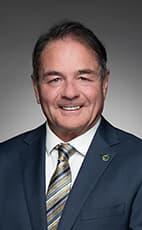
Scott Anderson
In the 90 days to September 18, 2026, 1 organization lobbied Scott Anderson across 1 meeting — most often about Aboriginal Affairs. The most frequent visitor was Real Ice Development Company (1 meeting, via Brooklyn Heidl Day of Niipaawi Strategies). Its registration describes the goal as “Provide information and updates on research on ice preservation in the Canadian Arctic”. That's fewer than the average MP, who had 6 meetings over the same period.
Based on federal lobbying registry data to September 18, 2026
In the House · Sep 21–25
Scott Anderson this week
“These out-of-touch Liberals have spent years allowing repeat offenders to cycle through our justice system while law-abiding Canadians pay the price.”
- Spoke 7 times in the House · the average MP spoke 4 times
- FORC-266, second reading — Establish a national framework respecting skilled trades and labour mobility · passed 295–21
Get Scott Anderson's week in your inbox every Monday
What they said, how they voted, and who lobbied them. Free, no ads, unsubscribe anytime.
How Scott Anderson actually voted
Their recorded positions on the issues Canadians care about — pulled straight from the parliamentary record.
- Voted For
Labour & Employment
Establish a national framework respecting skilled trades and labour mobility
C-266 · Sep 2026 · Passed · Tell your MP what you think
- Voted Against
Economy & Taxation
Implement certain provisions of the spring economic update tabled in Parliament on April 28, 2026
C-30 · Jun 2026 · Passed · Tell your MP what you think
- Voted Against
Housing
Authorize certain payments to be made out of the Consolidated Revenue Fund for the purpose of improving housing supply
C-26 · Jun 2026 · Passed · Tell your MP what you think
- Voted Against
Criminal Justice
Hate propaganda, hate crime and access to religious or cultural places
C-9 · Jun 2026 · Passed · Tell your MP what you think
- Voted Against
Overall leanings
100%
voted with the Conservative line this Parliament
96%
vote attendance (167/174, missed 7)
Who’s in Scott’s ear
31
lobbying meetings
26
companies & groups
103
speeches in Parliament
Top lobbying relationship: National Association of Career Colleges — met 3 times · most lobbied on Budget.
See who’s lobbying Scott →Who's lobbying Scott
Individual meeting records from the federal lobbying registry
| Date | Organization | |
|---|---|---|
| 2026-08-04 | Real Ice Development Company | |
| 2026-04-28 | National Police Federation | |
| 2026-04-28 | National Association of Career Colleges | |
| 2026-04-21 | Canadian Medical Association | |
| 2026-04-10 | Forest Products Association of Canada |
Write to Scott Anderson
Pick what it's about. You'll get a letter you can edit, then send it from your own email.
Other ways to reach Scott
613-992-4211 is the House of Commons switchboard — ask to be connected to your MP's office. For constituency office contact details, or if scott.anderson@parl.gc.ca bounces, visit their Parliament profile.
Committee Memberships
What Scott talks about
- Lawful Access Act, 202611 speeches · 2026
- Military Justice System Modernization Act10 speeches · 2025–2026
- Canadian Fuel Affordability Act6 speeches · 2026
- Making Life More Affordable for Canadians Act6 speeches · 2025
- The Budget6 speeches · 2025
Recent Speeches
Mr. Speaker, these out-of-touch Liberals have spent years allowing repeat offenders to cycle through our justice system while law-abiding Canadians pay the price. Violent offenders, burglars and car thieves deserve real consequences, not endless bail, house arrest, and catch-and-release. Canadians a… Read full speechShow less
Mr. Speaker, these out-of-touch Liberals have spent years allowing repeat offenders to cycle through our justice system while law-abiding Canadians pay the price. Violent offenders, burglars and car thieves deserve real consequences, not endless bail, house arrest, and catch-and-release. Canadians are tired of watching the same criminals return to the streets again and again. When will the Liberals stop siding with repeat offenders and start standing with the Canadians who obey the law?
Mr. Speaker, in late medieval Europe, the church sold something called indulgences. Indulgences were cash donations that would allegedly result in a person's temporal sin being removed or mitigated if they contributed money to the church. It was a highly innovative business plan that succeeded wildl… Read full speechShow less
Mr. Speaker, in late medieval Europe, the church sold something called indulgences. Indulgences were cash donations that would allegedly result in a person's temporal sin being removed or mitigated if they contributed money to the church. It was a highly innovative business plan that succeeded wildly until it backfired into 200 years of Reformation. The Liberals have rediscovered a remarkable new form of indulgences, and they call it standing up for Canadians. First, they demand cash and tell us it will help save the planet. Second, they make it a tax so people have no choice. Then, when Conservatives try to stop them, they call us regressive for supposedly not wanting to save the planet. Finally, they bow to reality and common sense, adopt half of the Conservative ideas and expect kudos because no longer doing what they did in the first place is such a great idea that they expect thanks from Canadians. They did it first with the carbon tax. First, they taxed energy. Then, when Canadians complained that making energy more expensive was making everything else more expensive, they told them it would clean the air. When Canadians finally got angry enough, the Liberals stopped collecting part of the tax and held a press conference to announce that they had rescued Canadians from the problem they created in the first place. Now they are doing it with the excise tax, the tax they installed over 50 years ago that they have only now discovered is not really necessary after all, until next year, that is, and then apparently the Liberals need half of it back. This doublespeak and magical thinking has become a hallmark of the last decade of Liberal government. Instead of looking toward the good of Canadians, it looks toward the health of the government coffers, already shrunk to nothing under the weight of its wild and irresponsible spending. Should we not instead be asking how this tax benefits the people of this country, rather than how it helps the Liberal government and Brookfield? Is the federal fuel excise tax a good tax or a bad tax for Canadians? Is it helping us or hurting our small and large businesses and our productivity as a nation? Is it helping our families? Do our jobs feel safer because of the excise tax? Are our streets cleaner? Are we more secure as a nation? Are those not the kinds of questions we should be asking about the excise tax? Ottawa's message now seems to be that the tax is necessary until it is not. Removing it is irresponsible until the Liberals do it, and once they do it, we need to applaud them for protecting us from it. It is a little like setting somebody's pants on fire, handing them a bucket of water and expecting a thank-you note. There are only so many things to say about this bill. I am going to vote for it not because it is a wonderful bill but because it is the best we are going to get from this gang. I am going to talk about something else instead. The Prime Minister spoke to the European Parliament and got a standing ovation. The president of the European Union says she wants Canada to become the EU's first-ever associate member. There is even a line going around about how it would be lovely if Canada became the 28th state of the European Union instead of the 51st state of the United States. Those are lovely words, and they pair well with the Prime Minister's tendency to swan about in European sitting rooms, sipping wine and eating caviar, or whatever else it is that drives the bills to Canadian taxpayers into the stratosphere. I have no doubt that the EU would love to get its hands on Canadian natural resources, but let us look at the reality. In 2008, the European economy and the American economy were roughly the same size. Today the American economy is roughly 50% larger. In 18 years, one of them grew like a teenager and the other one grew like a lump of coal. Mario Draghi, former head of the European Central Bank, a man of the same political convictions as the Liberals, wrote a report for the EU. His findings were that in the last 50 years, Europe had not created a single company from scratch worth more than 100 billion euros, not one. In the same 50 years, the Americans created six companies worth more than $1 trillion. Europe's response to the Draghi report was, naturally, to hold a summit about the Draghi report. As for red tape, members have probably heard about the bendy cucumber regulation. Europe even had rules on how curved a cucumber could be. It repealed them in 2009, and to this day, that is the fastest decision the EU has ever made. It tried to ban refillable olive oil bowls in restaurants. It even gave us the cookie banner, that little thing that comes up asking us to accept all or not. It is the single greatest destruction of human productivity since Solitaire came pre-installed on Windows. Here is my favourite: our free trade deal with Europe, or CETA, which we started negotiating in 2009 and signed in 2016. Now it is 2026, and it is still only provisionally in force because member states have not ratified all of it. The French Senate actually voted it down two years ago. It has been 17 years. My daughter went from kindergarten to a university degree in the time it took Europe to decide whether it likes Canadian beef. Now we are told that the EU is going to be our new security partner too. This was clearly done without anyone thinking to ask the Canadian Armed Forces. After Russia invaded Ukraine, Europe announced strategic autonomy: no more dependence on America. Then, and this number comes straight from the European Defence Agency, nearly 80% of what the European government bought for its militaries came from outside the EU, and about 60% came from the United States. Almost 100% of the discourse the EU spends on strategic subjects is spent pleading with the U.S. to send more of it. Apparently, strategic autonomy is when someone declares independence from a country and then sends their credit card to the folks they just declared independence from. Europe has 27 armies, one currency and no phone number. Henry Kissinger reportedly asked 50 years ago, “Who do I call if I want to talk to Europe?” It has since answered him: Call a switchboard, press “4” for defence, and be placed in a queue that is currently working on the 60-year-old question of Cyprus. As well, there is a hot war in Europe, the biggest since World War II. It threatens to spread into a third general European war that will almost certainly become a conflagration on a scale we have never seen before. We should help the west in every way we can, but the Liberals want to make us political and economic partners with the combatants too. Again, that will be good for Europe and wonderful for Brookfield, but is it good for Canadians? Here is Canada's situation in plain numbers. About three-quarters of everything we export goes to the United States. The EU, with a CETA deal we spent 17 years on, takes under 10%. Roughly $3.5 billion in goods crosses the American border every day. If we replaced the U.S. with the EU, we would need to sell Europe eight times more than we currently do, and we would have to do it by sailing past the one country that is actually next door. The Americans are now the world's largest oil producer and largest natural gas exporter. Europe pays two to three times the American price for industrial electricity, and having shut its nuclear plants, it is now heating itself by burning press releases about hydrogen. One does not leave a booming neighbour for an anxious war-torn continent because the neighbour is going to be rude for the next two years. I will take a rude customer who buys 75% of my product over a polite one who buys 8% and needs a subcommittee to even approve the invoice. Here is the part the Prime Minister's speech writers skip. Donald Trump leaves office on January 20, 2029. That is a hard date. It is a constitutional date less than two and a half years from tonight. Therefore, Canada has two good options. Option one is to negotiate with Trump now. He likes deals. It is the one thing everyone agrees he likes, and we have leverage. He needs our potash, our oil, our uranium, our electricity and the aluminum in every beer can from Buffalo to Bakersfield. Option two is to hold our ground, protect our industries, not give away anything permanent and wait 28 months. That is it. That is less time than it took Europe to schedule a second reading of our trade deal. Either way, the worst option is option three, which is to rebuild our entire economy around a partner engaged in a war and whose greatest strategic achievement of the decade is creating a unified phone charger, which, I will grant, is a real achievement. I have one, and it is excellent, but it is not a foreign policy. My message to the Prime Minister, delivered with all the affection of a rural Conservative to a central banker, is this. The Europeans gave him a standing ovation. He can enjoy it. He can frame it. They are very good at applauding. They have had 70 years of practice in applauding historic steps by others. When the applause stops, our biggest customer is still just a walk across the border, still growing, still the largest economy on earth and in 28 months, under new management. Mr. Carney, if you want to move to Europe, enjoy the wine and caviar, but please do not take us with you because the rest of us cannot afford it. Fix the—
My apologies, Mr. Speaker. I ask the Prime Minister to fix the fence with the neighbour instead, and while he is at it, get rid of the excise tax permanently.
Mr. Speaker, that was a bit of a mix of gratuitous insults and propaganda, but I am not quite sure. Obviously, we all want the Canadian economy to be strong. I think this is fairly obvious. I do not think that my supporting the bill in any way suggests that I think the Canadian economy should not be… Read full speechShow less
Mr. Speaker, that was a bit of a mix of gratuitous insults and propaganda, but I am not quite sure. Obviously, we all want the Canadian economy to be strong. I think this is fairly obvious. I do not think that my supporting the bill in any way suggests that I think the Canadian economy should not be strong. I am not sure where that came from.
Mr. Speaker, I think the Prime Minister's intent all along was to move toward the EU and join it as much as possible. He has been presented a perfect opportunity with all the tantrums going on south of the border. The meeting with the Chinese is quite likely another red flag, a gratuitous red flag, … Read full speechShow less
Mr. Speaker, I think the Prime Minister's intent all along was to move toward the EU and join it as much as possible. He has been presented a perfect opportunity with all the tantrums going on south of the border. The meeting with the Chinese is quite likely another red flag, a gratuitous red flag, to throw in front of Mr. Trump, who will hit the ceiling as usual, further making it difficult for the next American administration to repair the damage that he has done. Mr. Carney is making it almost impossible for the next administration—
Recent activity
21 activities across speeches, bills, and lobbying communications.
September 2026
Oral Questions
Mr. Speaker, these out-of-touch Liberals have spent years allowing repeat offenders to cycle through our justice system while law-abiding Canadians pay the price. Violent offenders, burglars and car t… Read full speechShow less
Mr. Speaker, these out-of-touch Liberals have spent years allowing repeat offenders to cycle through our justice system while law-abiding Canadians pay the price. Violent offenders, burglars and car thieves deserve real consequences, not endless bail, house arrest, and catch-and-release. Canadians are tired of watching the same criminals return to the streets again and again. When will the Liberals stop siding with repeat offenders and start standing with the Canadians who obey the law?
Government Orders
Mr. Speaker, in late medieval Europe, the church sold something called indulgences. Indulgences were cash donations that would allegedly result in a person's temporal sin being removed or mitigated if… Read full speechShow less
Mr. Speaker, in late medieval Europe, the church sold something called indulgences. Indulgences were cash donations that would allegedly result in a person's temporal sin being removed or mitigated if they contributed money to the church. It was a highly innovative business plan that succeeded wildly until it backfired into 200 years of Reformation. The Liberals have rediscovered a remarkable new form of indulgences, and they call it standing up for Canadians. First, they demand cash and tell us it will help save the planet. Second, they make it a tax so people have no choice. Then, when Conservatives try to stop them, they call us regressive for supposedly not wanting to save the planet. Finally, they bow to reality and common sense, adopt half of the Conservative ideas and expect kudos because no longer doing what they did in the first place is such a great idea that they expect thanks from Canadians. They did it first with the carbon tax. First, they taxed energy. Then, when Canadians complained that making energy more expensive was making everything else more expensive, they told them it would clean the air. When Canadians finally got angry enough, the Liberals stopped collecting part of the tax and held a press conference to announce that they had rescued Canadians from the problem they created in the first place. Now they are doing it with the excise tax, the tax they installed over 50 years ago that they have only now discovered is not really necessary after all, until next year, that is, and then apparently the Liberals need half of it back. This doublespeak and magical thinking has become a hallmark of the last decade of Liberal government. Instead of looking toward the good of Canadians, it looks toward the health of the government coffers, already shrunk to nothing under the weight of its wild and irresponsible spending. Should we not instead be asking how this tax benefits the people of this country, rather than how it helps the Liberal government and Brookfield? Is the federal fuel excise tax a good tax or a bad tax for Canadians? Is it helping us or hurting our small and large businesses and our productivity as a nation? Is it helping our families? Do our jobs feel safer because of the excise tax? Are our streets cleaner? Are we more secure as a nation? Are those not the kinds of questions we should be asking about the excise tax? Ottawa's message now seems to be that the tax is necessary until it is not. Removing it is irresponsible until the Liberals do it, and once they do it, we need to applaud them for protecting us from it. It is a little like setting somebody's pants on fire, handing them a bucket of water and expecting a thank-you note. There are only so many things to say about this bill. I am going to vote for it not because it is a wonderful bill but because it is the best we are going to get from this gang. I am going to talk about something else instead. The Prime Minister spoke to the European Parliament and got a standing ovation. The president of the European Union says she wants Canada to become the EU's first-ever associate member. There is even a line going around about how it would be lovely if Canada became the 28th state of the European Union instead of the 51st state of the United States. Those are lovely words, and they pair well with the Prime Minister's tendency to swan about in European sitting rooms, sipping wine and eating caviar, or whatever else it is that drives the bills to Canadian taxpayers into the stratosphere. I have no doubt that the EU would love to get its hands on Canadian natural resources, but let us look at the reality. In 2008, the European economy and the American economy were roughly the same size. Today the American economy is roughly 50% larger. In 18 years, one of them grew like a teenager and the other one grew like a lump of coal. Mario Draghi, former head of the European Central Bank, a man of the same political convictions as the Liberals, wrote a report for the EU. His findings were that in the last 50 years, Europe had not created a single company from scratch worth more than 100 billion euros, not one. In the same 50 years, the Americans created six companies worth more than $1 trillion. Europe's response to the Draghi report was, naturally, to hold a summit about the Draghi report. As for red tape, members have probably heard about the bendy cucumber regulation. Europe even had rules on how curved a cucumber could be. It repealed them in 2009, and to this day, that is the fastest decision the EU has ever made. It tried to ban refillable olive oil bowls in restaurants. It even gave us the cookie banner, that little thing that comes up asking us to accept all or not. It is the single greatest destruction of human productivity since Solitaire came pre-installed on Windows. Here is my favourite: our free trade deal with Europe, or CETA, which we started negotiating in 2009 and signed in 2016. Now it is 2026, and it is still only provisionally in force because member states have not ratified all of it. The French Senate actually voted it down two years ago. It has been 17 years. My daughter went from kindergarten to a university degree in the time it took Europe to decide whether it likes Canadian beef. Now we are told that the EU is going to be our new security partner too. This was clearly done without anyone thinking to ask the Canadian Armed Forces. After Russia invaded Ukraine, Europe announced strategic autonomy: no more dependence on America. Then, and this number comes straight from the European Defence Agency, nearly 80% of what the European government bought for its militaries came from outside the EU, and about 60% came from the United States. Almost 100% of the discourse the EU spends on strategic subjects is spent pleading with the U.S. to send more of it. Apparently, strategic autonomy is when someone declares independence from a country and then sends their credit card to the folks they just declared independence from. Europe has 27 armies, one currency and no phone number. Henry Kissinger reportedly asked 50 years ago, “Who do I call if I want to talk to Europe?” It has since answered him: Call a switchboard, press “4” for defence, and be placed in a queue that is currently working on the 60-year-old question of Cyprus. As well, there is a hot war in Europe, the biggest since World War II. It threatens to spread into a third general European war that will almost certainly become a conflagration on a scale we have never seen before. We should help the west in every way we can, but the Liberals want to make us political and economic partners with the combatants too. Again, that will be good for Europe and wonderful for Brookfield, but is it good for Canadians? Here is Canada's situation in plain numbers. About three-quarters of everything we export goes to the United States. The EU, with a CETA deal we spent 17 years on, takes under 10%. Roughly $3.5 billion in goods crosses the American border every day. If we replaced the U.S. with the EU, we would need to sell Europe eight times more than we currently do, and we would have to do it by sailing past the one country that is actually next door. The Americans are now the world's largest oil producer and largest natural gas exporter. Europe pays two to three times the American price for industrial electricity, and having shut its nuclear plants, it is now heating itself by burning press releases about hydrogen. One does not leave a booming neighbour for an anxious war-torn continent because the neighbour is going to be rude for the next two years. I will take a rude customer who buys 75% of my product over a polite one who buys 8% and needs a subcommittee to even approve the invoice. Here is the part the Prime Minister's speech writers skip. Donald Trump leaves office on January 20, 2029. That is a hard date. It is a constitutional date less than two and a half years from tonight. Therefore, Canada has two good options. Option one is to negotiate with Trump now. He likes deals. It is the one thing everyone agrees he likes, and we have leverage. He needs our potash, our oil, our uranium, our electricity and the aluminum in every beer can from Buffalo to Bakersfield. Option two is to hold our ground, protect our industries, not give away anything permanent and wait 28 months. That is it. That is less time than it took Europe to schedule a second reading of our trade deal. Either way, the worst option is option three, which is to rebuild our entire economy around a partner engaged in a war and whose greatest strategic achievement of the decade is creating a unified phone charger, which, I will grant, is a real achievement. I have one, and it is excellent, but it is not a foreign policy. My message to the Prime Minister, delivered with all the affection of a rural Conservative to a central banker, is this. The Europeans gave him a standing ovation. He can enjoy it. He can frame it. They are very good at applauding. They have had 70 years of practice in applauding historic steps by others. When the applause stops, our biggest customer is still just a walk across the border, still growing, still the largest economy on earth and in 28 months, under new management. Mr. Carney, if you want to move to Europe, enjoy the wine and caviar, but please do not take us with you because the rest of us cannot afford it. Fix the—
Government Orders
My apologies, Mr. Speaker. I ask the Prime Minister to fix the fence with the neighbour instead, and while he is at it, get rid of the excise tax permanently.
Government Orders
Mr. Speaker, that was a bit of a mix of gratuitous insults and propaganda, but I am not quite sure. Obviously, we all want the Canadian economy to be strong. I think this is fairly obvious. I do not t… Read full speechShow less
Mr. Speaker, that was a bit of a mix of gratuitous insults and propaganda, but I am not quite sure. Obviously, we all want the Canadian economy to be strong. I think this is fairly obvious. I do not think that my supporting the bill in any way suggests that I think the Canadian economy should not be strong. I am not sure where that came from.
Government Orders
Mr. Speaker, I think the Prime Minister's intent all along was to move toward the EU and join it as much as possible. He has been presented a perfect opportunity with all the tantrums going on south o… Read full speechShow less
Mr. Speaker, I think the Prime Minister's intent all along was to move toward the EU and join it as much as possible. He has been presented a perfect opportunity with all the tantrums going on south of the border. The meeting with the Chinese is quite likely another red flag, a gratuitous red flag, to throw in front of Mr. Trump, who will hit the ceiling as usual, further making it difficult for the next American administration to repair the damage that he has done. Mr. Carney is making it almost impossible for the next administration—
Government Orders
Mr. Speaker, I would not categorize the government's work as amazing. I would categorize it as a half measure destined to become even less soon. If it is good to reduce or stop the excise tax now, why… Read full speechShow less
Mr. Speaker, I would not categorize the government's work as amazing. I would categorize it as a half measure destined to become even less soon. If it is good to reduce or stop the excise tax now, why in the world would it be a bad idea next year?
Government Orders
Mr. Speaker, it is because this time the Liberals have not shoved all sorts of other things into the bill to make it unpassable.
June 2026
Government Orders
Madam Speaker, this is one of the deepest debates in Canadian politics, between the rights and freedoms of citizens on one hand and the powers of government on the other hand. I wonder if my colleague… Read full speechShow less
Madam Speaker, this is one of the deepest debates in Canadian politics, between the rights and freedoms of citizens on one hand and the powers of government on the other hand. I wonder if my colleague could speculate on why the Liberals want to shut down debate like this, so pre-emptively.
Government Orders
Mr. Speaker, my colleague spoke about the poison pill. First of all, mandatory sentences, obviously, as my other colleague pointed out much earlier, do in fact stop crime because it is very hard to co… Read full speechShow less
Mr. Speaker, my colleague spoke about the poison pill. First of all, mandatory sentences, obviously, as my other colleague pointed out much earlier, do in fact stop crime because it is very hard to commit a crime when in jail. As far as the poison pill goes, when I raised my kids and told them to clean their rooms, I did not say at the end of it, “Unless you don't feel like it.” This, I believe, is what is happening with this bill: If we do not feel like it, we do not have to obey the law. I would like my colleague to expand on that, if she would.
May 2026
Government Orders
Mr. Speaker, I was trying to think of great artists in history, such Shakespeare, Michelangelo, Cicero and Plato. Some of them had private benefactors, but none of them, to my knowledge, had governmen… Read full speechShow less
Mr. Speaker, I was trying to think of great artists in history, such Shakespeare, Michelangelo, Cicero and Plato. Some of them had private benefactors, but none of them, to my knowledge, had government support behind them. I cannot think of any artist that had government support—
Government Orders
Mr. Speaker, on the other hand, I cannot think of any artist who did have government support and who is great. I cannot think of a great Soviet artist. I wonder if my colleague could tell us this: Is … Read full speechShow less
Mr. Speaker, on the other hand, I cannot think of any artist who did have government support and who is great. I cannot think of a great Soviet artist. I wonder if my colleague could tell us this: Is it because the Liberals hate Canadian culture?
April 2026
Government Orders
Mr. Speaker, with regard to Norway's sovereign wealth fund, I decided to do the same thing as the Prime Minister, because he is a wise person. I decided that what I would do is take the bulk of the mo… Read full speechShow less
Mr. Speaker, with regard to Norway's sovereign wealth fund, I decided to do the same thing as the Prime Minister, because he is a wise person. I decided that what I would do is take the bulk of the money out of my credit card, put it in my savings account and call it “Scott's retirement fund”. Then I went to my accountant, who said that I would never retire. I was wondering if the member could explain to me why that is.
Government Orders
Mr. Speaker, with regard to the sovereign wealth fund, I recently asked my colleague the same question. The other day, my neighbour showed me his bank account, and it was enormous. I thought, “This is… Read full speechShow less
Mr. Speaker, with regard to the sovereign wealth fund, I recently asked my colleague the same question. The other day, my neighbour showed me his bank account, and it was enormous. I thought, “This is a secret”, so I maxed out my credit cards and put the money in my savings account. For some reason, when I went to my accountant, he said I will never retire. I am wondering if the member can explain to me the difference between my neighbour's bank account, in which he saved money over time, and my savings account that I just put money into. Can you explain the difference between those two?
Government Orders
Mr. Speaker, the member opposite has put a new face on what happened. In fact, the government has been trolling our benches, and some did slither over. The House is not reflective of Canadians' wishes… Read full speechShow less
Mr. Speaker, the member opposite has put a new face on what happened. In fact, the government has been trolling our benches, and some did slither over. The House is not reflective of Canadians' wishes. About 93% of the vote goes to the party now, by custom, and about 7% goes to the individual. By law, yes, we are elected as individuals. The Liberal Party's explanation is that it is “a big tent”, but I would say it is more like a circus tent. I wonder if the member agrees with the views of his party's newest acquisition on vaccines and the convoy.
Government Orders
Mr. Speaker, Winston Churchill famously remarked that democracy is the worst form of government except for all the others. The parliamentary system is not a perfect system. It is only as good as the a… Read full speechShow less
Mr. Speaker, Winston Churchill famously remarked that democracy is the worst form of government except for all the others. The parliamentary system is not a perfect system. It is only as good as the actors in it. When 93% of the electorate votes for the party and not for the candidate, and only 7% vote for the candidate, that is a distortion of democracy in the way parliamentary democracy is set up. The member mentioned reinstating the $1,000, because the same problem applies to the people in the long ballot. They are doing this. I was wondering if the member could talk about the $1,000 reinstatement—
Government Orders
Mr. Speaker, parliamentary democracy is a loose framework and is only as good as the actors in it. If the actors use good ethics, then it works well. For example, when 93% of the electorate votes for … Read full speechShow less
Mr. Speaker, parliamentary democracy is a loose framework and is only as good as the actors in it. If the actors use good ethics, then it works well. For example, when 93% of the electorate votes for the party customarily rather than for the candidate and when a floor crossing happens in a case like that, we can see intent of parliamentary democracy. I wonder if my colleague could expand on whether she considers the long ballot to be similarly detrimental to democracy.
Government Orders
Mr. Speaker, first, I would suggest that my colleagues not use “chain of command” until they understand what it means. People are removed from the chain of command today and put into the JAG system, o… Read full speechShow less
Mr. Speaker, first, I would suggest that my colleagues not use “chain of command” until they understand what it means. People are removed from the chain of command today and put into the JAG system, or at least they were prior to this. I want to quote Dr. Karen Breeck, who is a former officer in the Canadian Armed Forces and is also a medical doctor. She testified that the military of 2025 has changed. She said: Today the chain of command has extensive awareness and training. The sexual misconduct support and resource centre is fully operational. Victims' rights legislation is in force. Independent legal and victim supports exist.... What evidence still shows that [the civilian system] remains the best way forward? I wonder if my colleague could comment on one of the victims who said much the same thing as—
Government Orders
Mr. Speaker, Bill C-11, when it first came to the national defence committee, was meant to transfer sexual assault cases from the military to the civilian justice system. It was not supposed to be a c… Read full speechShow less
Mr. Speaker, Bill C-11, when it first came to the national defence committee, was meant to transfer sexual assault cases from the military to the civilian justice system. It was not supposed to be a controversial bill. It arose because of the need to address sexual assault in the military. All of us in the House have, I believe, deep down, the best interests of Canadians at heart. As a former officer, the bill matters to me. All of us in the room value the strength and dedication of our troops, but not one of us wants to see greater physical strength turned against our own. I have another personal reason for taking the bill seriously. I have a daughter who recently earned a university degree and a civilian pilot's license. She has recently applied to the Canadian Armed Forces to fly as a pilot in defence of our country. Those of us in the House who are fathers of daughters will understand all too well the deep rage that wells up at the mere thought of someone doing harm to our daughters. I want to assure the House that I take the bill very seriously indeed, and that I really mean what I am about to say. Those of us who have sons should be aware that, because of the higher number of men serving, 40% of sexual assault cases involve male victims. Like all of us, I had heard over the years horror stories involving sexual predation in the military, and I assumed, after having listened to the media, that this bill would be a sort of rubber stamp because everyone would want it. I assumed that victims of sexual predation in the military would want to stay far away from anybody in uniform. I assumed the victims would believe they would get a better shake in an inherently less structured and more liberal civilian justice system. I thought the victims would associate the military with the crime and understandably believe that, if their case were to be tried in the military, somehow the chain of command could influence the outcome, even though it has nothing to do with actual chain of command. The Liberals told us that the victims of criminal sexual assault would be too traumatized to choose between a civilian investigation and a military investigation. It was best, according to the Liberals, if the state chose for them. This sounded a little bit like the old TV show Father Knows Best. When we first started this investigation, I had no reason to believe that the victims would want anything to do with the military system, so I let it go. I think there are all sorts of other problems with the bill that we could fix with other amendments, and I am sure my colleagues will address those, but I want to talk specifically about the importance of choice. Like I said, I had assumed that no one would object to moving the crime into the civilian system. I was shocked. I was surprised at the responses of the academics, the military and the civilian police, and I was truly shocked at the response of the victims. We talked to academics. One professor pointed out that the conviction rate for sexual offences was not very high in the military justice system. Another academic, former JAG officer Rory Fowler, responded that, if the object were a high rate of conviction, perhaps Canada should emulate the North Korean justice system. He said that, quite likely, the reason for a low rate of conviction was an excellent defence team available in the military and referenced a recent high-profile case in which a JAG lawyer, Major Francesca Ferguson, supplied quality defence for a private who was falsely accused, right up to the Supreme Court. Rory Fowler argued that the culture in the military has changed radically over the years. Back in the 1990s and earlier in this century, high-profile cases of sexual predation drew national attention to a real problem with sexual assault and the way it was handled in the military justice system. As a result, the government reacted and ordered high-level independent reviews of the military's handling of sexual assault in the military. The Deschamps report came out 11 years ago and the Fish and Arbour reports followed it. They all had ideas for change. The Arbour report had 48 recommendations, including steering victims toward the civilian justice system. The problems in the military had not just kicked off a few reports, like most government studies do. They also kicked off a significant institutional culture change within the military. The senior leaders in the CAF did not just treat the Arbour and Fish reports as annoyances that had to be suffered through; they treated them as a new mission. By late last year, the CAF had actioned all 48 of the Arbour report recommendations and were still actively engaged in culture change. Culture change is much faster in a top-down chain of command. When the organization is built around instant obedience, instant cultural change can happen very quickly when it comes from the top in a sincere effort. Next, we listened to the defence and prosecution teams from the military. They argued that the studies the bill was responding to were out of date or no longer applied to current military culture. They said that they had both the know-how and the professionalism to handle the job. In fact, they said they were surprised to learn that the Liberals intended to remove jurisdiction because the CAF had made sweeping changes and spent enormous effort reforming the system. They also said the culture of the CAF had changed. We have two bodies of experts who are saying that the culture has changed. Then we listened to the civilian police who told us that, although they had the capability, they no longer had the capacity to absorb yet more work, especially in locations with military bases close by. One such police chief told us that the witnesses might be scattered in redeployments to other jurisdictions in Canada or internationally. She said a case in those circumstances would be almost impossible for her department to investigate. Then we listened to the victims of sexual assault in the military. These brave soldiers rose above the crimes that were done to them and were brave enough to testify in front of the nation in hopes that what had happened to them would not happen to others. Their testimony shocked me. These are the very people I thought would have the strongest desire to stay out of the military system, but the vast majority insisted that they wanted a choice. For various reasons, they wanted a choice. After numerous victims spoke, it became obvious that the victims wanted choice, so we co-operated with the Bloc member on the committee to amend an outdated Liberal motion into one that every stakeholder, from victim to investigator, wanted. Our amendments gave the victims choice. Dr. Karen Breeck, a former medical officer in the CAF and a victim of sexual assault, put it to us succinctly: First, the military of 2025 [has changed]. Today the chain of command has extensive awareness and training. The sexual misconduct support and resource centre is fully operational. Victims' rights legislation is in force. Independent legal and victim supports exist. What evidence still shows that [the civilian system] remains the best way forward? So far so good, but late Friday afternoon, the Minister of National Defence tabled Bill C-11 at report stage. Instead of our amended bill, and in defiance of civilian lawyers, military lawyers, civilian police, military police and even the victims themselves, what came into the House had been stripped of all our amendments. Why? It is because the artificial Liberal majority can now just stiff our soldiers and download the problem onto lower levels of government. The Liberals are not doing it to help our soldiers. They are doing it to push the problem off the federal plate, and then they will just not have to worry about it anymore. I appeal to my fellow veterans and to the MPs on the other side of the aisle to listen carefully to what one of our own veterans had to say about this. The veteran said that this bill, if it were stripped of all the amendments that were asked for by victims, cannot claim to be putting people first and that the bill, without the amendments, is not about making life easier for uniformed members but about making life easier for politicians. That is a very different thing and it is, frankly, dishonourable.
Government Orders
Mr. Speaker, the member, a veteran himself, knows very well that, in the military, with a top-down chain of command, culture can change very fast, because it is an order-based society. The Arbour repo… Read full speechShow less
Mr. Speaker, the member, a veteran himself, knows very well that, in the military, with a top-down chain of command, culture can change very fast, because it is an order-based society. The Arbour report is several years old, and the culture did not stop to wait for the Arbour report. Right away, the military started the culture change, and you know that very well. You know that if you go back—
Government Orders
Mr. Speaker, I apologize. However, if the member is acquainted with the military today, he knows very well that the culture has radically changed in a very short period of time.
March 2026
Prime Minister's Office (PMO)
22 communications with 19 clients
Top clients: [{"name": "Canadian Aquaculture Industry Alliance", "count": 2}, {"name": "Drax"…