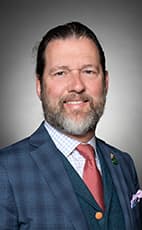
Scott Reid
In the 90 days to September 18, 2026, 1 organization lobbied Scott Reid across 1 meeting — most often about Health. The most frequent visitor was CANADIAN HEALTH FOOD ASSOCIATION (1 meeting, via their in-house lobbyist Aaron Skelton). Its registration describes the goal as “Trade and Export Promotion Programs, including the AgriMarketing Program and Global Affairs Canada’s Trade Commissioner Service, with…”. That's fewer than the average MP, who had 6 meetings over the same period.
Based on federal lobbying registry data to September 18, 2026
In the House · Sep 21–25
Scott Reid this week
“CORCAN is the inmate skills development wing of Corrections Canada. Last year, it employed 608 individuals, at a cost of $66 million, to educate only 1,056 inmates.”
- Spoke 2 times in the House · the average MP spoke 4 times
- FORC-266, second reading — Establish a national framework respecting skilled trades and labour mobility · passed 295–21
Get Scott Reid's week in your inbox every Monday
What they said, how they voted, and who lobbied them. Free, no ads, unsubscribe anytime.
How Scott Reid actually voted
Their recorded positions on the issues Canadians care about — pulled straight from the parliamentary record.
- Voted For
Labour & Employment
Establish a national framework respecting skilled trades and labour mobility
C-266 · Sep 2026 · Passed · Tell your MP what you think
- Voted Against
Economy & Taxation
Implement certain provisions of the spring economic update tabled in Parliament on April 28, 2026
C-30 · Jun 2026 · Passed · Tell your MP what you think
- Voted Against
Housing
Authorize certain payments to be made out of the Consolidated Revenue Fund for the purpose of improving housing supply
C-26 · Jun 2026 · Passed · Tell your MP what you think
- Voted Against
Criminal Justice
Hate propaganda, hate crime and access to religious or cultural places
C-9 · Jun 2026 · Passed · Tell your MP what you think
- Voted Against
Overall leanings
100%
voted with the Conservative line this Parliament
97%
vote attendance (169/174, missed 5)
Who’s in Scott’s ear
136
lobbying meetings
62
companies & groups
270
speeches in Parliament
Top lobbying relationship: Canopy Growth Corporation — met 28 times · most lobbied on Health.
See who’s lobbying Scott →Who's lobbying Scott
Individual meeting records from the federal lobbying registry
| Date | Organization | |
|---|---|---|
| 2026-07-21 | CANADIAN HEALTH FOOD ASSOCIATION | |
| 2026-06-01 | Food Banks Canada | |
| 2026-05-05 | Celiac Canada | |
| 2026-04-27 | Canadian Cattle Association | |
| 2026-04-20 | The Professional Institute for the Public Service of Canada |
Write to Scott Reid
Pick what it's about. You'll get a letter you can edit, then send it from your own email.
Other ways to reach Scott
613-992-4211 is the House of Commons switchboard — ask to be connected to your MP's office. For constituency office contact details, or if scott.reid@parl.gc.ca bounces, visit their Parliament profile.
Top Lobbying Clients
Companies with the most meetings with this MP
What Scott talks about
- Correctional Service of Canada30 speeches · 2022–2026
- Public Safety15 speeches · 2022–2025
- Budget 2025 Implementation Act, No. 18 speeches · 2025–2026
- Labour8 speeches · 2022
- Emergencies Act6 speeches · 2022
Recent Speeches
Mr. Speaker, CORCAN is the inmate skills development wing of Corrections Canada. Last year, it employed 608 individuals, at a cost of $66 million, to educate only 1,056 inmates. That is an annual per-student cost of $62,000, about half the cost of tuition at Harvard University. What kind of educatio… Read full speechShow less
Mr. Speaker, CORCAN is the inmate skills development wing of Corrections Canada. Last year, it employed 608 individuals, at a cost of $66 million, to educate only 1,056 inmates. That is an annual per-student cost of $62,000, about half the cost of tuition at Harvard University. What kind of education did the inmates get? They were taught rudimentary tasks like shovelling manure, picking apples and sewing pillowcases, none of which will help them to find jobs upon release. Why does the government allow CORCAN to achieve so little at so great a cost to taxpayers?
Mr. Speaker, during question period, the hon. member for Kingston and the Islands was repeatedly carrying on a very high-volume monologue, the purpose of which, I believe, was to interrupt the ability of members who were posing questions to concentrate and to ask their questions properly. That, of c… Read full speechShow less
Mr. Speaker, during question period, the hon. member for Kingston and the Islands was repeatedly carrying on a very high-volume monologue, the purpose of which, I believe, was to interrupt the ability of members who were posing questions to concentrate and to ask their questions properly. That, of course, would be a violation of Standing Order 16(2), which states, “When a member is speaking, no member shall pass between that member and the chair, nor interrupt him or her, except to raise a point of order.” During my own remarks, which were dealing with an aspect of Canadian correctional services, the member was speaking so loudly that it was very difficult for me to concentrate. One of the goals of producing an effective debate in the House is to have us be capable of speaking in a normal speaking voice, as I am doing now, as opposed to yelling at each other. Had I been yelling, I think I could have successfully drowned out the member's yelling, but it is very difficult to carry on a civilized debate when this kind of, frankly, uncivilized behaviour is going on. I have no idea if that constitutes something for which the member should apologize. One cannot retract a loud voice, but whatever the situation is, I seek your guidance on this, Mr. Speaker.
Mr. Speaker, I hope that all colleagues have reviewed the seating plan that has been proposed for our return to Centre Block. Faced with a growing number of MPs in a fixed space, the government's solution is, number one, to expand by about 30% the size of the desks assigned to cabinet so the Prime M… Read full speechShow less
Mr. Speaker, I hope that all colleagues have reviewed the seating plan that has been proposed for our return to Centre Block. Faced with a growing number of MPs in a fixed space, the government's solution is, number one, to expand by about 30% the size of the desks assigned to cabinet so the Prime Minister will feel like he is back home on his favourite luxury jet, and number two, having thereby caused an artificial space shortage for everyone else, to shove 300 MPs into four rows of bleachers, so tightly packed that MPs will no longer have a usable workspace and will have to tread on each other's toes to get to their seat. A better idea would be to use the Quebec legislature's new seating plan as our model. We could have five rows, with each row containing 36 members, connected by four aisles. This would result in wider seats, retention of desks instead of bleachers, and enough room for members to circulate behind each other's seat rather than over each other's feet. All we need for this to happen is to acknowledge the ancient principle that all MPs are treated and seated equally. Let us do that.
Mr. Speaker, first I am presenting 15 petitions, signed by a total of 3,357 Canadians, against the Alto high-speed rail project. I am being flooded with literally thousands of signatures on petitions on this subject. I have already tabled petitions on this topic from an additional 3,300 Canadians. T… Read full speechShow less
Mr. Speaker, first I am presenting 15 petitions, signed by a total of 3,357 Canadians, against the Alto high-speed rail project. I am being flooded with literally thousands of signatures on petitions on this subject. I have already tabled petitions on this topic from an additional 3,300 Canadians. The petitioners are concerned that their land will be expropriated and their lives destroyed by this project that is going to pass through their communities. They are also painfully aware that once their land has been taken from them by the government, they and their children will then be sent the tax bill for their share of a project so expensive that it will cost $9,000 for every family of four nationwide. Second, I am presenting the certificate for e-petition 7203, which I sponsored. It calls for the High-Speed Rail Network Act provisions of Bill C-15 to be stopped, the provisions that allow for an expedited expropriation process that will remove the right of appeal and guarantee that landowners get far less for their land than they ought to be getting; for the cessation of further advancement of the high-speed rail project; and for redirection by the federal government of investment toward improving higher-speed passenger rail service within existing rail corridors, which, as they note, can be done within the life of the current Parliament instead of in the year 2038. E-petition 7203 gathered 17,531 signatures, and, in total, the petitions I am tabling today contain the signatures of over 20,000 Canadians who are opposed to the Alto rail project.
Mr. Speaker, I have two petitions to present today. One is identical to the petition that was just presented by the hon. member. In fact, he basically read the entire text of it, so I will not repeat it. I have two copies of it signed by a considerable number of people, mostly from the agricultural … Read full speechShow less
Mr. Speaker, I have two petitions to present today. One is identical to the petition that was just presented by the hon. member. In fact, he basically read the entire text of it, so I will not repeat it. I have two copies of it signed by a considerable number of people, mostly from the agricultural sector in my constituency.
Bills Sponsored
Recent activity
24 activities across speeches, bills, and lobbying communications.
September 2026
Oral Questions
Mr. Speaker, CORCAN is the inmate skills development wing of Corrections Canada. Last year, it employed 608 individuals, at a cost of $66 million, to educate only 1,056 inmates. That is an annual per-… Read full speechShow less
Mr. Speaker, CORCAN is the inmate skills development wing of Corrections Canada. Last year, it employed 608 individuals, at a cost of $66 million, to educate only 1,056 inmates. That is an annual per-student cost of $62,000, about half the cost of tuition at Harvard University. What kind of education did the inmates get? They were taught rudimentary tasks like shovelling manure, picking apples and sewing pillowcases, none of which will help them to find jobs upon release. Why does the government allow CORCAN to achieve so little at so great a cost to taxpayers?
Routine Proceedings
Mr. Speaker, during question period, the hon. member for Kingston and the Islands was repeatedly carrying on a very high-volume monologue, the purpose of which, I believe, was to interrupt the ability… Read full speechShow less
Mr. Speaker, during question period, the hon. member for Kingston and the Islands was repeatedly carrying on a very high-volume monologue, the purpose of which, I believe, was to interrupt the ability of members who were posing questions to concentrate and to ask their questions properly. That, of course, would be a violation of Standing Order 16(2), which states, “When a member is speaking, no member shall pass between that member and the chair, nor interrupt him or her, except to raise a point of order.” During my own remarks, which were dealing with an aspect of Canadian correctional services, the member was speaking so loudly that it was very difficult for me to concentrate. One of the goals of producing an effective debate in the House is to have us be capable of speaking in a normal speaking voice, as I am doing now, as opposed to yelling at each other. Had I been yelling, I think I could have successfully drowned out the member's yelling, but it is very difficult to carry on a civilized debate when this kind of, frankly, uncivilized behaviour is going on. I have no idea if that constitutes something for which the member should apologize. One cannot retract a loud voice, but whatever the situation is, I seek your guidance on this, Mr. Speaker.
June 2026
Statements by Members
Mr. Speaker, I hope that all colleagues have reviewed the seating plan that has been proposed for our return to Centre Block. Faced with a growing number of MPs in a fixed space, the government's solu… Read full speechShow less
Mr. Speaker, I hope that all colleagues have reviewed the seating plan that has been proposed for our return to Centre Block. Faced with a growing number of MPs in a fixed space, the government's solution is, number one, to expand by about 30% the size of the desks assigned to cabinet so the Prime Minister will feel like he is back home on his favourite luxury jet, and number two, having thereby caused an artificial space shortage for everyone else, to shove 300 MPs into four rows of bleachers, so tightly packed that MPs will no longer have a usable workspace and will have to tread on each other's toes to get to their seat. A better idea would be to use the Quebec legislature's new seating plan as our model. We could have five rows, with each row containing 36 members, connected by four aisles. This would result in wider seats, retention of desks instead of bleachers, and enough room for members to circulate behind each other's seat rather than over each other's feet. All we need for this to happen is to acknowledge the ancient principle that all MPs are treated and seated equally. Let us do that.
Routine Proceedings
Mr. Speaker, first I am presenting 15 petitions, signed by a total of 3,357 Canadians, against the Alto high-speed rail project. I am being flooded with literally thousands of signatures on petitions … Read full speechShow less
Mr. Speaker, first I am presenting 15 petitions, signed by a total of 3,357 Canadians, against the Alto high-speed rail project. I am being flooded with literally thousands of signatures on petitions on this subject. I have already tabled petitions on this topic from an additional 3,300 Canadians. The petitioners are concerned that their land will be expropriated and their lives destroyed by this project that is going to pass through their communities. They are also painfully aware that once their land has been taken from them by the government, they and their children will then be sent the tax bill for their share of a project so expensive that it will cost $9,000 for every family of four nationwide. Second, I am presenting the certificate for e-petition 7203, which I sponsored. It calls for the High-Speed Rail Network Act provisions of Bill C-15 to be stopped, the provisions that allow for an expedited expropriation process that will remove the right of appeal and guarantee that landowners get far less for their land than they ought to be getting; for the cessation of further advancement of the high-speed rail project; and for redirection by the federal government of investment toward improving higher-speed passenger rail service within existing rail corridors, which, as they note, can be done within the life of the current Parliament instead of in the year 2038. E-petition 7203 gathered 17,531 signatures, and, in total, the petitions I am tabling today contain the signatures of over 20,000 Canadians who are opposed to the Alto rail project.
April 2026
Routine Proceedings
Mr. Speaker, I have two petitions to present today. One is identical to the petition that was just presented by the hon. member. In fact, he basically read the entire text of it, so I will not repeat … Read full speechShow less
Mr. Speaker, I have two petitions to present today. One is identical to the petition that was just presented by the hon. member. In fact, he basically read the entire text of it, so I will not repeat it. I have two copies of it signed by a considerable number of people, mostly from the agricultural sector in my constituency.
Routine Proceedings
Mr. Speaker, the second petition relates to the Alto high-speed rail project. I am being flooded by literally thousands of signatures on petitions on this subject. The petitioners list a series of con… Read full speechShow less
Mr. Speaker, the second petition relates to the Alto high-speed rail project. I am being flooded by literally thousands of signatures on petitions on this subject. The petitioners list a series of concerns about the Alto project and have three specific requests for the House of Commons: first, to get the government to immediately cancel the entire Alto high-speed rail project; second, in the event that the Ottawa-Montreal part of the project goes forward, to restrict the ability of Alto to engage in expropriations in the area west of Ottawa, which is not covered in that area, until such time as we can be certain that this part is actually going to be built; third, in the event that expropriations do occur, to restore to property owners the rights they had prior to the changing of those rules, the diminution of their rights in the Alto high-speed rail act.
Government Orders
Mr. Speaker, today I would like to address very briefly two topics and then dwell at greater length on a third. Like many of my colleagues here, I am generally supportive of this legislation. I do thi… Read full speechShow less
Mr. Speaker, today I would like to address very briefly two topics and then dwell at greater length on a third. Like many of my colleagues here, I am generally supportive of this legislation. I do think it is good that it will go to committee where it will, one hopes, be open for genuine good-faith amendments to improve it. Since we agree on the substance of the bill, it should be easy for us to find improvements that make sense to all of us. I am very hopeful that will happen. There are three areas that deserve being noted because they are particularly valuable. One is the banning of anonymous contributions through cryptocurrency, which I think removes a loophole on the idea we have had established in Canadian electoral legislation for some time, that we ought to be able to identify all contributors and that all contributions are public contributions. It is also a way of getting around potentially maximum contribution levels for individuals. Dealing with that is useful. The removal of some forms of foreign interference is also beneficial. Then, of course, there is the issue of ballot integrity, which is dealing with the problems introduced by the activities of the longest ballot committee. I want to spend a bit of time talking about that. I had the chance to see this up close in the last federal election, about this time last year, when I spent a considerable amount of time campaigning in the riding of Carleton, where the leader of my party was running. It is the riding that joins my own riding. It was clear that there was a need to get in there and do what we could to help the leader. Ultimately, the efforts that other individuals and I made were insufficient, although we did cause him to experience the highest Conservative vote he had ever had in his entire career, but that was insufficient to win the riding. At the same time that was going on, there was an effort by the longest ballot committee to put many people onto the ballot, ostensibly, in the service of their goal of trying to draw attention to the abandonment, way back in 2017 ,of Justin Trudeau's stated goal of changing the electoral system. We will recall that in 2015, then candidate Trudeau said this would be the last election under first past the post. There was then a series of hearings of a parliamentary committee for this purpose. I served on that committee, and so did my colleague who is nodding. She still looks somewhat exhausted from the experience. We came up with a proposal that, ultimately, he decided was not very satisfactory, so Trudeau stepped away from it. The longest ballot committee felt this would be a way of drawing attention to their concerns with his abandonment and his approach. I think that may be how it started, but as time went on, it went from being a form of political protest to being a kind of performance art. There is nothing wrong, I suppose, with engaging in performance art if it creates no harm, but I think in this case it did create harm. I will, first of all, show how over a period of time, over six different elections, this transformation occurred. In the year 2021, in the riding of St. Boniface—St. Vital, the longest ballot committee put forward 15 candidates. Of those 15 candidates, the maximum number of votes garnered for one candidate was 58 votes. The minimum number received by a longest ballot committee candidate was seven votes. In 2022, there was a by-election in Mississauga—Lakeshore. This time, there were 33 candidates from the longest ballot committee, more than double. The maximum number of votes received by any of them was 48. The third by-election took place in Winnipeg South Centre. It resulted in 42 candidates that time, so it is going up, as we will notice. There was a maximum number of 36 votes for any of those candidates and there was a candidate who received only one vote. The fourth time this happened, when the longest ballot committee weighed in, was in a by-election in 2024 in Toronto—St. Paul's. This time, there were 77 longest ballot committee candidates. For the first time, we saw a candidate who received zero votes, strongly suggesting that the candidate was not a resident of the riding and was not even able to vote for himself or herself. The fifth time this came up was in a by-election in LaSalle—Émard—Verdun in September 2024, with 77 longest ballot candidates again. By the way, I got all this information from Wikipedia. In each of these, as I looked it up, it said that it was a new record-breaking result. It seems that whoever wrote those articles was starting to cover it as a kind of sporting event. There were 77 candidates for the committee. The maximum number of votes achieved was 34, so we notice a gradual downward trend here. Two candidates got zero votes. The next one was in Carleton last year, with 85 candidates, a significant number of whom received zero votes. Finally, last August, in Battle River—Crowfoot, we saw something in the neighbourhood of 200 candidates for the longest ballot committee. The point is that 77 of those candidates got zero votes, and a significant number got one vote each. That was the performance chart. Now, what are the consequences of doing this? In Battle River—Crowfoot, there were two independent candidates, both of whom complained that they had a hard time being taken seriously and drawing independent attention to local issues, which is often what independent candidates are trying to do, because they were being conflated with the people on the longest ballot committee. In fact, the second-place candidate in that by-election was an independent candidate, Bonnie Critchley, and she largely got attention for the issues she was concerned about by criticizing the longest ballot committee and asking, “How can we express our concerns when these guys are hogging all the bandwidth and distracting?” As I said, she came in second. In all fairness, she got only 9.8% of the vote, but that was more than twice what the Liberal candidate got. She was a serious candidate. These other people were not serious candidates. I think that's a legitimate harm they are doing. Perhaps it is not a harm that is a cause to ban them. However, I will point out as well that my step-mother lives in the riding of Carleton. She is quite elderly now and cannot get out to vote, so I looked into getting a ballot for her to participate from home. In these circumstances, it is very difficult to get a mail-in ballot that would be usable by someone in her situation. Likewise, someone who is visually impaired is normally enabled to vote and to participate fully, with a confidential, secret ballot, when there is a normal-length ballot, in the following manner: People are given a ballot and then a template with a series of holes. They can feel which hole is in which spot, while the names of the candidates are read out to them in order, typically in alphabetical order. They identify that they will vote for candidate number three, who is the candidate of their party. They go behind the screen, count down to the third spot and mark their X. It gets put into the ballot box with everybody else's ballot. The result is that they have a secret ballot. Once this is done, that is taken away from them. Taking away the right of a citizen to participate fully and properly in an election is, in my view, a contravention of section 3 of the charter, which guarantees every Canadian the right to vote in a federal election. I am sure that was not the intention, but that is the practical result. The practical proposal being adopted in this legislation is one that eliminates the ability to engage in this kind of frivolous balloting. It is not that independent candidates cannot get on the ballot, real independent candidates like Bonnie Critchley. It is a way of ensuring that candidates who have taken what started off as a legitimate protest and turned it into a form of performance art cannot engage in that performance art at the expense of the constitutional rights of Canadians who have disabilities, who are prohibited by their actions from participating in a full, proper and rights-respecting manner.
Government Orders
Mr. Speaker, to be honest, I think the measures that have been proposed would actually serve the same purpose, basically eliminating non-serious independent candidates. I do want to say, though, that … Read full speechShow less
Mr. Speaker, to be honest, I think the measures that have been proposed would actually serve the same purpose, basically eliminating non-serious independent candidates. I do want to say, though, that we have to be a bit careful about what we put in there. I will just throw this out as a thought. In 2011, the New Democrats won a significant number of seats in Quebec, where the candidates were not resident in the riding and had not visited the riding. It appears that the people who voted for them we actually aware of that fact. This was their way of expressing support for Jack Layton and his vision. After some of them got elected, they went to heroic efforts, in some cases, to move to the area. We all remember Ruth Ellen Brosseau, who went to her riding. She did not speak French very well. She learned to speak it better. She moved. She raised her son there. The result was that she was re-elected. I do not ever want to preclude the possibility of that happening again.
Government Orders
Mr. Speaker, to me this is not really a problem. I once signed a nomination paper for a candidate who was running against me. It was the Green Party candidate in my riding. I did vote for myself thoug… Read full speechShow less
Mr. Speaker, to me this is not really a problem. I once signed a nomination paper for a candidate who was running against me. It was the Green Party candidate in my riding. I did vote for myself though. I heard that, in 2011, NDP candidates in Quebec stopped people in the street to sign their nomination papers. That tells me that people are prepared to sign these papers to express their support for the process, not the candidate.
Government Orders
Mr. Speaker, you could actually comment very intelligently. It is just that the rules preclude the Speaker from doing so. I think the answer is that it is a real problem, but it is not a problem that … Read full speechShow less
Mr. Speaker, you could actually comment very intelligently. It is just that the rules preclude the Speaker from doing so. I think the answer is that it is a real problem, but it is not a problem that would justify this action. I think the stripping away of constitutional rights from other Canadian citizens is the important matter that needs to be addressed here.
Statements by Members
Mr. Speaker, the Alto project will be the biggest expropriation event in Canadian history. Alto also costs more than Canada can afford. At $90 billion, it is larger than last year's record federal def… Read full speechShow less
Mr. Speaker, the Alto project will be the biggest expropriation event in Canadian history. Alto also costs more than Canada can afford. At $90 billion, it is larger than last year's record federal deficit. If Alto experiences the 50% to 100% cost overruns that are typical for Canadian rail projects, it could easily be paused or even abandoned. This makes pre-emptive expropriations and land freezes doubly irresponsible, but pre-emptive expropriations are a hallmark of Liberal infrastructure policy. At Mirabel airport, at Pickering airport and at LeBreton Flats, land was expropriated first, and the project cancelled later, after costs skyrocketed. Citizens are not powerless. If enough Canadians sign petition e-7203 against Alto, we can show the Liberals that Canada does not want the Alto project, not the expropriations and not the wasted billions. It is time for the government to go back to the drawing board.
March 2026
Routine Proceedings
Mr. Speaker, I am presenting a petition. It is the first petition of what I believe will be many on the subject of the Alto high-speed rail project. There is currently an online petition with, at this… Read full speechShow less
Mr. Speaker, I am presenting a petition. It is the first petition of what I believe will be many on the subject of the Alto high-speed rail project. There is currently an online petition with, at this point, over 10,000 signatures, and I know other print petitions are circulating. The petitioners draw the House's attention to the fact that the cost of this project will be as much as $90 billion, which is $9,000 for every single family of four in Canada. They note the aggressive use of expropriation orders to prohibit work on private property and other measures, such as the right of first refusal, that will destroy or reduce the value of property for many people who are on the line who will see their properties affected. They also note that the high-speed rail will create an impenetrable barrier between two sides of the same community. Therefore, the petitioners call upon the government to do three things. First, they ask the government to immediately cancel the Alto high-speed rail project. Second, in the event that the project is pursued, they ask that the Ottawa-Montreal portion be finished before any expropriations occur west of Ottawa. Finally, they ask that the full protections of the Expropriation Act should be returned to property owners along the route instead of being stripped away, as has been done under the budget implementation bill.
February 2026
Government Orders
Mr. Speaker, today I am going to be talking about two themes: the first is property rights and the second is the economics of the Alto project. My comments on both are in the context of the part of th… Read full speechShow less
Mr. Speaker, today I am going to be talking about two themes: the first is property rights and the second is the economics of the Alto project. My comments on both are in the context of the part of the budget implementation act that deals with the proposed high-speed rail network and the Alto train, which would run 1,000 kilometres from Quebec City to Toronto at a cost estimate of $60 billion to $90 billion. I am going to start with property rights because the proposed corridor of 1,000 kilometres would run through my constituency. There are two proposed routes that would go through my constituency: a northern route and a southern route. Whichever one is chosen, people who live on that route would be negatively affected, and I thought I would talk a bit about how they would be affected. Let me start by telling members my own position on property rights. This is an issue that is near and dear to me. It is an issue on which I proposed a constitutional amendment, an amendment to the Charter of Rights, to include property rights. The formula which I suggested, because one speaks in general language in bills of rights and charters of rights, is to say that, when property is taken or its use infringed upon for a government purpose, the owners ought to have a right to full, just and timely compensation. All three of those principles are violated by the expropriation and land use restriction regime proposed under the budget implementation act for Alto. Alto has published a plan of rough estimates for where the corridors would be. These rough estimates show corridors roughly 10 kilometres wide. It varies along the route. I assume Alto is in the process of doing some geological work to determine where it wants to go. The process that has been outlined for us says that, at the end of this year either the northern or the southern route will be chosen, and additionally, the corridor for the potential rail line will be narrowed to about a kilometre wide. I am not sure if that is actually what will happen, but that is what it has planned to happen. Within that one kilometre-wide corridor, a thousand kilometres long, and therefore a thousand square kilometres, Alto would have the power to expropriate. This expropriation would occur with a Crown corporation, which includes private investors, and it would do this using expropriation powers normally only exercised by government. That is an extraordinary shift. Additionally, a series of protections for property owners would be stripped away. The first thing that would happen is that Alto would look and then say it might run along a certain part within that kilometre-wide corridor. It might not, but it is not sure, so it is going to put a property development freeze on all properties that it might go through. Will that be every property within the kilometre-wide corridor? We do not know yet, but a freeze on property, that is to say that someone cannot develop or improve their property, has a real financial impact. Under the Expropriation Act, this kind of freeze is permitted, and it can be for up to 120 days. Under the new legislation, it would be for up to two years. During those two years, someone would not be able to do anything to their property. If they tried to, they could be fined through what are called administrative monetary penalties, and they can be ruinous penalties. It is a bit difficult, from the legislation, to determine exactly what those penalties would be. It appears to me that they could be as high as $20,000 per offence, and individual offences that continue over a period of time could result in multiple fines. That, I think, is enough to ensure that anyone would, indeed, not develop their property. After Alto has built its rail and decided which properties it actually wants, someone's property might be released, at which point they have the right to seek compensation for the loss in value. However, that is a long, slow process, and this would affect thousands of properties, maybe tens of thousands of properties. I actually do not know how many there will be in the as yet undefined corridor. All these properties would be involved, with people trying to seek compensation, and each one would have to be a negotiated settlement. I think it is safe to say that, for many people, the payback would be less than it was worth or they would simply give up and never actually seek the money that was taken from them. That is for the people who would have a property freeze placed on them. Will there be any compensation for people whose property value is diminished because the Alto line runs through, cutting the community in half? No, there will be no compensation for those folks. It will significantly affect property values, landlocked properties, properties that can no longer be accessed with ease, properties where formerly people could get to them by simply crossing and driving down the road, where now the road is bisected. Presumably hundreds of roads will be bisected. Alto will have a strong incentive to try and make it as minimal as possible, the number of roads on which overpasses are built. There is a reason for that: Overpasses cost money. I have heard estimates that a single overpass is as high as $50 million, but I have found some evidence that it may be as low as $20 million. Whatever the case is, multiply that by a few hundred, and we can see that Alto, which is trying to be a profit-making company, is going to finance this money through floating a bond. It is going to have a very strong incentive to be as ruthless as possible and have as few overpasses as possible. I was wondering: How many overpasses might there be? It is hard to estimate exactly, but I did take some highway construction for property near places where I live or have lived. I used to live on Phelan Road in what is now part of the extended city of Ottawa. Highway 416 was built south of the city. That road was cut off, and so where people could have crossed and talked to their neighbour within a five-minute walk, they now have to drive seven kilometres in one direction, cross over the highway and go seven kilometres back, 14 kilometres in total. Similarly, east of Ottawa, there is a spot where I go camping. My mother-in-law owns a campground there. To get across Highway 417, people have to drive seven kilometres in one direction, cross over and drive six kilometres back. I have several other examples I could give, but I think the point is made. This is going to divide communities, slow down emergency response times and so on. Now, in the three remaining minutes I have, I want to talk about the costs of Alto. I do not think we grasp just how badly costed-out this really is. A cost range was given. These were stabs in the dark, frankly. Let us say it is $90 billion. There are 40 million people in Canada, 10 million families of four, and $90 billion divided by 10 million is $9,000 for every single Canadian family of four across the country. It does not matter if they live in Nunavut and will never even see this rail, because every Canadian family is paying $9,000. Every Canadian family across the country is paying for something that is going to service people only in that narrow corridor. The people whose properties will be sliced up are paying $9,000 too. Is that number to be taken seriously? That, in itself, is mind-blowingly high. It is higher than our entire national deficit this year. As it turns out, there is a fascinating paper written by Prof. Bent Flyvbjerg, who is the professor and founding chair of program management at the Saïd Business School at Oxford University. He writes this, in a recent paper about megaprojects in general: Performance data for megaprojects speak their own language. Nine out of ten such projects have cost overruns; overruns of up to 50% in real terms are common, over 50% are not uncommon. Then he provides a list. I will just read some of the rail projects: The Shinkansen Joetsu high-speed rail line in Japan is somewhat comparable, at a 100% cost overrun; the Boston–New York–Washington Railway, U.S.A., a 130% cost overrun, the Copenhagen Metro, Denmark, a 150% overrun; the Montreal Metro Laval extension, Canada, a 160% overrun; the Minneapolis Hiawatha light rail line, U.S.A., a 190% overrun; and the Troy and Greenfield Railroad, U.S.A., 900%. That, perhaps, is an outlier, but it makes the point. He says shortfalls of 50% are also not uncommon: Combine the large cost overruns and benefit shortfalls with the fact that business cases, cost–benefit analyses, and social and environmental impact assessments are typically at the core of planning and decision making for megaprojects and we see that such analyses can generally not be trusted. For example, for rail projects, an average cost overrun of 44.7% combines with an average demand shortfall of 51.4%. I will stop there and go to questions.
Government Orders
Mr. Speaker, I lack the expertise to give an intelligent response to that question, which is clearly designed just to divert me from the issue of this mind-blowingly expensive project that would destr… Read full speechShow less
Mr. Speaker, I lack the expertise to give an intelligent response to that question, which is clearly designed just to divert me from the issue of this mind-blowingly expensive project that would destroy lives, ruin property rights and ruin communities that I represent. It would destroy people's lives. That is what is at stake here. The costs of this would be just insane for every single Canadian, including the member. He gets a nice big salary for his $9,000. However, for people who are never going to be around this, how would this be beneficial to them? Why on earth should people in British Columbia, Alberta and Newfoundland pay for this, so that people who live in downtown Toronto or Montreal can get back and forth and shave 90 minutes off their travel time? If I lived beside the train station and I could get that benefit tomorrow, not 10 years out, and it is $9,000 for my family, I would not go for it. It is a terrible cost proposition for someone in that situation, and it is an insane cost proposition for someone who happens to live somewhere else. Worst of all is being a property owner and seeing one's property destroyed and one's life destroyed and then being told, “Now here is the tax bill for this thing we have done to screw you over.”
Government Orders
Mr. Speaker, in the end, the cost is going to be zero, because there is no way that this insane project is actually going to make its way through. We do not have the money to spend $90 billion, which … Read full speechShow less
Mr. Speaker, in the end, the cost is going to be zero, because there is no way that this insane project is actually going to make its way through. We do not have the money to spend $90 billion, which is the estimate. We do not have the money for that. We will spend $3 billion or $4 billion, do a series of expropriations and destroy lives, and then, like the Pickering airport, it will be shut down, unfinished, with no benefit except to the consultants. That is what is going to happen. However, in the event it actually went through, there is a fascinating estimate. Alto projects 24 million riders per year, which turns out to be significantly higher than the number of people travelling between Ottawa, Montreal and Toronto right now by rail, air and road combined, so somehow, people who are not travelling at all would start travelling because of this amazing transportation hub. We have a pretty good idea that, in practice, if the costs are not very low and the speed is not high, people do not tend to shift to rail unless the travel time is under two hours. Therefore, it is not likely to generate the expected ridership. That means that revenues would be very low and the subsidies would be in the multiple billions of dollars every year. Again, we cannot afford this. I suspect that if anything does get built, it will be the Ottawa to Montreal part, at which point the low ridership would show that the whole thing was a catastrophe and we would stop halfway through, much like we did with the Mirabel airport. It was going to be a giant airport, but once we saw the insane costs and the low usage, the whole thing was shut down.
Government Orders
Mr. Speaker, I think the answer is that those are projects that would actually generate expansion to the GDP, because we would be exporting product, whereas this is not going to achieve that goal.
Government Orders
Mr. Speaker, I genuinely do not know the answer to this. What is the practice with regard to an hon. member who is virtual, not visible to us but merely heard? Is it in order for that person to partic… Read full speechShow less
Mr. Speaker, I genuinely do not know the answer to this. What is the practice with regard to an hon. member who is virtual, not visible to us but merely heard? Is it in order for that person to participate in the debate or not?
Orders of the Day
Mr. Speaker, I am torn between my sympathy for the idea of shorter speeches with longer questions following them and the fact that I have a 10-minute set-piece speech that I am going to be delivering … Read full speechShow less
Mr. Speaker, I am torn between my sympathy for the idea of shorter speeches with longer questions following them and the fact that I have a 10-minute set-piece speech that I am going to be delivering later on this afternoon. I do think there is a model for this, and I wanted to ask my colleague about it. Adjournment Proceedings questions, or late show questions, are four minutes of question and four minutes of answer. They are equal length and both of them are longer. It does give time to allow people to put a substantive, as opposed to purely rhetorical question, into what they ask. I am wondering whether that serves as a model or potentially, as it is not a perfect system, a warning about things we should think about as we look at this question.
Orders of the Day
Madam Speaker, I was unaware of the code of conduct issues that had arisen with regard to the member. I will just observe that it is an excellent introduction to what I am about to deal with here, whi… Read full speechShow less
Madam Speaker, I was unaware of the code of conduct issues that had arisen with regard to the member. I will just observe that it is an excellent introduction to what I am about to deal with here, which is our own code of conduct. The Conflict of Interest Code for Members of the House of Commons is an appendix to the Standing Orders, and today's debate is therefore the appropriate forum in which to discuss the code and also to discuss the problematic way in which it has been administered. In my remarks today, I will demonstrate that, in at least one case, the administration of the code by the former ethics commissioner, Mr. Mario Dion, was itself a very consequential violation of the code. I hope that the current commissioner will take heed. I have already been vocal in my criticism of Mr. Dion. In February 2021, I wrote an essay, which I published on my website, criticizing Commissioner Dion's report finding the member for Etobicoke—Lakeshore guilty of an entirely invented breach of the code. Last October, I had the opportunity to speak out against the former commissioner's outrageous 2019 finding that the member for Ottawa West—Nepean had violated the code by transgressing a preposterously stringent interpretation of the term “using her position as a member of Parliament”. On September 29, 2020, it was my turn; the commissioner went after me. I received a letter on that day in which the commissioner informed me, “Pursuant to subsection 27(4) of the...Code, I am writing to notify you of my concerns that you may have contravened the Code by attempting to use your position as a Member of Parliament to influence a decision so as to further the private interests of a member of your family”. Commissioner Dion further stated, “Upon receipt of your response...I will determine whether an inquiry into your conduct is warranted”. I will fast-forward to another piece of correspondence from Commissioner Dion, dated November 25 of the same year, in which he wrote: I am writing further to the letter from your [legal] counsel...responding to my concerns...that you may have contravened section 11 of the...Code.... ...I have determined that I do not have reason to believe you have contravened section 11 of the Code and I will not initiate an inquiry into the matter. That ended things. I had a clean bill of ethical health. However, members will note that Commissioner Dion makes reference to a letter from my legal counsel. Here is that letter, and as members can see, it is over 100 pages long. I apologize for showing it in the House, but I want to make the point that it is over 100 pages. It includes tax returns, audited statements and other documents. Importantly, my legal bill to respond to Mr. Dion's preliminary review was $43,423.53, every penny of which was paid out of after-tax income. At the 50% tax bracket in which all MPs sit, the cost to me was over $80,000. I have the good fortune to have a significant amount of inherited wealth. However, for the majority of members in this place, the sudden imposition of a legal bill of this magnitude could be ruinous. Had Commissioner Dion decided, as he could well have done, that he would go further and launch an actual inquiry, my legal bills might well have been several multiples higher. When the costs of responding to an accusation become ruinous, prosecutions, including preliminary reviews and inquiries, can be weaponized. That is to say, the process of prosecution itself can be used as a weapon. Mere accusations, including groundless accusations, become death blows to all but the wealthiest. Our court system has therefore adopted a number of rules to prevent weaponization. One such rule is that the losing party in a court action must pay a share of the court costs of the winning party. Another rule is that the person who is accused has the right to face his or her accuser. By contrast with the courts, our conflict of interest code contains no version of the first of the two rules I just mentioned, but it does contain an interesting proxy for the right to face one's accuser. Pursuant to subsection 27(1) of the code, the commissioner may pursue a preliminary review only if authorized to do so by a signed, written request from a member of Parliament, who effectively takes on the role of publicly identified accuser, and if at the conclusion of an inquiry, the commissioner is of the opinion that the request for an inquiry was frivolous or vexatious, subsection 27(6) of the code provides that “the commissioner shall so state in dismissing the request in a report...and may recommend that further action be considered against the member who made the request.” However, in my case, the commissioner ignored the limit imposed on him by subsection 27(1). In his letter of September 29, the commissioner informed me that he had been notified by an anonymous tip. He said, “On June 26...I received a letter from a member of the public alleging that you communicated numerous times with councillors and municipal employees of Tay Valley Township in respect of your spouse's operation of a forest school and community garden at [Blueberry Creek Forest School and Nature Centre] on Highway 7.” It was on the basis of this letter, from a party whose identity the commissioner subsequently kept secret, that he informed me that he would launch an inquiry unless, within the next 30 days, I satisfied him as to my innocence. It was the act of satisfying him as to my innocence, by exhaustively demonstrating the fact that Blueberry Creek is a bona fide not-for-profit and that my wife derives no financial benefit from the operation of the forest school, that cost me 43,000 after-tax dollars in legal bills. That is a bit like proving someone's innocence of witchcraft by drowning them during a witch dunking: They are innocent but also dead. The accusation was costless for my anonymous accuser to make. Refuting the anonymous accusation was devastatingly expensive. Even though the request for the inquiry was indeed vexatious, I have no ability to seek the redress promised by subsection 27(6) because the commissioner has made sure that I cannot find out who made the anonymous denunciation. However, I was able to draw the commissioner's attention to the fact that, whomever it may have been who contacted him, the ultimate source of this information had to be an interested party on the other side of an ongoing legal dispute between Blueberry Creek Forest School and Tay Valley Township. I sent a letter to the commissioner pointing out that one piece of evidence that had been given to him by the anonymous informant “has never been made public”. I am quoting from my letter, which continues, “Only the eight members of the Council to whom this was emailed, plus the township's clerk, Amanda Mabo, and the township's Chief Administrative Officer, Larry Donaldson, would ever have seen the...email.” An Ethics Commissioner who allows anonymous denunciations to which the cost of responding are ruinous has set the grounds for the serial use of vexatious assertions of ethical breaches in order to settle scores or to force elected officials to resign as the only means of escaping expensive inquiries. Now, lest the assertion that I have just made be taken as hysterical, let me point out that this is exactly what has happened to Ontario's system of municipal integrity commissioners. Ironically, this was attested to just a moment ago in the last remark by the previous speaker, the member for Hamilton West—Ancaster—Dundas, who said he faced numerous such accusations for reasons that were entirely personal. The Ontario system permits anonymous denunciations, arbitrary penalties and provides only the weakest safeguards against the integrity commissioners, as ethics commissioners are called provincially, who are usually external counsel retained on contract by the township or municipality, having their own conflicts of interest. For example, they might be simultaneously a town solicitor and its integrity commissioner, a clear conflict of interest. In 2024, Ontario's integrity commissioner system was variously described as the “wild west” and as being a “cash cow” for the commissioners themselves, most egregiously for Tony Fleming, a lawyer at the Kingston law firm of Cunningham Swan, who served simultaneously as town councillor and integrity commissioner for 35 municipalities, despite repeated accusations that this represents a conflict of interest on his part. In 2022, it was reported that the legal bills paid to the integrity commissioner in the town of Elliott Lake over the four-year term of the town council amounted to $858,000, or about $80 per town resident. To give another example, at one point in the summer of 2025, the integrity commissioner for the Township of Rideau Lakes, just south of my riding, was involved in 11 simultaneous investigations. The town council in Rideau Lakes has only nine members. A year earlier, the Ontario ombudsman reported that most of the complaints it had received regarding municipal accountability officers were specifically about integrity commissioners. A similar form of weaponization of our own ethics code is a very real danger should the safeguards that have been built into the code continue to be ignored by the official who is charged with their enforcement. Commissioner Dion facilitated weaponization. It is my hope that the current commissioner will hear what I am saying today and will firmly reject the dangerous precedent set by his predecessor, and in the event that he takes the position that his predecessor's actions in accepting anonymous denunciations were not a breach of the code, that the House will modify the code to impose this limit in clearer terms in the future.
Orders of the Day
Madam Speaker, I am here to talk about the weaponization of our ethics code for the purpose of destroying the lives and careers of members of Parliament. I am not going to answer a question on that su… Read full speechShow less
Madam Speaker, I am here to talk about the weaponization of our ethics code for the purpose of destroying the lives and careers of members of Parliament. I am not going to answer a question on that subject.
January 2026
House of Commons
123 communications with 54 clients
Top clients: [{"name": "Canopy Growth Corporation", "count": 27}, {"name": "National Council …