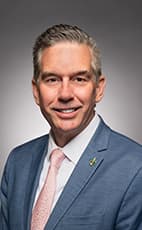
Tim Louis
In the 90 days to September 18, 2026, 9 organizations lobbied Tim Louis across 10 meetings — most often about Telecommunications. The most frequent visitor was TELUS Corporation (2 meetings, via their in-house lobbyist Victor Dodig). Its registration describes the goal as “Advocacy concerning the development, adoption, and implementation of national artificial intelligence (AI) policies, regulations…”. That's more than the average MP, who had 6 meetings over the same period.
Based on federal lobbying registry data to September 18, 2026
In the House · Sep 21–25
Tim Louis this week
“Today I rise to speak to the building Canada strong act. We find ourselves at a critical juncture in our nation's history. Around the world, global trade patterns are shifting, geopolitical instability is rising and competition for capital is fierce.”
- Spoke 5 times in the House · the average MP spoke 4 times
- FORC-266, second reading — Establish a national framework respecting skilled trades and labour mobility · passed 295–21
Get Tim Louis's week in your inbox every Monday
What they said, how they voted, and who lobbied them. Free, no ads, unsubscribe anytime.
How Tim Louis actually voted
Their recorded positions on the issues Canadians care about — pulled straight from the parliamentary record.
- Voted For
Labour & Employment
Establish a national framework respecting skilled trades and labour mobility
C-266 · Sep 2026 · Passed · Tell your MP what you think
- Voted For
Economy & Taxation
Implement certain provisions of the spring economic update tabled in Parliament on April 28, 2026
C-30 · Jun 2026 · Passed · Tell your MP what you think
- Voted For
Housing
Authorize certain payments to be made out of the Consolidated Revenue Fund for the purpose of improving housing supply
C-26 · Jun 2026 · Passed · Tell your MP what you think
- Voted For
Criminal Justice
Hate propaganda, hate crime and access to religious or cultural places
C-9 · Jun 2026 · Passed · Tell your MP what you think
- Voted For
Overall leanings
100%
voted with the Liberal line this Parliament
99%
vote attendance (173/174, missed 1)
Who’s in Tim’s ear
343
lobbying meetings
158
companies & groups
147
speeches in Parliament
Top lobbying relationship: Animal Justice — met 13 times · most lobbied on Agriculture.
See who’s lobbying Tim →Who's lobbying Tim
Individual meeting records from the federal lobbying registry
| Date | Organization | |
|---|---|---|
| 2026-09-10 | Women's Network PEI | |
| 2026-08-25 | Save the Children Canada | |
| 2026-08-25 | CARE Canada | |
| 2026-08-24 | Insurance Brokers Association of Canada | |
| 2026-08-10 | TELUS Corporation |
Write to Tim Louis
Pick what it's about. You'll get a letter you can edit, then send it from your own email.
Other ways to reach Tim
613-992-4211 is the House of Commons switchboard — ask to be connected to your MP's office. For constituency office contact details, or if tim.louis@parl.gc.ca bounces, visit their Parliament profile.
Committee Memberships
Top Lobbying Clients
Companies with the most meetings with this MP
What Tim talks about
- Prohibition of the Export of Horses by Air for Slaughter Act12 speeches · 2023–2024
- Online Streaming Act7 speeches · 2022
- Health6 speeches · 2022–2026
- Strong Borders Act5 speeches · 2025
- Building Canada Strong Act4 speeches · 2026
Recent Speeches
Mr. Speaker, today I rise to speak to the building Canada strong act. We find ourselves at a critical juncture in our nation's history. Around the world, global trade patterns are shifting, geopolitical instability is rising and competition for capital is fierce. For years, Canada has relied heavily… Read full speechShow less
Mr. Speaker, today I rise to speak to the building Canada strong act. We find ourselves at a critical juncture in our nation's history. Around the world, global trade patterns are shifting, geopolitical instability is rising and competition for capital is fierce. For years, Canada has relied heavily on a single trading partner, leaving our businesses, workers and communities vulnerable to external shocks and sudden tariffs. To secure our national sovereignty and long-term prosperity, Canada must build capacity for true economic self-reliance. Our government set an ambitious goal to double our non-U.S. exports over the next decade, unlocking new trade and attracting investment. As a nation, we are now turning that potential into progress. Federal decision-making in Canada has been slow, fragmented and plagued by duplication. Projects that could create good-paying jobs and power our clean energy transition have faced regulatory paralysis, taking up to five years or more just to get answers. The building Canada strong act would address these structural bottlenecks directly through three interconnected pillars: accelerating major project reviews, modernizing supply chains and trade corridors, and modernizing collective bargaining and strengthening worker protections. I know that significant legislation can raise concerns, so today I want to address questions that are being raised regarding environmental protections, labour rights and indigenous reconciliation and explain how this bill would address them. A question that has been raised is, if we accelerate federal reviews, how do we do so without cutting corners or weakening environmental standards? I want to be clear that the building Canada strong act represents a reform of process, not a reduction of standards. This is not a choice between protecting the environment and building major infrastructure. We can and we must do both. Under our current system, federal departments review projects consecutively. A proponent might spend two years completing an assessment under the Impact Assessment Act, only to start from scratch with separate sequential permits from Fisheries and Oceans Canada or Transport Canada. That is unnecessary duplication. This bill would transition federal reviews from consecutive to concurrent workflows. Under the new framework, the Impact Assessment Agency of Canada would coordinate federal departments simultaneously. In plain terms, instead of making projects wait in line for one department after another, all federal agencies would work at the same time, together. The federal government would commit to completing its review and delivering one comprehensive federal decision, whether it is a yes or a no, within one year once a complete application is submitted. The scope of environmental assessments would remain intact, incorporating health, social and environmental impacts, along with indigenous traditional knowledge. Our government listened carefully during extensive consultations, where we received over 26,000 submissions. In response to this feedback, we have explicitly removed proposed changes to the Species at Risk Act jeopardy clause, so the Species at Risk Act would remain fully untouched and uncompromisingly protected. Strong environmental protections remain a non-negotiable foundation of our approach, ensuring that economic growth and conservation go hand in hand. By identifying environmental considerations earlier in the process, this approach maintains environmental protection while providing greater certainty for communities and for project proponents alike. The second area of feedback comes from our union workforce and labour representatives. Workers want to know that legislation will not restrict the constitutional right to strike or expand government intervention in collective bargaining. I firmly believe that a strong economy is built by well-paid, protected workers. The building Canada strong act would preserve and enshrine the constitutional right to strike. The best, most durable agreements are those negotiated directly by workers and employees at the bargaining table. To address disputes in critical supply chain sectors or disagreements that can leave negotiations stalled for months due to bad-faith bargaining from employers or unions, this bill would modernize the Canada Labour Code to help parties reach an agreement before a crisis occurs. For complex negotiations, we would be starting talks earlier and extending federal conciliation time. Rather than forcing a deal, a neutral conciliator would help manage discussions and work with employers and unions toward a fair compromise before a dispute escalates to a work stoppage. We would be introducing a special mediator to help resolve deadlocks. If talks stall, their reports would be published publicly within five days to hold both sides accountable. Beyond dispute resolution, we would be investing directly in workers' everyday protections by strengthening workplace safety, by resolving complaints faster and by cracking down on wage theft. The building Canada strong act would ensure that as we grow our economy, we protect, respect and support the workers who build it. The third thing I would like to address is our constitutional and moral obligations to indigenous peoples. The Crown's duty to consult and accommodate is constitutionally protected. It is non-negotiable, and it would be fully mandated under this act. Economic reconciliation is embedded in this legislation through the indigenous advisory committees and through enabling indigenous equity ownership in major infrastructure. This bill would replace the confusing web of separate departmental reviews with a new Crown consultation hub, giving indigenous communities one single coordinated federal contact point for every project. To grow our economy together, we must also modernize our trade corridors and transportation networks. Eighty per cent of Canada's non-U.S. trade moves through our marine ports. The building Canada strong act would establish a tell-us-once digital frame network. By transitioning from paper-based forms to UN-aligned electronic trade records, we eliminate duplicate filings across government departments and can unlock tremendous economic potential for Canadian exporters. In conclusion, we will build a stronger Canada by standing with the people who build it. The building Canada strong act is an ambitious, integrated economic package. It would bring speed and certainty to project approvals while upholding world-leading environmental standards. It would respect section 35 indigenous rights while streamlining consultation. It would protect the constitutional right to strike while equipping workers and employers with modern tools to reach fair deals at the bargaining table. Let us move forward together, support our workers, protect our environment and build an economy that is resilient, competitive and strong for all Canadians.
Mr. Speaker, I respect my colleague. These are the kinds of conversations we need to have now in the House. By setting up an indigenous advisory council, we will get in consultation right away on projects. Also, we will start earlier. If we know that projects are going to be in certain areas and cer… Read full speechShow less
Mr. Speaker, I respect my colleague. These are the kinds of conversations we need to have now in the House. By setting up an indigenous advisory council, we will get in consultation right away on projects. Also, we will start earlier. If we know that projects are going to be in certain areas and certain ports, we are going to start environmental assessments and start working even before a project is put forward. If we are working within departments to do environmental assessments and consultations with indigenous communities in advance, then when things start, when a project comes forward, we will already have baseline data that can be used. Each project will be able to draw from that baseline data and use it moving forward. By doing that in conjunction with working consecutively and having the consultation hub, we can work a lot faster and work together to get things done while protecting indigenous rights.
Mr. Speaker, my French is not there yet to answer in French. I am getting there. The Impact Assessment Act is still in place. Some of the projects that are used to going through the CER, the regulator, are still going to go through it, but it is an arm's-length process. By working together through t… Read full speechShow less
Mr. Speaker, my French is not there yet to answer in French. I am getting there. The Impact Assessment Act is still in place. Some of the projects that are used to going through the CER, the regulator, are still going to go through it, but it is an arm's-length process. By working together through the Impact Assessment Act and through the CER, we are going to make sure that these projects happen at arm's length and that thoroughness is done.
Mr. Speaker, let us imagine going for a driver's licence. We have to get our driver's licence in one place, go to another place to get our picture taken, go to another place to get eye-exam certified and then go back to the first place and start that process over again. By consolidating the processe… Read full speechShow less
Mr. Speaker, let us imagine going for a driver's licence. We have to get our driver's licence in one place, go to another place to get our picture taken, go to another place to get eye-exam certified and then go back to the first place and start that process over again. By consolidating the processes and making the departments work together concurrently instead of consecutively, we can get things done quicker. We can get our driver's licence a lot sooner. Saying we are going to get things done in a year means it is a yes or no in a year. It does not mean it is a yes in a year. It means yes or no in a year. We just need to be more efficient and move faster so we can grow our economy for Canadians.
Mr. Speaker, my colleague and I have had meetings about this. We have worked together. When people on the other side of the aisle work together, it works okay. When people work with provinces and territories, it works. Next week, we are going to be sitting down with the provinces and territories, wo… Read full speechShow less
Mr. Speaker, my colleague and I have had meetings about this. We have worked together. When people on the other side of the aisle work together, it works okay. When people work with provinces and territories, it works. Next week, we are going to be sitting down with the provinces and territories, working chapter by chapter to get rid of interprovincial tariffs, including for direct-to-consumer alcohol. All the federal barriers are gone for interprovincial. Now it is time for the provinces and territories to do their part. I am willing to work with our colleagues and work with the provinces and territories to make that happen.
Bills Sponsored
Recent activity
22 activities across speeches, bills, and lobbying communications.
September 2026
Government Orders
Mr. Speaker, today I rise to speak to the building Canada strong act. We find ourselves at a critical juncture in our nation's history. Around the world, global trade patterns are shifting, geopolitic… Read full speechShow less
Mr. Speaker, today I rise to speak to the building Canada strong act. We find ourselves at a critical juncture in our nation's history. Around the world, global trade patterns are shifting, geopolitical instability is rising and competition for capital is fierce. For years, Canada has relied heavily on a single trading partner, leaving our businesses, workers and communities vulnerable to external shocks and sudden tariffs. To secure our national sovereignty and long-term prosperity, Canada must build capacity for true economic self-reliance. Our government set an ambitious goal to double our non-U.S. exports over the next decade, unlocking new trade and attracting investment. As a nation, we are now turning that potential into progress. Federal decision-making in Canada has been slow, fragmented and plagued by duplication. Projects that could create good-paying jobs and power our clean energy transition have faced regulatory paralysis, taking up to five years or more just to get answers. The building Canada strong act would address these structural bottlenecks directly through three interconnected pillars: accelerating major project reviews, modernizing supply chains and trade corridors, and modernizing collective bargaining and strengthening worker protections. I know that significant legislation can raise concerns, so today I want to address questions that are being raised regarding environmental protections, labour rights and indigenous reconciliation and explain how this bill would address them. A question that has been raised is, if we accelerate federal reviews, how do we do so without cutting corners or weakening environmental standards? I want to be clear that the building Canada strong act represents a reform of process, not a reduction of standards. This is not a choice between protecting the environment and building major infrastructure. We can and we must do both. Under our current system, federal departments review projects consecutively. A proponent might spend two years completing an assessment under the Impact Assessment Act, only to start from scratch with separate sequential permits from Fisheries and Oceans Canada or Transport Canada. That is unnecessary duplication. This bill would transition federal reviews from consecutive to concurrent workflows. Under the new framework, the Impact Assessment Agency of Canada would coordinate federal departments simultaneously. In plain terms, instead of making projects wait in line for one department after another, all federal agencies would work at the same time, together. The federal government would commit to completing its review and delivering one comprehensive federal decision, whether it is a yes or a no, within one year once a complete application is submitted. The scope of environmental assessments would remain intact, incorporating health, social and environmental impacts, along with indigenous traditional knowledge. Our government listened carefully during extensive consultations, where we received over 26,000 submissions. In response to this feedback, we have explicitly removed proposed changes to the Species at Risk Act jeopardy clause, so the Species at Risk Act would remain fully untouched and uncompromisingly protected. Strong environmental protections remain a non-negotiable foundation of our approach, ensuring that economic growth and conservation go hand in hand. By identifying environmental considerations earlier in the process, this approach maintains environmental protection while providing greater certainty for communities and for project proponents alike. The second area of feedback comes from our union workforce and labour representatives. Workers want to know that legislation will not restrict the constitutional right to strike or expand government intervention in collective bargaining. I firmly believe that a strong economy is built by well-paid, protected workers. The building Canada strong act would preserve and enshrine the constitutional right to strike. The best, most durable agreements are those negotiated directly by workers and employees at the bargaining table. To address disputes in critical supply chain sectors or disagreements that can leave negotiations stalled for months due to bad-faith bargaining from employers or unions, this bill would modernize the Canada Labour Code to help parties reach an agreement before a crisis occurs. For complex negotiations, we would be starting talks earlier and extending federal conciliation time. Rather than forcing a deal, a neutral conciliator would help manage discussions and work with employers and unions toward a fair compromise before a dispute escalates to a work stoppage. We would be introducing a special mediator to help resolve deadlocks. If talks stall, their reports would be published publicly within five days to hold both sides accountable. Beyond dispute resolution, we would be investing directly in workers' everyday protections by strengthening workplace safety, by resolving complaints faster and by cracking down on wage theft. The building Canada strong act would ensure that as we grow our economy, we protect, respect and support the workers who build it. The third thing I would like to address is our constitutional and moral obligations to indigenous peoples. The Crown's duty to consult and accommodate is constitutionally protected. It is non-negotiable, and it would be fully mandated under this act. Economic reconciliation is embedded in this legislation through the indigenous advisory committees and through enabling indigenous equity ownership in major infrastructure. This bill would replace the confusing web of separate departmental reviews with a new Crown consultation hub, giving indigenous communities one single coordinated federal contact point for every project. To grow our economy together, we must also modernize our trade corridors and transportation networks. Eighty per cent of Canada's non-U.S. trade moves through our marine ports. The building Canada strong act would establish a tell-us-once digital frame network. By transitioning from paper-based forms to UN-aligned electronic trade records, we eliminate duplicate filings across government departments and can unlock tremendous economic potential for Canadian exporters. In conclusion, we will build a stronger Canada by standing with the people who build it. The building Canada strong act is an ambitious, integrated economic package. It would bring speed and certainty to project approvals while upholding world-leading environmental standards. It would respect section 35 indigenous rights while streamlining consultation. It would protect the constitutional right to strike while equipping workers and employers with modern tools to reach fair deals at the bargaining table. Let us move forward together, support our workers, protect our environment and build an economy that is resilient, competitive and strong for all Canadians.
Government Orders
Mr. Speaker, I respect my colleague. These are the kinds of conversations we need to have now in the House. By setting up an indigenous advisory council, we will get in consultation right away on proj… Read full speechShow less
Mr. Speaker, I respect my colleague. These are the kinds of conversations we need to have now in the House. By setting up an indigenous advisory council, we will get in consultation right away on projects. Also, we will start earlier. If we know that projects are going to be in certain areas and certain ports, we are going to start environmental assessments and start working even before a project is put forward. If we are working within departments to do environmental assessments and consultations with indigenous communities in advance, then when things start, when a project comes forward, we will already have baseline data that can be used. Each project will be able to draw from that baseline data and use it moving forward. By doing that in conjunction with working consecutively and having the consultation hub, we can work a lot faster and work together to get things done while protecting indigenous rights.
Government Orders
Mr. Speaker, my French is not there yet to answer in French. I am getting there. The Impact Assessment Act is still in place. Some of the projects that are used to going through the CER, the regulator… Read full speechShow less
Mr. Speaker, my French is not there yet to answer in French. I am getting there. The Impact Assessment Act is still in place. Some of the projects that are used to going through the CER, the regulator, are still going to go through it, but it is an arm's-length process. By working together through the Impact Assessment Act and through the CER, we are going to make sure that these projects happen at arm's length and that thoroughness is done.
Government Orders
Mr. Speaker, let us imagine going for a driver's licence. We have to get our driver's licence in one place, go to another place to get our picture taken, go to another place to get eye-exam certified … Read full speechShow less
Mr. Speaker, let us imagine going for a driver's licence. We have to get our driver's licence in one place, go to another place to get our picture taken, go to another place to get eye-exam certified and then go back to the first place and start that process over again. By consolidating the processes and making the departments work together concurrently instead of consecutively, we can get things done quicker. We can get our driver's licence a lot sooner. Saying we are going to get things done in a year means it is a yes or no in a year. It does not mean it is a yes in a year. It means yes or no in a year. We just need to be more efficient and move faster so we can grow our economy for Canadians.
Oral Questions
Mr. Speaker, my colleague and I have had meetings about this. We have worked together. When people on the other side of the aisle work together, it works okay. When people work with provinces and terr… Read full speechShow less
Mr. Speaker, my colleague and I have had meetings about this. We have worked together. When people on the other side of the aisle work together, it works okay. When people work with provinces and territories, it works. Next week, we are going to be sitting down with the provinces and territories, working chapter by chapter to get rid of interprovincial tariffs, including for direct-to-consumer alcohol. All the federal barriers are gone for interprovincial. Now it is time for the provinces and territories to do their part. I am willing to work with our colleagues and work with the provinces and territories to make that happen.
June 2026
Statements by Members
Mr. Speaker, I rise today to recognize an extraordinary community leader in Kitchener—Conestoga, Mr. Martin Buhr. For decades, Martin has worked tirelessly to ensure that people in need have a safe, a… Read full speechShow less
Mr. Speaker, I rise today to recognize an extraordinary community leader in Kitchener—Conestoga, Mr. Martin Buhr. For decades, Martin has worked tirelessly to ensure that people in need have a safe, affordable place to call home. As founding member of MennoHomes, which is now known as Beyond Housing, he built a legacy of compassion, inclusion and service that continues to strengthen our community. This year, as Beyond Housing marks his 25th anniversary and Martin celebrates his 87th birthday, he is preparing for his final Out-Spok'n Bike-a-thon, a community event uniting riders, sponsors and supporters committed to affordable housing. Over the years, through this ride, Martin has raised more than $387,000, with a goal of reaching $500,000. Proceeds will support a 30-unit accessible apartment in Elmira. Martin's leadership has inspired countless people across Waterloo Region and reminds us about the difference one person can make. On behalf of the grateful community in Kitchener—Conestoga, I thank him and wish him every success in his final ride. I will see Mr. Buhr tomorrow.
Statements by Members
Mr. Speaker, I rise to congratulate the Kitchener Rangers on capturing junior hockey's top national honour this year, the Memorial Cup, after an amazing season that also saw them win the OHL champions… Read full speechShow less
Mr. Speaker, I rise to congratulate the Kitchener Rangers on capturing junior hockey's top national honour this year, the Memorial Cup, after an amazing season that also saw them win the OHL championship. The Rangers demonstrated remarkable determination and composure throughout their run, excelling in both the OHL playoffs and the Memorial Cup tournament. They have met every challenge with confidence and resolve, proving what their fans already knew, which is that they are true champions. I send my congratulations to the players for their dedication and performance and to the coaches and staff for their ongoing leadership and guidance. I also send my thanks to the billet families and to the fans, whose steadfast belief and passion have been the foundation of this team's success. Their support has carried the Rangers every step of the way. Once again I congratulate the Kitchener Rangers. They have brought pride, inspiration and lasting memories to our community. This achievement stands as a proud moment for Kitchener and for all who believe in them. Go, Rangers, go!
May 2026
Adjournment Proceedings
Mr. Speaker, as the member knows, Canada Health Infoway has received funding from the Government of Canada for 25 years. That is 25 years of Liberal and Conservative governments alike recognizing that… Read full speechShow less
Mr. Speaker, as the member knows, Canada Health Infoway has received funding from the Government of Canada for 25 years. That is 25 years of Liberal and Conservative governments alike recognizing that we need to come together with the provinces and territories to jointly fund an organization that promotes improving our health data infrastructure. This collaboration with provinces and territories is essential in a country like Canada, where health care falls under provincial jurisdiction. This means that we need to work together, alongside the provinces and territories, ensuring that our health care system responds to the needs of all Canadians. That is why the previous government worked with Infoway and the provinces and territories to launch PrescribeIT in 2017. The federal government heard from our provincial and territorial partners that our health care data was being held back by a long-standing dependence on paper and fax to transmit prescriptions. We should not be relying on fax machines at a time when information is so easily accessible. To try to address this challenge, the previous government provided seed funding to Health Canada Infoway for a program that would replace this outdated reliance on fax machines. This was never intended to be long-term, ongoing funding. From the beginning, the plan was for PrescribeIT to become self-sufficient. Nearly a decade later, it was clear this plan had failed. While nearly 11 million prescriptions were fulfilled last year using PrescribeIT, that number is only 5% of prescriptions across Canada. Doctors and pharmacies alike did not use the system. Our new government came into office and took a look at what was working and what was not. Based on our careful review, we saw that there was no path for PrescribeIT to become financially sustainable, and we ended the funding for the program. The Conservatives seem to think there is something wrong with ending a program that has low uptake, but the fact is that our new government takes its role as steward and custodian of taxpayer dollars very seriously, especially when it comes to health care. We are committed to focusing on resources where those dollars will deliver the greatest benefit to patients and our health care system.
Adjournment Proceedings
Mr. Speaker, it sounds like the Conservatives seem to think the government should continue funding programs that are not being used. A previous government worked with Infoway and our provincial and te… Read full speechShow less
Mr. Speaker, it sounds like the Conservatives seem to think the government should continue funding programs that are not being used. A previous government worked with Infoway and our provincial and territorial partners to launch PrescribeIT, because that is what the provinces and territories said was needed. A decade later, it was clear that doctors and pharmacies were not using the system, so we ended funding for it. Our government will always work to ensure we are delivering programs for policies that are smarter, faster and more effective for all Canadians. That means, in health care, that it works for everyone.
Adjournment Proceedings
Mr. Speaker, I thank the member opposite for her question, and I will say many of the things to her that I said to the member's colleagues. As my colleague knows, PrescribeIT was launched by the previ… Read full speechShow less
Mr. Speaker, I thank the member opposite for her question, and I will say many of the things to her that I said to the member's colleagues. As my colleague knows, PrescribeIT was launched by the previous government in collaboration with Canada Health Infoway, the provinces and territories because it saw that there was a need for it. The provinces and territories wanted to move doctors and pharmacies away from using fax machines and toward a system where important health care data could be sent electronically. Infoway was chosen for the job because it had received funding from Liberal and Conservative governments alike since 2001. The organization has long been a place for federal, provincial and territorial governments to come together to work on improving Canada's health data infrastructure. The resulting program, PrescribeIT, was launched in 2017, following extensive consultations with the provinces and territories. It is important to note that the goal was never to have the federal government fund PrescribeIT indefinitely. From the outset, the plan was for the program to be self-funded over time. This meant that, when our new government came into office last year, we took a hard look at what was working and what was not working. We take our responsibility as stewards and watchdogs for taxpayer dollars very seriously. We saw that PrescribeIT did not have the level of pick up that was expected when it launched nearly a decade ago. As was mentioned, only 5% of prescriptions were filled using the system. Rather than continuing to fund a program that no one was using, we decided to end funding for PrescribeIT. At a time when Canadians expect that we will spend health care dollars wisely and carefully, we wanted to make sure that we were investing taxpayer money in a way that delivers the greatest benefit to patients and the health system alike. Are there questions about the future of lnfoway following this decision? Of course there are. That is why we are refocusing government spending and ensuring that Canada Health lnfoway focuses on what it was intended to do, which is to build up Canada's health data infrastructure and support the development of national health data standards. This work is important, and it speaks to the future of Canada's health care system. Canadians deserve and expect a system that meets their needs and adapts to the world as the flow of information changes. Our government will always be there for Canadians, for our health care sector, and for our provincial and territorial partners, to make sure that we are helping to deliver health care in a way that puts the needs of patients first.
Adjournment Proceedings
Mr. Speaker, let us focus on the facts of this situation. The previous government launched a program in 2017 that was intended to become self-sufficient over time. After 10 years, it was clear that do… Read full speechShow less
Mr. Speaker, let us focus on the facts of this situation. The previous government launched a program in 2017 that was intended to become self-sufficient over time. After 10 years, it was clear that doctors and pharmacists were not using the program and that it had no path to self-sufficiency. As our government takes its role of defending taxpayer dollars seriously, we decided to end funding for the program. Our new government will always make sure that we are focusing resources and investments so they deliver the greatest benefit to patients and our health care system.
April 2026
Government Orders
Madam Speaker, we are talking about legislation and the Canadian space launch act. My colleague is from Manitoba, so he will be happy to know that I just recently met with a group called Manitoba Adva… Read full speechShow less
Madam Speaker, we are talking about legislation and the Canadian space launch act. My colleague is from Manitoba, so he will be happy to know that I just recently met with a group called Manitoba Advantage from the Manitoba Chambers of Commerce, industry and the Business Council of Manitoba, which are all behind growing our aerospace industries. We heard from a colleague from Quebec saying that Quebec is poised to grow our aerospace industries. I want to support Ontario, specifically the Waterloo region, for our strong tech sector. We are also poised to grow in the aerospace industries. We have two universities and a community college in Waterloo region. Can my colleague from Manitoba explain the importance of the aerospace industry in connecting with our post-secondary institutions?
Oral Questions
Mr. Speaker, Canada already has the best deal among U.S. trading partners in the world, and we are working hard to maintain that deal. We continue to engage with our American and our Mexican counterpa… Read full speechShow less
Mr. Speaker, Canada already has the best deal among U.S. trading partners in the world, and we are working hard to maintain that deal. We continue to engage with our American and our Mexican counterparts to review CUSMA. At the same time, Canadians gave us a mandate to expand our non-U.S. trade with the world. That is what we are doing. The third prong of that is working together with the provinces, territories, industries and unions. Every Canadian is working together to prepare for this. We are ready to build. This is what Canadians sent us to do. We are going to build Canada strong.
Oral Questions
Mr. Speaker, Canadians sent us to Ottawa to get the best deal, not to settle for a bad deal. We are working at our pace to make sure we get the best deal for Canadians. We are consulting with Canadian… Read full speechShow less
Mr. Speaker, Canadians sent us to Ottawa to get the best deal, not to settle for a bad deal. We are working at our pace to make sure we get the best deal for Canadians. We are consulting with Canadians. We are consulting with industries. We are using every legal, diplomatic and economic tool, and we are working with provinces, territories and Canadians to make sure we get the best deal possible. We are not going to negotiate in public, but we are working together.
Statements by Members
Mr. Speaker, every spring there is a sure sign that warmer days are on the way, and in Kitchener—Conestoga that sign has been a cherished tradition since 1965: the Elmira Maple Syrup Festival. Recogni… Read full speechShow less
Mr. Speaker, every spring there is a sure sign that warmer days are on the way, and in Kitchener—Conestoga that sign has been a cherished tradition since 1965: the Elmira Maple Syrup Festival. Recognizing the world's largest one-day maple syrup festival, Elmira, home to about 12,000 residents, welcomed around 70,000 visitors this past Saturday. I thank the tireless volunteers, the festival committee and the dedicated sponsors whose support brings our community together year after year. The day featured a pancake-flipping contest, a family fun area, incredible food, local vendors, live entertainment and of course pancakes drenched in pure Canadian maple syrup produced right here in Kitchener—Conestoga. All proceeds from the festival are returned directly to the community, supporting local charitable and not-for-profit organizations and turning a delicious day of celebration into lasting community impacts. Year after year, the Elmira Maple Syrup Festival truly represents the best of community, agriculture and springtime in Canada. I offer my congratulations.
March 2026
Oral Questions
Mr. Speaker, we know we need to work together to make major projects happen, and that is what our government is doing. We are maintaining an open dialogue with other levels of government, with farmers… Read full speechShow less
Mr. Speaker, we know we need to work together to make major projects happen, and that is what our government is doing. We are maintaining an open dialogue with other levels of government, with farmers, with unions and with all community stakeholders. We need to build this country together, and we are looking forward to the co-operation that is going to happen.
House of Commons
309 communications with 142 clients
Top clients: [{"name": "Animal Justice", "count": 13}, {"name": "Chicken Farmers of Canada", …
February 2026
Statements by Members
Mr. Speaker, February 15 marks the beginning of Non-Profit Sector Appreciation Week, and I am proud to rise today to celebrate the heart of our communities: our non-profits and the people behind them.… Read full speechShow less
Mr. Speaker, February 15 marks the beginning of Non-Profit Sector Appreciation Week, and I am proud to rise today to celebrate the heart of our communities: our non-profits and the people behind them. These are our neighbours. They are the friendly faces who step up when someone needs a ride, a meal, a place to call home or a caring professional to talk to. Their dedication does not make headlines most days, but it makes a world of difference in Kitchener—Conestoga and across the nation. We are Canadian. We celebrate those who strengthen our communities through compassion, service and the belief that we are better when we lift each other up. During this week of appreciation, coinciding with national Kindness Week, I encourage everyone to get involved and volunteer their time, lend their skills or simply reach out to a local non-profit organization to ask how they can help. Sometimes the smallest gesture becomes the moment that someone remembers the most. I thank all non-profit sector workers and volunteers. Their work reflects the very best of who we are as Canadians.
Statements by Members
Mr. Speaker, today is Canada's Agriculture Day, a time to recognize the farmers, producers and food processors who sustain our communities and our economy. In Kitchener—Conestoga, across Wellesley, Wi… Read full speechShow less
Mr. Speaker, today is Canada's Agriculture Day, a time to recognize the farmers, producers and food processors who sustain our communities and our economy. In Kitchener—Conestoga, across Wellesley, Wilmot and Woolwich, agriculture is a part of everyday life and is a year-round commitment. From the first harvest of maple syrup in early spring, through planting and the fall harvest to the daily care of livestock throughout the year, the work never stops. Agriculture is present in our farms and barns, in on farm markets, in processing plants and along the routes that move food from farm to table. I recognize and appreciate the early mornings, long hours and dedication required to steward the land, produce high-quality food and plan for the future. On Agriculture Day, I want to thank the people whose work helps us put food on our table every day and whose efforts strengthen our economy and food security. They are building Canada strong.
January 2026
Statements by Members
Mr. Speaker, Canada's food sovereignty begins with the people who grow and produce our food. In Kitchener—Conestoga, we see that every day. Agriculture is at the heart of our community and farmers fee… Read full speechShow less
Mr. Speaker, Canada's food sovereignty begins with the people who grow and produce our food. In Kitchener—Conestoga, we see that every day. Agriculture is at the heart of our community and farmers feed families across our country. Recently, I joined the Minister responsible for Canada-U.S. Trade and the Canadian ambassador to the U.S. for a national round table with Canadian dairy farmers and producers. We discussed the pressures they face and their determination to keep Canada's food system strong. Safeguarding our food sovereignty requires that we be supportive of the producers who feed us and the families facing rising grocery costs. Our government's new Canada groceries and essentials benefit will provide targeted support to those who need it most, helping families manage the cost of food. We are also working to reduce food costs by strengthening local food infrastructure, addressing production and supply chain challenges, and investing in domestic food production, including greenhouses. By supporting farmers and ensuring Canadians can afford the food they need, we are safeguarding Canada's food sovereignty for generations to come.
December 2025
Statements by Members
Mr. Speaker, today I rise to honour Adolph Hafemann of Wellesley Township, who passed away this fall at the age of 95. Adolph's life is a story of resilience and of service. Born in Poland, he fled wi… Read full speechShow less
Mr. Speaker, today I rise to honour Adolph Hafemann of Wellesley Township, who passed away this fall at the age of 95. Adolph's life is a story of resilience and of service. Born in Poland, he fled with his family during the Second World War, immigrating to Canada with just 15¢ in his pocket. He worked on farms, then in Kitchener's manufacturing sector, before building a new life in Wellesley Township. In 1970 Adolph and his wife, Emily, purchased a small grocery store in Wellesley. It turned into a thriving business. His character shone through in the quiet moments, gestures like slipping food into the bag of a family in need, or granting credit with no questions asked. Adolph Hafemann helped found the Wellesley Apple Butter and Cheese Festival, a tradition that continues to bring our community together every year. He was named Wellesley citizen of the year and remained a pillar of generosity throughout his life. I thank his family and friends for sharing Adolf with us. His life reminds us that true success is measured by the lives we touch.