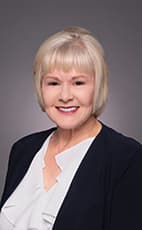
Cheryl Gallant
In the 90 days to September 18, 2026, 1 organization lobbied Cheryl Gallant across 2 meetings — most often about Small Business. The most frequent visitor was Terlin Construction Ltd (2 meetings, via David Pratt of David Pratt & Associates). Its registration describes the goal as “The client is interested in potential federal funding support for infrastructure related to a housing development in eastern Ontario”. That's fewer than the average MP, who had 6 meetings over the same period.
Based on federal lobbying registry data to September 18, 2026
In the House · Oct 5–6
Cheryl Gallant this week
“This omnibus bill is over 250 pages and seeks to amend over a dozen acts of Parliament, yet Canadians do not need to read past division 1 in part 1 to find the core problem.”
- Spoke 9 times in the House · the average MP spoke 2 times
- FORC-218, second reading — Medical assistance in dying · defeated 141–187
- FOROpposition Motion (Diesel prices) · defeated 133–196
- AGAINSTFifth report of the Standing Committee on Health · passed 196–132
Get Cheryl Gallant's week in your inbox every Monday
What they said, how they voted, and who lobbied them. Free, no ads, unsubscribe anytime.
How Cheryl Gallant actually voted
Their recorded positions on the issues Canadians care about — pulled straight from the parliamentary record.
- Voted For
- Voted Against
Healthcare
Fifth report of the Standing Committee on Health
Oct 2026 · Passed
- Voted For
Labour & Employment
Establish a national framework respecting skilled trades and labour mobility
C-266 · Sep 2026 · Passed · Tell your MP what you think
- Voted Against
Criminal Justice
Hate propaganda, hate crime and access to religious or cultural places
C-9 · Jun 2026 · Passed · Tell your MP what you think
- Voted Against
Overall leanings
100%
voted with the Conservative line this Parliament
100%
vote attendance (177/177)
Who's lobbying Cheryl
Individual meeting records from the federal lobbying registry
| Date | Organization | |
|---|---|---|
| 2026-07-31 | Terlin Construction Ltd | |
| 2026-07-03 | Terlin Construction Ltd | |
| 2026-04-07 | The Professional Institute for the Public Service of Canada | |
| 2026-02-25 | Canadian Vehicle Manufacturers' Association | |
| 2026-02-25 | Ontario Federation of Anglers and Hunters Membership |
Write to Cheryl Gallant
Pick what it's about. You'll get a letter you can edit, then send it from your own email.
Other ways to reach Cheryl
613-992-4211 is the House of Commons switchboard — ask to be connected to your MP's office. For constituency office contact details, or if cheryl.gallant@parl.gc.ca bounces, visit their Parliament profile.
Committee Memberships
Top Lobbying Clients
Companies with the most meetings with this MP since July 2008
What Cheryl talks about
- National Defence29 speeches · 2021–2026
- Criminal Code27 speeches · 2021–2026
- Carbon Pricing26 speeches · 2023–2025
- Military Justice System Modernization Act14 speeches · 2025–2026
- An Act to Implement the Protocol on the Accession of the United Kingdom of Great Britain and Northern Ireland to the Comprehensive and Progressive Agreement for Trans-Pacific Partnership12 speeches · 2025–2026
Recent Speeches
Mr. Speaker, higher fuel prices are official Liberal Party policy. Higher diesel prices mean that everything that moves by truck, train or cargo ship costs more. Canadians are suffering due to Liberal inaction. They cannot feed their kids press releases. Just like with the carbon tax and the gas tax… Read full speechShow less
Mr. Speaker, higher fuel prices are official Liberal Party policy. Higher diesel prices mean that everything that moves by truck, train or cargo ship costs more. Canadians are suffering due to Liberal inaction. They cannot feed their kids press releases. Just like with the carbon tax and the gas tax, the Liberals will not do anything for Canadians until the polls shift. Will the Liberals stop wasting time and join us in passing the emergency fuel relief plan?
Mr. Speaker, so far on Pacific link, the Liberals have the memorandum of understanding, the agreement in principle, the implementation agreement, the Major Projects Office announcement and now this. How many more announcements does the member think the Prime Minister will make about this pipeline co… Read full speechShow less
Mr. Speaker, so far on Pacific link, the Liberals have the memorandum of understanding, the agreement in principle, the implementation agreement, the Major Projects Office announcement and now this. How many more announcements does the member think the Prime Minister will make about this pipeline connecting to the Pacific coast before pipe actually gets into the ground?
Mr. Speaker, I am pleased to rise on behalf of the enlightened constituents in the knowledge-producing riding of Algonquin—Renfrew—Pembroke to speak to Bill C-39, a Liberal omnibus bill. This omnibus bill is over 250 pages and seeks to amend over a dozen acts of Parliament, yet Canadians do not need… Read full speechShow less
Mr. Speaker, I am pleased to rise on behalf of the enlightened constituents in the knowledge-producing riding of Algonquin—Renfrew—Pembroke to speak to Bill C-39, a Liberal omnibus bill. This omnibus bill is over 250 pages and seeks to amend over a dozen acts of Parliament, yet Canadians do not need to read past division 1 in part 1 to find the core problem. This bill does not touch the destructive mandate of the Impact Assessment Agency, and in fact it adds that mandate to the Canadian Nuclear Safety Commission. Before I explain why the mandate is so destructive, and how it will continue to ensure nothing gets built, we need to answer one question. Would this law have given the Canadian Nuclear Laboratories the green light to build the near surface disposal facility, NSDF, at Chalk River? While Parliament has debated this project before, I just want to quickly recap for any Canadians watching at home. Upstream from Parliament Hill is Chalk River Laboratories. Established in 1944, Chalk River was an instrumental part of the Manhattan project to develop the atomic bomb. The first nuclear reactor outside the United States was built and operated at Chalk River, reaching criticality just one month after the bombing of Hiroshima and Nagasaki. For over 80 years, Chalk River has been producing leading-edge nuclear science in power generation and medical isotopes. It has also been generating low-level radioactive waste products, such as gowns, gloves and booties. All of that waste is still on site and stored following the best standards at that time. The Harper government began the process of dealing with that legacy, and the result was a plan for the near surface disposal facility. Following years of consultations with all impacted first nations bands, the project received support from the municipality and the Algonquins of Pikwàkanagàn First Nation. That is when the project went before the Canadian Nuclear Safety Commission. The commission undertook its own consultations with the Algonquin Anishinabeg Nation Tribal Council as part of the Crown's study to consult under section 35 of the Constitution. The commission also began consultations with the various Algonquin bands that make up the broader nation. These consultations included Kebaowek First Nation, a band located upstream from Chalk River and whose land claim does not include Chalk River. Late in the process, Kebaowek demanded funding from the commission to support a consultation framework agreement. The band cited Justin Trudeau's hasty adoption of the United Nations Declaration on the Rights of Indigenous Peoples, UNDRIP, which meant the commission had to seek free, prior and informed consent. The commission argued that it was not able to go beyond the Nuclear Safety and Control Act to interpret the treaty and how it applied to the framework of the commission. After the commission approved the construction of the near surface disposal facility, Kebaowek took the company, Canadian Nuclear Laboratories, to court, arguing that the commission had failed to follow UNDRIP when approving the construction. The band was successful before the courts, and the judge ordered new consultations to take place under the free, prior and informed consent framework. Last week, Kebaowek halted engagement with the commission, claiming the money provided by the commission was insufficient. Nothing in this bill addresses the increasing complexity of whether consultations should fall under the duty to consult framework or the free, prior and informed consent framework. Kebaowek also took the government to court over the decision to grant an environmental permit under the Species at Risk Act. Kebaowek won in Federal Court, and last June saw the ruling upheld after the government appealed. The changes in this bill to the Species at Risk Act seem designed to address some of the issues raised by the Federal Court, yet even if this bill had been law when the proud socialist environment minister issued the permit, there is still no guarantee of success. In fact, the Federal Court had ruled that the permit the minister issued was unreasonable because it did not adequately justify the decision. The amendment to the Species at Risk Act actually requires an even more robust justification. Should the Liberals appoint another radical far-left former criminal to be the environment minister, there is nothing preventing them from sabotaging the process by failing to provide sufficient justification for their decision. If the point of this bill is to build Canada even stronger, we need to reduce uncertainty, not increase it by including more politicians in the process. As we can see from the example of the near surface disposal facility and the ongoing litigation over consultations, the bill fails to address the uncertainty caused by never-ending legal challenges and appeals. In fact, the bill may signal the death of the nuclear industry in Canada, and that is because, rather than repeal the Impact Assessment Act, the bill would incorporate the Canadian Nuclear Safety Commission into the mandate of that bill: The Government of Canada, the Minister, the Agency, the Canadian Nuclear Safety Commission and federal authorities, in the administration of this Act, must exercise their powers in a manner that fosters sustainability, respects the rights of the Indigenous peoples of Canada recognized and affirmed by section 35 of the Constitution Act, 1982, takes into account Indigenous knowledge, considers the cumulative effects of physical activities, applies the precautionary principle and promotes cooperation among jurisdictions and with the Indigenous peoples of Canada. The Canadian Nuclear Safety Commission has been a world-leading regulator. The commission earned its stellar reputation by applying policies and regulations rooted in science, evidence and risk management. That is the exact opposite of the approach based on the precautionary principle. While the Government of Canada has adopted “A Framework for the Application of Precaution and Science-Based Decision Making About Risk”, the document fully admits that “Ultimately, [the precautionary principle] is guided by judgment, based on values and priorities”. Canada's nuclear future cannot be determined by the Liberal Party's priority to be re-elected. Whether Canada develops a fusion power industry cannot be decided by the values of far-left activists and judges. By incorporating the commission into the mandate of the Impact Assessment Act, this government would open the door to endless litigation, just like we have seen with the near surface disposal facility. Canada's current legal framework allows a single first nations band with no claim to the land that Chalk River Labs sits on, and upstream from the experimental facility, to derail a decade-long process. Kebaowek First Nation, with the help of foreign funding, was able to use UNDRIP and the Species at Risk Act to block Canada from building. This bill would open the door to any group to take any applicant to court if the commission failed to adequately apply the Impact Assessment Act. This is why no private investor wants to take the risk of building a pipeline. I imagine a gifted entrepreneur who has invented a new type of fusion reactor. Where would they decide to put their fusion company? Could they really have confidence in Canada if, after investing millions of dollars and years of filling out paperwork, their application was approved, only to turn around and have a court freeze their investment because one judge decided the commission had failed to adequately consider the sustainability of hydrogen? Just because 90% of the atoms in the universe are hydrogen, that is not going to stop the far left from claiming fusion power is the next existential threat. My Albertan colleagues dubbed the Impact Assessment Act the “no more pipelines” bill. By scooping in the nuclear commission, the Liberals are turning this into a “no more build anything” bill. No number of amendments to the act will get Canada building, so long as the mandate requires adopting anti-science ideas such as the precautionary principle. We will never achieve reconciliation if a first nation with a direct interest in a project can be dismissed in favour of a first nation with no real stake in the project. Who would invest in Canada if they can be dragged into court because a socialist minister sabotaged their permit? The Liberals will use their backdoor majority to send this bill to a special committee. That will be the last chance for these Liberals to prove whether they really do want to build Canada strong or just build bureaucracy strong.
Mr. Speaker, I think I just heard the member call the Pikwàkanagàn and the Anishinabe “pretendians”. I have never heard that before. The very first people CNL approached when this project first came to light were our first nations people. The member said it outright. This is all about money. It is n… Read full speechShow less
Mr. Speaker, I think I just heard the member call the Pikwàkanagàn and the Anishinabe “pretendians”. I have never heard that before. The very first people CNL approached when this project first came to light were our first nations people. The member said it outright. This is all about money. It is not about doing the right thing and doing it safely so that the people and the environment are protected. That is what this project would do. It would make the environment and people even safer.
Mr. Speaker, all I can say is thank God those projects got started before Bill C-39 came into force.
Bills Sponsored
10 since 2001, latest 5 shown