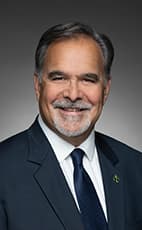
Fred Davies
In the 90 days to September 18, 2026, 2 organizations lobbied Fred Davies across 2 meetings — most often about Taxation and Finance. The most frequent visitor was Frontier Duty Free Association (1 meeting, via Barbara Barrett of Impact Public Affairs). Its registration describes the goal as “Financial support program during tariff crisis”. That's fewer than the average MP, who had 6 meetings over the same period.
Based on federal lobbying registry data to September 18, 2026
In the House · Sep 21–25
Fred Davies this week
- No speeches in the House · the average MP spoke 4 times
- FORC-266, second reading — Establish a national framework respecting skilled trades and labour mobility · passed 295–21
Get Fred Davies's week in your inbox every Monday
What they said, how they voted, and who lobbied them. Free, no ads, unsubscribe anytime.
How Fred Davies actually voted
Their recorded positions on the issues Canadians care about — pulled straight from the parliamentary record.
- Voted For
Labour & Employment
Establish a national framework respecting skilled trades and labour mobility
C-266 · Sep 2026 · Passed · Tell your MP what you think
- Voted Against
Economy & Taxation
Implement certain provisions of the spring economic update tabled in Parliament on April 28, 2026
C-30 · Jun 2026 · Passed · Tell your MP what you think
- Voted Against
Housing
Authorize certain payments to be made out of the Consolidated Revenue Fund for the purpose of improving housing supply
C-26 · Jun 2026 · Passed · Tell your MP what you think
- Voted Against
Criminal Justice
Hate propaganda, hate crime and access to religious or cultural places
C-9 · Jun 2026 · Passed · Tell your MP what you think
- Voted Against
Overall leanings
100%
voted with the Conservative line this Parliament
99%
vote attendance (173/174, missed 1)
Who’s in Fred’s ear
44
lobbying meetings
32
companies & groups
117
speeches in Parliament
Top lobbying relationship: Frontier Duty Free Association — met 4 times · most lobbied on Taxation and Finance.
See who’s lobbying Fred →Who's lobbying Fred
Individual meeting records from the federal lobbying registry
| Date | Organization | |
|---|---|---|
| 2026-09-04 | Frontier Duty Free Association | |
| 2026-08-31 | The Duty Free at Peace Bridge Inc. | |
| 2026-06-03 | Frontier Duty Free Association | |
| 2026-05-29 | Customs and Immigration Union | |
| 2026-05-13 | Niagara Association of REALTORS |
Write to Fred Davies
Pick what it's about. You'll get a letter you can edit, then send it from your own email.
Other ways to reach Fred
613-992-4211 is the House of Commons switchboard — ask to be connected to your MP's office. For constituency office contact details, or if fred.davies@parl.gc.ca bounces, visit their Parliament profile.
Committee Memberships
What Fred talks about
- Citizenship Act16 speeches · 2025
- Canada's Auto Industry8 speeches · 2025
- Bail and Sentencing Reform Act6 speeches · 2025–2026
- Protecting Victims Act6 speeches · 2026
- Immigration, Refugees and Citizenship5 speeches · 2026
Recent Speeches
Mr. Speaker, there is no rhetoric or bluster here, as the minister does his fancy dance over there. The price of used cars has more than doubled over the last several years as a result of the government's inflationary policies. Taxing a vehicle twice is wrong. We on this side believe that cars are n… Read full speechShow less
Mr. Speaker, there is no rhetoric or bluster here, as the minister does his fancy dance over there. The price of used cars has more than doubled over the last several years as a result of the government's inflationary policies. Taxing a vehicle twice is wrong. We on this side believe that cars are not a luxury, and for many people, they are a lifeline. On this side of the House, we would zero-rate used vehicles under the Excise Tax Act. Will the Liberals stop profiting off of inflation and remove GST from the sale of used cars in this country?
Mr. Speaker, the Minister of Justice will remember that several times in the House I have raised the issue of a three-year-old little toddler in my riding who was brutally raped and beaten and left for dead. About a week and a half ago, survivors of sexual assault from early age to adulthood came to… Read full speechShow less
Mr. Speaker, the Minister of Justice will remember that several times in the House I have raised the issue of a three-year-old little toddler in my riding who was brutally raped and beaten and left for dead. About a week and a half ago, survivors of sexual assault from early age to adulthood came to Ottawa to talk to members of the House about their stories of survival. This is not a partisan issue for me. This is something that we need to do as a country. These survivors came to Ottawa and asked me to ask the Minister of Justice why it is that we continually see people being given bail after being convicted of sexual assaults against children and adults. Will he commit to ensuring that if this legislation does not go far enough, there will be amendments made in the future to ensure that for the perpetrators of these vile crimes against children, it never happens again?
Mr. Speaker, I rise today in strong support of Bill S‑210 to designate September as Ukrainian heritage month in Canada, not merely as a matter of multicultural courtesy but an act of moral clarity, historical justice and national affirmation. This bill is not symbolic in the diminishing sense of the… Read full speechShow less
Mr. Speaker, I rise today in strong support of Bill S‑210 to designate September as Ukrainian heritage month in Canada, not merely as a matter of multicultural courtesy but an act of moral clarity, historical justice and national affirmation. This bill is not symbolic in the diminishing sense of the word. It is substantively symbolic, the kind of recognition that tells a community we see them, we remember with them and we stand beside them. In this moment, when the soil of Ukraine runs red from Russian bombardment and when cities that Ukrainian Canadians' grandparents once called home are being reduced to rubble by an imperial aggressor, the passage of this bill carries a weight that goes far beyond ceremony. It is a declaration of who we are as Canadians. Let us begin with history, because history is where the story starts. When the first great wave of Ukrainian immigration to Canada began in the 1890s, tens of thousands of women, men, farmers, labourers and dreamers crossed an ocean to escape poverty, land scarcity and political oppression under Russian imperial and Austro-Hungarian rule. They came at the invitation of the Canadian government that needed settlers for a vast, unbroken prairie west. They came with almost nothing. They were given land, raw, stubborn land that had to be cleared by hand, broken by oxen and coaxed into yield through sheer endurance. They built homes from sod and timber. They raised churches with onion domes on the Saskatchewan horizon. They planted sunflowers beside wheat fields in Manitoba and Alberta. They gave the Prairies a soul. In Alberta, Ukrainian settlers established hundreds of communities from Vegreville to Mundare, from Two Hills to Smoky Lake. In Saskatchewan, Canora, Yorkton and Foam Lake became centres of Ukrainian cultural life. In Manitoba, the north end of Winnipeg became a vibrant Ukrainian corridor, home to cultural halls, Orthodox and Greek Catholic parishes and newspapers printed in Ukrainian. The Ukrainian contribution to Canada did not stay on the Prairies. In Ontario, Ukrainian communities built cultural institutions in Toronto, Ottawa and Hamilton. In Quebec, Ukrainian immigrants added their voices to an already‑complex multicultural chorus. In British Columbia, communities in Vancouver carried forward traditions that connected generations to a homeland thousands of kilometres away. Over 1.3 million Canadians today identify as having Ukraine heritage. Four Governors General have been of Ukrainian descent. Ukrainian Canadians have served in our military, on our supreme courts and in our legislatures, shaped by culture that prizes resilience, community and a ferocious attachment to freedom. One such individual is a man that I worked for as a member of Parliament for Edmonton East. In 1984 he was elected. He was a proud Ukrainian Canadian. He often told me stories of how his family came over here from Ukraine. I was proud to spend a few years with Bill Lesick, the MP for Edmonton East. I will never forget his passion for Canada. He ended his career as a citizenship judge, which reflected his commitment to his country. His attachment to freedom brings me to the present moment, and I will not mince words. On February 24, 2022, Vladimir Putin launched a full‑scale invasion of a sovereign democratic nation. Russia did not stumble into war. It chose war deliberately, systematically and with the stated ambition of erasing Ukrainian national identity from the map of the world. Putin has said explicitly that Ukraine is not a real country, that Ukrainians are not a real people and that their language, culture and history, the very things that this bill celebrates, are fabrications to be corrected by force. This is not a border dispute or a regional conflict. This is a genocidal ideology expressed through artillery shells and mass graves. When this Parliament debates Ukrainian heritage month, we are debating it against the backdrop of Mariupol, Bucha and Kherson, while Ukrainian families in Canada carry the grief of relatives killed under Russian occupation. To pass this bill is to say the culture Russia is trying to destroy is a culture Canada honours. The identity Russia calls fictional is an identity Canada celebrates. There is no more powerful rebuttal to imperial erasure than democratic recognition. That resolve is alive right here in our own communities. In Hamilton, Ontario, a drone manufacturer called Sentinel Research and Development, founded in 2023 specifically because of Russia's war of aggression, is now part of the Canada‑Ukraine defence partnership. When the Russian government responded with threats, CEO Kath Intson did not flinch. She called it what it was, which was “political posturing”, saying, “It does not affect our way forward in any way whatsoever”. This is the Canadian answer to Russian intimidation: not retreat, not appeasement, but moving forward. Sentinel is cut from the same cloth as those prairie settlers. The geography has changed; the adversary has not. Some will ask why we need a dedicated month. The designation matters because it would create space in schools, communities and public life for structured reflection and education. It would mean teachers have a framework to bring Ukrainian history into classrooms. It would mean that Ukrainian Canadians, particularly the younger generation, the grandchildren of those prairie settlers, would see their inheritance acknowledged at the highest level of democratic governance. Given the current war and Russia's documented attempts to suppress Ukrainian cultural expression, ban the Ukrainian language in occupied territories, destroy cultural monuments and abduct children, the designation of Ukrainian heritage month is an act of cultural solidarity. It says that, what they are burning, we are keeping alive. Let me close with an image. Somewhere on the Prairies, perhaps in Alberta, perhaps in Saskatchewan, there is a small Ukrainian Orthodox church, white-walled and blue-domed, standing alone in a field of wheat. It was built over 100 years ago by hands calloused from a hard crossing and harder work. Around that church are the graves of men and women who arrived with nothing and gave everything to this country. Those graves are Canadian soil. That church is Canadian heritage. The culture it represents is alive in Edmonton, Winnipeg, Toronto, Ottawa, Hamilton and my riding of Niagara South. There are 1.3 million Canadians who carry that Ukrainian heritage with them. They deserve a month. They deserve this bill. In passing it, we would send a message heard far beyond our borders, which is that Canada does not only welcome the people of Ukraine, but also preserves what those who wish to destroy Ukraine are trying to erase. I ask members to vote yes, support this bill, honour the heritage and stand with Ukraine. Slava Ukraini.
Mr. Speaker, I rise today in support of Bill C-232, introduced by my friend and colleague the member for Niagara Falls—Niagara-on-the-Lake, yet I do so with a deep sense of frustration because this legislation should not be necessary. Canada should have resolved this issue years ago. In my riding of… Read full speechShow less
Mr. Speaker, I rise today in support of Bill C-232, introduced by my friend and colleague the member for Niagara Falls—Niagara-on-the-Lake, yet I do so with a deep sense of frustration because this legislation should not be necessary. Canada should have resolved this issue years ago. In my riding of Niagara South lies Lake Gibson, in the city of Thorold. Every time I cross the bridge over that water, I think of Kristen French and Leslie Mahaffy. I cannot cross it without remembering that that lake is where Paul Bernardo discarded the remains of two innocent young girls after subjecting them to unimaginable cruelty. The horror of those crimes is impossible to adequately express. For those of us who lived through that dark chapter in Niagara, the memory has never faded. It remains etched in the consciousness of our communities. That is why Canadians were outraged when, on May 29, 2023, Correctional Service Canada quietly transferred Paul Bernardo, a serial rapist, a sadistic torturer and a convicted murderer, from Millhaven Institution, a maximum-security penitentiary, to a minimum-security institution in rural Quebec. The families of Kristen French and Leslie Mahaffy learned of that decision only hours before it became public. There was no consultation, no meaningful explanation and no consideration for the anguish it would reopen. Their lawyer, Tim Danson, described the families as devastated. He said the transfer forced them to relive the worst moments of their lives all over again. Canadians across the country shared that outrage. Political leaders from every corner of this country condemned the decision. That unanimity mattered because it revealed something fundamental about Canadians: that regardless of political affiliation, most Canadians instinctively understood that the most dangerous and predatory offenders belong in maximum-security institutions. It is not out of vengeance or emotion but because justice, public safety and moral clarity demand it. Despite the national outrage, nothing has changed. Paul Bernardo remains in medium security to this day. Every time I cross that bridge at Lake Gibson, I am reminded that while Kristen French and Leslie Mahaffy lost their lives forever, the man who destroyed them now benefits from conditions that Canadians overwhelmingly believe are wholly inappropriate. That reality is not merely disappointing. It is profoundly shameful. Paul Bernardo is not simply a convicted murderer. He is a designated dangerous offender, a classification reserved for the most violent and persistently threatening individuals in Canadian society. Parliament created that designation precisely because certain offenders demonstrate such enduring brutality and such a high likelihood of future violence that extraordinary measures are justified to protect the public. Dangerous offender designations are not applied casually. They are rare. They carry indeterminate sentences because the courts recognize that these individuals cannot safely be trusted outside the strictest controls. What do these assessments continue to tell us about Paul Bernardo? A spousal risk assessment conducted in 2014 concluded that he posed a high probability of violence toward intimate partners and continued risk toward others. Clinical evaluations conducted decades into his incarceration identified ongoing psychological concerns and only intermittent progress. Experts concluded that he demonstrated little genuine rehabilitation and limited acceptance of and responsibility for his crimes. When Bernardo appeared before the Parole Board in 2024, parole was denied for a third time. The board cited the extreme violence of his offences, the serial nature of his crimes, his narcissistic personality traits and persistent concerns surrounding sexual recidivism. Correctional Service Canada itself has repeatedly opposed his release. Even the commissioner of CSC reportedly acknowledged that Bernardo continues to exhibit psychopathic characteristics. This is the offender whom our system deemed appropriate for medium security. At the centre of this controversy lies the principle within the Corrections and Conditional Release Act that requires inmates to be managed in the “least restrictive environment” consistent with public safety and institutional management. In principle, rehabilitation is an important goal of corrections policy. Canadians believe in rehabilitation where rehabilitation is genuinely possible, but that principle was never intended to be interpreted mechanically or blindly. It was never designed for sadistic sexual predators whose crimes rank among the worst in Canadian history and whose risk assessments continue to raise profound alarms decades later. The dangerous offender designation represents Parliament's clearest declaration that certain individuals pose a uniquely persistent threat. Under the current system, however, that judicial finding can effectively be diluted through an administrative reclassification process driven by incremental behaviour metrics inside prison walls. That contradiction is precisely why Bill C‑232 is necessary. Tim Danson articulated this powerfully when he stated that sentencing reflects society's moral values and that prison placement must reflect those same values. Canadians understand intuitively that there are some crimes so monstrous, some offenders so dangerous and some harms so permanent that the only proportionate response is the highest level of confinement our correctional system can provide. This debate is not solely about offender management. It is also about the victims. For more than three decades, Debbie Mahaffy and Donna French have carried unimaginable grief. They have endured repeated parole hearings, legal battles, media attention and a consistent reopening of wounds that truly never heal. Their courage has been extraordinary, yet even after all these years, the system continues to place new burdens on them. In 2024, because Bernardo had been moved to a medium-security institution, logistical implications initially prevented the mothers from appearing in person at the parole hearing. Tim Danson described their reaction as “gut-wrenching”. He called it a devastating setback for victims' rights and an insult to the families who have already endured more suffering than most Canadians could imagine, and he was correct. There is a direct relationship between where dangerous offenders are housed and the rights available to victims. Prison placement affects access, participation, security arrangements and the ability of victims' families to confront the individuals responsible for their suffering. Friends of and advocates for Kristen French testified before a parliamentary committee that the system appeared to prioritize Bernardo's administrative rights over the rights of victims and survivors. Many Canadians believe they were right to say so. The Canadian Victims Bill of Rights guarantees victims the right to information, protection and meaningful participation in the justice system. Those principles cannot simply disappear when correctional classifications are reviewed behind closed doors. Bill C‑232 recognizes the reality by explicitly connecting victims' rights to decisions regarding the placement of dangerous offenders. Correctional Service Canada later reviewed Bernardo's transfer and concluded that the process had complied with the existing law and policy. It simultaneously acknowledged that the family should have received better notification. Those two conclusions are deeply revealing. If a process can be technically compliant while still producing an outcome that shocks the conscience of the nation, then the problem is no longer merely administrative. The problem is legislative. The law itself requires reform. Kristen French was 15 years old. Leslie Mahaffy was 14 years old. Their lives were stolen through acts of calculated evil that horrified an entire country. Decades later, their mothers are still fighting for dignity, for accountability and for a justice system that fully recognizes the magnitude of what was taken from them. Meanwhile, the offender responsible resides in a medium-security institution. Canadians know instinctively that this is wrong. The moral argument behind Bill C‑232 is not complicated. These are offenders whose crimes demonstrate such enduring depravity, such profound danger and such catastrophic harm that maximum security is not only appropriate but necessary, not temporarily, and not symbolically, but for as long as the threat posed continues to exist. Now is the time for our laws to reflect that reality consistently and unequivocally. We have a moral obligation to ensure that the most dangerous offenders in Canada remain behind maximum-security walls, commensurate with the horrific violence they inflicted upon innocent people. I ask my colleagues to pass this legislation. Let this Parliament send a clear and unmistakable message that Canada will never lose sight of its duty to victims, its obligation to public safety and its responsibility to ensure that the most dangerous criminals face the most secure confinement our justice system can provide.
Madam Speaker, it is my job to bring a profound conclusion to the debate before us tonight, and I am happy to add my 30 seconds of wisdom. Let me begin by stating something quite clearly, Conservatives believe workers have the right to organize. We believe workers have the right to choose their repr… Read full speechShow less
Madam Speaker, it is my job to bring a profound conclusion to the debate before us tonight, and I am happy to add my 30 seconds of wisdom. Let me begin by stating something quite clearly, Conservatives believe workers have the right to organize. We believe workers have the right to choose their representation freely and democratically. We believe employer domination of unions has no place in Canada. Those principles are not in dispute. The question before us is whether Bill C-259 strengthens workers' rights or whether it creates instability, uncertainty and unintended consequences in federally regulated workplaces. The sponsor argues that workers must be represented by organizations independent from employer influence. On that point, there is broad agreement. However, the reality is that the Canada Labour Code already contains strong protections against employer interference. Today a union cannot be certified if it is so dominated or influenced by an employer that its ability to represent workers is impaired. I will wrap up with that profound statement of five or six sentences tonight. I appreciate the patience of the House.
Recent activity
21 activities across speeches, bills, and lobbying communications.
June 2026
Oral Questions
Mr. Speaker, there is no rhetoric or bluster here, as the minister does his fancy dance over there. The price of used cars has more than doubled over the last several years as a result of the governme… Read full speechShow less
Mr. Speaker, there is no rhetoric or bluster here, as the minister does his fancy dance over there. The price of used cars has more than doubled over the last several years as a result of the government's inflationary policies. Taxing a vehicle twice is wrong. We on this side believe that cars are not a luxury, and for many people, they are a lifeline. On this side of the House, we would zero-rate used vehicles under the Excise Tax Act. Will the Liberals stop profiting off of inflation and remove GST from the sale of used cars in this country?
Government Orders
Mr. Speaker, the Minister of Justice will remember that several times in the House I have raised the issue of a three-year-old little toddler in my riding who was brutally raped and beaten and left fo… Read full speechShow less
Mr. Speaker, the Minister of Justice will remember that several times in the House I have raised the issue of a three-year-old little toddler in my riding who was brutally raped and beaten and left for dead. About a week and a half ago, survivors of sexual assault from early age to adulthood came to Ottawa to talk to members of the House about their stories of survival. This is not a partisan issue for me. This is something that we need to do as a country. These survivors came to Ottawa and asked me to ask the Minister of Justice why it is that we continually see people being given bail after being convicted of sexual assaults against children and adults. Will he commit to ensuring that if this legislation does not go far enough, there will be amendments made in the future to ensure that for the perpetrators of these vile crimes against children, it never happens again?
Private Members' Business
Mr. Speaker, I rise today in strong support of Bill S‑210 to designate September as Ukrainian heritage month in Canada, not merely as a matter of multicultural courtesy but an act of moral clarity, hi… Read full speechShow less
Mr. Speaker, I rise today in strong support of Bill S‑210 to designate September as Ukrainian heritage month in Canada, not merely as a matter of multicultural courtesy but an act of moral clarity, historical justice and national affirmation. This bill is not symbolic in the diminishing sense of the word. It is substantively symbolic, the kind of recognition that tells a community we see them, we remember with them and we stand beside them. In this moment, when the soil of Ukraine runs red from Russian bombardment and when cities that Ukrainian Canadians' grandparents once called home are being reduced to rubble by an imperial aggressor, the passage of this bill carries a weight that goes far beyond ceremony. It is a declaration of who we are as Canadians. Let us begin with history, because history is where the story starts. When the first great wave of Ukrainian immigration to Canada began in the 1890s, tens of thousands of women, men, farmers, labourers and dreamers crossed an ocean to escape poverty, land scarcity and political oppression under Russian imperial and Austro-Hungarian rule. They came at the invitation of the Canadian government that needed settlers for a vast, unbroken prairie west. They came with almost nothing. They were given land, raw, stubborn land that had to be cleared by hand, broken by oxen and coaxed into yield through sheer endurance. They built homes from sod and timber. They raised churches with onion domes on the Saskatchewan horizon. They planted sunflowers beside wheat fields in Manitoba and Alberta. They gave the Prairies a soul. In Alberta, Ukrainian settlers established hundreds of communities from Vegreville to Mundare, from Two Hills to Smoky Lake. In Saskatchewan, Canora, Yorkton and Foam Lake became centres of Ukrainian cultural life. In Manitoba, the north end of Winnipeg became a vibrant Ukrainian corridor, home to cultural halls, Orthodox and Greek Catholic parishes and newspapers printed in Ukrainian. The Ukrainian contribution to Canada did not stay on the Prairies. In Ontario, Ukrainian communities built cultural institutions in Toronto, Ottawa and Hamilton. In Quebec, Ukrainian immigrants added their voices to an already‑complex multicultural chorus. In British Columbia, communities in Vancouver carried forward traditions that connected generations to a homeland thousands of kilometres away. Over 1.3 million Canadians today identify as having Ukraine heritage. Four Governors General have been of Ukrainian descent. Ukrainian Canadians have served in our military, on our supreme courts and in our legislatures, shaped by culture that prizes resilience, community and a ferocious attachment to freedom. One such individual is a man that I worked for as a member of Parliament for Edmonton East. In 1984 he was elected. He was a proud Ukrainian Canadian. He often told me stories of how his family came over here from Ukraine. I was proud to spend a few years with Bill Lesick, the MP for Edmonton East. I will never forget his passion for Canada. He ended his career as a citizenship judge, which reflected his commitment to his country. His attachment to freedom brings me to the present moment, and I will not mince words. On February 24, 2022, Vladimir Putin launched a full‑scale invasion of a sovereign democratic nation. Russia did not stumble into war. It chose war deliberately, systematically and with the stated ambition of erasing Ukrainian national identity from the map of the world. Putin has said explicitly that Ukraine is not a real country, that Ukrainians are not a real people and that their language, culture and history, the very things that this bill celebrates, are fabrications to be corrected by force. This is not a border dispute or a regional conflict. This is a genocidal ideology expressed through artillery shells and mass graves. When this Parliament debates Ukrainian heritage month, we are debating it against the backdrop of Mariupol, Bucha and Kherson, while Ukrainian families in Canada carry the grief of relatives killed under Russian occupation. To pass this bill is to say the culture Russia is trying to destroy is a culture Canada honours. The identity Russia calls fictional is an identity Canada celebrates. There is no more powerful rebuttal to imperial erasure than democratic recognition. That resolve is alive right here in our own communities. In Hamilton, Ontario, a drone manufacturer called Sentinel Research and Development, founded in 2023 specifically because of Russia's war of aggression, is now part of the Canada‑Ukraine defence partnership. When the Russian government responded with threats, CEO Kath Intson did not flinch. She called it what it was, which was “political posturing”, saying, “It does not affect our way forward in any way whatsoever”. This is the Canadian answer to Russian intimidation: not retreat, not appeasement, but moving forward. Sentinel is cut from the same cloth as those prairie settlers. The geography has changed; the adversary has not. Some will ask why we need a dedicated month. The designation matters because it would create space in schools, communities and public life for structured reflection and education. It would mean teachers have a framework to bring Ukrainian history into classrooms. It would mean that Ukrainian Canadians, particularly the younger generation, the grandchildren of those prairie settlers, would see their inheritance acknowledged at the highest level of democratic governance. Given the current war and Russia's documented attempts to suppress Ukrainian cultural expression, ban the Ukrainian language in occupied territories, destroy cultural monuments and abduct children, the designation of Ukrainian heritage month is an act of cultural solidarity. It says that, what they are burning, we are keeping alive. Let me close with an image. Somewhere on the Prairies, perhaps in Alberta, perhaps in Saskatchewan, there is a small Ukrainian Orthodox church, white-walled and blue-domed, standing alone in a field of wheat. It was built over 100 years ago by hands calloused from a hard crossing and harder work. Around that church are the graves of men and women who arrived with nothing and gave everything to this country. Those graves are Canadian soil. That church is Canadian heritage. The culture it represents is alive in Edmonton, Winnipeg, Toronto, Ottawa, Hamilton and my riding of Niagara South. There are 1.3 million Canadians who carry that Ukrainian heritage with them. They deserve a month. They deserve this bill. In passing it, we would send a message heard far beyond our borders, which is that Canada does not only welcome the people of Ukraine, but also preserves what those who wish to destroy Ukraine are trying to erase. I ask members to vote yes, support this bill, honour the heritage and stand with Ukraine. Slava Ukraini.
Private Members' Business
Mr. Speaker, I rise today in support of Bill C-232, introduced by my friend and colleague the member for Niagara Falls—Niagara-on-the-Lake, yet I do so with a deep sense of frustration because this le… Read full speechShow less
Mr. Speaker, I rise today in support of Bill C-232, introduced by my friend and colleague the member for Niagara Falls—Niagara-on-the-Lake, yet I do so with a deep sense of frustration because this legislation should not be necessary. Canada should have resolved this issue years ago. In my riding of Niagara South lies Lake Gibson, in the city of Thorold. Every time I cross the bridge over that water, I think of Kristen French and Leslie Mahaffy. I cannot cross it without remembering that that lake is where Paul Bernardo discarded the remains of two innocent young girls after subjecting them to unimaginable cruelty. The horror of those crimes is impossible to adequately express. For those of us who lived through that dark chapter in Niagara, the memory has never faded. It remains etched in the consciousness of our communities. That is why Canadians were outraged when, on May 29, 2023, Correctional Service Canada quietly transferred Paul Bernardo, a serial rapist, a sadistic torturer and a convicted murderer, from Millhaven Institution, a maximum-security penitentiary, to a minimum-security institution in rural Quebec. The families of Kristen French and Leslie Mahaffy learned of that decision only hours before it became public. There was no consultation, no meaningful explanation and no consideration for the anguish it would reopen. Their lawyer, Tim Danson, described the families as devastated. He said the transfer forced them to relive the worst moments of their lives all over again. Canadians across the country shared that outrage. Political leaders from every corner of this country condemned the decision. That unanimity mattered because it revealed something fundamental about Canadians: that regardless of political affiliation, most Canadians instinctively understood that the most dangerous and predatory offenders belong in maximum-security institutions. It is not out of vengeance or emotion but because justice, public safety and moral clarity demand it. Despite the national outrage, nothing has changed. Paul Bernardo remains in medium security to this day. Every time I cross that bridge at Lake Gibson, I am reminded that while Kristen French and Leslie Mahaffy lost their lives forever, the man who destroyed them now benefits from conditions that Canadians overwhelmingly believe are wholly inappropriate. That reality is not merely disappointing. It is profoundly shameful. Paul Bernardo is not simply a convicted murderer. He is a designated dangerous offender, a classification reserved for the most violent and persistently threatening individuals in Canadian society. Parliament created that designation precisely because certain offenders demonstrate such enduring brutality and such a high likelihood of future violence that extraordinary measures are justified to protect the public. Dangerous offender designations are not applied casually. They are rare. They carry indeterminate sentences because the courts recognize that these individuals cannot safely be trusted outside the strictest controls. What do these assessments continue to tell us about Paul Bernardo? A spousal risk assessment conducted in 2014 concluded that he posed a high probability of violence toward intimate partners and continued risk toward others. Clinical evaluations conducted decades into his incarceration identified ongoing psychological concerns and only intermittent progress. Experts concluded that he demonstrated little genuine rehabilitation and limited acceptance of and responsibility for his crimes. When Bernardo appeared before the Parole Board in 2024, parole was denied for a third time. The board cited the extreme violence of his offences, the serial nature of his crimes, his narcissistic personality traits and persistent concerns surrounding sexual recidivism. Correctional Service Canada itself has repeatedly opposed his release. Even the commissioner of CSC reportedly acknowledged that Bernardo continues to exhibit psychopathic characteristics. This is the offender whom our system deemed appropriate for medium security. At the centre of this controversy lies the principle within the Corrections and Conditional Release Act that requires inmates to be managed in the “least restrictive environment” consistent with public safety and institutional management. In principle, rehabilitation is an important goal of corrections policy. Canadians believe in rehabilitation where rehabilitation is genuinely possible, but that principle was never intended to be interpreted mechanically or blindly. It was never designed for sadistic sexual predators whose crimes rank among the worst in Canadian history and whose risk assessments continue to raise profound alarms decades later. The dangerous offender designation represents Parliament's clearest declaration that certain individuals pose a uniquely persistent threat. Under the current system, however, that judicial finding can effectively be diluted through an administrative reclassification process driven by incremental behaviour metrics inside prison walls. That contradiction is precisely why Bill C‑232 is necessary. Tim Danson articulated this powerfully when he stated that sentencing reflects society's moral values and that prison placement must reflect those same values. Canadians understand intuitively that there are some crimes so monstrous, some offenders so dangerous and some harms so permanent that the only proportionate response is the highest level of confinement our correctional system can provide. This debate is not solely about offender management. It is also about the victims. For more than three decades, Debbie Mahaffy and Donna French have carried unimaginable grief. They have endured repeated parole hearings, legal battles, media attention and a consistent reopening of wounds that truly never heal. Their courage has been extraordinary, yet even after all these years, the system continues to place new burdens on them. In 2024, because Bernardo had been moved to a medium-security institution, logistical implications initially prevented the mothers from appearing in person at the parole hearing. Tim Danson described their reaction as “gut-wrenching”. He called it a devastating setback for victims' rights and an insult to the families who have already endured more suffering than most Canadians could imagine, and he was correct. There is a direct relationship between where dangerous offenders are housed and the rights available to victims. Prison placement affects access, participation, security arrangements and the ability of victims' families to confront the individuals responsible for their suffering. Friends of and advocates for Kristen French testified before a parliamentary committee that the system appeared to prioritize Bernardo's administrative rights over the rights of victims and survivors. Many Canadians believe they were right to say so. The Canadian Victims Bill of Rights guarantees victims the right to information, protection and meaningful participation in the justice system. Those principles cannot simply disappear when correctional classifications are reviewed behind closed doors. Bill C‑232 recognizes the reality by explicitly connecting victims' rights to decisions regarding the placement of dangerous offenders. Correctional Service Canada later reviewed Bernardo's transfer and concluded that the process had complied with the existing law and policy. It simultaneously acknowledged that the family should have received better notification. Those two conclusions are deeply revealing. If a process can be technically compliant while still producing an outcome that shocks the conscience of the nation, then the problem is no longer merely administrative. The problem is legislative. The law itself requires reform. Kristen French was 15 years old. Leslie Mahaffy was 14 years old. Their lives were stolen through acts of calculated evil that horrified an entire country. Decades later, their mothers are still fighting for dignity, for accountability and for a justice system that fully recognizes the magnitude of what was taken from them. Meanwhile, the offender responsible resides in a medium-security institution. Canadians know instinctively that this is wrong. The moral argument behind Bill C‑232 is not complicated. These are offenders whose crimes demonstrate such enduring depravity, such profound danger and such catastrophic harm that maximum security is not only appropriate but necessary, not temporarily, and not symbolically, but for as long as the threat posed continues to exist. Now is the time for our laws to reflect that reality consistently and unequivocally. We have a moral obligation to ensure that the most dangerous offenders in Canada remain behind maximum-security walls, commensurate with the horrific violence they inflicted upon innocent people. I ask my colleagues to pass this legislation. Let this Parliament send a clear and unmistakable message that Canada will never lose sight of its duty to victims, its obligation to public safety and its responsibility to ensure that the most dangerous criminals face the most secure confinement our justice system can provide.
Private Members' Business
Madam Speaker, it is my job to bring a profound conclusion to the debate before us tonight, and I am happy to add my 30 seconds of wisdom. Let me begin by stating something quite clearly, Conservative… Read full speechShow less
Madam Speaker, it is my job to bring a profound conclusion to the debate before us tonight, and I am happy to add my 30 seconds of wisdom. Let me begin by stating something quite clearly, Conservatives believe workers have the right to organize. We believe workers have the right to choose their representation freely and democratically. We believe employer domination of unions has no place in Canada. Those principles are not in dispute. The question before us is whether Bill C-259 strengthens workers' rights or whether it creates instability, uncertainty and unintended consequences in federally regulated workplaces. The sponsor argues that workers must be represented by organizations independent from employer influence. On that point, there is broad agreement. However, the reality is that the Canada Labour Code already contains strong protections against employer interference. Today a union cannot be certified if it is so dominated or influenced by an employer that its ability to represent workers is impaired. I will wrap up with that profound statement of five or six sentences tonight. I appreciate the patience of the House.
May 2026
Oral Questions
Mr. Speaker, last night, the Minister of Immigration tried to dodge a very simple question. When asked whether taxpayer dollars are being used to buy hotels for asylum claimants, she attempted to rebr… Read full speechShow less
Mr. Speaker, last night, the Minister of Immigration tried to dodge a very simple question. When asked whether taxpayer dollars are being used to buy hotels for asylum claimants, she attempted to rebrand them as “reception centres”. Canadians know the facts. Municipalities like Ottawa and Pickering have already used millions of dollars in public funds to purchase hotels to house asylum claimants. Changing the label does not change the reality. With Canada now the only G7 country in a recession, will the minister stop hiding behind bureaucratic language and finally confirm the Liberals are funding municipalities to purchase hotels for asylum claimants?
Oral Questions
Mr. Speaker, with Canada now the only G7 country in a recession, Canadians cannot understand why the government continues wasting millions of dollars through government programs that fund municipaliti… Read full speechShow less
Mr. Speaker, with Canada now the only G7 country in a recession, Canadians cannot understand why the government continues wasting millions of dollars through government programs that fund municipalities to buy hotels for asylum claimants. A hotel does not stop being a hotel because the Liberals rename it a “reception centre”. Canadians are tired of political spin and word games, as families struggle with rising costs and economic uncertainty. Will the minister stop misleading Canadians and answer a question directly? Is the Liberal government funding municipalities to buy hotels for asylum claimants?
Government Orders
Mr. Speaker, I want to thank my colleague for that thoughtful presentation. She knows full well that when governments pick winners and losers, capital flees. Capital flows to where certainty exists. I… Read full speechShow less
Mr. Speaker, I want to thank my colleague for that thoughtful presentation. She knows full well that when governments pick winners and losers, capital flees. Capital flows to where certainty exists. In this regime, under this proposal, there is no certainty. The CRTC is oblivious to economics, trade or capital flow. Can the hon. member tell me how she thinks the decision can negatively impact investment in Canadian production and Canadian culture?
Government Orders
Mr. Chair, when I asked the minister at committee about the purchase of real estate for asylum housing, she had a bit of a confused look on her face and provided a rather bizarre answer. She said that… Read full speechShow less
Mr. Chair, when I asked the minister at committee about the purchase of real estate for asylum housing, she had a bit of a confused look on her face and provided a rather bizarre answer. She said that the population was staying in these hotels. How many former hotels, motels or hospitality properties are currently being funded through federal transfers to house failed or asylum claimants?
Government Orders
Mr. Chair, let me try to rephrase that, because we know that the City of Pickering has purchased hotels through transfers from the federal government. How many hotels is the government funding through… Read full speechShow less
Mr. Chair, let me try to rephrase that, because we know that the City of Pickering has purchased hotels through transfers from the federal government. How many hotels is the government funding through transfers to municipalities to house asylum claimants? It is a simple number.
Government Orders
Mr. Chair, we are now calling them “reception centres”. Is the minister suggesting that municipalities have not been buying real estate with the funds that have been transferred by her department for … Read full speechShow less
Mr. Chair, we are now calling them “reception centres”. Is the minister suggesting that municipalities have not been buying real estate with the funds that have been transferred by her department for the purpose of housing asylum claimants?
Government Orders
Mr. Chair, there is a twist: “reception centres” is catchphrase for allowing municipalities to purchase hotels to put asylum claimants in them. Let me go back to another question I asked the minister … Read full speechShow less
Mr. Chair, there is a twist: “reception centres” is catchphrase for allowing municipalities to purchase hotels to put asylum claimants in them. Let me go back to another question I asked the minister in committee. There are contribution agreements that are signed between IRCC and municipalities. What is the language in the contribution agreement that allows the municipalities to purchase real estate with taxpayers' money?
Government Orders
Once again, Mr. Chair, there is a contribution agreement between IRCC and municipalities that receive federal funding. What is the language in the contribution agreement that gives the authority for m… Read full speechShow less
Once again, Mr. Chair, there is a contribution agreement between IRCC and municipalities that receive federal funding. What is the language in the contribution agreement that gives the authority for municipalities to purchase real estate for asylum claimants? It is a very simple question. Does the minister know the answer?
Government Orders
Mr. Chair, I am not sure we are going to be able to get to the bottom of this. How many hotels have been purchased with taxpayer money, through contribution agreements between IRCC and municipalities?… Read full speechShow less
Mr. Chair, I am not sure we are going to be able to get to the bottom of this. How many hotels have been purchased with taxpayer money, through contribution agreements between IRCC and municipalities? It is a very simple question.
Government Orders
Mr. Chair, I am not going to get a straight answer, for whatever reason. It does not seem like a difficult question. In these contribution agreements, she will not verify that there is language that a… Read full speechShow less
Mr. Chair, I am not going to get a straight answer, for whatever reason. It does not seem like a difficult question. In these contribution agreements, she will not verify that there is language that allows municipalities to purchase real estate, but we know that they have purchased real estate because it has been all over the news, including the fact that the City of Ottawa spent over $40 million purchasing real estate for asylum claimants. Let me ask the minister this. What happens to the real estate? Who gets the proceeds when the city sells this real estate?
Government Orders
Mr. Chair, for 10 years, IRCC has spiralled from backlog to backlog while temporary migration numbers exploded beyond Canada's capacity for housing, health care and infrastructure. Nearly two million … Read full speechShow less
Mr. Chair, for 10 years, IRCC has spiralled from backlog to backlog while temporary migration numbers exploded beyond Canada's capacity for housing, health care and infrastructure. Nearly two million visas and permits are now approaching expiry, exposing a system riddled with abuse by questionable colleges that turn immigration into a business model. One of the programs that got caught up in this chaos is the start-up visa program, which has not been talked about by anyone since the new government has taken office. There are now around 43,000 innovation founders waiting in the queue, having paid substantial fees to go through incubation and business building programs, but your website now says, Minister, that there is a 10-year wait for visas to be issued. These entrepreneurs are going elsewhere, where there is no chaos and where economic certainty exists. Is the minister okay with this?
Government Orders
Mr. Chair, that is interesting, because my next question was going to be about the corruption in the program. The minister has just verified and validated that there has been corruption in her departm… Read full speechShow less
Mr. Chair, that is interesting, because my next question was going to be about the corruption in the program. The minister has just verified and validated that there has been corruption in her department in the program. It cannot handle the backlog of applications, so it shut it down because it was corrupted. I wonder if the minister can tell me, did the department ever audit NACO when it was subcontracted to do the due diligence on designated organizations?
Government Orders
Mr. Chair, it is not that I want to correct the minister by her trying to correct what she had already said, that the program had been rife with corruption, but the IRCC's own evaluations identified p… Read full speechShow less
Mr. Chair, it is not that I want to correct the minister by her trying to correct what she had already said, that the program had been rife with corruption, but the IRCC's own evaluations identified problematic applications, weak oversight and pay-to-incubate schemes involving designated organizations. Why did your government fail to act before the backlog exploded past 43,000 applications? Why did you subcontract a designated organization approval process to NACO? Does the minister know what NACO is?
Government Orders
Mr. Chair, let us talk about results. Right now, the minister's website says the approval time for start-up visa program applications is in excess of 10 years. People can get approval in France in one… Read full speechShow less
Mr. Chair, let us talk about results. Right now, the minister's website says the approval time for start-up visa program applications is in excess of 10 years. People can get approval in France in one to two months. In the United States, it is 15 days. In Germany, it is four to six months. In the U.K., it is two to four months. In Canada, it is 10 excruciatingly painful years. Is the minister okay with that?
Government Orders
Mr. Speaker, the parliamentary secretary to the government House leader says there is hypocrisy on this side of the House because we vote against funding programs to fund programs to fix problems that… Read full speechShow less
Mr. Speaker, the parliamentary secretary to the government House leader says there is hypocrisy on this side of the House because we vote against funding programs to fund programs to fix problems that the Liberals created in the first place. That is the definition of insanity, in my view. I would like to ask my hon. friend something. He is talking about the temporary relief from fuel taxes in Canada. We have been advocating for a permanent exemption for fuel taxes to really help Canadians in a time of need, not spending more money to fix problems that the government already created. I wonder what my hon. friend has to say about that.
February 2026
House of Commons
32 communications with 26 clients
Top clients: [{"name": "Dairy Farmers of Ontario", "count": 3}, {"name": "Beer Canada", "coun…