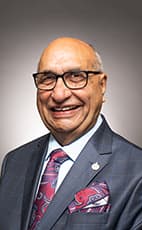
Gurbux Saini
In the 90 days to September 18, 2026, 5 organizations lobbied Gurbux Saini across 6 meetings — most often about Health. The most frequent visitor was British Columbia's Children's Hospital Foundation (2 meetings, via their in-house lobbyist Malcolm Berry). Its registration describes the goal as “Seek funding for the development of a new mental health building on the BC Children’s Hospital campus”. That's about the same as the average MP, who had 6 meetings over the same period.
Based on federal lobbying registry data to September 18, 2026
In the House · Sep 21–25
Gurbux Saini this week
“Members of the community arrived for prayers to find their mosque had been vandalized with hateful and Islamophobic graffiti, including explicit death threats, along with raw animal remains left at the site. These acts are completely unacceptable.”
- Spoke 1 time in the House · the average MP spoke 4 times
- FORC-266, second reading — Establish a national framework respecting skilled trades and labour mobility · passed 295–21
Get Gurbux Saini's week in your inbox every Monday
What they said, how they voted, and who lobbied them. Free, no ads, unsubscribe anytime.
How Gurbux Saini actually voted
Their recorded positions on the issues Canadians care about — pulled straight from the parliamentary record.
- Voted For
Labour & Employment
Establish a national framework respecting skilled trades and labour mobility
C-266 · Sep 2026 · Passed · Tell your MP what you think
- Voted For
Economy & Taxation
Implement certain provisions of the spring economic update tabled in Parliament on April 28, 2026
C-30 · Jun 2026 · Passed · Tell your MP what you think
- Voted For
Housing
Authorize certain payments to be made out of the Consolidated Revenue Fund for the purpose of improving housing supply
C-26 · Jun 2026 · Passed · Tell your MP what you think
- Voted For
Criminal Justice
Hate propaganda, hate crime and access to religious or cultural places
C-9 · Jun 2026 · Passed · Tell your MP what you think
- Voted For
Overall leanings
99%
voted with the Liberal line this Parliament · broke ranks 1×
98%
vote attendance (171/174, missed 3)
Who’s in Gurbux’s ear
71
lobbying meetings
53
companies & groups
33
speeches in Parliament
Top lobbying relationship: National Council of Canadian Muslims (NCCM) — met 4 times · most lobbied on Economic Development.
See who’s lobbying Gurbux →Who's lobbying Gurbux
Individual meeting records from the federal lobbying registry
| Date | Organization | |
|---|---|---|
| 2026-08-13 | British Columbia's Children's Hospital Foundation | |
| 2026-07-31 | Real Estate Foundation BC | |
| 2026-07-31 | British Columbia's Children's Hospital Foundation | |
| 2026-07-21 | Environmental Defence Canada | |
| 2026-07-10 | CANADIAN HEALTH FOOD ASSOCIATION |
Write to Gurbux Saini
Pick what it's about. You'll get a letter you can edit, then send it from your own email.
Other ways to reach Gurbux
613-992-4211 is the House of Commons switchboard — ask to be connected to your MP's office. For constituency office contact details, or if gurbux.saini@parl.gc.ca bounces, visit their Parliament profile.
Committee Memberships
What Gurbux talks about
- National Framework for Food Price Transparency Act7 speeches · 2025–2026
- Bail and Sentencing Reform Act6 speeches · 2025
- Public Safety4 speeches · 2025–2026
- Food Price Transparency2 speeches · 2025–2026
- Canada Day Celebrations1 speeches · 2025
Recent Speeches
Mr. Speaker, I rise today to condemn the deeply disturbing incident that took place on August 28 at Fleetwood Islamic Centre in Surrey. Members of the community arrived for prayers to find their mosque had been vandalized with hateful and Islamophobic graffiti, including explicit death threats, alon… Read full speechShow less
Mr. Speaker, I rise today to condemn the deeply disturbing incident that took place on August 28 at Fleetwood Islamic Centre in Surrey. Members of the community arrived for prayers to find their mosque had been vandalized with hateful and Islamophobic graffiti, including explicit death threats, along with raw animal remains left at the site. These acts are completely unacceptable. Places of worship must remain safe and welcoming spaces for everyone. Islamophobia and racism have no place in Canada. Every Canadian deserves to live and worship safely, freely and without fear.
Mr. Speaker, my colleague opposite talks about the notwithstanding clause. Your government has said publicly that it would use the notwithstanding clause to take away the rights of Canadians, whether it is religious freedom or any others. This is why your party voted in favour of Bill C‑21, which wo… Read full speechShow less
Mr. Speaker, my colleague opposite talks about the notwithstanding clause. Your government has said publicly that it would use the notwithstanding clause to take away the rights of Canadians, whether it is religious freedom or any others. This is why your party voted in favour of Bill C‑21, which would take rights away from Canadians.
Mr. Speaker, I rise today to recognize Kaur Collective Foundation, a national organization advancing South Asian women's health equity and collective care. Founded and led by Jessie Kaur Lehail, Kaur Collective Foundation works at the intersection of women's health, culture and power. It leads healt… Read full speechShow less
Mr. Speaker, I rise today to recognize Kaur Collective Foundation, a national organization advancing South Asian women's health equity and collective care. Founded and led by Jessie Kaur Lehail, Kaur Collective Foundation works at the intersection of women's health, culture and power. It leads health equity research and projects that improve access to culturally safe care for South Asian women. Kaur Collective Foundation also pushes government and institutions to see intimate partner violence, human trafficking and food security labour through a cultural lens. I ask all members to join me in thanking the Kaur Collective Foundation for its vital work supporting South Asian women.
Mr. Speaker, this summer, organizations across Fleetwood—Port Kells are creating valuable opportunities for young people through the Canada summer jobs program. Through this program, we were able to connect and fund 221 youth jobs in my riding, representing a total of 59,320 hours of valuable work e… Read full speechShow less
Mr. Speaker, this summer, organizations across Fleetwood—Port Kells are creating valuable opportunities for young people through the Canada summer jobs program. Through this program, we were able to connect and fund 221 youth jobs in my riding, representing a total of 59,320 hours of valuable work experience to prepare for future careers while supporting important community organizations. This year, more than 45 organizations in Fleetwood—Port Kells are participating, including non-profits, sports groups, and cultural and religious organizations. I would like to thank all the organizations that applied and that continue to invest in young Canadians.
Mr. Speaker, I am pleased to rise once again in support of Bill C-226, an act to establish a national framework to improve food price transparency. Let me begin by acknowledging that our government has already taken important steps to support Canadians through a challenging period of global inflatio… Read full speechShow less
Mr. Speaker, I am pleased to rise once again in support of Bill C-226, an act to establish a national framework to improve food price transparency. Let me begin by acknowledging that our government has already taken important steps to support Canadians through a challenging period of global inflation and rising food costs, from strengthening competition in the grocery sector to supporting households directly. We recognize that affordability remains one of the most pressing concerns for Canadians today. These are important steps. They show that our government is taking concrete steps to better understand pricing practices and ensure that markets remain fair and competitive. However, we also recognize that more can and should be done. Bill C-226 builds on these efforts in a constructive and collaborative way. It does not seek to replace existing measures, nor does it place undue burden on provinces, territories or retailers. Instead, it proposes a practical framework that complements current initiatives by focusing on one key principle: transparency. Canadians want to make informed choices, yet too often they are faced with unclear or inconsistent pricing practices. Without standardized unit pricing, such as the cost per gram or per litre, it becomes unnecessarily difficult to compare products and determine their true value. It is important to note that this bill aims to foster a shared approach to clarity and consistency across the country in partnership with provinces and territories, without infringing on their jurisdictions or authorities. It is also important to emphasize that this legislation is measured and realistic. It does not claim to solve all aspects of food affordability; rather, it represents a thoughtful step forward that empowers consumers without imposing heavy-handed regulations. At a time when Canadians are carefully managing their household budgets, even small improvements in transparency can make a meaningful difference. When people can easily compare prices, they are better equipped to stretch their dollars and make choices that suit their needs. This bill is also about trust. Transparency strengthens confidence in the marketplace. It reassures Canadians that the system is fair, that information is accessible and that they are not at a disadvantage when making everyday purchases. This is a balanced proposal. It aligns with the work our government is already doing, and it reflects our commitment to supporting Canadians in a practical, responsible way. I invite all members of the House to view Bill C-226 in that spirit, as a collaborative, responsible measure that would complement existing efforts and help Canadians navigate the realities of today's economy. Let us continue working together to improve affordability, strengthen transparency and ensure that our grocery system works for all Canadians.
Bills Sponsored
Recent activity
22 activities across speeches, bills, and lobbying communications.
September 2026
Statements by Members
Mr. Speaker, I rise today to condemn the deeply disturbing incident that took place on August 28 at Fleetwood Islamic Centre in Surrey. Members of the community arrived for prayers to find their mosqu… Read full speechShow less
Mr. Speaker, I rise today to condemn the deeply disturbing incident that took place on August 28 at Fleetwood Islamic Centre in Surrey. Members of the community arrived for prayers to find their mosque had been vandalized with hateful and Islamophobic graffiti, including explicit death threats, along with raw animal remains left at the site. These acts are completely unacceptable. Places of worship must remain safe and welcoming spaces for everyone. Islamophobia and racism have no place in Canada. Every Canadian deserves to live and worship safely, freely and without fear.
June 2026
Government Orders
Mr. Speaker, my colleague opposite talks about the notwithstanding clause. Your government has said publicly that it would use the notwithstanding clause to take away the rights of Canadians, whether … Read full speechShow less
Mr. Speaker, my colleague opposite talks about the notwithstanding clause. Your government has said publicly that it would use the notwithstanding clause to take away the rights of Canadians, whether it is religious freedom or any others. This is why your party voted in favour of Bill C‑21, which would take rights away from Canadians.
Statements by Members
Mr. Speaker, I rise today to recognize Kaur Collective Foundation, a national organization advancing South Asian women's health equity and collective care. Founded and led by Jessie Kaur Lehail, Kaur … Read full speechShow less
Mr. Speaker, I rise today to recognize Kaur Collective Foundation, a national organization advancing South Asian women's health equity and collective care. Founded and led by Jessie Kaur Lehail, Kaur Collective Foundation works at the intersection of women's health, culture and power. It leads health equity research and projects that improve access to culturally safe care for South Asian women. Kaur Collective Foundation also pushes government and institutions to see intimate partner violence, human trafficking and food security labour through a cultural lens. I ask all members to join me in thanking the Kaur Collective Foundation for its vital work supporting South Asian women.
May 2026
Statements by Members
Mr. Speaker, this summer, organizations across Fleetwood—Port Kells are creating valuable opportunities for young people through the Canada summer jobs program. Through this program, we were able to c… Read full speechShow less
Mr. Speaker, this summer, organizations across Fleetwood—Port Kells are creating valuable opportunities for young people through the Canada summer jobs program. Through this program, we were able to connect and fund 221 youth jobs in my riding, representing a total of 59,320 hours of valuable work experience to prepare for future careers while supporting important community organizations. This year, more than 45 organizations in Fleetwood—Port Kells are participating, including non-profits, sports groups, and cultural and religious organizations. I would like to thank all the organizations that applied and that continue to invest in young Canadians.
April 2026
Private Members' Business
Mr. Speaker, I am pleased to rise once again in support of Bill C-226, an act to establish a national framework to improve food price transparency. Let me begin by acknowledging that our government ha… Read full speechShow less
Mr. Speaker, I am pleased to rise once again in support of Bill C-226, an act to establish a national framework to improve food price transparency. Let me begin by acknowledging that our government has already taken important steps to support Canadians through a challenging period of global inflation and rising food costs, from strengthening competition in the grocery sector to supporting households directly. We recognize that affordability remains one of the most pressing concerns for Canadians today. These are important steps. They show that our government is taking concrete steps to better understand pricing practices and ensure that markets remain fair and competitive. However, we also recognize that more can and should be done. Bill C-226 builds on these efforts in a constructive and collaborative way. It does not seek to replace existing measures, nor does it place undue burden on provinces, territories or retailers. Instead, it proposes a practical framework that complements current initiatives by focusing on one key principle: transparency. Canadians want to make informed choices, yet too often they are faced with unclear or inconsistent pricing practices. Without standardized unit pricing, such as the cost per gram or per litre, it becomes unnecessarily difficult to compare products and determine their true value. It is important to note that this bill aims to foster a shared approach to clarity and consistency across the country in partnership with provinces and territories, without infringing on their jurisdictions or authorities. It is also important to emphasize that this legislation is measured and realistic. It does not claim to solve all aspects of food affordability; rather, it represents a thoughtful step forward that empowers consumers without imposing heavy-handed regulations. At a time when Canadians are carefully managing their household budgets, even small improvements in transparency can make a meaningful difference. When people can easily compare prices, they are better equipped to stretch their dollars and make choices that suit their needs. This bill is also about trust. Transparency strengthens confidence in the marketplace. It reassures Canadians that the system is fair, that information is accessible and that they are not at a disadvantage when making everyday purchases. This is a balanced proposal. It aligns with the work our government is already doing, and it reflects our commitment to supporting Canadians in a practical, responsible way. I invite all members of the House to view Bill C-226 in that spirit, as a collaborative, responsible measure that would complement existing efforts and help Canadians navigate the realities of today's economy. Let us continue working together to improve affordability, strengthen transparency and ensure that our grocery system works for all Canadians.
Private Members' Business
Mr. Speaker, I would like to see a recorded vote.
Statements by Members
Mr. Speaker, I rise today to note that my private member's bill, Bill C-226, an act to improve food price transparency, will be voted on in the House on Wednesday. At a time when families are facing h… Read full speechShow less
Mr. Speaker, I rise today to note that my private member's bill, Bill C-226, an act to improve food price transparency, will be voted on in the House on Wednesday. At a time when families are facing high grocery costs, Canadians deserve clear information to make informed choices. Too often, unclear pricing makes it difficult to compare products and find the best value. The bill proposes a practical, balanced federal framework focused on transparency while respecting provincial jurisdiction. It does not claim to solve all aspects of food affordability. Rather, it represents a thoughtful step forward. I urge all members of the House to support my bill, Bill C-226, on Wednesday.
March 2026
Statements by Members
Mr. Speaker, across Canada, people from many cultures and backgrounds come together to contribute to a shared society. The safety, opportunity and sense of belonging found here are what have led many … Read full speechShow less
Mr. Speaker, across Canada, people from many cultures and backgrounds come together to contribute to a shared society. The safety, opportunity and sense of belonging found here are what have led many people to choose Canada as their home. This week, as we mark the International Day for the Elimination of Racial Discrimination, we reflect on the importance of protecting these values. Respect, social cohesion and a strong spirit of living together are what allow our communities to grow and flourish. By encouraging these principles, we ensure that Canada remains a place where diversity is welcome and where everyone has the opportunity to succeed.
Statements by Members
Mr. Speaker, as we celebrate International Women's Day this week, we take time to recognize the many contributions that women make in our communities, workplaces and families. Across Canada, women are… Read full speechShow less
Mr. Speaker, as we celebrate International Women's Day this week, we take time to recognize the many contributions that women make in our communities, workplaces and families. Across Canada, women are leaders, caregivers, business owners, teachers and volunteers who help build a stronger and more compassionate country. Let us be reminded to continue working toward equality and opportunity for all women and girls across Canada and around the world. When women have access to opportunity and stability, entire communities thrive. Let us continue working toward a more equal and prosperous future for all.
House of Commons
38 communications with 29 clients
Top clients: [{"name": "Islamic Relief Canada", "count": 4}, {"name": "Mennonite Central Comm…
February 2026
Statements by Members
Mr. Speaker, we are all heartbroken by the horrific attack at Tumbler Ridge Secondary School. No parent should ever have to experience the loss of a child. I want to join members of the House in shari… Read full speechShow less
Mr. Speaker, we are all heartbroken by the horrific attack at Tumbler Ridge Secondary School. No parent should ever have to experience the loss of a child. I want to join members of the House in sharing my grief for the nine lives lost in Tumbler Ridge on Tuesday, and to pray for the quick recovery of the injured survivors. I also want to thank the first responders for their professionalism, which doubtlessly saved many lives. As the people of Tumbler Ridge feel the weight of their heavy loss, I want them to know that the House and this nation stand with them.
Statements by Members
Mr. Speaker, I rise to draw attention to a serious issue in Fleetwood—Port Kells. With the number of extortion cases on the rise, I met with constituents who shared their concerns about extortion and … Read full speechShow less
Mr. Speaker, I rise to draw attention to a serious issue in Fleetwood—Port Kells. With the number of extortion cases on the rise, I met with constituents who shared their concerns about extortion and intimidation in Surrey. No one should live in fear for their safety or their livelihood. These acts undermine trust, threaten community well-being and place strain on those who are trying to build a better life. I want my constituents to know that their voices have been heard. Addressing extortion requires strong co-operation between government and community leaders. I will continue working to support community safety and ensure that those responsible are held accountable.
January 2026
Oral Questions
Mr. Speaker, communities across Canada want to feel safe in their neighbourhoods and confident their government is taking action to prevent crime, especially given the rise in extortion in B.C.'s Lowe… Read full speechShow less
Mr. Speaker, communities across Canada want to feel safe in their neighbourhoods and confident their government is taking action to prevent crime, especially given the rise in extortion in B.C.'s Lower Mainland. Can the minister update the House on measures the government is taking to counter extortion, support law enforcement and ensure our communities feel safe?
Private Members' Business
moved that Bill C-226, An Act to establish a national framework to improve food price transparency, be read the second time and referred to a committee. Mr. Speaker, I proudly rise today for the secon… Read full speechShow less
moved that Bill C-226, An Act to establish a national framework to improve food price transparency, be read the second time and referred to a committee. Mr. Speaker, I proudly rise today for the second reading of my private member's bill, Bill C-226, an act to establish a national framework to improve food price transparency. The bill responds directly to what Canadians in every region of the country have been telling us, that grocery prices are too expensive and the pricing is too confusing. Canadians are doing everything they can to stretch their budgets. Families deserve clearer and more consistent information when making everyday purchasing decisions. Our government should ensure that the prices people see on the shelves are fair and transparent. Bill C-226 would call upon the collective efforts of federal, provincial and territorial governments. In response to this crisis, the Minister of Industry would consult with provincial and territorial counterparts responsible for consumers' affairs. The bill recognizes that improving food price transparency is not the responsibility of a single entity. It requires partnership. This is the exact kind of collaboration that Canadians deserve on issues that affect their daily lives. This is what Canadians voted for. As set out in subclause 3(2) of the bill, the framework must include measures to establish a national standard for unit pricing, ensuring accuracy, usability and accessibility across the country. It would also mandate greater transparency around price increases, adjustments and fluctuations. This would help consumers to better understand changes to the cost of essential foods over time. Furthermore, it would promote public education, so that Canadians are informed on unit pricing and how they can better compare products to determine value. The foundation of Bill C-226 is the promotion of fairness. The bill would strengthen transparency and build consumers' confidence during a crisis that unreasonably impacts families, students, newcomers and seniors on fixed incomes. The practice of unit pricing remains voluntary, and it is applied inconsistently from one province or territory to the next, affecting all Canadians. When meeting with my constituents, I regularly hear from families, seniors, newcomers and young people who face this reality. Rising grocery costs require more deliberate planning and careful budgeting for each trip to the grocery store. When unit pricing is applied inconsistently, consumers face increased pressure to compare products quickly and ineffectively. As Canadians struggle to make ends meet, this uncertainty places increased pressure on limited household budgets. Quebec is currently the only province where unit pricing is mandated by law, and Quebeckers benefit from clear, universal unit price transparency everywhere in that province. Meanwhile, in other jurisdictions, Canadians face the inconsistencies of a system reliant on retailers' discretion. This is a system that works for some but leaves many without the benefit of a blanket approach that looks after all Canadians. The inconvenience of this disparity is fundamentally unfair. Canadians, regardless of where they live, deserve the same level of clarity when purchasing essential goods. The House can make this a reality by taking this crucial first step. I have spoken with many stakeholders, including my constituents, post-secondary institutions and organizations that support individuals and communities struggling with unaffordable grocery pricing. Members of the Consumers Council of Canada have emphasized that a national unit pricing framework would provide consumers with accurate, uniform and accessible labelling for every product. Clear, standardized unit pricing would ensure that Canadians are not left to calculate costs based on inconsistent store practices to determine the true value of their groceries. I have also heard directly from post-secondary students of all backgrounds who are facing significant hardship. The student rights and responsibilities office at Kwantlen Polytechnic University shared that many students are making dramatic sacrifices to their living standards to afford basic groceries. This includes sharing one- or two-bedroom suites with many roommates and cutting necessary expenses, such as heating or medication, to ensure that they can eat. Young Canadians deserve the opportunity to buy affordable, nutritious and culturally appropriate meals in the face of food insecurity. Basic needs should never be compromised. While Bill C-226 is not a complete solution, it is a meaningful and practical step toward ensuring that Canadians have the tools they need to navigate an increasingly unaffordable grocery landscape. By ensuring universal unit price transparency, we empower consumers, promote fairness and ease the burden of the overarching issue of overpriced groceries. Passing this bill would be a concrete step toward addressing food insecurity and unaffordability. Unit price transparency would provide Canadians with the clarity to shop based on products that provide the best value. It would help families maximize their grocery dollars, support those on fixed income, and ensure newcomers and low-income Canadians are not disadvantaged by inconsistent or complex price displays. The bill's transparency requirement would address price increases and fluctuation by fostering greater accountability and giving Canadians the opportunity to make informed decisions. Unit price transparency will not solve food insecurity on its own, but it is a practical first step that would ease a key component of affordability for all Canadians. As Canadians struggle to make ends meet, the bill offers fairness and transparency to all Canadians so they can make more informed decisions. Our country deserves a grocery system that is fair, transparent and works for all its people. Bill C-226 would deliver on this by providing Canadians with the tools they need to make informed choices. I urge all members of the House to vote for this bill and help Canadians take back control of the grocery stores.
Private Members' Business
Mr. Speaker, the taxes the member is talking about do not exist. There is zero effect from carbon taxes, and there are many studies that have justified that.
Private Members' Business
Mr. Speaker, I congratulate the member as a Quebec member because Quebec is currently the only province that has this transparency. I am trying to tell Canadians that, if it can be done in Quebec, it … Read full speechShow less
Mr. Speaker, I congratulate the member as a Quebec member because Quebec is currently the only province that has this transparency. I am trying to tell Canadians that, if it can be done in Quebec, it should be done for all Canadians. I am absolutely open to help fellow Canadians wherever we can so they can live a reasonable life by paying reasonable prices for food products.
Private Members' Business
Mr. Speaker, Bill C-226 would make it so that every time someone goes to a grocery store, beside the pricing, the label would show what quantity someone is paying for, like grams or kilos. The consume… Read full speechShow less
Mr. Speaker, Bill C-226 would make it so that every time someone goes to a grocery store, beside the pricing, the label would show what quantity someone is paying for, like grams or kilos. The consumer could then compare different products and stores to make sure they are getting the best price available. Right now, that is not happening anywhere besides Quebec. During the crisis two or three years ago, one of the worst things that happened was that food prices stayed the same but the packages shrunk. Consumers were paying a lot more money for less product. This bill would force retailers to show what the price is per gram or per kilo, and then Canadians could compare prices online with different retailers and with different manufacturers.
December 2025
Oral Questions
Mr. Speaker, this past weekend important discussions were held in Surrey, British Columbia, on strengthening our law enforcement and intelligence agencies to combat extortion. Protecting Canadians has… Read full speechShow less
Mr. Speaker, this past weekend important discussions were held in Surrey, British Columbia, on strengthening our law enforcement and intelligence agencies to combat extortion. Protecting Canadians has never been more critical, yet the Conservatives play political games and stall measures like Bill C-2, preventing law enforcement from getting the key tools they need to protect Canadians. Can the Minister of Public Safety please outline the steps our government—
November 2025
Statements by Members
Mr. Speaker, I rise in the House today to speak about our charter, which was born 43 years ago. Canadians have had confidence that their federal government will respect their charter-guaranteed rights… Read full speechShow less
Mr. Speaker, I rise in the House today to speak about our charter, which was born 43 years ago. Canadians have had confidence that their federal government will respect their charter-guaranteed rights. The Leader of the Opposition has now admitted that he would be the first to breach that trust. He would walk over our charter rights. He is telling us exactly who he is. By contrast, our government remains committed to protecting these rights and freedoms, because Canadians expect all orders of government to abide by the charter, not limit it. We are the party of the charter, and we will always do our job to consistently defend it.
Statements by Members
Mr. Speaker, I rise today to address a matter of grave concern: public safety in Surrey. Residents are deeply worried about their safety and the security of their livelihoods. Seventy-four cases of ex… Read full speechShow less
Mr. Speaker, I rise today to address a matter of grave concern: public safety in Surrey. Residents are deeply worried about their safety and the security of their livelihoods. Seventy-four cases of extortion are currently under investigation. These are not just statistics. They are families, entrepreneurs and neighbourhoods living in fear. With Bill C-14, we have an opportunity and a responsibility to work together across all levels of government to restore safety, confidence and peace of mind. I want the people of Fleetwood—Port Kells to know their voices are being heard, and our government remains firmly committed to ensuring justice and safety for all Canadians.
October 2025
Government Orders
Mr. Speaker, I will be sharing my time with the member for Nunavut. I am pleased to speak today to Bill C-14, the bail and sentencing reform act, which proposes amendments to the Criminal Code to stre… Read full speechShow less
Mr. Speaker, I will be sharing my time with the member for Nunavut. I am pleased to speak today to Bill C-14, the bail and sentencing reform act, which proposes amendments to the Criminal Code to strengthen Canada's bail and sentencing laws by tightening release provisions for repeat and violent offenders and ensuring that serious crimes would be met with sentences that reflect their gravity. I would like to focus my remarks today on the proposed changes to the conditional sentence order regime, which is commonly referred to as house arrest. Conditional sentencing was introduced in 1966 to reduce the overreliance on incarceration and correctional institutions by allowing judges, in appropriate circumstances, to order that a sentence of imprisonment be served in the community under strict conditions. The Supreme Court of Canada has affirmed that conditional sentences are designed to combine the objectives of denunciation and deterrence with the rehabilitation and reintegration of the offenders. Judges must impose conditions that reflect this balance. Such conditions can include curfews, mandatory counselling, abstention from alcohol or drugs, abstention from owning weapons, and frequent reporting to a supervisor. Breaching any condition can result in the offender being placed in custody to serve the remainder of the sentence. To qualify for such an order, a number of conditions must be met. Number one, an offender must receive a sentence of less than two years. Number two, the court must be satisfied that serving their sentence in the community would not endanger public safety. Number three, such a sentence must be consistent with the fundamental purpose and principles of sentencing. The Criminal Code imposes other limitations on the availability of conditional sentences even if those conditions are met. Specifically, conditional sentences cannot be imposed for offences that carry a mandatory minimum term of imprisonment, or for offences related to terrorism or criminal organizations, when prosecuted by indictment and the maximum penalty is 10 years' imprisonment, or for the offences of attempted murder, advocating genocide and torture. Bill C-14 proposes to add new restrictions to the conditional sentence regime to ensure that that conditional sentences would no longer be available for serious sexual offences, including those involving children. In particular, conditional sentences would no longer be available for the following offences: sexual assault when prosecuted by indictment; sexual assault with a weapon; threats to a third party causing bodily harm; aggravated sexual assault; and sexual exploitation of a person with a disability when prosecuted by indictment. In addition, any offence that is of a sexual nature involving a victim under 18 years of age would be ineligible for a CSO when prosecuted by indictment. These proposed changes to the availability of conditional sentences are measured and deliberate. They would maintain the conditional sentencing option for low-risk offenders in appropriate cases, while reaffirming that sexual violence and exploitation demand more significant consequences. In my view, these changes are important and necessary. Although appellate courts across the country have affirmed that conditional sentences are not appropriate for sexual offending, there have been a number of decisions in which courts have nevertheless ordered conditional sentences for serious sexual offences, including cases involving minors or vulnerable victims. Given the profound harm these crimes inflict on victims and the need for sentences that clearly denounce such conduct, I am supportive of the proposed amendment to restrict conditional sentences in that type of offending. Additionally, the proposed changes were to respond to concerns raised by a number of partners and key stakeholders, including the provinces and territories, about the availability of conditional sentences for offenders convicted of sexual assault and other serious sex offences, particularly when those crimes involve children or other vulnerable persons. Partners and stakeholders have been clear and consistent in their views. Conditional sentences should never be available for sexual offences of this nature, and especially not for those committed against minors. Bill C-14 would respond directly to these calls to reform. It represents constructive federal-provincial collaboration to ensure that sentencing laws strike the right balance between judicial discretion, public safety and society's confidence in the administration of justice. The proposed amendments also respond to the lived experience of victims and survivors. Many of them have described the retraumatization that can result when they learn that an offender has remained in the community after conviction. For survivors, seeing a person found guilty of sexual offences serving a sentence at home can undermine confidence in the justice system and deter others from coming forward. Let me be clear. Conditional sentences can be an important pathway to accountability and reintegration, but only when the circumstances of the offence and the offender make that outcome consistent with justice and public safety. In some cases, though, conditional sentences are simply not appropriate and send the wrong signal. In closing, I would like to convey that Bill C-14 represents necessary and responsible criminal law reform. It demonstrates that Parliament can respond thoughtfully to emerging challenges in the justice system by refining the law to reflect both fairness and accountability. It strikes the right balance so that our sentencing framework remains coherent, consistent and worthy of public trust. For those reasons, I urge all members to support the swift passage of Bill C-14, a set of reforms that reaffirm our collective commitment to a justice system that stands for victims, protects communities and preserves the integrity of the justice system. In doing so, we send a clear message that fairness and safety can reinforce each other and that the criminal justice system in Canada will always remain both principled and strong.