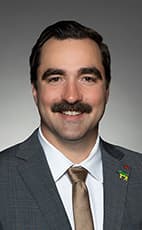
Jeremy Patzer
In the 90 days to September 18, 2026, 3 organizations lobbied Jeremy Patzer across 7 meetings — most often about Agriculture. The most frequent visitor was Saskatchewan Association of Rural Municipalities (3 meetings, via their in-house lobbyist Laurel Feltin). Its registration describes the goal as “Wildfire Management funding: the need for a funding program for volunteer fire department training and equipment to help prepare for future…”. That's about the same as the average MP, who had 6 meetings over the same period.
Based on federal lobbying registry data to September 18, 2026
In the House · Sep 21–25
Jeremy Patzer this week
“I want to get something on the record here. The member for Winnipeg North was talking about the government creating jobs. The problem in Canada right now is that it is actually not up to the government to create jobs.”
- Spoke 4 times in the House · the average MP spoke 4 times
- FORC-266, second reading — Establish a national framework respecting skilled trades and labour mobility · passed 295–21
Get Jeremy Patzer's week in your inbox every Monday
What they said, how they voted, and who lobbied them. Free, no ads, unsubscribe anytime.
How Jeremy Patzer actually voted
Their recorded positions on the issues Canadians care about — pulled straight from the parliamentary record.
- Voted For
Labour & Employment
Establish a national framework respecting skilled trades and labour mobility
C-266 · Sep 2026 · Passed · Tell your MP what you think
- Voted Against
Economy & Taxation
Implement certain provisions of the spring economic update tabled in Parliament on April 28, 2026
C-30 · Jun 2026 · Passed · Tell your MP what you think
- Voted Against
Housing
Authorize certain payments to be made out of the Consolidated Revenue Fund for the purpose of improving housing supply
C-26 · Jun 2026 · Passed · Tell your MP what you think
- Voted Against
Criminal Justice
Hate propaganda, hate crime and access to religious or cultural places
C-9 · Jun 2026 · Passed · Tell your MP what you think
- Voted Against
Overall leanings
100%
voted with the Conservative line this Parliament
99%
vote attendance (173/174, missed 1)
Who’s in Jeremy’s ear
357
lobbying meetings
164
companies & groups
703
speeches in Parliament
Top lobbying relationship: Saskatchewan Association of Rural Municipalities — met 66 times · most lobbied on Agriculture.
See who’s lobbying Jeremy →Who's lobbying Jeremy
Individual meeting records from the federal lobbying registry
| Date | Organization | |
|---|---|---|
| 2026-08-24 | Saskatchewan Association of Rural Municipalities | |
| 2026-08-17 | SaskMilk (Saskatchewan Milk Marketing Board) | |
| 2026-08-14 | SaskMilk (Saskatchewan Milk Marketing Board) | |
| 2026-07-21 | Dexcom Canada, Co. | |
| 2026-06-04 | Canada's National Firearms Association |
Write to Jeremy Patzer
Pick what it's about. You'll get a letter you can edit, then send it from your own email.
Other ways to reach Jeremy
613-992-4211 is the House of Commons switchboard — ask to be connected to your MP's office. For constituency office contact details, or if jeremy.patzer@parl.gc.ca bounces, visit their Parliament profile.
Committee Memberships
Top Lobbying Clients
Companies with the most meetings with this MP
What Jeremy talks about
- Canadian Sustainable Jobs Act45 speeches · 2023–2024
- Criminal Code31 speeches · 2021–2026
- Carbon Pricing25 speeches · 2022–2024
- Copyright Act17 speeches · 2021–2023
- Online Streaming Act17 speeches · 2022–2023
Recent Speeches
Mr. Speaker, the member spoke a lot about the labour portion of this bill, which is part 3. We have seen, over the last couple of years, a lot of strikes at the port of Vancouver, as well as the rail companies. In the member's opinion, how would this bill have handled or interacted with those strike… Read full speechShow less
Mr. Speaker, the member spoke a lot about the labour portion of this bill, which is part 3. We have seen, over the last couple of years, a lot of strikes at the port of Vancouver, as well as the rail companies. In the member's opinion, how would this bill have handled or interacted with those strikes and those labour situations at the port of Vancouver and the rail strikes?
Mr. Speaker, I want to get something on the record here. The member for Winnipeg North was talking about the government creating jobs. The problem in Canada right now is that it is actually not up to the government to create jobs. It is up to the private sector to create jobs. The government's job i… Read full speechShow less
Mr. Speaker, I want to get something on the record here. The member for Winnipeg North was talking about the government creating jobs. The problem in Canada right now is that it is actually not up to the government to create jobs. It is up to the private sector to create jobs. The government's job is to create a regulatory environment that would allow the private sector to do that. This is the second bill that the government has tabled claiming to blow the doors off the Canadian economy, yet it has not done anything to substantively address the regulatory problems that are cited by industry regarding getting jobs created. Does my colleague have any thoughts on that?
Mr. Speaker, I want to thank my colleague for a tremendous speech. It is always a pleasure to listen to him in this House. He is very factual as well. That is what I really appreciate about what he has to say. He brings so much substance to what he says in the House. We can contrast that with the fa… Read full speechShow less
Mr. Speaker, I want to thank my colleague for a tremendous speech. It is always a pleasure to listen to him in this House. He is very factual as well. That is what I really appreciate about what he has to say. He brings so much substance to what he says in the House. We can contrast that with the fact that we are dealing with a bill today that is thicker than most phone books we find in this country now. I really cannot believe it. This is not the first bill the government has tabled to try to fix 10 years of disastrous governance over there. It already has Bill C-5. This is another admission that that bill does not work. Are we going to be back here again debating another bill to undo more bad Liberal laws from the government? Are Canadians expected to believe that it is going to get things right this time?
Madam Speaker, it is always an honour to rise in this place on behalf of the great people of southwest and west central Saskatchewan. Canadians sent us here to deal with many problems affecting them personally and impacting the country as a whole. There is no doubt that what we are debating right no… Read full speechShow less
Madam Speaker, it is always an honour to rise in this place on behalf of the great people of southwest and west central Saskatchewan. Canadians sent us here to deal with many problems affecting them personally and impacting the country as a whole. There is no doubt that what we are debating right now is a very serious issue facing our society. I first want to thank my colleague the member for Cloverdale—Langley City for her leadership in bringing forward the right to recover act, Bill C-218. She has already brought hope to so many people and approached such a difficult topic with the compassion and the urgency that it deserves. Not only has the member for Elgin—St. Thomas—London South seconded the bill, but along the way he has done a lot of work advocating for it. He had the courage to share his own personal story of battling years of severe depression and surviving suicide attempts. While telling his full story, which includes a challenging process of recovery, he shone a light on a struggle facing thousands of Canadians and their loved ones. To give us more perspective, here are some of the latest numbers from the federal public health website. Each year in Canada, there are 4,750 deaths by suicide and 20,000 hospitalizations caused by self-harm. There are 100,000 reported suicide attempts, along with 250,000 people who make suicide plans and 840,000 people with serious thoughts of suicide. That means every single day there are 250 Canadians who make reported suicide attempts, 700 who make suicide plans and 2,300 who have serious suicidal thoughts. Let us allow all of that to sink in for a minute. We often talk about having better awareness about mental health, but we also need to build on that by actively meeting people's needs and providing real protection for those who are vulnerable. With this bill, both of these MPs have moved us forward in that important goal. At the moment, we are in a situation where the current law would allow access to MAID for people who have a desire to die solely on the basis of their mental illness. If we think about it for a second, we can start to imagine how that creates an opening in the medical system where it becomes easier for a suicidal person to end their life. In other words, it is pretty clear that we are really talking about assisted suicide. As Canadians learn that this is happening, they are increasingly against the idea, but currently, if nothing changes, the Criminal Code would allow eligibility for assisted suicide on the basis of mental illness alone starting next spring. As disturbing as it is to think about, it is not too far in the future. However, Bill C-218 provides a simple solution. By a short amendment to the Criminal Code, it would stop the expansion of MAID for mental illness before it takes effect. Just recently, the Special Joint Committee on Medical Assistance in Dying studied this exact issue and came to the same conclusion. Based on the consistent testimony of witnesses and experts, the committee's report officially recommended an amendment to the Criminal Code to exclude mental illness as the sole underlying medical condition for MAID. This recommendation reflects a consensus across party lines, and now that we have Bill C-218 in front of us, it just makes sense for us to proceed with it to achieve the final result we would like to see. Earlier this year, I had the chance to work with the special joint committee as it carried out the study. That happened because I ended up filling in for one of the regular members, the member for Cariboo—Prince George—Omineca, who was supposed to be on that committee but had to spend some time away to recover from surgery he had on his knee. I want to make a special mention of something here. It made perfect sense for him to participate in the study because he has been one of Canada's strongest advocates for mental health. He has worked tirelessly for years to make the 988 suicide prevention hotline a reality. After his motion passed unanimously in the House, it still took a few years before it finally launched, thanks in large part to his persistent efforts with introducing legislation, setting timelines and helping to keep up the pressure on the government to get the job done. It needed so much time and effort to accomplish, even though it was a project that already had broad support across parties. It was worth doing because we know that 988 has made a real difference and has been saving people's lives. We all support suicide prevention. We have a good idea of how important it is to be prepared so that we can respond with compassion and provide resources to people who are suicidal. On the other side of the equation, we also need to be extremely cautious of sending the wrong signals or messages, which could push a vulnerable group of people in a worse direction. We had a representative from 988 appear as a witness in this study on assisted suicide for mental illness. She provided data to us based on her team's experience: ...on frontline signals from 988, up to 7% of interactions on the service refer to MAID. Critically, among those who reference MAID, 74% endorsed thoughts of suicide in the past two days, compared with 48% among other contacts. In short, interactions with our national suicide crisis line that reference MAID are associated with substantially higher suicidal ideation. That's not a theoretical concern; it's a real, measurable, elevated risk among people who mentioned MAID to Canada's suicide prevention service. The same witness also went on to say: My recommendation is straightforward. Do not expand MAID to cases where the sole underlying condition is a mental disorder. This recommendation aligns with the position of the International Association for Suicide Prevention that the overlap between MAID requests and suicide makes distinguishing between them impossible. MAID for mental illness will undermine suicide prevention by positioning MAID as a viable alternative to treatment. This was one of the key concerns raised during the committee study. As this witness said, which was a point echoed by others, it is impossible to distinguish a desire for death inspired by mental illness from being suicidal. Dr. Sandip Singh Gandham expressed, “I worry that in some cases, we may not be responding to an autonomous, enduring request for assisted dying, but rather to the voice of the illness itself.” We also heard the story of Donna Duncan in B.C. Her daughter, Alicia, appeared as a witness and has been raising the alarm on her mother's case, which is directly related to the issue before us today. Donna was approved for and died by MAID in British Columbia in 2021, only hours after being released from a psychiatric unit and following a suicide attempt. Donna was clearly suicidal and facing a mental health crisis, and all her blood tests came back normal. She had no terminal condition. She should not have been a candidate for MAID, yet the system deemed her eligible for track 1 MAID because, under the influence of a mental disorder, she was starving herself. In this case, the existing safeguards failed despite the family's best efforts and despite Donna's own admission that she did not want to die. She just felt deprived of proper care. If a mistake was made in this case or any others, what is the remedy supposed to be? Death is irreversible. As the Duncan family found out, the only person authorized to access Donna's MAID assessment records is Donna herself, and Donna has died. Neither her family nor even the police can access the records, and neither the regulators nor the B.C Privacy Commissioner is prepared to override that. Realistically, then, how is anyone supposed to investigate whether the law was followed? There are also concerns about new conflicts with providing patient care in the relationship that therapists have with clients. Are Canadian care providers there to fight relentlessly for every last person who can be helped or are they there to process people according to their requests and wishes, even if they could eventually recover in the future from their mental illness? Dr. Jitender Sareen put his finger on this when he said, “This goes to the core psychiatric practice, which is grounded in assessing and treating hopelessness and preventing suicide.” Is the psychiatrist there to help prevent suicide or enable it? What does it do to a psychiatrist's ability to do the former if the patient knows all the time that all they have to do to have their life ended is refuse to co-operate on therapeutic help that might work? In that context, if MAID is available as an option, it becomes a factor on its own, which can undermine the effectiveness of therapy. Along with the general problem of recognizing suicidality for what it is, medical and psychiatric professionals also share deep concerns with the idea of irremediability and predicting patient outcomes while considering all the complexity of treatments for mental illnesses. Dr. Karin Neufeld testified about a middle-aged patient of hers who had been suffering from a major depressive illness since childhood. He was seeking a referral for MAID and would have qualified, but after undergoing treatment with this particular therapist, he has now recovered the will to live. We have heard about similar cases as well. Across Canada, people struggling with a mental illness are contemplating MAID not because they want to die, but because they are not getting proper support. They come from all walks of life. In this area, we heard about particular concerns related to indigenous communities and people with disabilities. Our approach to allowing assisted suicide for mental illness is something that medical professionals, psychiatrists, advocacy groups and the United Nations have called on us to rethink. Parliament has itself pushed the deadline back multiple times and our special committee has now recommended indefinitely suspending it. We should listen to Canadians and listen to the committee and finally reverse this expansion. Let us pass Bill C-218.
Mr. Speaker, when I rose in the House previously in question period, I asked the Minister of Public Safety about charges being stayed against two fentanyl traffickers who were arrested and in court in Swift Current. Police found 17.5 pounds of fentanyl in their car, and their charges were stayed. Th… Read full speechShow less
Mr. Speaker, when I rose in the House previously in question period, I asked the Minister of Public Safety about charges being stayed against two fentanyl traffickers who were arrested and in court in Swift Current. Police found 17.5 pounds of fentanyl in their car, and their charges were stayed. That 17.5 pounds of fentanyl is just under four million doses. Effectively, 17.5 pounds of fentanyl could kill close to four million people. That is enough fentanyl to kill just about all of the people in Alberta and Saskatchewan combined in one traffic stop. The individuals' charges were stayed, they were released on bail and now they are out in the general public. This is getting ridiculous. It is getting out of hand. Let us look at the tone the government has set over the years with its soft-on-crime approach. Let us look at Bill C-75. The “earliest reasonable opportunity and on the least onerous conditions” is the main theme of what Bill C-75 has meant for people like drug traffickers. Let us take a look at a few other cases in and around Saskatchewan. On April 8, another individual was found with 51 grams of fentanyl. It is not nearly as much as 17.5 pounds, but it is deadly, nonetheless. On April 16, another person was found with 282 grams of fentanyl and 556 grams of cocaine. On May 15, 227 grams of methamphetamine was found on an individual. These are deadly amounts of drugs that people have in their possession, and these people are generally released out into the public. Just yesterday, here in Ontario, an individual who was out on bail was arrested with 30 grams of cocaine and 22 grams of fentanyl, which has a street value of about $5,200. This person was out on bail for a previous drug possession and trafficking charge for a street value of $125,000. This is getting insane. These are the kinds of things that people are seeing on the streets. Canadians are getting sick and tired of seeing people who have large amounts of fentanyl, which is a deadly drug that can kill tons of people. We have all seen the headlines. People are getting so sick and tired of this. Fentanyl is getting into our high schools and many places where it should never be. We are seeing people overdosing in parks and public spaces. The drug epidemic is getting out of hand, and people are getting so sick and tired of it. When on earth is the government going to actually do something to make sure that people trafficking 17.5 pounds of fentanyl will not be allowed back out on the streets?
Bills Sponsored
Recent activity
23 activities across speeches, bills, and lobbying communications.
September 2026
Government Orders
Mr. Speaker, the member spoke a lot about the labour portion of this bill, which is part 3. We have seen, over the last couple of years, a lot of strikes at the port of Vancouver, as well as the rail … Read full speechShow less
Mr. Speaker, the member spoke a lot about the labour portion of this bill, which is part 3. We have seen, over the last couple of years, a lot of strikes at the port of Vancouver, as well as the rail companies. In the member's opinion, how would this bill have handled or interacted with those strikes and those labour situations at the port of Vancouver and the rail strikes?
Government Orders
Mr. Speaker, I want to get something on the record here. The member for Winnipeg North was talking about the government creating jobs. The problem in Canada right now is that it is actually not up to … Read full speechShow less
Mr. Speaker, I want to get something on the record here. The member for Winnipeg North was talking about the government creating jobs. The problem in Canada right now is that it is actually not up to the government to create jobs. It is up to the private sector to create jobs. The government's job is to create a regulatory environment that would allow the private sector to do that. This is the second bill that the government has tabled claiming to blow the doors off the Canadian economy, yet it has not done anything to substantively address the regulatory problems that are cited by industry regarding getting jobs created. Does my colleague have any thoughts on that?
Government Orders
Mr. Speaker, I want to thank my colleague for a tremendous speech. It is always a pleasure to listen to him in this House. He is very factual as well. That is what I really appreciate about what he ha… Read full speechShow less
Mr. Speaker, I want to thank my colleague for a tremendous speech. It is always a pleasure to listen to him in this House. He is very factual as well. That is what I really appreciate about what he has to say. He brings so much substance to what he says in the House. We can contrast that with the fact that we are dealing with a bill today that is thicker than most phone books we find in this country now. I really cannot believe it. This is not the first bill the government has tabled to try to fix 10 years of disastrous governance over there. It already has Bill C-5. This is another admission that that bill does not work. Are we going to be back here again debating another bill to undo more bad Liberal laws from the government? Are Canadians expected to believe that it is going to get things right this time?
Private Members' Business
Madam Speaker, it is always an honour to rise in this place on behalf of the great people of southwest and west central Saskatchewan. Canadians sent us here to deal with many problems affecting them p… Read full speechShow less
Madam Speaker, it is always an honour to rise in this place on behalf of the great people of southwest and west central Saskatchewan. Canadians sent us here to deal with many problems affecting them personally and impacting the country as a whole. There is no doubt that what we are debating right now is a very serious issue facing our society. I first want to thank my colleague the member for Cloverdale—Langley City for her leadership in bringing forward the right to recover act, Bill C-218. She has already brought hope to so many people and approached such a difficult topic with the compassion and the urgency that it deserves. Not only has the member for Elgin—St. Thomas—London South seconded the bill, but along the way he has done a lot of work advocating for it. He had the courage to share his own personal story of battling years of severe depression and surviving suicide attempts. While telling his full story, which includes a challenging process of recovery, he shone a light on a struggle facing thousands of Canadians and their loved ones. To give us more perspective, here are some of the latest numbers from the federal public health website. Each year in Canada, there are 4,750 deaths by suicide and 20,000 hospitalizations caused by self-harm. There are 100,000 reported suicide attempts, along with 250,000 people who make suicide plans and 840,000 people with serious thoughts of suicide. That means every single day there are 250 Canadians who make reported suicide attempts, 700 who make suicide plans and 2,300 who have serious suicidal thoughts. Let us allow all of that to sink in for a minute. We often talk about having better awareness about mental health, but we also need to build on that by actively meeting people's needs and providing real protection for those who are vulnerable. With this bill, both of these MPs have moved us forward in that important goal. At the moment, we are in a situation where the current law would allow access to MAID for people who have a desire to die solely on the basis of their mental illness. If we think about it for a second, we can start to imagine how that creates an opening in the medical system where it becomes easier for a suicidal person to end their life. In other words, it is pretty clear that we are really talking about assisted suicide. As Canadians learn that this is happening, they are increasingly against the idea, but currently, if nothing changes, the Criminal Code would allow eligibility for assisted suicide on the basis of mental illness alone starting next spring. As disturbing as it is to think about, it is not too far in the future. However, Bill C-218 provides a simple solution. By a short amendment to the Criminal Code, it would stop the expansion of MAID for mental illness before it takes effect. Just recently, the Special Joint Committee on Medical Assistance in Dying studied this exact issue and came to the same conclusion. Based on the consistent testimony of witnesses and experts, the committee's report officially recommended an amendment to the Criminal Code to exclude mental illness as the sole underlying medical condition for MAID. This recommendation reflects a consensus across party lines, and now that we have Bill C-218 in front of us, it just makes sense for us to proceed with it to achieve the final result we would like to see. Earlier this year, I had the chance to work with the special joint committee as it carried out the study. That happened because I ended up filling in for one of the regular members, the member for Cariboo—Prince George—Omineca, who was supposed to be on that committee but had to spend some time away to recover from surgery he had on his knee. I want to make a special mention of something here. It made perfect sense for him to participate in the study because he has been one of Canada's strongest advocates for mental health. He has worked tirelessly for years to make the 988 suicide prevention hotline a reality. After his motion passed unanimously in the House, it still took a few years before it finally launched, thanks in large part to his persistent efforts with introducing legislation, setting timelines and helping to keep up the pressure on the government to get the job done. It needed so much time and effort to accomplish, even though it was a project that already had broad support across parties. It was worth doing because we know that 988 has made a real difference and has been saving people's lives. We all support suicide prevention. We have a good idea of how important it is to be prepared so that we can respond with compassion and provide resources to people who are suicidal. On the other side of the equation, we also need to be extremely cautious of sending the wrong signals or messages, which could push a vulnerable group of people in a worse direction. We had a representative from 988 appear as a witness in this study on assisted suicide for mental illness. She provided data to us based on her team's experience: ...on frontline signals from 988, up to 7% of interactions on the service refer to MAID. Critically, among those who reference MAID, 74% endorsed thoughts of suicide in the past two days, compared with 48% among other contacts. In short, interactions with our national suicide crisis line that reference MAID are associated with substantially higher suicidal ideation. That's not a theoretical concern; it's a real, measurable, elevated risk among people who mentioned MAID to Canada's suicide prevention service. The same witness also went on to say: My recommendation is straightforward. Do not expand MAID to cases where the sole underlying condition is a mental disorder. This recommendation aligns with the position of the International Association for Suicide Prevention that the overlap between MAID requests and suicide makes distinguishing between them impossible. MAID for mental illness will undermine suicide prevention by positioning MAID as a viable alternative to treatment. This was one of the key concerns raised during the committee study. As this witness said, which was a point echoed by others, it is impossible to distinguish a desire for death inspired by mental illness from being suicidal. Dr. Sandip Singh Gandham expressed, “I worry that in some cases, we may not be responding to an autonomous, enduring request for assisted dying, but rather to the voice of the illness itself.” We also heard the story of Donna Duncan in B.C. Her daughter, Alicia, appeared as a witness and has been raising the alarm on her mother's case, which is directly related to the issue before us today. Donna was approved for and died by MAID in British Columbia in 2021, only hours after being released from a psychiatric unit and following a suicide attempt. Donna was clearly suicidal and facing a mental health crisis, and all her blood tests came back normal. She had no terminal condition. She should not have been a candidate for MAID, yet the system deemed her eligible for track 1 MAID because, under the influence of a mental disorder, she was starving herself. In this case, the existing safeguards failed despite the family's best efforts and despite Donna's own admission that she did not want to die. She just felt deprived of proper care. If a mistake was made in this case or any others, what is the remedy supposed to be? Death is irreversible. As the Duncan family found out, the only person authorized to access Donna's MAID assessment records is Donna herself, and Donna has died. Neither her family nor even the police can access the records, and neither the regulators nor the B.C Privacy Commissioner is prepared to override that. Realistically, then, how is anyone supposed to investigate whether the law was followed? There are also concerns about new conflicts with providing patient care in the relationship that therapists have with clients. Are Canadian care providers there to fight relentlessly for every last person who can be helped or are they there to process people according to their requests and wishes, even if they could eventually recover in the future from their mental illness? Dr. Jitender Sareen put his finger on this when he said, “This goes to the core psychiatric practice, which is grounded in assessing and treating hopelessness and preventing suicide.” Is the psychiatrist there to help prevent suicide or enable it? What does it do to a psychiatrist's ability to do the former if the patient knows all the time that all they have to do to have their life ended is refuse to co-operate on therapeutic help that might work? In that context, if MAID is available as an option, it becomes a factor on its own, which can undermine the effectiveness of therapy. Along with the general problem of recognizing suicidality for what it is, medical and psychiatric professionals also share deep concerns with the idea of irremediability and predicting patient outcomes while considering all the complexity of treatments for mental illnesses. Dr. Karin Neufeld testified about a middle-aged patient of hers who had been suffering from a major depressive illness since childhood. He was seeking a referral for MAID and would have qualified, but after undergoing treatment with this particular therapist, he has now recovered the will to live. We have heard about similar cases as well. Across Canada, people struggling with a mental illness are contemplating MAID not because they want to die, but because they are not getting proper support. They come from all walks of life. In this area, we heard about particular concerns related to indigenous communities and people with disabilities. Our approach to allowing assisted suicide for mental illness is something that medical professionals, psychiatrists, advocacy groups and the United Nations have called on us to rethink. Parliament has itself pushed the deadline back multiple times and our special committee has now recommended indefinitely suspending it. We should listen to Canadians and listen to the committee and finally reverse this expansion. Let us pass Bill C-218.
June 2026
Adjournment Proceedings
Mr. Speaker, when I rose in the House previously in question period, I asked the Minister of Public Safety about charges being stayed against two fentanyl traffickers who were arrested and in court in… Read full speechShow less
Mr. Speaker, when I rose in the House previously in question period, I asked the Minister of Public Safety about charges being stayed against two fentanyl traffickers who were arrested and in court in Swift Current. Police found 17.5 pounds of fentanyl in their car, and their charges were stayed. That 17.5 pounds of fentanyl is just under four million doses. Effectively, 17.5 pounds of fentanyl could kill close to four million people. That is enough fentanyl to kill just about all of the people in Alberta and Saskatchewan combined in one traffic stop. The individuals' charges were stayed, they were released on bail and now they are out in the general public. This is getting ridiculous. It is getting out of hand. Let us look at the tone the government has set over the years with its soft-on-crime approach. Let us look at Bill C-75. The “earliest reasonable opportunity and on the least onerous conditions” is the main theme of what Bill C-75 has meant for people like drug traffickers. Let us take a look at a few other cases in and around Saskatchewan. On April 8, another individual was found with 51 grams of fentanyl. It is not nearly as much as 17.5 pounds, but it is deadly, nonetheless. On April 16, another person was found with 282 grams of fentanyl and 556 grams of cocaine. On May 15, 227 grams of methamphetamine was found on an individual. These are deadly amounts of drugs that people have in their possession, and these people are generally released out into the public. Just yesterday, here in Ontario, an individual who was out on bail was arrested with 30 grams of cocaine and 22 grams of fentanyl, which has a street value of about $5,200. This person was out on bail for a previous drug possession and trafficking charge for a street value of $125,000. This is getting insane. These are the kinds of things that people are seeing on the streets. Canadians are getting sick and tired of seeing people who have large amounts of fentanyl, which is a deadly drug that can kill tons of people. We have all seen the headlines. People are getting so sick and tired of this. Fentanyl is getting into our high schools and many places where it should never be. We are seeing people overdosing in parks and public spaces. The drug epidemic is getting out of hand, and people are getting so sick and tired of it. When on earth is the government going to actually do something to make sure that people trafficking 17.5 pounds of fentanyl will not be allowed back out on the streets?
Adjournment Proceedings
Mr. Speaker, the common theme we see with the Liberals is that they go easy on criminals, and then all of a sudden they introduce all these new laws that try to make up for their own undoing of previo… Read full speechShow less
Mr. Speaker, the common theme we see with the Liberals is that they go easy on criminals, and then all of a sudden they introduce all these new laws that try to make up for their own undoing of previous laws that were in place and would have helped deal with a lot of this. There are other chronic issues that are at play here. Six out of 10 provinces have requested more judges appointed to the King's bench. There is a shortage, particularly in my province of Saskatchewan, which led to this individual with 17.5 pounds of fentanyl having their charges stayed. The Liberals made a commitment in the last election to hire 1,000 more police officers. We have yet to see them follow up on that at all. I do not think any new officers have been hired, let alone dealing with the people who are retiring. The borders continue to be a sore spot for drugs coming in. Basically zero containers are scanned coming into Canada, so all kinds of drugs and who knows what else are pouring into our country, and it is putting our citizens at risk and in danger. How else do we end up with 17.5 pounds of fentanyl getting on the streets down Highway 1?
Government Orders
Madam Speaker, it is always a privilege to be able to rise on behalf of the great people of southwest and west central Saskatchewan, and to be able to do so here in the month of June. We know June is … Read full speechShow less
Madam Speaker, it is always a privilege to be able to rise on behalf of the great people of southwest and west central Saskatchewan, and to be able to do so here in the month of June. We know June is the graduation season for all of the kids in elementary school who are moving up to high school. The kids who are in high school and have the whole world in front of them are graduating and looking to either start their first job or go on to university, or whatever the next step of their life is. June is an exciting time for them. There are a lot of exciting things happening in their lives. We also know that generation of people is, for many of us here in the House of Commons, why we are here and why we do what we do. I think this is also very relevant when we talk about Bill C-16, the victims bill. I want to start with a couple of things. There is a bit of a scourge happening in society. There are many people who are victims of sexual assault and violence. It is getting out of hand. I am sure that my colleague from Mégantic—L'Érable—Lotbinière, whom I am going to split my time with, is going to be able to elaborate on that a bit more. I look forward to hearing what he has to say. Saskatchewan, in particular, has some of the highest rates of domestic violence in the country per capita, for example. We know this is a scourge on society, so I applaud the government's attempts to try to take a few steps and measures that would rein some of this in and get things under control. However, at the same time, we see with this bill that the government has put forward a measure around the inclusion of clause 63, which would essentially allow mandatory minimums to be ignored. I find that to be very egregious. Here is why. I am going to read these out. I have to google them really quickly. I typed in “man caught with child sexual exploitation and assault material” and a plethora of headlines come up. Here is one from today. This one is from 47 minutes ago. It reads, “Man Arrested in Sexual Assault Investigation”. This one is from six hours ago. It reads, “Niagara Falls man accused of breaching order to stay away from children”. This one reads, “Markham Man Arrested for Using Social Media to Sexually Lure and Extort Youth”. That is from five hours ago. This one is from one day ago. It reads, “Male Arrested Following Child Luring and Sexual Exploitation Investigation in Whitby”. It goes on and on and on. An Alberta man, for example, was recently caught with over 500,000 images of child sexual abuse and exploitation material. In Quebec, 23 men had over four million files of sexual exploitation and abuse material of children. This is disgusting. It is ridiculous. The fact is that there is now a provision that would allow somebody to escape a mandatory minimum. Let me be clear. Part of the reason why the bill came forward is that the Supreme Court struck down a mandatory minimum for child sexual abuse and exploitation material. It is absolutely disgusting that this happened as well. When we see in the news the number of files that are out there and just how many people continue to access them, and when we see that there is the ability for a soft-on-crime approach to be taken because of this clause, it is just absolutely disgusting. If we want to try to signal to people that we actually care about victims and that we are going to prioritize the needs of victims, taking some of these very heinous crimes seriously, establishing a floor and making sure that nobody, under any circumstance, will serve below that minimum would be acceptable. In the court case that was referenced with the bill, a hypothetical case was presented. That is why the mandatory minimum I am referring to was struck down. It was completely made up. It was not a story based on any evidence. It was not even the case that should have been referenced, which was very different from what was used to determine why they should strike down the mandatory minimum. If we are going to take things seriously in this country, we need to value our citizens. We need to value people who have been victimized. Allowing people to get off easy is not how we are going to deal with this. There are many other examples of this. I pulled up examples of people who were let off. Here is another one. It reads, “Calgary man who sexually assaulted a 12-year-old girl gets reduced sentence”. I am sick and tired of seeing headlines like that. Canadians are sick and tired of seeing headlines like that. We do not want to see them anymore. Establishing mandatory minimums and having them in place shows that we take these kinds of crimes very seriously. The prosecution and the judges have discretion and can use leniency. They can increase a sentence if they want to, or they can go with the minimum, but establishing those minimum sentences shows that we take these things very seriously. There are many other charges that people can get away with very easily, and I am going to highlight a few more. For example, another one says a scam victim says Canadian sentences are a joke after a fraudster got house arrest. That is another one of these issues. Seniors are being victimized over and over again. In fact, the Canadian Anti-Fraud Centre says between 17,000 or even 20,000 direct fraud and financial abuse reports come in regularly in Canada. Also, 7.8% of the Canadian population aged 15 and over has experienced fraud in some shape or form. We know seniors are targeted. I think it comes to about $137 million annually. Seniors are being victimized when it comes to fraud. This is the kind of thing for which a person is able to get only house arrest. In the case that I referenced, this person was sentenced to only 18 months of house arrest, but there were exceptions. They were allowed to leave the house multiple times a week to go to the gym and, after six months, the conditions required them to be home only between 10 p.m. and 6 a.m. If someone who is actively defrauding people is given house arrest, that means they can continue to carry out the very crimes they were committing in the comfort of their own home. Those kinds of people should be in jail. They are preying on the people who are the most vulnerable. Going back to seniors, my wife's grandpa was a victim of fraud. He sincerely thought somebody in tech support was helping him out, but they were not. He was defrauded out of thousands of dollars. He was targeted because he is a senior, and seniors generally tend to be far more trusting and tend to believe something like that, as in that particular case. Fortunately, he was able to eventually get his money back, but this happens over and over again. When these people are caught, they are given house arrest. These are the kinds of things we are seeing, and we do not want to see them happening any longer. Let me take another look at some of the other areas where mandatory minimums would be allowed to be circumvented. There is aggravated sexual assault with a gun. It is bad enough that people accessing, selling, recording and making child sexual abuse and exploitation material would be able to avoid a mandatory minimum. Aggravated sexual assault with a gun, human trafficking, multiple violent firearms offences, extortion with a firearm, weapons trafficking and drive-by shootings are the kinds of things for which mandatory minimums would be looked over and discarded because of clause 63. If we are going to have a serious discussion about dealing with the issue of crime and the fact that so many people end up with bail instead of jail, establishing and re-establishing some basic mandatory minimums in this bill would have been great. Not including a clause that would allow mandatory minimums to be completely disregarded would have been great as well. That shows we are not taking victims' concerns seriously. I get lots of emails to my constituency office and my Hill office from people wanting a tough-on-crime approach. People want to see mandatory minimums become a thing because they set the tone. They let the criminals know we take these crimes seriously and there will be a punishment if they are caught. When they find out they can get just house arrest or a reduced sentence, they are going to keep doing what they are doing. There was a case in my home community at the local courthouse, where a person's charges were stayed for fentanyl trafficking. They had enough fentanyl in their possession to kill hundreds and thousands of people. Their charges were stayed and they were released. This is ridiculous. This is the kind of stuff people are sick and tired of seeing. They do not want clause 63, which would allow mandatory minimums to be skirted, to be included. There are some good pieces in this bill that I wish the Liberals were serious about. I wish they would deal with the good parts of the bill. If they had accepted our amendments to put even some safeguards around clause 63, it would have been helpful, but they voted against every single measure proposed by the Conservatives at committee to protect victims, which is shameful.
Government Orders
Madam Speaker, the member says all kinds of ridiculous things. Referring to yesterday and the language the Speaker let him use, that was a dumb question from the member. The Speaker allowed him to use… Read full speechShow less
Madam Speaker, the member says all kinds of ridiculous things. Referring to yesterday and the language the Speaker let him use, that was a dumb question from the member. The Speaker allowed him to use that word, so I am going to use it. That was a dumb question, and this is why. If the Liberals actually truly cared about crime and if they truly cared about victims, they would not allow people to have mandatory minimums be circumvented by clause 63. That should not have been allowed to happen. At the very least, the member should have said he supported some of the safeguards we are proposing to make sure that victims would be respected and that criminals would go to jail, but that did not happen. The Liberals voted them down.
Government Orders
Madam Speaker, I will start by saying that in my speech, I referenced the fact that there were 23 men in Quebec who were in possession of over four million files of child sexual assault and exploitati… Read full speechShow less
Madam Speaker, I will start by saying that in my speech, I referenced the fact that there were 23 men in Quebec who were in possession of over four million files of child sexual assault and exploitation material. One of the reasons Bill C‑16 is here is that the Supreme Court struck down the mandatory minimum for the possession and distribution of this type of material. If the Liberals were serious about restoring mandatory minimums, they would have restored that mandatory minimum to make sure that our children are protected. The last thing I want to see is those 23 men in Quebec being put back out on the street next week so that they can continue to create, distribute and monetize child sexual abuse and exploitation material. I do not want to see those kinds of people on the streets ever again. They belong in jail.
Government Orders
Madam Speaker, again, we are seeing so many different types of crimes becoming more and more prominent in our communities and on our streets. One that I referenced in my speech, for example, is extort… Read full speechShow less
Madam Speaker, again, we are seeing so many different types of crimes becoming more and more prominent in our communities and on our streets. One that I referenced in my speech, for example, is extortion with a firearm. This is the kind of thing that a person can serve house arrest for, and the mandatory minimum can be circumvented because of this bill and clause 63. People who are terrorizing our streets should not be allowed to serve house arrest. They should not be given lenient sentences. A mandatory minimum with a high threshold would make sure that those people, and their victims, get justice.
Government Orders
Madam Speaker, we have heard quite a bit, and rightfully so, about the problems with all the bureaucracies that the government is creating, but one thing it has not done in 11 years is negotiate a new… Read full speechShow less
Madam Speaker, we have heard quite a bit, and rightfully so, about the problems with all the bureaucracies that the government is creating, but one thing it has not done in 11 years is negotiate a new softwood lumber agreement with the United States. In fact, the minister's own province of British Columbia has had close to 35 sawmills close in the last five years. We were reading lots of articles about sawmills closing in Quebec. The ability to produce the goods that are needed to build homes in this country is being severely limited, yet the government has done nothing about that. Is the minister going to advocate and push to try to get the sawmills open again so that Canada can produce the things that are needed, which, by doing so, would actually bring down the cost of building homes in this country?
Oral Questions
Mr. Speaker, I heard from several farmers and local media that test plots at Canada's only federal organic research station at Swift Current were ploughed under and receded, destroying years of valuab… Read full speechShow less
Mr. Speaker, I heard from several farmers and local media that test plots at Canada's only federal organic research station at Swift Current were ploughed under and receded, destroying years of valuable research. The minister will probably stand up and say, “this is just a usual organics process” and “ignore the data loss,” but really, this is the Liberals' weak attempt at responding to the massive push-back from farmers and industry. The Liberal agriculture minister said that shutting federal research centres was worthwhile, but organic farming in Canada is an $11-billion industry and growing. Does the minister really want his legacy to be destroying organic research in Canada?
Government Orders
Madam Speaker, it is always an honour and a privilege to be able to rise on behalf of the great people of southwest and west central Saskatchewan. I rise today to talk about the opposition motion that… Read full speechShow less
Madam Speaker, it is always an honour and a privilege to be able to rise on behalf of the great people of southwest and west central Saskatchewan. I rise today to talk about the opposition motion that we have put forward, but before I do, I just want to take a few moments here to offer our sincere condolences to the families in Pelican Narrows who were impacted by a shooting that happened up there yesterday. Our thoughts and prayers are with the community and the family of the victim up there. I wanted to start off by acknowledging that. What are we doing here today? We are talking about a recession. The Prime Minister himself, in an interview with the BBC when he was over in England, said “the technical definition of a technical recession is...two [straight] quarters of flat or negative [GDP] growth”. That is it. It is pretty simple. What do we have here in Canada? Let us take a look. Real GDP fell 0.1% in Q1, and the quarter before that, it fell roughly 1%. Based on the Prime Minister's own words, that meets the definition of a technical recession, so that is what we have. The Prime Minister has been in power for a little over a year. He is supposed to be the grandmaster economist who is going to save Canada. He was bold enough to stand at the microphones and say that the United States was on track for a recession, but Canada was not. There might be some impact from what is happening in the States, but it was headed for a recession, and we were not. That is what he said. That was right around the time of the last election, so that was one of the first things he was trying to sell to Canadians. Okay, so let us look at his track record. When he was over in England, he said that Brexit was going to cause a massive recession. Well, he was wrong. I just talked about what he said about the United States. He was wrong. He said Canada was not going to enter a recession. Guess what. He was wrong, because here we are right now. The Prime Minister's very own definition has been met: two straight quarters of negative or flat growth.
Government Orders
Madam Speaker, I am just quoting the Prime Minister. I know it is hard for the member to actually grasp his own leader's words, but that is what his own leader said. I am only quoting his own leader. … Read full speechShow less
Madam Speaker, I am just quoting the Prime Minister. I know it is hard for the member to actually grasp his own leader's words, but that is what his own leader said. I am only quoting his own leader. If he does not like it, he can take it up with the Prime Minister. Let us talk a bit more about some of the signs and the markers we have been seeing when we talk to Canadians. We have been telling the government for a couple of years now that the pressures on households are getting to be very tight. What we saw in quarter one was that over 37,000 Canadians filed for insolvency, just in Q1. That is the highest it has been since 2009, when there was an actual global recession and the housing market crashed around the globe. It has not been that high since then. That is what we have been seeing. Let us look at household debt. Canadian household debt is 103% of GDP. Canadian non‑mortgage debt is $43,300, up from $40,200 two years ago, which was already a crazy high number. Now, when we look at the snapshot for just homeowners, non-mortgage debt is $82,400, up 19% in two years. Canadians are feeling the pressure and are putting more on their credit cards. It would appear that they are following what the government has been doing. What has the government done? The government has been living off the credit card that the taxpayers basically provide it. Every single announcement the government makes is borrowed money. The government has been running on constant deficits for a very long time. We saw a bit of a recent influx in government revenues because oil prices have gone a bit higher and the government actually benefited from that. What did the Liberals do? They spent it. They blew it. The deficit for this year alone is almost $80 billion. Let us take a look at what the national debt looks like. Canada is over $1.3 trillion in debt. That number is massively rising every single day. What is the Bank of Canada telling us? Well, there is 523 billion dollars' worth of debt that has to be refinanced. That was refinanced when the former prime minister said, “Interest rates are at [all‑time] lows, Glen”: 1%. It is now being recalled at 3%, so the share for every Canadian, just on that number alone, is going from $1,500 to $1,900 because of that jump from 1% to 3%. That is going to have a massive impact, and that is just in the short term. There is longer‑term interest that is going to be up for renewal as the years go on, and those rates are going to be higher and higher. We have a continually snowballing and cascading effect that is going to rock Canadian households. Let us take another look at what is happening in the business world. Business capital investment fell 0.7% in quarter one, which was the fifth straight quarter that business investment in Canada has fallen. This comes after a 10-year run with the Liberal government when foreign direct investment of over $1 trillion left Canada. For every dollar that came in, two dollars left. That is what we are seeing here. That is the by-product of what is happening today. When we look at some of the other statistics from the Bank of Canada and a few others, they mention that government spending was down 2.5% and that is what caused a bit of a drop in GDP. The fact that it is government spending that is also driving that shows the government is the one trying to artificially prop up the economy. The private sector is struggling. We are not seeing massive private sector investment. There are a couple projects here and there, but we are just not seeing the large-scale investment that is required. Let us look at what the Liberals wanted to do. Coming out of the election, they said they wanted to build at speeds not yet seen. What did they propose to the House? It was Bill C-5. They said they needed Bill C-5 because that was going to allow them to do what? It was to override their own bad laws they had put in place, because they recognized that was the problem. They said they needed Bill C-5 so they could circumvent their own laws that they had created. We said it would be better if they just scrapped the bad laws but that we would play ball and help them out, so we worked with the government to pass Bill C-5. We put some safeguards in there to make sure the Prime Minister was not greasing the palms of his buddies at Brookfield, and we helped them pass Bill C-5. Then they put projects on the list. There are a couple of LNG projects on there. They have been on that list now for well over 250 days. We are closing in on almost a year with some of these projects listed, and there has been no movement. Nothing is happening. Germany came here and said it wanted our LNG, and the government said, “Sure, this time we'll work with you to make sure you get some LNG.” When did it say we would deliver the LNG to Germany? It was sometime in the 2030s. There is no fixed date because the government does not actually know. What did Germany do? When the former prime minister said there was no business case, Germany went home and built an import terminal in 194 days. That is a shorter amount of time than the projects have been on the Major Projects Office list with nothing being done. What have Conservatives done? Well, we proposed the Canadian sovereignty act because we wanted to help the government get out of its own way. We proposed that in the same way we are doing here today, with an opposition day motion, to give the government a template to kind of get the ball rolling, to help it advance the football down the field, per se. The Liberals voted against it. They had an opportunity to implement another one of our great plans, and they voted no. They took our advice and scrapped the consumer carbon tax. Now they are saying this is one of the greatest cost-saving moves they have ever made, and that is because Conservatives were right. It was Conservatives who put the pressure on them to do it, and eventually they relented. Maybe if they would implement the Canadian sovereignty act, which would repeal the bad laws like Bill C-69 and Bill C-48, that would get them on the right track and get them going, because Bill C-5 was supposed to be the mechanism to help them circumvent those laws. If they would implement the Canadian sovereignty act, it would get them going in the right direction. It would also get rid of the industrial carbon tax, which we know is putting massive downward pressure on investment in Canada because nowhere else around the world wants the same type of pricing mechanism that the government is going to enforce on Canadian industry. It is going to be devastating to Canadians. The Liberals should look at what Conservatives are proposing. We have had some great ideas that would help them and that probably would have helped them avoid entering this recession, which has been made by the Liberal government. If they want to work with us, we have great ideas. They have said no to many of them, and now they have to pay for that, which means Canadians have to pay for it because the government has no money. It is only because Canadians pay taxes and the government prints money against the future of Canadians that it acquires any money. At this point in time, if it wants to get the economy rolling, the government could take some of our great ideas that we have proposed, and that would actually help it avoid this recession.
Government Orders
Madam Speaker, that is a bit of a ridiculous question coming from that member, who spent 26 years in a provincial government and destroyed Saskatchewan. That is his track record: destroyed it. Again, … Read full speechShow less
Madam Speaker, that is a bit of a ridiculous question coming from that member, who spent 26 years in a provincial government and destroyed Saskatchewan. That is his track record: destroyed it. Again, he takes issue with what I said, but guess what. I was quoting the Prime Minister. If he takes issue with what I was saying, I was quoting the Prime Minister. He should talk to his boss if he does not like what I was saying, because that is who I got it from. If he wants to know what our plan is, he should just go back and look at the blues. We have it right on record. We debated it in this very House, and this member is saying he has never seen our plan. He needs to wake up and pay attention.
Government Orders
Yes, Madam Speaker, let us not forget about the Snowbirds. When the Snowbirds were grounded, the Secretary of State for Rural Development said it was a very, very joyous and happy day. When the Snowbi… Read full speechShow less
Yes, Madam Speaker, let us not forget about the Snowbirds. When the Snowbirds were grounded, the Secretary of State for Rural Development said it was a very, very joyous and happy day. When the Snowbirds were cancelled, that is what he said. Yes, let us take a look at some of the benefits to Saskatchewan. The Secretary of State represents the part of our province that should benefit the most because there are a lot of great resources in the north that could be developed. The industrial carbon tax is going to hammer those projects in his riding, so it is shameful that he continues to prop up that policy. He is clearly not on Saskatchewan's side. Only Conservative members are truly on Saskatchewan's side.
Government Orders
Madam Speaker, let us talk a little about some energy policy. It is important. I think the member would agree with me that it is actually up to the provinces to decide what path they are going to go o… Read full speechShow less
Madam Speaker, let us talk a little about some energy policy. It is important. I think the member would agree with me that it is actually up to the provinces to decide what path they are going to go on. I know Quebec has done a lot with hydroelectric, and it views hydrogen, for example, as a plan to go forward. In Saskatchewan, we have a lot of natural gas. There is a lot of oil extraction that goes on. That is a provincial resource. It is up to the provincial government to deal with that. The federal government, the Liberal government, has been taking a top-down approach that is forcing provinces to take one path or a different path but not the path that the provinces themselves actually want to choose. Resource extraction is up to the provinces and should be left to the provinces, and the feds should just get out of the way.
Government Orders
Mr. Speaker, this is coming from a Liberal government that is completely out of ideas. Here is why. We let the Liberals have Bill C‑5 because they said it was the thing they needed to get business inv… Read full speechShow less
Mr. Speaker, this is coming from a Liberal government that is completely out of ideas. Here is why. We let the Liberals have Bill C‑5 because they said it was the thing they needed to get business investment and get things built at speeds we have never seen before in this country. We worked with them to pass it because we agree that Canada needs to get building and start getting things done, yet not a single project from the Major Projects Office has been approved and advanced to any next stage. The Liberals then turned around and said that is not working. What else can they try? They decided to try a sovereign wealth fund, but they do not have any money to put into it, so they are going to borrow against it. They are going to use debt to finance it. It is going to cost Canadians $750 million a year just in debt service charges for their so-called sovereign wealth fund. It is going to be a debt fund. On top of that, they figured out that that is not going to work either, so now they are going to have consultations to figure out how to speed things up. The government is clueless. It has no idea. Why does it not pass the sovereignty act that the Conservatives proposed to get projects built?
Government Orders
Mr. Speaker, the Liberals keep saying that there is so much growth in Canada, so let us take a look at the growth that I am seeing. I am seeing growth in inflation, which was up 0.5% in April, and gro… Read full speechShow less
Mr. Speaker, the Liberals keep saying that there is so much growth in Canada, so let us take a look at the growth that I am seeing. I am seeing growth in inflation, which was up 0.5% in April, and growth in unemployment in April. Food bank usage is up massively. We are also seeing that business capital investment fell 0.7% in the first quarter of 2026, which was the fifth consecutive quarter in which business capital investment in Canada dropped. I am wondering what my colleague thinks about that and if he has any ideas about how to get the government back in line.
May 2026
Oral Questions
Mr. Speaker, the Secretary of State for Rural Development, the only Liberal MP in Saskatchewan, called the grounding of the Snowbirds and the potential loss—
February 2026
House of Commons
318 communications with 153 clients
Top clients: [{"name": "Saskatchewan Association of Rural Municipalities", "count": 51}, {"na…
House of Commons
5 communications with 4 clients
Top clients: [{"name": "Canadian Canola Growers Association", "count": 2}, {"name": "Syngenta…