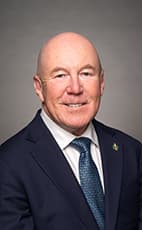
Kerry Diotte
In the 90 days to September 18, 2026, 2 organizations lobbied Kerry Diotte across 2 meetings — most often about Justice and Law Enforcement. The most frequent visitor was Google Canada Corporation (1 meeting, via their in-house lobbyist Sabrina Geremia). Its registration describes the goal as “Communicating with government officials about the Protecting Privacy and Consumer Data Act (Bill C-36) as it relates to the protection of…”. That's fewer than the average MP, who had 6 meetings over the same period.
Based on federal lobbying registry data to September 18, 2026
In the House · Sep 21–25
Kerry Diotte this week
“At its core, the legislation would do something very simple. It would extend the suspension of the federal excise tax on gasoline, diesel and aviation fuel until January 31, 2027. Then the tax would come back.”
- Spoke 5 times in the House · the average MP spoke 4 times
- FORC-266, second reading — Establish a national framework respecting skilled trades and labour mobility · passed 295–21
Get Kerry Diotte's week in your inbox every Monday
What they said, how they voted, and who lobbied them. Free, no ads, unsubscribe anytime.
How Kerry Diotte actually voted
Their recorded positions on the issues Canadians care about — pulled straight from the parliamentary record.
- Voted For
Labour & Employment
Establish a national framework respecting skilled trades and labour mobility
C-266 · Sep 2026 · Passed · Tell your MP what you think
- Voted Against
Economy & Taxation
Implement certain provisions of the spring economic update tabled in Parliament on April 28, 2026
C-30 · Jun 2026 · Passed · Tell your MP what you think
- Voted Against
Housing
Authorize certain payments to be made out of the Consolidated Revenue Fund for the purpose of improving housing supply
C-26 · Jun 2026 · Passed · Tell your MP what you think
- Voted Against
Criminal Justice
Hate propaganda, hate crime and access to religious or cultural places
C-9 · Jun 2026 · Passed · Tell your MP what you think
- Voted Against
Overall leanings
100%
voted with the Conservative line this Parliament
100%
vote attendance (174/174)
Who’s in Kerry’s ear
175
lobbying meetings
114
companies & groups
93
speeches in Parliament
Top lobbying relationship: Alberta Milk — met 13 times · most lobbied on Taxation and Finance.
See who’s lobbying Kerry →Who's lobbying Kerry
Individual meeting records from the federal lobbying registry
| Date | Organization | |
|---|---|---|
| 2026-08-17 | Google Canada Corporation | |
| 2026-07-05 | Hotels Canada | |
| 2026-06-19 | Pathways to Education Canada | |
| 2026-06-10 | Canadian Fuels Association | |
| 2026-05-26 | Community Radio Fund of Canada |
Write to Kerry Diotte
Pick what it's about. You'll get a letter you can edit, then send it from your own email.
Other ways to reach Kerry
613-992-4211 is the House of Commons switchboard — ask to be connected to your MP's office. For constituency office contact details, or if kerry.diotte@parl.gc.ca bounces, visit their Parliament profile.
Committee Memberships
Top Lobbying Clients
Companies with the most meetings with this MP
What Kerry talks about
- Bail and Sentencing Reform Act6 speeches · 2025–2026
- Corrections and Conditional Release Act6 speeches · 2025–2026
- Lawful Access Act, 20266 speeches · 2026
- Broadcasting Act5 speeches · 2021
- Canadian Fuel Affordability Act5 speeches · 2026
Recent Speeches
Mr. Speaker, I rise today to speak to this act to amend the Excise Tax Act and extend the federal fuel excise tax relief. At its core, the legislation would do something very simple. It would extend the suspension of the federal excise tax on gasoline, diesel and aviation fuel until January 31, 2027… Read full speechShow less
Mr. Speaker, I rise today to speak to this act to amend the Excise Tax Act and extend the federal fuel excise tax relief. At its core, the legislation would do something very simple. It would extend the suspension of the federal excise tax on gasoline, diesel and aviation fuel until January 31, 2027. Then the tax would come back. On February 1, the government would bring it back at half the regular rate, and on April 1, the regular excise tax rates would return. Canadians need relief at the pumps, and Conservatives have been pushing for exactly that. The Liberals originally planned to bring this tax back after Labour Day, and Conservatives pushed for the relief to continue. Canadians made clear that they are struggling with the cost of living, and the government changed its timeline. Now we are asking the Prime Minister to listen again. Conservatives are proposing to extend broader federal fuel tax relief until at least Canada Day 2027, because families in Edmonton Griesbach and right across the country are still struggling to afford their lives. They need to fill their cars, buy groceries, heat their homes and get to work without wondering what new cost is coming next. Under the bill, the current suspension would continue through January, and beginning February 1 the federal excise tax on gasoline would come back at five cents per litre. Diesel and aviation fuel would come back at two cents per litre. By April, the regular rates would be back. Conservatives believe that Canadians should get that relief for longer. If the Prime Minister recognizes that lowering fuel taxes helps Canadians today, why not extend that relief until at least Canada Day, and why stop with the excise tax? Why not look at other federal costs on fuel? Why not look at the GST? Conservatives under Prime Minister Harper cut the GST from 7% to 5%, and that relief stayed. Conservatives are calling for all federal taxes on gas and diesel to be removed until at least Canada Day 2027. That includes the GST and the cost associated with the clean fuel regulations, because every dollar matters to a family trying to make its budget work. Take a family filling up a 60-litre tank. At 10¢ a litre, that is six dollars in federal excise tax relief every time they fill up. That six dollars becomes $12, then $18 and then $24. For a family with two vehicles, it adds up even faster. That matters when they are buying groceries, when the mortgage payment is due, when the kids need new shoes or when the hydro bill comes in. The impact goes well beyond the family filling up at the local gas station. I think about the farmer, the trucker, the contractor or the small business owner. Fuel is not optional for these Canadians. It is the cost of doing business. A trucker cannot deliver food without diesel. A farmer cannot operate equipment without fuel. A contractor cannot carry lumber and tools to a job site on the bus. For millions of Canadians, driving is not a luxury; it is how they earn a living, and fuel is built into the cost of almost everything. Somebody grew the food, somebody processed it, somebody put it on a truck and somebody drove that truck to the store. Every step costs money, and fuel is part of that cost. When we lower the cost of moving goods, we help lower the cost of doing business right across this country. The same goes for construction. Liberals keep talking in the House about building more homes, but talk is cheap. It does not build homes. Canadians do not need another list of projects sitting on paper. They need shovels in the ground. They need homes built. They need mines opened. They need roads, pipelines and infrastructure moving. They need Canadian resources getting to market, and most importantly they need the jobs that come with all of it. A project does not employ a worker because Ottawa announced it. It creates opportunity when somebody actually builds it. That is how we grow this economy. That is how we raise paycheques, and that is ultimately what affordability is all about. It is not just what Canadians pay; it is also what Canadians earn. Canadians need jobs. They need investment. They need businesses expanding and hiring. They need projects moving from an announcement to a construction site. That is how Canadians get ahead. People should keep more of what they earn. Small businesses should have room to grow. Workers should receive bigger paycheques. That brings me to another major economic challenge facing Canadian workers and businesses, the trade war with the United States. Tariffs raise costs. There is no question about that. Trading tariffs back and forth does not make groceries cheaper or businesses more competitive. The Prime Minister has spent considerable time pursuing new economic relationships in Europe, but Europe is not going to simply replace the United States. Look at our auto sector. Statistics Canada reported that more than 93% of our motor vehicle exports go south of the border. That is the reality that Canadian auto workers are facing. We can pursue opportunities in Europe. We can diversify our trade somewhat. We can sell more Canadian products around the world, but European customers are not going to replace the 1.5 million Canadian vehicles sold annually to the U.S.A. Our auto industry was built around an integrated North American market. Right now, that market is being disrupted by tariffs. The Prime Minister has to get to work. He has to get the trade war resolved. He has to get the tariffs off Canadian workers and Canadian businesses. Canadian auto workers cannot afford to wait while their largest export market becomes more expensive to access. Canadian manufacturers cannot plan investments when they do not know what the rules will be six months from now, and Canadian businesses cannot simply be told to find another market and move on. The United States is our largest trading partner. That relationship matters. The Prime Minister needs to get back to work here at home, get back to the table with the United States and get this trade war resolved. That is what he promised in the last election. Canadian workers need results. The government claims it is serious about affordability, so it should be looking at every opportunity to lower costs and strengthen the Canadian economy. Lower the cost of fuel. Get our products to market. Remove the barriers to building homes. Cut unnecessary red tape. Create the conditions for businesses to invest, expand and hire. Protect Canada's access to its largest trading partner. The Liberal government cannot tax Canadians into prosperity, try as it might, and it cannot replace economic results with announcements. International meetings have their place, and new trade relationships have their place, but Canadians should be able to look at what their government is doing and see those efforts producing results here at home: more jobs, more investment, more homes, more projects getting built and paycheques that actually go further. Canadians are doing their part: the single mother driving to work every morning, the tradesman loading his truck before sunrise, the farmer putting fuel in his equipment, the trucker moving Canadian goods across this enormous country, and the small business owner trying to make payroll. Those are the people we should be thinking about when we debate the bill. They benefit from paying less tax on fuel. The question is straightforward. If extending the relief through January helps Canadians, why not give them a few more months? Why not extend broader fuel tax relief until at least Canada Day 2027? Give Canadian families more time with lower fuel costs. Give farmers and truckers more breathing room. Give small businesses more time with lower operating costs.
Mr. Speaker, clearly the United States is our biggest trading partner. The Prime Minister ran a whole campaign saying he was the person who would get a deal with the United States. Where is it? Why not get back to the table with our largest trading partner? Tariffs upon tariffs do not benefit Canadi… Read full speechShow less
Mr. Speaker, clearly the United States is our biggest trading partner. The Prime Minister ran a whole campaign saying he was the person who would get a deal with the United States. Where is it? Why not get back to the table with our largest trading partner? Tariffs upon tariffs do not benefit Canadians. We have to get back to the table. We have to get a tariff-free deal with the United States of America, our biggest trading partner. We just cannot sit back and say we are going to replace that market with the European market. It does not work that way.
Mr. Speaker, I hear that question all the time, just going into a grocery store. Every penny counts these days. People are so hard pressed. As my other colleague was talking about, the wild spending by the Liberal government fuels inflation. It drives all the costs up. This little bit of a break is … Read full speechShow less
Mr. Speaker, I hear that question all the time, just going into a grocery store. Every penny counts these days. People are so hard pressed. As my other colleague was talking about, the wild spending by the Liberal government fuels inflation. It drives all the costs up. This little bit of a break is good, but it should go further. We should get it until Canada Day.
Mr. Speaker, we have already seen the result of the tit-for-tat tariffs, because Canadian businesses are being hurt. That is the great irony. The government goes after the U.S. and slaps on a tariff, but Canadian businesses are actually going out of business because of it. We have to get back to the… Read full speechShow less
Mr. Speaker, we have already seen the result of the tit-for-tat tariffs, because Canadian businesses are being hurt. That is the great irony. The government goes after the U.S. and slaps on a tariff, but Canadian businesses are actually going out of business because of it. We have to get back to the table and negotiate tariff-free access to the United States of America, our biggest trading partner. We are not going to replace it with Europe, despite the fact that the Prime Minister spends more time in Europe than he does here in the House of Commons.
Mr. Speaker, the Liberal member across the way talks about building the economy strong, so why is it that there are 500 projects, including pipelines, that are sitting on the Prime Minister's desk, and nothing is being built?
Bills Sponsored
Recent activity
23 activities across speeches, bills, and lobbying communications.
September 2026
Government Orders
Mr. Speaker, I rise today to speak to this act to amend the Excise Tax Act and extend the federal fuel excise tax relief. At its core, the legislation would do something very simple. It would extend t… Read full speechShow less
Mr. Speaker, I rise today to speak to this act to amend the Excise Tax Act and extend the federal fuel excise tax relief. At its core, the legislation would do something very simple. It would extend the suspension of the federal excise tax on gasoline, diesel and aviation fuel until January 31, 2027. Then the tax would come back. On February 1, the government would bring it back at half the regular rate, and on April 1, the regular excise tax rates would return. Canadians need relief at the pumps, and Conservatives have been pushing for exactly that. The Liberals originally planned to bring this tax back after Labour Day, and Conservatives pushed for the relief to continue. Canadians made clear that they are struggling with the cost of living, and the government changed its timeline. Now we are asking the Prime Minister to listen again. Conservatives are proposing to extend broader federal fuel tax relief until at least Canada Day 2027, because families in Edmonton Griesbach and right across the country are still struggling to afford their lives. They need to fill their cars, buy groceries, heat their homes and get to work without wondering what new cost is coming next. Under the bill, the current suspension would continue through January, and beginning February 1 the federal excise tax on gasoline would come back at five cents per litre. Diesel and aviation fuel would come back at two cents per litre. By April, the regular rates would be back. Conservatives believe that Canadians should get that relief for longer. If the Prime Minister recognizes that lowering fuel taxes helps Canadians today, why not extend that relief until at least Canada Day, and why stop with the excise tax? Why not look at other federal costs on fuel? Why not look at the GST? Conservatives under Prime Minister Harper cut the GST from 7% to 5%, and that relief stayed. Conservatives are calling for all federal taxes on gas and diesel to be removed until at least Canada Day 2027. That includes the GST and the cost associated with the clean fuel regulations, because every dollar matters to a family trying to make its budget work. Take a family filling up a 60-litre tank. At 10¢ a litre, that is six dollars in federal excise tax relief every time they fill up. That six dollars becomes $12, then $18 and then $24. For a family with two vehicles, it adds up even faster. That matters when they are buying groceries, when the mortgage payment is due, when the kids need new shoes or when the hydro bill comes in. The impact goes well beyond the family filling up at the local gas station. I think about the farmer, the trucker, the contractor or the small business owner. Fuel is not optional for these Canadians. It is the cost of doing business. A trucker cannot deliver food without diesel. A farmer cannot operate equipment without fuel. A contractor cannot carry lumber and tools to a job site on the bus. For millions of Canadians, driving is not a luxury; it is how they earn a living, and fuel is built into the cost of almost everything. Somebody grew the food, somebody processed it, somebody put it on a truck and somebody drove that truck to the store. Every step costs money, and fuel is part of that cost. When we lower the cost of moving goods, we help lower the cost of doing business right across this country. The same goes for construction. Liberals keep talking in the House about building more homes, but talk is cheap. It does not build homes. Canadians do not need another list of projects sitting on paper. They need shovels in the ground. They need homes built. They need mines opened. They need roads, pipelines and infrastructure moving. They need Canadian resources getting to market, and most importantly they need the jobs that come with all of it. A project does not employ a worker because Ottawa announced it. It creates opportunity when somebody actually builds it. That is how we grow this economy. That is how we raise paycheques, and that is ultimately what affordability is all about. It is not just what Canadians pay; it is also what Canadians earn. Canadians need jobs. They need investment. They need businesses expanding and hiring. They need projects moving from an announcement to a construction site. That is how Canadians get ahead. People should keep more of what they earn. Small businesses should have room to grow. Workers should receive bigger paycheques. That brings me to another major economic challenge facing Canadian workers and businesses, the trade war with the United States. Tariffs raise costs. There is no question about that. Trading tariffs back and forth does not make groceries cheaper or businesses more competitive. The Prime Minister has spent considerable time pursuing new economic relationships in Europe, but Europe is not going to simply replace the United States. Look at our auto sector. Statistics Canada reported that more than 93% of our motor vehicle exports go south of the border. That is the reality that Canadian auto workers are facing. We can pursue opportunities in Europe. We can diversify our trade somewhat. We can sell more Canadian products around the world, but European customers are not going to replace the 1.5 million Canadian vehicles sold annually to the U.S.A. Our auto industry was built around an integrated North American market. Right now, that market is being disrupted by tariffs. The Prime Minister has to get to work. He has to get the trade war resolved. He has to get the tariffs off Canadian workers and Canadian businesses. Canadian auto workers cannot afford to wait while their largest export market becomes more expensive to access. Canadian manufacturers cannot plan investments when they do not know what the rules will be six months from now, and Canadian businesses cannot simply be told to find another market and move on. The United States is our largest trading partner. That relationship matters. The Prime Minister needs to get back to work here at home, get back to the table with the United States and get this trade war resolved. That is what he promised in the last election. Canadian workers need results. The government claims it is serious about affordability, so it should be looking at every opportunity to lower costs and strengthen the Canadian economy. Lower the cost of fuel. Get our products to market. Remove the barriers to building homes. Cut unnecessary red tape. Create the conditions for businesses to invest, expand and hire. Protect Canada's access to its largest trading partner. The Liberal government cannot tax Canadians into prosperity, try as it might, and it cannot replace economic results with announcements. International meetings have their place, and new trade relationships have their place, but Canadians should be able to look at what their government is doing and see those efforts producing results here at home: more jobs, more investment, more homes, more projects getting built and paycheques that actually go further. Canadians are doing their part: the single mother driving to work every morning, the tradesman loading his truck before sunrise, the farmer putting fuel in his equipment, the trucker moving Canadian goods across this enormous country, and the small business owner trying to make payroll. Those are the people we should be thinking about when we debate the bill. They benefit from paying less tax on fuel. The question is straightforward. If extending the relief through January helps Canadians, why not give them a few more months? Why not extend broader fuel tax relief until at least Canada Day 2027? Give Canadian families more time with lower fuel costs. Give farmers and truckers more breathing room. Give small businesses more time with lower operating costs.
Government Orders
Mr. Speaker, clearly the United States is our biggest trading partner. The Prime Minister ran a whole campaign saying he was the person who would get a deal with the United States. Where is it? Why no… Read full speechShow less
Mr. Speaker, clearly the United States is our biggest trading partner. The Prime Minister ran a whole campaign saying he was the person who would get a deal with the United States. Where is it? Why not get back to the table with our largest trading partner? Tariffs upon tariffs do not benefit Canadians. We have to get back to the table. We have to get a tariff-free deal with the United States of America, our biggest trading partner. We just cannot sit back and say we are going to replace that market with the European market. It does not work that way.
Government Orders
Mr. Speaker, I hear that question all the time, just going into a grocery store. Every penny counts these days. People are so hard pressed. As my other colleague was talking about, the wild spending b… Read full speechShow less
Mr. Speaker, I hear that question all the time, just going into a grocery store. Every penny counts these days. People are so hard pressed. As my other colleague was talking about, the wild spending by the Liberal government fuels inflation. It drives all the costs up. This little bit of a break is good, but it should go further. We should get it until Canada Day.
Government Orders
Mr. Speaker, we have already seen the result of the tit-for-tat tariffs, because Canadian businesses are being hurt. That is the great irony. The government goes after the U.S. and slaps on a tariff, … Read full speechShow less
Mr. Speaker, we have already seen the result of the tit-for-tat tariffs, because Canadian businesses are being hurt. That is the great irony. The government goes after the U.S. and slaps on a tariff, but Canadian businesses are actually going out of business because of it. We have to get back to the table and negotiate tariff-free access to the United States of America, our biggest trading partner. We are not going to replace it with Europe, despite the fact that the Prime Minister spends more time in Europe than he does here in the House of Commons.
Government Orders
Mr. Speaker, the Liberal member across the way talks about building the economy strong, so why is it that there are 500 projects, including pipelines, that are sitting on the Prime Minister's desk, an… Read full speechShow less
Mr. Speaker, the Liberal member across the way talks about building the economy strong, so why is it that there are 500 projects, including pipelines, that are sitting on the Prime Minister's desk, and nothing is being built?
June 2026
Government Orders
Mr. Speaker, why is it that Liberals always seem to support criminals rather than supporting victims' rights?
May 2026
Government Orders
Mr. Speaker, Canadians are stretched thin. They are paying more for groceries, more for gas, more for rent, more for everything. Now the Liberals want them to pay more to stream their favourite shows … Read full speechShow less
Mr. Speaker, Canadians are stretched thin. They are paying more for groceries, more for gas, more for rent, more for everything. Now the Liberals want them to pay more to stream their favourite shows and movies online. With this new policy, the CRTC is ordering online streaming services like Netflix and Disney to pay more of their annual Canadian revenues to fund Canadian content. It is not the first time the Liberals have tried to do this. Under the Liberals, the CRTC introduced a 5% tax on revenues. That tax is being challenged and is still before the courts. Now it wants to increase the tax from 5% to 15%, and that is wrong. Let us call it what it is: This is a streaming tax. A tax is a tax is a tax. Canadians know exactly what happens next. Big corporations simply do not absorb new costs. They pass them on to consumers. That means higher monthly bills for Canadian families who are already struggling with the cost of living crisis the Liberal government created. The Liberals can try to dress this up in bureaucratic language. They can call it a contribution, and they can call it modernization, but Canadians know better. If it walks like a tax and costs like a tax, it is a tax. Canadians can smell a rat, and they can smell a tax too. This Liberal tax will drive up the cost of living for all Canadians who have to shell out for online streaming services. This is just another example of a government that believes Canadians are somehow undertaxed. Conservatives have always believed in letting Canadians keep more of their own money in their own pockets. By contrast, the Liberals are always the ones with their hands in Canadians' pockets. We have repeatedly called on the government to remove all taxes on gasoline and diesel at the pumps to give some measure of tax relief to beleaguered Canadians. Unfortunately, the Liberals have only responded with half measures, including taking off a few cents a litre in taxes, but we know more can be done. After 11 years of the Liberal government, life has become more expensive. Mortgage payments have doubled for many families. Food inflation has hammered household budgets. Food bank usage has doubled since 2019 to nearly 2.2 million visits per month. One in four Canadian kids now go to school hungry. Canadians are struggling. At the same time, interest rates have soared. Why? It is because the government fuelled that inflation with its reckless spending. The Prime Minister has doubled Justin Trudeau's deficit, which was $31 billion. This allegedly new and improved leader has a projected deficit of $65 billion. Now the Liberals want to make our entertainment more expensive too. Canadians use streaming services because they want choice, convenience and affordability, and the Liberals are threatening all three. The Liberals have already pushed through the Online Streaming Act. Conservatives warned that bill would open the door to more government control, more CRTC interference and more costs for consumers. We were right. The Liberals claimed ordinary Canadians would not be affected, but now we see the consequences. We see the higher costs. We know there is more red tape. Ultimately, we know it is due to more government meddling. It is the same old Liberal platform: tax, spend, repeat. This decision also sends the wrong message to investors. Canada should be attracting investment, not driving it away. Businesses need certainty. They need competitiveness. They need a government that understands economic growth. Instead, under the Liberal government, all they get is endless regulation, escalating costs and unpredictable markets. Why would companies invest more in Canada when the Liberal government keeps moving the goalposts? Why would innovators choose Canada when they are punished with higher fees and heavier regulation? Conservatives believe in supporting Canadian culture, but we do not strengthen it by punishing investment, driving up costs and undermining economic growth. This decision creates uncertainty at the worst possible time. Canada's economy is already weak. Productivity is declining. Investment is lagging behind our competitors. Businesses are leaving. This 15% tax hike places Canada among the most expensive operating jurisdictions in the world for streaming services. Put simply, it discourages business investment in Canada and will further devastate Canadian film and television production hubs like Vancouver and Toronto. In the face of declining capital, the Liberals are responding the only way they know how, with another tax hike for already struggling Canadians. That is backward and Conservatives will stand against it. This decision also risks damaging Canada's relationship with the United States ahead of a CUSMA review. At a time when we should be reducing trade tensions, the Liberals are creating new trade irritants. The U.S. ambassador to Canada said, “CRTC’s decision to triple the tax rate on leading streaming services is making a bad situation worse. CRTC is targeting and taxing U.S. companies, putting up new, discriminatory trade barriers, and worsening the investment climate for American businesses.” That is exactly what the government is doing: making a bad situation worse. While we are on the topic, how are those trade talks going? I remember that, for the first Canada-U.S. trade deal under Justin Trudeau, there were discussions many months in advance. The true irony of this is that the new Prime Minister sold himself to Canadians as the man who could get a deal with Mr. Trump by July 2025. Obviously, that failed. I am pessimistic about his ability to get a new trade deal anytime soon, especially when his government is increasing tensions between our countries with more needless taxation. That is just irresponsible. The United States has already raised concerns about discriminatory digital taxes and regulatory measures targeting American companies. The Liberals should be working to strengthen North American trade, not weaken it. Our economy depends on stable and predictable trade relationships. The government should not be picking fights with our largest trading partner just to satisfy its ideological obsession with big government. It is not just American organizations that are against this tax hike. It has also faced criticism from Canadian domestic screenwriters and creators, including the Writers Guild of Canada. Conservatives believe in lower taxes. We believe Canadians should keep more of their own money. We believe government should spend within its means, instead of driving up its deficit and constantly reaching deeper into Canadians' pockets. We believe consumers, not bureaucrats, should decide what Canadians watch online. The streaming tax is costly, careless and completely unnecessary. That is why we are calling on the Liberals to reject the CRTC's decision. The government has the authority to act. It should eliminate this streaming tax before Canadians are forced to pay the price. Canadians cannot afford more Liberal taxes. They cannot afford more inflation. They certainly cannot afford another Liberal government cash grab disguised as cultural policy. Conservatives will continue fighting for affordability, for taxpayers and for common sense.
Government Orders
Mr. Speaker, Canada is not alone, but that is hardly a bragging point. Saying other countries overtax their citizens, too, is not a bragging point. Whether we agree with the U.S. on certain things or … Read full speechShow less
Mr. Speaker, Canada is not alone, but that is hardly a bragging point. Saying other countries overtax their citizens, too, is not a bragging point. Whether we agree with the U.S. on certain things or not, they are our biggest trading partner. We need to get tariff-free access to United States markets. This is a major impediment and it is going to have absolutely terrible repercussions.
Government Orders
Mr. Speaker, no, of course we do not want to attack Quebec culture, but let us call this what it is. This is not an attack on culture. This is an attack on Canadians' wallets. It is one of the few ple… Read full speechShow less
Mr. Speaker, no, of course we do not want to attack Quebec culture, but let us call this what it is. This is not an attack on culture. This is an attack on Canadians' wallets. It is one of the few pleasures that people seem to have these days. They can sit back and stream Disney+ and Netflix. The Liberal government wants to take even that small pleasure away from them, and that is just unconscionable.
Government Orders
Mr. Speaker, that is the $64,000 question. Canadians just cannot afford another tax, and the Liberals keep heaping them on. Canadians are having trouble putting food on the table and paying rent, and … Read full speechShow less
Mr. Speaker, that is the $64,000 question. Canadians just cannot afford another tax, and the Liberals keep heaping them on. Canadians are having trouble putting food on the table and paying rent, and now we get this onerous luxury tax, basically, that will also imperil negotiations with getting a free trade deal with the United States. It is double-trouble.
Government Orders
Mr. Speaker, my colleague is exactly right. It has been criticized. The U.S. ambassador himself criticized this as a major irritant. This is not the time to further irritate our largest trading partne… Read full speechShow less
Mr. Speaker, my colleague is exactly right. It has been criticized. The U.S. ambassador himself criticized this as a major irritant. This is not the time to further irritate our largest trading partner. We are lucky to be on the border with the United States of America in order to sell our goods to them. They are—
Oral Questions
Mr. Speaker, Canadians are concerned. The Liberals are on track to add $1 trillion to the national debt since taking office just 11 years ago. Just as with our personal credit cards, Canadians know we… Read full speechShow less
Mr. Speaker, Canadians are concerned. The Liberals are on track to add $1 trillion to the national debt since taking office just 11 years ago. Just as with our personal credit cards, Canadians know we will have to pay that bill. The Liberal Prime Minister is not a good steward of our tax dollars. It is an illusion. We have more costs, more taxes, more debt. The Prime Minister is just another Liberal. When will he get serious? When will he end his costly credit card budgeting so Canadians can afford to live?
April 2026
Statements by Members
Mr. Speaker, I chose Edmonton as my home more than 40 years ago. It is a great city. It is friendly and full of honest, hard-working people, but lately, Edmonton is struggling. People are afraid to ri… Read full speechShow less
Mr. Speaker, I chose Edmonton as my home more than 40 years ago. It is a great city. It is friendly and full of honest, hard-working people, but lately, Edmonton is struggling. People are afraid to ride city trains and buses. Many are afraid to go downtown. They read about violent crime and see used needles in the streets. It is all because this great city has been plagued with a drug epidemic. There have been 613 drug poisoning deaths just between January 1 and the end of November 2025. Fentanyl is the killer. Last year, it accounted for 75% of opioid deaths compared to just 15% in 2024. Clearly, the Liberals' supervised drug consumption sites do not work. People do not need a place to do drugs; they need a place to get off of drugs. Instead of consumption sites, we need to help those struggling with addictions to get off the streets, get off the drugs and become productive members of society.
Government Orders
Mr. Speaker, I want to ask the Liberal MP this: Is it not true that Liberals would be adding two new members to committees so they could have a majority and then the Liberal scandals could no longer b… Read full speechShow less
Mr. Speaker, I want to ask the Liberal MP this: Is it not true that Liberals would be adding two new members to committees so they could have a majority and then the Liberal scandals could no longer be revealed or investigated?
Government Orders
Mr. Speaker, it is an honour to rise today on behalf of the Edmonton Griesbach riding. I will be using my time to speak to Bill C-22. Bill C-22 is significant. It touches on public safety, privacy and… Read full speechShow less
Mr. Speaker, it is an honour to rise today on behalf of the Edmonton Griesbach riding. I will be using my time to speak to Bill C-22. Bill C-22 is significant. It touches on public safety, privacy and the fundamental relationship between citizens and the government. That means we absolutely have to get it right. It goes without saying that Conservatives believe in law and order. We have always stood for common-sense measures to keep Canadians safe. For the past decade, we have been urging the Liberal government to reverse its failed policies and restore safety to our communities. Instead, the Liberals have let the situation get out of control. Last fall, the Liberals put forward Bill C-2, which would have fallen well short of protecting Canadians while overreaching in other areas. Thanks to the work of our Conservative team, we forced the Liberals to back down from Bill C-2, successfully blocking their infringement of individual freedoms and privacy. We stopped the Liberals from limiting the use of cash. We stopped them from opening mail without oversight. We stopped them from demanding that any service provider, including even dry cleaners, disclose user data without judicial oversight. Now we are presented with Bill C-22. While this bill excludes some provisions that Conservatives opposed, it also reintroduces parts of the failed Bill C-2. My Conservative colleagues and I continue to carefully review every line of this bill, as lawmakers. This legislation requires the necessary scrutiny and, yes, skepticism. Conservatives take this responsibility seriously. We support law enforcement. We want officers to have the tools they need to keep Canadians safe. That is not in question. It has never been in question. Also, we know these powers must be accompanied by strong safeguards, clear limits and independent oversight to protect Canadians' rights and freedoms. At the same time, we stand for the rights and freedoms of Canadians. We stand for privacy and due process. Those two principles must go hand in hand. We will continue working to ensure that privacy and due process are protected, with this legislation and all future legislation. Unlike the Liberal government, we believe in listening before legislating. As a result, Conservatives have spoken with law enforcement about Bill C-22. What we heard was clear. Officers want tools, and they want clarity. They want to be able to act quickly when it matters most. Of course, we agree with that. We welcome measures that lawfully, and with proper judicial oversight, allow police to access information needed to stop serious crime. Here is the concern. Too often with the Liberal government, the devil is in the details. We have seen it before. We saw it in Bill C-2. What was packaged as a so-called border bill actually included proposals to inspect Canadians' mail without a warrant. Canadians rejected that. We saw it again in Bill C-8, a cybersecurity bill that made sense on the surface but also included sweeping ministerial powers with little oversight. Now we have Bill C-22, and serious concerns remain. One of the biggest concerns I have with this legislation is about oversight. This bill would grant significant authority. In some cases, that authority would rest with ministers, not with the courts or with independent bodies. That is a problem. Ministerial authority is not the same as judicial oversight. It is not the same as accountability. It risks becoming arbitrary. Canadians have reason to be skeptical of Bill C-22. The government has a track record. Time and time again, it has pushed the limits of government power. Time and time again, the Liberals have asked Canadians to simply trust them, but trust must be earned, and right now it is in short supply. Civil liberties groups from across the spectrum have raised alarms about Bill C-22. That should tell us something. It tells us we need to slow down and take a closer look. This is not just about technology or policing tools. This is about Canadians' personal information, their data, their communications, their private lives. Metadata alone can reveal a great deal, more than many people realize, yet we are being asked to consider provisions that would involve broad data practices without clear limits or definitions. For example, the bill does not clearly define what constitutes a service provider. That could mean telecom companies. It could mean email providers. It could mean messaging apps or cloud storage. In other words, it could mean access to deeply personal aspects of Canadians' lives. This is not a small matter. We cannot afford vague definitions because once those powers exist, they do not just apply today. They apply tomorrow. They apply to future governments as well. This is not about partisanship but about principle. We must always ask, “How could this power be used, and how could it be misused?” This is our duty as legislators, and it is a duty Conservatives will uphold as we continue to examine this proposed legislation. As legislators, we cannot look at lawful access in isolation. If we are serious about public safety, we need a system that works from start to finish. This includes bail and sentencing. This includes giving police the support they have been asking for over the past number of years. Too often, the government has been selective, listening to law enforcement when it suits it and ignoring it when it does not. Conservatives will always stand with those on the front lines, but we will not accept a trade-off when Canadians' rights are weakened in the process. On one hand, we must ensure that those who enforce our laws have the tools they need. On the other, we must protect the fundamental rights and freedoms that define our nation. Conservatives will not sacrifice one for the other. If we get this wrong, the consequences will be serious. We have seen what happens when legislation is rushed and when concerns are dismissed. This is why we will not rubber-stamp Bill C-22. We will do our job. We will study it, question it and propose amendments where needed. We will listen to experts, law enforcement, civil liberties advocates and Canadians, because that is what responsible lawmakers do. We deeply support the objective of keeping Canadians safe. We support giving police effective tools. However, we will not ignore the risks of government overreach or the need for oversight. We will not ignore the Charter of Rights and Freedoms. In closing, Bill C-22 raises serious and complex questions. It shows some progress, true, but it is clearly not there yet. It requires careful examination, detailed study, and scrutiny at committee and beyond. Conservatives will continue to stand for common-sense solutions that protect Canadians' individual freedoms, privacy and safety. That work is still ahead of us.
Government Orders
Of course, Mr. Speaker, as I pointed out in my speech, we support giving the police tools. However, Canadians have a right to be skeptical of the Liberal government. In previous legislation, we stoppe… Read full speechShow less
Of course, Mr. Speaker, as I pointed out in my speech, we support giving the police tools. However, Canadians have a right to be skeptical of the Liberal government. In previous legislation, we stopped the Liberals from limiting the use of cash, opening mail without oversight and demanding that any service provider, including hospitals and dry cleaners, disclose user data without judicial oversight. Canadians have a right to be skeptical, and Conservatives are going to fight anything in this bill that looks suspicious.
Government Orders
Mr. Speaker, I agree 100%. The Liberals talk a good game. I had a private member's bill that would have toughened up parole. We had several private members' bills that would have given police more too… Read full speechShow less
Mr. Speaker, I agree 100%. The Liberals talk a good game. I had a private member's bill that would have toughened up parole. We had several private members' bills that would have given police more tools. What happened? They got shut down. The Liberals talk a good game, but let us see them deliver. Again, Canadians have a right to be skeptical when poison pills are injected into legislation.
Government Orders
Mr. Speaker, as I said in my speech, the devil is in the details. When we start going through Bill C-22, there are a lot of details we have to look at. We want to give police the tools they need, but … Read full speechShow less
Mr. Speaker, as I said in my speech, the devil is in the details. When we start going through Bill C-22, there are a lot of details we have to look at. We want to give police the tools they need, but we cannot allow the bill to go over and above what Canadians expect. We believe in giving police power but not in giving away charter rights.
Government Orders
Mr. Speaker, we will take the support. It is great. The bill needs a great deal of work yet. Again, we believe in giving police the tools, but we do not want to rob people of their freedoms and rights… Read full speechShow less
Mr. Speaker, we will take the support. It is great. The bill needs a great deal of work yet. Again, we believe in giving police the tools, but we do not want to rob people of their freedoms and rights under the charter.
Statements by Members
Mr. Speaker, the Prime Minister was asked yesterday what he would do to help Canadians suffering with high gas and diesel prices. He did not have an answer. Even in oil-rich Alberta, folks are paying … Read full speechShow less
Mr. Speaker, the Prime Minister was asked yesterday what he would do to help Canadians suffering with high gas and diesel prices. He did not have an answer. Even in oil-rich Alberta, folks are paying well over two bucks a litre for diesel. Here is an easy way for the Prime Minister to help. The feds are hauling in record revenues from high oil prices, so they can use $5 billion of that estimated $9 billion to help hard-hit Canadians. Conservatives have a plan: suspend the fuel excise tax, suspend the GST on gas and diesel, and kill the so-called clean fuel standard tax and the hated industrial carbon tax. That would cut 20¢ a litre off the price of gas and 21¢ off the price of diesel. Canadians are suffering. They desperately need some relief from the pain at the pumps. The Liberal government must give them the relief they deserve.
February 2026
House of Commons
151 communications with 98 clients
Top clients: [{"name": "Alberta Milk", "count": 12}, {"name": "MS Canada", "count": 6}, {"nam…