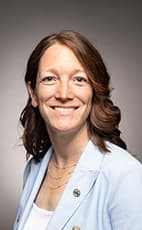
Marianne Dandurand
In the 90 days to October 1, 2026, 4 organizations lobbied Marianne Dandurand across 5 meetings — most often about Economic Development. The most frequent visitor was Xplore Inc. (1 meeting, via Simone Racine of PAA Advisory | Conseils). Its registration describes the goal as “Encouraging future spectrum auctions to allow for greatest use of spectrum for rural broadband and other issues related specifically to…”. That's about the same as the average MP, who had 6 meetings over the same period.
Based on federal lobbying registry data to October 1, 2026
In the House · Oct 5–9
Marianne Dandurand this week
- No speeches in the House · the average MP spoke 5 times
- FORC-39, second reading — Respecting certain measures to strengthen the economy · passed 296–26
- AGAINSTC-218, second reading — Medical assistance in dying · defeated 141–187
- AGAINSTOpposition Motion (Diesel prices) · defeated 133–196
- FORFifth report of the Standing Committee on Health · passed 196–132
Get Marianne Dandurand's week in your inbox every Monday
What they said, how they voted, and who lobbied them. Free, no ads, unsubscribe anytime.
How Marianne Dandurand actually voted
Their recorded positions on the issues Canadians care about — pulled straight from the parliamentary record.
- Voted Against
- Voted For
Healthcare
Fifth report of the Standing Committee on Health
Oct 2026 · Passed
- Voted For
Labour & Employment
Establish a national framework respecting skilled trades and labour mobility
C-266 · Sep 2026 · Passed · Tell your MP what you think
- Voted For
Economy & Taxation
Implement certain provisions of the spring economic update tabled in Parliament on April 28, 2026
C-30 · Jun 2026 · Passed · Tell your MP what you think
- Voted For
Housing
Authorize certain payments to be made out of the Consolidated Revenue Fund for the purpose of improving housing supply
C-26 · Jun 2026 · Passed · Tell your MP what you think
Overall leanings
100%
voted with the Liberal line this Parliament
100%
vote attendance (178/178)
Who's lobbying Marianne
Individual meeting records from the federal lobbying registry
| Organization | |
|---|---|
| Client not named in the registry2026-08-21 · Internal Trade; Agriculture | |
| Xplore Inc.2026-07-24 · Telecommunications; Infrastructure; Regional Development; Science and Technology; Taxation and Finance | |
| TerraVest Industries Inc.2026-07-10 · Industry; Internal Trade; International Trade; Regional Development; Taxation and Finance | |
| Space Exploration Technologies Company (SpaceX)2026-07-07 · Telecommunications; Industry; Infrastructure; Science and Technology; Economic Development | |
| SpaceX Canada Corp.2026-07-07 · Telecommunications; Industry; Infrastructure; Science and Technology; Economic Development |
Write to Marianne Dandurand
Pick what it's about. You'll get a letter you can edit, then send it from your own email.
Other ways to reach Marianne
613-992-4211 is the House of Commons switchboard — ask to be connected to your MP's office. For constituency office contact details, or if marianne.dandurand@parl.gc.ca bounces, visit their Parliament profile.
Committee Memberships
What Marianne talks about
- Spectrum Policy Framework for Canada Act7 speeches · 2026
- Protecting Victims Act6 speeches · 2026
- Budget 2025 Implementation Act, No. 14 speeches · 2025
- Agriculture and Food in Compton—Stanstead.1 speeches · 2026
- Bishop's University1 speeches · 2025
Recent Speeches
Madam Speaker, I would like to thank my colleague from Saint-Boniface—Saint-Vital for her commitment to indigenous issues. I know she spent the summer conducting consultations, including in Quebec. I would like my colleague to tell us how this initiative is being received and how much interest it is… Read full speechShow less
Madam Speaker, I would like to thank my colleague from Saint-Boniface—Saint-Vital for her commitment to indigenous issues. I know she spent the summer conducting consultations, including in Quebec. I would like my colleague to tell us how this initiative is being received and how much interest it is generating amongst indigenous groups. There is a sense that some opposition parties may not want this bill to quickly move forward. What would be the consequences of delaying this bill?
Mr. Speaker, pursuant to Standing Order 36, I rise today to present a petition signed by residents of the Eastern Townships, other parts of Quebec and even other parts of Canada regarding cellular connectivity in rural areas. The petitioners point out that, despite the efforts of municipalities, reg… Read full speechShow less
Mr. Speaker, pursuant to Standing Order 36, I rise today to present a petition signed by residents of the Eastern Townships, other parts of Quebec and even other parts of Canada regarding cellular connectivity in rural areas. The petitioners point out that, despite the efforts of municipalities, regional elected officials and many citizens, cellular service is still poor in many rural areas, including village centres. They emphasize that reliable cellular service is essential for public safety, agricultural activities, economic activity, and also for access to education, health care and essential communications. The petitioners are therefore calling on the Government of Canada to take measures to improve cellular coverage in rural areas and to bridge the digital divide that persists to this day. Reliable cellular service should not depend on a postal code. Whether they live in a major city or a rural community, every Canadian should be able to count on reliable cellular service when they need it.
Mr. Speaker, it is an honour to rise today after my colleagues, and after speaking last month in the House, to conclude debate at second reading on Bill C‑268. I thank all my colleagues who spoke. I am pleased to see that this is not a partisan issue. I want to thank the members for Tobique—Mactaqua… Read full speechShow less
Mr. Speaker, it is an honour to rise today after my colleagues, and after speaking last month in the House, to conclude debate at second reading on Bill C‑268. I thank all my colleagues who spoke. I am pleased to see that this is not a partisan issue. I want to thank the members for Tobique—Mactaquac, Joliette—Manawan, Egmont, Portage—Lisgar, London—Fanshawe, Brome—Missisquoi, Drummond, Avalon, Riding Mountain and Elgin—St. Thomas—London South for supporting the bill. My colleague from Elgin—St. Thomas—London South was talking about people who live just outside urban centres and have no Internet connection. I live in a city with a population of nearly 200,000, and I do not get more than one bar of Internet signal inside my home. Members of Parliament from every region of the country and every party have described exactly the same reality: roads with no signal, underserved communities, and citizens who cannot rely on their phones when they need them. That is also my personal experience, as I just mentioned. I am one of those people who has to move closer to a window to get better reception. On the roads in my region, I know exactly where I have to tell the person on the other end of the line that the connection is going to drop and that I will have to call them back in a minute. Sometimes it is even worse: I have to call back in 10 minutes. As the member for Portage—Lisgar pointed out, people have come to accept a level of service that would be considered unacceptable in any other sector. He gave the following example: No one would agree to buy a car that stops working as soon as they turn onto a certain road. In too many rural regions, people are paying full price for cell service that disappears once they reach a certain road or a certain village. My colleagues from Drummond and Brome—Missisquoi demonstrated what this is like by holding up their phones and pretending to search for a signal. We all do that in the regions. We laughed about it because it is something that we do all the time. However, behind such anecdotes lie much more serious concerns. My colleagues talked about emergency services, first responders, accidents, serious health problems and women experiencing violence who cannot always rely on the network when they need it. The mayor of Martinville, Michel‑Henri Goyette, was the one who reminded me that this issue goes beyond cellphone call quality. He also reminded me that we should not settle for mediocrity. That is why, as my colleague said, I have tackled this issue head-on. That is why I am bringing it before the House. It is a matter of economic development, public safety and fairness for people in rural areas. The member for Egmont reminded us that poor connectivity limits access to telehealth, remote learning and new learning opportunities. The digital divide is becoming a social, economic and regional divide. We know where the dead zones are. Constituents know them; mayors know them; paramedics know them; firefighters know them. The problem is not whether they exist. It is having the tools needed to map these areas and guide future decisions. Bill C‑268 proposes two practical measures. First, it would require a process to verify the accuracy of wireless coverage data. If we want to fix connectivity gaps, we need an accurate picture of where those gaps actually exist. Second, it would modernize Canada's spectrum policy framework, which has not been updated since 2007. Technology has changed immensely since then, and our policy framework must evolve as well. We do not agree on everything, but there is something we seem to agree on: Doing nothing is not an option. The bill would not be the finish line, but a starting point. The bill would get the ball rolling. It would create a better understanding of the problem, and ensure that rural connectivity is considered as a priority in future spectrum policy decisions. I urge all members to support Bill C‑268 at second reading and to refer it to committee for further consideration.
Mr. Speaker, I move that Bill C-268 be read the second time and referred to a committee.
Mr. Speaker, I want to thank my colleague from Shefford for her work with people experiencing homelessness, female victims of violence, seniors and vulnerable individuals in the region where both of our ridings are located. I would like my colleague to explain which solutions for fighting coercive c… Read full speechShow less
Mr. Speaker, I want to thank my colleague from Shefford for her work with people experiencing homelessness, female victims of violence, seniors and vulnerable individuals in the region where both of our ridings are located. I would like my colleague to explain which solutions for fighting coercive control are most effective in her riding, including community-led initiatives. What is working well in her riding?
Bills Sponsored
1 since 2001
MyMP is free and run by one person in Edmonton. Reader support keeps it that way. Chip in