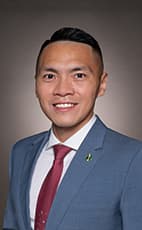
Wade Chang
In the 90 days to September 18, 2026, 8 organizations lobbied Wade Chang across 15 meetings — most often about Health. The most frequent visitor was British Columbia Institute of Technology (6 meetings, via their in-house lobbyist Jeff Zabudsky). Its registration describes the goal as “Modernization of trades training”. That's more than the average MP, who had 6 meetings over the same period.
Based on federal lobbying registry data to September 18, 2026
In the House · Oct 5–6
Wade Chang this week
- No speeches in the House · the average MP spoke 2 times
- AGAINSTC-218, second reading — Medical assistance in dying · defeated 141–187
- AGAINSTOpposition Motion (Diesel prices) · defeated 133–196
- FORFifth report of the Standing Committee on Health · passed 196–132
Get Wade Chang's week in your inbox every Monday
What they said, how they voted, and who lobbied them. Free, no ads, unsubscribe anytime.
How Wade Chang actually voted
Their recorded positions on the issues Canadians care about — pulled straight from the parliamentary record.
- Voted Against
- Voted For
Healthcare
Fifth report of the Standing Committee on Health
Oct 2026 · Passed
- Voted For
Labour & Employment
Establish a national framework respecting skilled trades and labour mobility
C-266 · Sep 2026 · Passed · Tell your MP what you think
- Voted For
Economy & Taxation
Implement certain provisions of the spring economic update tabled in Parliament on April 28, 2026
C-30 · Jun 2026 · Passed · Tell your MP what you think
- Voted For
Housing
Authorize certain payments to be made out of the Consolidated Revenue Fund for the purpose of improving housing supply
C-26 · Jun 2026 · Passed · Tell your MP what you think
Overall leanings
100%
voted with the Liberal line this Parliament
100%
vote attendance (177/177)
Who's lobbying Wade
Individual meeting records from the federal lobbying registry
| Date | Organization | |
|---|---|---|
| 2026-08-20 | Canadian Bankers Association | |
| 2026-08-18 | STEMCELL Technologies Canada Inc. | |
| 2026-08-13 | British Columbia's Children's Hospital Foundation | |
| 2026-08-11 | Amgen Canada Inc. | |
| 2026-08-10 | MVZEIF |
Write to Wade Chang
Pick what it's about. You'll get a letter you can edit, then send it from your own email.
Other ways to reach Wade
613-992-4211 is the House of Commons switchboard — ask to be connected to your MP's office. For constituency office contact details, or if wade.chang@parl.gc.ca bounces, visit their Parliament profile.
Committee Memberships
Top Lobbying Clients
Companies with the most meetings with this MP since July 2008
What Wade talks about
- Making Life More Affordable for Canadians Act5 speeches · 2025
- The Budget4 speeches · 2025
- Diversity and Inclusion2 speeches · 2026
- Strengthening Canada's Immigration System and Borders Act2 speeches · 2025
- 50th Anniversary of MOSAIC1 speeches · 2026
Recent Speeches
Mr. Speaker, this year, the Burnaby Hospice Society celebrates 40 years of caring for Burnaby. For me, this anniversary is deeply personal. My mom battled cervical cancer for three years. In the final months of her life, she received hospice care. It gave her comfort and peace. It also gave our fami… Read full speechShow less
Mr. Speaker, this year, the Burnaby Hospice Society celebrates 40 years of caring for Burnaby. For me, this anniversary is deeply personal. My mom battled cervical cancer for three years. In the final months of her life, she received hospice care. It gave her comfort and peace. It also gave our family the strength to face the unimaginable. “Be a blessing to others” were my mom's final words before she passed away. They led me to a life of service and to the House. Having witnessed the impact of hospice care first-hand, I know that hospice workers and volunteers cannot change what lies ahead, but they can ensure that no one walks their final journey alone. I thank every staff member, volunteer, donor and supporter of the Burnaby Hospice Society. In the moments when a hand is held for the last time and a final goodbye is whispered, they are there. They remind us that the soul of a community is not how it celebrates life but how it cares for one another when life is drawing to a close.
Mr. Speaker, happy Pride. Today the Prime Minister and parliamentarians gathered on Parliament Hill to raise the Pride flag and mark the beginning of Pride season in Canada. Pride is more than a celebration. It is a reminder that the rights and freedoms of 2SLGBTQIA+ Canadians cannot be taken for gr… Read full speechShow less
Mr. Speaker, happy Pride. Today the Prime Minister and parliamentarians gathered on Parliament Hill to raise the Pride flag and mark the beginning of Pride season in Canada. Pride is more than a celebration. It is a reminder that the rights and freedoms of 2SLGBTQIA+ Canadians cannot be taken for granted. At a time when hate is on the rise and when some voices in the House continue to question the full inclusion of 2SLGBTQIA+ people, Canadians expect leadership to stand firmly on the side of equality, dignity and human rights. Can the Minister of Women and Gender Equality tell the House how our government will continue to protect the safety, dignity and full inclusion of 2SLGBTQIA+ Canadians?
Mr. Chair, I will be sharing my time. I am pleased to rise today to discuss how IRCC's main estimates will drive our economy. The budget, the spring economic update and now the main estimates are guiding our country forward during a very challenging period. The rupture in global order brings us to a… Read full speechShow less
Mr. Chair, I will be sharing my time. I am pleased to rise today to discuss how IRCC's main estimates will drive our economy. The budget, the spring economic update and now the main estimates are guiding our country forward during a very challenging period. The rupture in global order brings us to a moment when we need to build our strengths at home, diversify our markets abroad, and build or renew international partnerships with like-minded countries. Immigration is an important part of that plan. When it is thoughtfully managed, immigration strengthens our country, fills labour gaps, grows businesses and supports critical sectors like health care, construction and emerging technology. However, the immigration system needs to work smoothly. It needs to be aligned with both the needs of our employers and the capacities of our communities. It needs to provide fair opportunities for those who come to Canada and leave everything behind. The government has been working hard to improve the immigration system by restoring control, strengthening program integrity and returning immigration targets to sustainable levels. In the 2026-28 immigration levels plan, we set a clear commitment to make immigration levels sustainable. The plan stabilizes targets for permanent residents and reduces arrival targets for new temporary residents. We remain focused on attracting the best talent in the world to build our economy and address the labour shortage, while making sure that communities are growing responsibly. As a result, Canadians are seeing a system that is balanced and reliable. Our immigration plan prioritizes workers. In 2026, nearly two out of three PRs will fill essential positions across the country. We are inviting newcomers to fill jobs where there are skill gaps. We are attracting global talent to meet our country's unique emerging needs. We are prioritizing industries like artificial intelligence, clean energy, advanced manufacturing, health care and construction. Canada's international talent attraction strategy is a whole-of-government effort to bring in skilled newcomers our industries and communities need: the best and the brightest. As we begin to attract this talent, we must have a system in place that encourages them to stay and to settle long-term. This is why we are prioritizing skilled temporary workers who are already here for permanent residence. We recently announced more details about the one-time in-Canada workers initiative, which will accelerate the processing and approval of 33,000 temporary workers for permanent residence. They are already here, paying taxes and taking part in our communities. They deserve to feel like Canada is their home. Many of those workers are in smaller and rural communities that are facing persistent labour shortages, where local employers depend on them to stay in business. The main estimates will support a more efficient system for attracting and retaining newcomers. In 2026, our government announced new measures to make it easier for physicians working in Canada to apply for permanent residence. We are also making it easier for graduate and postdoctoral students to bring their expertise to Canada. The department's digital modernization effort will allow newcomers to understand their applications better and have access to support when needed. New digital tools will help train officers proactively to identify issues and verify information. These tools will also help them process applications faster. We need an immigration system that delivers results for newcomers and for all Canadians, and sometimes that means different results for different parts of our country. The system must be able to reflect what makes each of our regions unique and recognize that Burnaby's Metrotown and the east coast fisheries represent very different labour markets. We are partnering with provinces and territories and responding to their economic priorities through programs that respect regional diversity. This includes the provincial nominee program, the Atlantic immigration program, and pilot programs that support rural and francophone communities. In a time of global disruption, Canada continues to be a beacon of opportunity, where skilled people from different parts of the world can find their place in welcoming communities, find work in emerging fields and watch their families thrive. We are pulling together strategies and resources to attract the best and the brightest, grow our economy and support our communities. Our government is ensuring that immigration continues to serve Canadians, now and for future generations. Many people who came to Canada through the Hong Kong pathway are highly skilled, very well educated, hard-working and already contributing significantly to our economy. Many pay taxes, work in essential sectors and are building their lives here in Canada. At the same time, many families still face uncertainty because they do not yet have permanent status. Can the minister provide an update on the effort to improve processing times and reduce delays for those families as they continue to contribute to Canada?
Mr. Speaker, earlier this month, I had the honour of taking the floor at the Assembly of the Inter-Parliamentary Union in Istanbul. As an Asian, an immigrant and a proud gay member of the House, I stand here as proof that representation is about challenging barriers and changing systems. Let me be v… Read full speechShow less
Mr. Speaker, earlier this month, I had the honour of taking the floor at the Assembly of the Inter-Parliamentary Union in Istanbul. As an Asian, an immigrant and a proud gay member of the House, I stand here as proof that representation is about challenging barriers and changing systems. Let me be very clear: The most powerful force in system change is mindset. Policy reflects mindset, funding follows mindset and programs are built on mindset. If we do not change how we think, we will reproduce inequality more efficiently. If we want different outcomes, we must redesign the system with intention. That means new voices, inclusive leadership and courage over comfort. When we change who decides, we change whom the system serves, and that changes everything. I urge all members of the House to address barriers facing youth, women, persons with disabilities, immigrants, people experiencing homelessness, and 2SLGBTQIA+ individuals, and to act with urgency to remove those barriers.
Mr. Speaker, I rise to celebrate the upcoming 95th birthday of Johnny Virani, a respected elder in Burnaby Central and the uncle of former minister of justice Arif Virani. Born in Uganda, his life is a testament to resilience, service and the lasting contribution of seniors to our communities. His l… Read full speechShow less
Mr. Speaker, I rise to celebrate the upcoming 95th birthday of Johnny Virani, a respected elder in Burnaby Central and the uncle of former minister of justice Arif Virani. Born in Uganda, his life is a testament to resilience, service and the lasting contribution of seniors to our communities. His legacy shows that our country is strengthened by the wisdom and dedication of those who came before us. I also want to recognize a group of high school students visiting from British Columbia. Their presence in Ottawa demonstrates that our democracy thrives when young people engage, question and participate. At a time when anti-Semitism, Islamophobia, homophobia, racism, discrimination and misogyny are rising in Canada, Canada will look to young people to raise their voice, lead with purpose and bring people together. It is in this partnership between generations, where the wisdom of our seniors meets the courage of our youth, that we find our strength. We will build the Canada of tomorrow, united, with every generation shaping and moving forward as one.