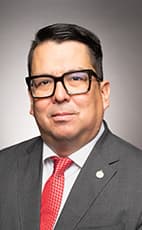
Wade Grant
In the 90 days to September 18, 2026, 10 organizations lobbied Wade Grant across 12 meetings — most often about Economic Development. The most frequent visitor was The University of British Columbia (2 meetings, via their in-house lobbyist Benoit-Antoine Bacon). Its registration describes the goal as “Discussions with Innovation, Science and Economic Development Canada and other relevant departments and agencies regarding the role of…”. That's more than the average MP, who had 6 meetings over the same period.
Based on federal lobbying registry data to September 18, 2026
In the House · Oct 5–6
Wade Grant this week
“Last week on September 30, millions of Canadians observed national truth and reconciliation day. Unfortunately, three days before that, in the city of Kamloops in the Tk̓emlúps te Secwe̓pemc territory, a group organized and demonstrated in front of and mere…”
- Spoke 1 time in the House · the average MP spoke 2 times
- AGAINSTC-218, second reading — Medical assistance in dying · defeated 141–187
- AGAINSTOpposition Motion (Diesel prices) · defeated 133–196
- FORFifth report of the Standing Committee on Health · passed 196–132
Get Wade Grant's week in your inbox every Monday
What they said, how they voted, and who lobbied them. Free, no ads, unsubscribe anytime.
How Wade Grant actually voted
Their recorded positions on the issues Canadians care about — pulled straight from the parliamentary record.
- Voted Against
- Voted For
Healthcare
Fifth report of the Standing Committee on Health
Oct 2026 · Passed
- Voted For
Labour & Employment
Establish a national framework respecting skilled trades and labour mobility
C-266 · Sep 2026 · Passed · Tell your MP what you think
- Voted For
Economy & Taxation
Implement certain provisions of the spring economic update tabled in Parliament on April 28, 2026
C-30 · Jun 2026 · Passed · Tell your MP what you think
- Voted For
Housing
Authorize certain payments to be made out of the Consolidated Revenue Fund for the purpose of improving housing supply
C-26 · Jun 2026 · Passed · Tell your MP what you think
Overall leanings
100%
voted with the Liberal line this Parliament
100%
vote attendance (177/177)
Who's lobbying Wade
Individual meeting records from the federal lobbying registry
| Date | Organization | |
|---|---|---|
| 2026-08-19 | Canadian Bankers Association | |
| 2026-08-17 | The University of British Columbia | |
| 2026-08-13 | British Columbia's Children's Hospital Foundation | |
| 2026-08-11 | The UBC Graduate Student Society | |
| 2026-08-07 | BC Real Estate Association |
Write to Wade Grant
Pick what it's about. You'll get a letter you can edit, then send it from your own email.
Other ways to reach Wade
613-992-4211 is the House of Commons switchboard — ask to be connected to your MP's office. For constituency office contact details, or if wade.grant@parl.gc.ca bounces, visit their Parliament profile.
Committee Memberships
Top Lobbying Clients
Companies with the most meetings with this MP since July 2008
What Wade talks about
- Carbon Pricing10 speeches · 2025–2026
- Climate Change9 speeches · 2025–2026
- Housing7 speeches · 2026
- Industry7 speeches · 2026
- The Economy7 speeches · 2025–2026
Recent Speeches
Mr. Speaker, last week on September 30, millions of Canadians observed national truth and reconciliation day. Unfortunately, three days before that, in the city of Kamloops in the Tk̓emlúps te Secwe̓pemc territory, a group organized and demonstrated in front of and mere steps away from the residenti… Read full speechShow less
Mr. Speaker, last week on September 30, millions of Canadians observed national truth and reconciliation day. Unfortunately, three days before that, in the city of Kamloops in the Tk̓emlúps te Secwe̓pemc territory, a group organized and demonstrated in front of and mere steps away from the residential school. These people wanted to intimidate and strike fear in residential school survivors. We stand with residential school survivors. We stand with their truths, and we want them to know that we stand with them every single day. To the residential school survivors and their families who are still here, the next time those people come out of their mothers' basements and march in an unorganized way, know that they are not strong, that they are not courageous. Survivors have more strength and more courage in their pinky fingers than each and every one of them does. We stand with survivors. We stand with them every day, not just on September 30, but every day of the year.
Mr. Speaker, I would like to congratulate my colleague from North Vancouver—Capilano, along the same sort of lines as my colleague across the way. I know that he was knocking on doors for almost a month recently, and it has been a great success for him. I also want to ask him about how this bill spe… Read full speechShow less
Mr. Speaker, I would like to congratulate my colleague from North Vancouver—Capilano, along the same sort of lines as my colleague across the way. I know that he was knocking on doors for almost a month recently, and it has been a great success for him. I also want to ask him about how this bill specifically would answer or quell any concerns that he heard when knocking on the doors of the great people of North Vancouver—Capilano.
Mr. Speaker, it is my first time rising in the House since we have come back, and I am very excited to be back. Issues related to oil sands management are taken seriously. The importance of clean waterways, healthy ecosystems and the well-being of surrounding communities continues to guide federal a… Read full speechShow less
Mr. Speaker, it is my first time rising in the House since we have come back, and I am very excited to be back. Issues related to oil sands management are taken seriously. The importance of clean waterways, healthy ecosystems and the well-being of surrounding communities continues to guide federal action in this area, alongside consideration of indigenous rights and interests. Environment and Climate Change Canada is advancing its work on oil sands mining effluent through ongoing structured engagement with indigenous rights holders and organizations, the Government of Alberta, the Government of Northwest Territories, industry representatives, environmental non-governmental organizations and other federal departments. This collaborative approach is intended to ensure that multiple perspectives and expertise inform policy development. A key component of this work is the Crown-indigenous working group, through which ECCC, or Environment and Climate Change Canada, and indigenous partners are working together to examine options related to the management of oil sands mining process water. The outcome of this work will inform recommendations provided to the Minister of Environment and Climate Change Canada. Should a regulation authorizing discharge to water be deemed necessary, it would apply only to mine water that has been treated to strict standards, designed to protect the environment, human health and the well-being of indigenous people. Under no circumstances would the releasing of tailings or untreated mine water be permitted. Engagement with partners and stakeholders will continue as considerations advance, if applicable, through the development of any regulatory measures. In addition, Environment and Climate Change Canada, on behalf of the federal government, jointly leads the oil sands monitoring program with the Government of Alberta, in partnership with indigenous communities and industry. This program aims to improve understanding of the environmental effects of oil sands development through comprehensive ambient monitoring within the region. Monitoring results and reports are made publicly accessible through the oil sands monitoring program portal. In August 2024, the Government of Canada announced that it would make available nearly $12 million over 10 years to support a Fort Chipewyan health study examining the potential impacts of oil sands activities on community health. Nations have begun this work. Canada is dedicated to supporting a community-led, transparent and science-based approach to assessing health risks, with indigenous nations leading decision-making on issues that affect their well-being. Safeguarding the health of communities and the integrity of Canada's waters and ecosystems is a fundamental responsibility of this government now and into the future. Addressing the risks associated with tailings management requires sustained effort, collaboration and solutions grounded in sound science. This work is ongoing, and the government will continue to consider and be guided by the recommendations that emerge from all of these collaborative processes.
Mr. Speaker, the incident referenced is deeply concerning, and it reinforces the importance of strong oversight and accountability. Federal officials remain engaged with provincial regulators and indigenous communities to ensure that appropriate response measures are taken and that impacts are fully… Read full speechShow less
Mr. Speaker, the incident referenced is deeply concerning, and it reinforces the importance of strong oversight and accountability. Federal officials remain engaged with provincial regulators and indigenous communities to ensure that appropriate response measures are taken and that impacts are fully assessed. Where federal laws apply, they will be enforced. At the same time, this situation underscores the need to strengthen how tailings are managed across the sector. That is why the government is advancing the work, in partnership with indigenous peoples, with a focus on transparency, rigorous science and the protection of waters and communities.
Mr. Speaker, we cannot build a clean Canada if we are not working together. We are thinking differently and strategically to deliver results for Canadians. We have introduced new methane regulations. We have brought Alberta to the table. We have actually brought Canada's largest-emitting province to… Read full speechShow less
Mr. Speaker, we cannot build a clean Canada if we are not working together. We are thinking differently and strategically to deliver results for Canadians. We have introduced new methane regulations. We have brought Alberta to the table. We have actually brought Canada's largest-emitting province to the table. We will soon also be launching our clean electricity strategy to double our grid in the next number of years. It is something we have promised Canadians. We are going to give this to Canadians today, tomorrow and for future generations, and that is why I am proud to stand on this side of the aisle.