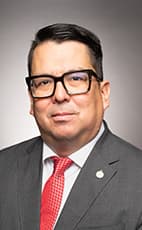
Wade Grant
In the 90 days to September 18, 2026, 10 organizations lobbied Wade Grant across 12 meetings — most often about Economic Development. The most frequent visitor was The University of British Columbia (2 meetings, via their in-house lobbyist Benoit-Antoine Bacon). Its registration describes the goal as “Discussions with Innovation, Science and Economic Development Canada and other relevant departments and agencies regarding the role of…”. That's more than the average MP, who had 6 meetings over the same period.
Based on federal lobbying registry data to September 18, 2026
In the House · Sep 21–25
Wade Grant this week
“I know that he was knocking on doors for almost a month recently, and it has been a great success for him. I also want to ask him about how this bill specifically would answer or quell any concerns that he heard when knocking on the doors of the great people…”
- Spoke 3 times in the House · the average MP spoke 4 times
- FORC-266, second reading — Establish a national framework respecting skilled trades and labour mobility · passed 295–21
Get Wade Grant's week in your inbox every Monday
What they said, how they voted, and who lobbied them. Free, no ads, unsubscribe anytime.
How Wade Grant actually voted
Their recorded positions on the issues Canadians care about — pulled straight from the parliamentary record.
- Voted For
Labour & Employment
Establish a national framework respecting skilled trades and labour mobility
C-266 · Sep 2026 · Passed · Tell your MP what you think
- Voted For
Economy & Taxation
Implement certain provisions of the spring economic update tabled in Parliament on April 28, 2026
C-30 · Jun 2026 · Passed · Tell your MP what you think
- Voted For
Housing
Authorize certain payments to be made out of the Consolidated Revenue Fund for the purpose of improving housing supply
C-26 · Jun 2026 · Passed · Tell your MP what you think
- Voted For
Criminal Justice
Hate propaganda, hate crime and access to religious or cultural places
C-9 · Jun 2026 · Passed · Tell your MP what you think
- Voted For
Overall leanings
100%
voted with the Liberal line this Parliament
100%
vote attendance (174/174)
Who’s in Wade’s ear
172
lobbying meetings
117
companies & groups
106
speeches in Parliament
Top lobbying relationship: The University of British Columbia — met 6 times · most lobbied on Environment.
See who’s lobbying Wade →Who's lobbying Wade
Individual meeting records from the federal lobbying registry
| Date | Organization | |
|---|---|---|
| 2026-08-19 | Canadian Bankers Association | |
| 2026-08-17 | The University of British Columbia | |
| 2026-08-13 | British Columbia's Children's Hospital Foundation | |
| 2026-08-11 | The UBC Graduate Student Society | |
| 2026-08-07 | BC Real Estate Association |
Write to Wade Grant
Pick what it's about. You'll get a letter you can edit, then send it from your own email.
Other ways to reach Wade
613-992-4211 is the House of Commons switchboard — ask to be connected to your MP's office. For constituency office contact details, or if wade.grant@parl.gc.ca bounces, visit their Parliament profile.
Committee Memberships
Top Lobbying Clients
Companies with the most meetings with this MP
What Wade talks about
- Carbon Pricing10 speeches · 2025–2026
- Climate Change9 speeches · 2025–2026
- Housing7 speeches · 2026
- Industry7 speeches · 2026
- The Economy7 speeches · 2025–2026
Recent Speeches
Mr. Speaker, I would like to congratulate my colleague from North Vancouver—Capilano, along the same sort of lines as my colleague across the way. I know that he was knocking on doors for almost a month recently, and it has been a great success for him. I also want to ask him about how this bill spe… Read full speechShow less
Mr. Speaker, I would like to congratulate my colleague from North Vancouver—Capilano, along the same sort of lines as my colleague across the way. I know that he was knocking on doors for almost a month recently, and it has been a great success for him. I also want to ask him about how this bill specifically would answer or quell any concerns that he heard when knocking on the doors of the great people of North Vancouver—Capilano.
Mr. Speaker, it is my first time rising in the House since we have come back, and I am very excited to be back. Issues related to oil sands management are taken seriously. The importance of clean waterways, healthy ecosystems and the well-being of surrounding communities continues to guide federal a… Read full speechShow less
Mr. Speaker, it is my first time rising in the House since we have come back, and I am very excited to be back. Issues related to oil sands management are taken seriously. The importance of clean waterways, healthy ecosystems and the well-being of surrounding communities continues to guide federal action in this area, alongside consideration of indigenous rights and interests. Environment and Climate Change Canada is advancing its work on oil sands mining effluent through ongoing structured engagement with indigenous rights holders and organizations, the Government of Alberta, the Government of Northwest Territories, industry representatives, environmental non-governmental organizations and other federal departments. This collaborative approach is intended to ensure that multiple perspectives and expertise inform policy development. A key component of this work is the Crown-indigenous working group, through which ECCC, or Environment and Climate Change Canada, and indigenous partners are working together to examine options related to the management of oil sands mining process water. The outcome of this work will inform recommendations provided to the Minister of Environment and Climate Change Canada. Should a regulation authorizing discharge to water be deemed necessary, it would apply only to mine water that has been treated to strict standards, designed to protect the environment, human health and the well-being of indigenous people. Under no circumstances would the releasing of tailings or untreated mine water be permitted. Engagement with partners and stakeholders will continue as considerations advance, if applicable, through the development of any regulatory measures. In addition, Environment and Climate Change Canada, on behalf of the federal government, jointly leads the oil sands monitoring program with the Government of Alberta, in partnership with indigenous communities and industry. This program aims to improve understanding of the environmental effects of oil sands development through comprehensive ambient monitoring within the region. Monitoring results and reports are made publicly accessible through the oil sands monitoring program portal. In August 2024, the Government of Canada announced that it would make available nearly $12 million over 10 years to support a Fort Chipewyan health study examining the potential impacts of oil sands activities on community health. Nations have begun this work. Canada is dedicated to supporting a community-led, transparent and science-based approach to assessing health risks, with indigenous nations leading decision-making on issues that affect their well-being. Safeguarding the health of communities and the integrity of Canada's waters and ecosystems is a fundamental responsibility of this government now and into the future. Addressing the risks associated with tailings management requires sustained effort, collaboration and solutions grounded in sound science. This work is ongoing, and the government will continue to consider and be guided by the recommendations that emerge from all of these collaborative processes.
Mr. Speaker, the incident referenced is deeply concerning, and it reinforces the importance of strong oversight and accountability. Federal officials remain engaged with provincial regulators and indigenous communities to ensure that appropriate response measures are taken and that impacts are fully… Read full speechShow less
Mr. Speaker, the incident referenced is deeply concerning, and it reinforces the importance of strong oversight and accountability. Federal officials remain engaged with provincial regulators and indigenous communities to ensure that appropriate response measures are taken and that impacts are fully assessed. Where federal laws apply, they will be enforced. At the same time, this situation underscores the need to strengthen how tailings are managed across the sector. That is why the government is advancing the work, in partnership with indigenous peoples, with a focus on transparency, rigorous science and the protection of waters and communities.
Mr. Speaker, we cannot build a clean Canada if we are not working together. We are thinking differently and strategically to deliver results for Canadians. We have introduced new methane regulations. We have brought Alberta to the table. We have actually brought Canada's largest-emitting province to… Read full speechShow less
Mr. Speaker, we cannot build a clean Canada if we are not working together. We are thinking differently and strategically to deliver results for Canadians. We have introduced new methane regulations. We have brought Alberta to the table. We have actually brought Canada's largest-emitting province to the table. We will soon also be launching our clean electricity strategy to double our grid in the next number of years. It is something we have promised Canadians. We are going to give this to Canadians today, tomorrow and for future generations, and that is why I am proud to stand on this side of the aisle.
Mr. Speaker, on top of what I just said, we have also released the nature strategy. We are going to be protecting 30% of Canada's lands and waters by 2030. In fact, about two weeks ago, I went to Klemtu on the coast of British Columbia, where I was standing with the Minister of the Environment and C… Read full speechShow less
Mr. Speaker, on top of what I just said, we have also released the nature strategy. We are going to be protecting 30% of Canada's lands and waters by 2030. In fact, about two weeks ago, I went to Klemtu on the coast of British Columbia, where I was standing with the Minister of the Environment and Climate Change. We announced with seven first nations in the province of British Columbia a plan to protect over 6,700 square kilometres of coast. That is equivalent to 1.5 times the size of Banff National Park and larger than Prince Edward Island.
Recent activity
21 activities across speeches, bills, and lobbying communications.
September 2026
Government Orders
Mr. Speaker, I would like to congratulate my colleague from North Vancouver—Capilano, along the same sort of lines as my colleague across the way. I know that he was knocking on doors for almost a mon… Read full speechShow less
Mr. Speaker, I would like to congratulate my colleague from North Vancouver—Capilano, along the same sort of lines as my colleague across the way. I know that he was knocking on doors for almost a month recently, and it has been a great success for him. I also want to ask him about how this bill specifically would answer or quell any concerns that he heard when knocking on the doors of the great people of North Vancouver—Capilano.
Adjournment Proceedings
Mr. Speaker, it is my first time rising in the House since we have come back, and I am very excited to be back. Issues related to oil sands management are taken seriously. The importance of clean wate… Read full speechShow less
Mr. Speaker, it is my first time rising in the House since we have come back, and I am very excited to be back. Issues related to oil sands management are taken seriously. The importance of clean waterways, healthy ecosystems and the well-being of surrounding communities continues to guide federal action in this area, alongside consideration of indigenous rights and interests. Environment and Climate Change Canada is advancing its work on oil sands mining effluent through ongoing structured engagement with indigenous rights holders and organizations, the Government of Alberta, the Government of Northwest Territories, industry representatives, environmental non-governmental organizations and other federal departments. This collaborative approach is intended to ensure that multiple perspectives and expertise inform policy development. A key component of this work is the Crown-indigenous working group, through which ECCC, or Environment and Climate Change Canada, and indigenous partners are working together to examine options related to the management of oil sands mining process water. The outcome of this work will inform recommendations provided to the Minister of Environment and Climate Change Canada. Should a regulation authorizing discharge to water be deemed necessary, it would apply only to mine water that has been treated to strict standards, designed to protect the environment, human health and the well-being of indigenous people. Under no circumstances would the releasing of tailings or untreated mine water be permitted. Engagement with partners and stakeholders will continue as considerations advance, if applicable, through the development of any regulatory measures. In addition, Environment and Climate Change Canada, on behalf of the federal government, jointly leads the oil sands monitoring program with the Government of Alberta, in partnership with indigenous communities and industry. This program aims to improve understanding of the environmental effects of oil sands development through comprehensive ambient monitoring within the region. Monitoring results and reports are made publicly accessible through the oil sands monitoring program portal. In August 2024, the Government of Canada announced that it would make available nearly $12 million over 10 years to support a Fort Chipewyan health study examining the potential impacts of oil sands activities on community health. Nations have begun this work. Canada is dedicated to supporting a community-led, transparent and science-based approach to assessing health risks, with indigenous nations leading decision-making on issues that affect their well-being. Safeguarding the health of communities and the integrity of Canada's waters and ecosystems is a fundamental responsibility of this government now and into the future. Addressing the risks associated with tailings management requires sustained effort, collaboration and solutions grounded in sound science. This work is ongoing, and the government will continue to consider and be guided by the recommendations that emerge from all of these collaborative processes.
Adjournment Proceedings
Mr. Speaker, the incident referenced is deeply concerning, and it reinforces the importance of strong oversight and accountability. Federal officials remain engaged with provincial regulators and indi… Read full speechShow less
Mr. Speaker, the incident referenced is deeply concerning, and it reinforces the importance of strong oversight and accountability. Federal officials remain engaged with provincial regulators and indigenous communities to ensure that appropriate response measures are taken and that impacts are fully assessed. Where federal laws apply, they will be enforced. At the same time, this situation underscores the need to strengthen how tailings are managed across the sector. That is why the government is advancing the work, in partnership with indigenous peoples, with a focus on transparency, rigorous science and the protection of waters and communities.
June 2026
Oral Questions
Mr. Speaker, we cannot build a clean Canada if we are not working together. We are thinking differently and strategically to deliver results for Canadians. We have introduced new methane regulations. … Read full speechShow less
Mr. Speaker, we cannot build a clean Canada if we are not working together. We are thinking differently and strategically to deliver results for Canadians. We have introduced new methane regulations. We have brought Alberta to the table. We have actually brought Canada's largest-emitting province to the table. We will soon also be launching our clean electricity strategy to double our grid in the next number of years. It is something we have promised Canadians. We are going to give this to Canadians today, tomorrow and for future generations, and that is why I am proud to stand on this side of the aisle.
Oral Questions
Mr. Speaker, on top of what I just said, we have also released the nature strategy. We are going to be protecting 30% of Canada's lands and waters by 2030. In fact, about two weeks ago, I went to Klem… Read full speechShow less
Mr. Speaker, on top of what I just said, we have also released the nature strategy. We are going to be protecting 30% of Canada's lands and waters by 2030. In fact, about two weeks ago, I went to Klemtu on the coast of British Columbia, where I was standing with the Minister of the Environment and Climate Change. We announced with seven first nations in the province of British Columbia a plan to protect over 6,700 square kilometres of coast. That is equivalent to 1.5 times the size of Banff National Park and larger than Prince Edward Island.
May 2026
Oral Questions
Mr. Speaker, we cannot build Canada strong and clean if we are not working together. That is why we are thinking differently, strategically, to deliver real results for Canadians. We have introduced n… Read full speechShow less
Mr. Speaker, we cannot build Canada strong and clean if we are not working together. That is why we are thinking differently, strategically, to deliver real results for Canadians. We have introduced new methane regulations and $90 billion in clean investment tax credits. We brought Alberta to the table for the first time, making sure that we move together for the future, and I was so proud to be in Klemtu this weekend, where we worked with six first nations and the Province of British Columbia to protect 6,500 square kilometres of marine conservation for future generations.
Government Orders
Mr. Speaker, I have memories of being in high school in the early 1990s when the B.C. treaty process was opened up because of the many title cases that my colleague has talked about. Fellow students a… Read full speechShow less
Mr. Speaker, I have memories of being in high school in the early 1990s when the B.C. treaty process was opened up because of the many title cases that my colleague has talked about. Fellow students asked, “Are you coming for our house? Are you coming for our land?” We had to have leadership come say absolutely not, we will never do that; we want to work in co-operation and we want to live in harmony with each and every person who lives in and around our territory. The hon. parliamentary secretary has been involved in first nations politics for a very long time across this country. Has he ever once heard a first nations person, a chief or anybody, say they want private property rights?
Government Orders
Mr. Speaker, I know that my colleague, the member for Richmond East—Steveston, has been very involved with the issue. He is very concerned as well, because he does take this very seriously with his re… Read full speechShow less
Mr. Speaker, I know that my colleague, the member for Richmond East—Steveston, has been very involved with the issue. He is very concerned as well, because he does take this very seriously with his residents and his constituents. I have seen him working on the ground, not only with them but also with the parties appealing the decision along with the federal government. There is the municipality. There are other first nations. There is the province of British Columbia. There is a unified approach to make sure the decision is appealed. I want to ask the member what he has been hearing from the other parties, so we know they are all working together to ensure that it is appealed.
Government Orders
Mr. Speaker, I have much respect for my colleague from the Nanaimo territory. She mentioned that the government failed to negotiate a treaty with the Cowichan Tribes. However, the Stz’uminus tribe, wh… Read full speechShow less
Mr. Speaker, I have much respect for my colleague from the Nanaimo territory. She mentioned that the government failed to negotiate a treaty with the Cowichan Tribes. However, the Stz’uminus tribe, which is part of the Cowichan Tribes, dropped out of the treaty process in 2014, and who was in government at the time, in 2014? We try to negotiate on this side. We go to court. These sorts of things happen. Then the Conservatives criticize the negotiations on a government-to-government level. What are we supposed to do? What is their solution, to negotiate with first nations or to go to court, because they are saying that both do not work?
Oral Questions
Madam Speaker, I want to say that Canada continues to be a global climate leader, and we are making our voice heard on the world stage. In fact, just last week, at the G7, the Minister of the Environm… Read full speechShow less
Madam Speaker, I want to say that Canada continues to be a global climate leader, and we are making our voice heard on the world stage. In fact, just last week, at the G7, the Minister of the Environment, Climate Change presented our ambitious new nature strategy. In the spring economic statement, we renewed Canada's international climate finance to support sustainable solutions across the world, especially in vulnerable places. As the Prime Minister has said in the House of Commons, we will respect our Paris commitments for climate change, and we are determined to achieve them. Our government will continue to take decisive climate action and engage in global conversations and action supporting a stronger, cleaner and safer world.
Private Members' Business
Madam Speaker, before I start, I want to thank my colleague from Kitchener Centre for standing up and having the tremendous strength she had today to share her story. Far too often in my 47 years, I h… Read full speechShow less
Madam Speaker, before I start, I want to thank my colleague from Kitchener Centre for standing up and having the tremendous strength she had today to share her story. Far too often in my 47 years, I have had to say goodbye to many family members way too early. They never were able to climb the mountain that she was able to climb, but I am able to share her story now to say that people can climb that mountain and be in this hallowed hall one day. I thank the member again. I am thankful for this opportunity to speak to the private member's bill, Bill C-240, the offender rehabilitation act. This bill proposes amendments to the Criminal Code, the Corrections and Conditional Release Act, CCRA, and the Controlled Drugs and Substances Act. More specifically, the proposed amendments would allow a court to prescribe measures that an offender must undertake during their sentence, such as participation in treatment or employment programs; require that such measures be incorporated into an offender's correctional plan and that progress be considered by the Parole Board of Canada, PBC, when making sentencing decisions; and treat large-scale fentanyl trafficking as an aggravating sentencing factor. Our primary responsibility as a government is to keep all Canadians safe. This responsibility requires us to carefully review legislation, assess its implications and ensure that it upholds the values that Canadians expect of us. We support the principles of Bill C-240 and recognize that it requires further study at the committee stage to address certain challenges present in its current form. We look forward to working together to rectify these issues and ensure the safety of all Canadians. With this in mind, I will use my time to talk about how Correctional Service Canada, CSC, helps people in custody achieve their substance use goals, as well as how parole works in Canada. Substance use is a complex health issue that requires a balanced approach focused on prevention, treatment and harm reduction. Through its national drugs and substances strategy, CSC takes a health-centred approach to substance abuse, recognizing that addressing problematic use is essential to rehabilitation and public safety. CSC provides screening, evidence-based treatment and peer-supported recovery services. This includes substance use treatment delivered by health care professionals, such as opioid agonist treatment for individuals with opioid use disorder. CSC also implements harm reduction measures to reduce the risk of overdose and the spread of infectious diseases while supporting access to care. CSC further supports recovery through peer-based programs, which use lived experience to promote engagement, recovery and successful reintegration into the community. The majority of offenders are serving fixed-length sentences. This means that they will eventually be released back into the community once their sentence ends. Let me, for a moment, explain how parole works in Canada. Parole contributes to public safety by helping offenders reintegrate into society as law-abiding citizens through a gradual, controlled and supported release with conditions. Parole decisions are made by the Parole Board of Canada, an independent administrative tribunal that operates at arm's length from government and is free from outside influence. The process can take place through an in-office file review or a face-to-face hearing with the offender and their parole officer. When hearings are held in person, observers may request to attend remotely. Board members consider all relevant and available information in assessing an offender's risk to reoffend. Decisions are based on a thorough risk assessment of all relevant and available information, which includes information from police, courts, Crown attorneys, mental health professionals, correctional authorities, private agencies, indigenous communities and victims of crime. We must not forget that an offender on parole is not completely free. They continue to be monitored and supported by a parole officer from Correctional Service Canada. The Parole Board of Canada may revoke an offender's release not only if they breach their conditions, but also if their risk is assessed as having become unacceptable. I want to reassure all Canadians that public safety is the primary consideration in all conditional release decisions. I would also like to share some information about recidivism. Over the last 10 years, 93% of offenders granted day or full parole by the Parole Board of Canada have not committed a new offence while on parole and 99% of offenders have not committed a new violent offence while on parole. I would also like to emphasize that victims have a role to play in the parole process as well. They may register to receive information from the Parole Board of Canada and Correctional Service Canada. Victims may also provide information to Correctional Service Canada and/or to the Parole Board of Canada at any time throughout the offender's sentence, for consideration when making decisions related to the offender's security level, evaluations or the offender's programming needs and overall risk to re-offend. This includes by board members when deciding whether the offender should be released and the conditions they impose. Victims can choose to provide a victim statement describing the impact the crime continues to have on them, express their views about the possible conditional release of the offender and ask Correctional Service Canada to consider their area of residence when making a release plan. Victims can also request special conditions for the Parole Board to consider, for example, preventing the offender from communicating with them or their family and from going to any specified place. Further, victims may attend the offender's parole hearing as observers and can read their written statement to board members, outlining the continuing impact the offence has had on them, as well as any risk or safety concerns the offender may pose. The national office for victims, through Public Safety Canada, provides an essential resource for victims of federal offenders. It is committed to empowering victims of federal offenders through information. Victims of crime can use this information to understand how authorities determine eligibility dates for different types of release. Through the Canadian Victims Bill of Rights, the Government of Canada also provides the following rights to victims of crime: the right to information, the right to protection, the right to participation and the right to seek restitution. Under the Corrections and Conditional Release Act, victims of crime can receive information on progress made by inmates towards meeting the objectives of their correctional plan. The government will always take the protection of these rights seriously. We will continue to ensure the safety of all Canadians. As we support sending the bill to committee, we hope to further the progress, efforts and values I discussed today by strengthening this piece of legislation and ensuring a safer Canada for all Canadians.
April 2026
Government Orders
Mr. Speaker, I appreciate my dear friend's tremendous speech. I know that he is a proud Nova Scotian. I know he is a proud Canadian. Like me, he probably grew up thinking about going to space and alwa… Read full speechShow less
Mr. Speaker, I appreciate my dear friend's tremendous speech. I know that he is a proud Nova Scotian. I know he is a proud Canadian. Like me, he probably grew up thinking about going to space and always dreaming of being an astronaut. Unfortunately, things changed for me, but we do now have this bill on the floor. I want to talk a bit about the member's beautiful riding. I have never been there, but I know I will be there one day. He talked about the investment that this could bring to his riding. He talked about his constituents. He is a proud indigenous member as well. What can investments like this in his riding provide for indigenous communities and indigenous people in his riding?
Oral Questions
Mr. Speaker, I thank the hon. member for looking out for my relatives from the Cowichan tribes. I know they are probably very furious about what is happening. We will work with them and work with othe… Read full speechShow less
Mr. Speaker, I thank the hon. member for looking out for my relatives from the Cowichan tribes. I know they are probably very furious about what is happening. We will work with them and work with others to ensure that no illegal dumping occurs on their property. We will make sure that it stops as soon as possible.
Statements by Members
Mr. Speaker, this will undoubtedly be the hardest minute in my time as an MP, where I honour my father, who passed away on March 29 this year. He was born Howard Hong to a Musqueam matriarch and Hong … Read full speechShow less
Mr. Speaker, this will undoubtedly be the hardest minute in my time as an MP, where I honour my father, who passed away on March 29 this year. He was born Howard Hong to a Musqueam matriarch and Hong Tim Hing, a Chinese immigrant. He grew up without a father; his father died when he was 10. My dad was the greatest father that my five siblings and I could ever have. He was Dad to many other people because of his large shoulders that we all stand upon. He built bridges between communities and between cultures, and he became a bridge himself, a person who would bring people together. He told me to come here to the House of Commons and to shake the hands of each and every person here because we are all working together. That is the Canada he wanted for his children and his grandchildren. Today I have a little secret: My name is Howard Wade Grant. He named me after him. If I could say something to him today, I would say that the love that I shared with him, the love that we shared, is so much better because I got to share his name.
Adjournment Proceedings
Mr. Speaker, it is always a pleasure to rise and reply to my friend from York—Durham. Yes, we know that too many Canadians are struggling to find homes they can afford. That is why the government is t… Read full speechShow less
Mr. Speaker, it is always a pleasure to rise and reply to my friend from York—Durham. Yes, we know that too many Canadians are struggling to find homes they can afford. That is why the government is taking action on multiple fronts to increase the rate of home construction, restore affordability and reduce homelessness, not through a single program but with a comprehensive approach that brings every partner to the table. On February 5, the government tabled legislation to establish Build Canada Homes as a Crown corporation to scale up the supply of affordable homes for lower- and middle-income Canadians. Build Canada Homes will partner across the housing ecosystem, deploying flexible financing tools, leveraging public lands and using modern methods of construction to build more affordable homes for Canadians. It will help build homes more quickly, more efficiently and at scale. Across this country, the Government of Canada is working with provinces, territories and municipalities to remove local barriers that slow new supply. We are helping to support faster, more predictable approvals and aligning rules so that good projects can get built. We have introduced targeted tax measures that make purpose-built rental projects more financially viable, because renters need more options that they can afford. The Canada Mortgage and Housing Corporation programs, such as the apartment construction loan program and mortgage loan insurance, are helping builders access the financing necessary to move projects from concept to construction. This continues the progress made by the national housing strategy. To date, over 741,000 households have been reduced or eliminated from housing needs. More than 195,000 new housing units were created or committed. That progress matters, because solving the housing crisis requires steady, sustained effort over time. For young Canadians working toward their first home, federal supports, such as the first home savings account, will allow them to save up to $40,000 tax-free. This is done with contributions that reduce their taxable income and withdrawals that are entirely tax-free when they buy their first home. To lower the upfront cost of buying a new home for young Canadians, we introduced the first-time homebuyers' GST rebate to allow first-time homebuyers to save up to $50,000 on a new home. The government is eliminating the goods and services tax on new homes up to $1 million and reducing the same GST on new homes between $1 million and $1.5 million for first-time homebuyers. We are also working to reduce the cost of home building. The first of these partnerships was announced on March 30 with the Government of Ontario. It will help lower development charges and reduce taxes and fees for a home in Ontario up to $200,000. We look forward to working with other partners to reach similar agreements. The Government of Canada is taking action so all Canadians have access to an affordable place to live.
Adjournment Proceedings
Mr. Speaker, I want to start by saying that the federal government is empowering Canadians to get ahead, through budget 2025. Build Canada Homes and a range of housing measures are part of our nationa… Read full speechShow less
Mr. Speaker, I want to start by saying that the federal government is empowering Canadians to get ahead, through budget 2025. Build Canada Homes and a range of housing measures are part of our national effort to increase housing construction, restore affordability and reduce homelessness. Budget 2025 is making generational investments of $25 billion over five years for housing, and $115 billion over five years for infrastructure. These strategic investments will create lasting prosperity by building homes and major infrastructure projects. Together with our partners across government and the housing industry, we are building homes, creating jobs and growing our economy. The Government of Canada is strengthening its capacity to address Canada's housing crisis, improving housing supply and accelerating innovation in homebuilding. We are taking action to lower housing costs for Canadians so everyone has a place to call home.
Oral Questions
Mr. Speaker, we, of course, acknowledge and take seriously the concerns raised by indigenous communities in the regions around tailings ponds where safety risks happen. Pollution from oil sands tailin… Read full speechShow less
Mr. Speaker, we, of course, acknowledge and take seriously the concerns raised by indigenous communities in the regions around tailings ponds where safety risks happen. Pollution from oil sands tailings is a serious issue that affects Canada's waters, ecosystems and the well-being of communities. Our government is committed to protecting the health of communities, as well as Canada's waters, fish and ecosystems, today and for generations to come. This is why we are working closely with the Crown-indigenous working group along with the affected communities, first nations, provinces and industry to develop a long-term, science-based solution, and we look forward to their recommendations.
Adjournment Proceedings
Mr. Speaker, I know my colleague from Mission—Matsqui—Abbotsford proudly represents many of my extended family in the Sumas and Sts'ailes first nations, and I raise my hands to him for that, but I hav… Read full speechShow less
Mr. Speaker, I know my colleague from Mission—Matsqui—Abbotsford proudly represents many of my extended family in the Sumas and Sts'ailes first nations, and I raise my hands to him for that, but I have to disagree with how he is painting the industrial carbon pricing. We have said before that there is no carbon tax on food and farmers, and farmers are not subject to the industrial carbon price. Independent modelling from the Canadian Climate Institute and Navius Research shows the impact of industrial carbon pricing on agriculture is less than one-tenth of 1% by 2030. Why? It is because farmers are not the ones paying it. Industrial carbon pricing applies only to large industrial emitters: steel, cement, mining, oil and gas. Under the output-based system, facilities can cut emissions, buy credits or adopt cleaner technologies. It is a flexible and efficient framework that reduces emissions at the lowest cost while protecting business and competitiveness. Global pressures, not federal climate policy, are driving food inflation. Disrupted shipping routes, climate-related crop losses and the impacts of international conflicts on fertilizer and energy markets are the same challenges faced around the world. That is why yesterday the government temporarily suspended the federal fuel excise tax on gasoline and diesel across Canada. Starting April 20, this measure will provide immediate relief to Canadians, reducing prices at the pump by approximately 10¢ per litre on gasoline and four cents per litre on diesel. It lowers costs for businesses and truckers across key sectors while we continue to build long-term energy security. This is in addition to our new Canada groceries and essentials benefit announced earlier this year, which will help more than 12 million low- and modest-income earners afford day-to-day essentials. We are also investing heavily in adaptation. Since 2015, more than $6.6 billion has supported community resilience, with new funding in budget 2025. Indigenous leadership is essential to this work and supported by over $2 billion in indigenous-led climate initiatives since 2020. Climate action is economic action. Our policies protect families, support workers and position Canada for long-term prosperity.
Adjournment Proceedings
Mr. Speaker, yes, I do recognize what the hon. member has stated. I have talked with many of my family members in that area about that very topic. I will repeat this because it matters. Farmers do not… Read full speechShow less
Mr. Speaker, yes, I do recognize what the hon. member has stated. I have talked with many of my family members in that area about that very topic. I will repeat this because it matters. Farmers do not pay the industrial carbon price, and groceries are not subject to any carbon tax. Our government eliminated the consumer fuel charge back in 2025. Industrial carbon pricing applies only to major emitters and gives them practical, low-cost options to reduce pollution. Eliminating these tools would not lower food prices. It would increase pollution, undermine investor certainty and weaken Canada's competitiveness as the global market shifts to cleaner production. There is no food packaging tax, and independent analysis shows food inflation has been driven by global disruptions, not climate policy. Canadians deserve solutions grounded in evidence, and that is exactly what this government will be delivering.
Adjournment Proceedings
Mr. Speaker, I thank my colleague for Cloverdale—Langley City, which is a beautiful riding not too far from my home, for the question. The Government of Canada is focused on making housing more afford… Read full speechShow less
Mr. Speaker, I thank my colleague for Cloverdale—Langley City, which is a beautiful riding not too far from my home, for the question. The Government of Canada is focused on making housing more affordable and buying a home more attainable for Canadians. Through budget 2025, we are making generational investments of $25 billion over five years for housing and $115 billion over five years for infrastructure. These strategic investments will build major infrastructure and homes and create lasting prosperity, empowering Canadians to get ahead. This is also why the Prime Minister launched Build Canada Homes in September 2025. Build Canada Homes is a completely different way to build affordable housing for Canadians. This new federal agency will catalyze a productive housing industry, something that sets it apart from anything done previously. Build Canada Homes will not act alone. It will work in close partnership with developers, manufacturers, provinces, territories, municipalities and indigenous partners to get housing financed and built. Our goal is to make it faster and easier for builders to get big projects off the ground and deliver homes for Canadians right across the country. Young families and first-time homebuyers deserve the same opportunities to own a home that our parents did. That is why we are taking action to provide Canadians with immediate relief through targeted tax measures. We are cutting the GST on new homes at or under $1 million for first-time homebuyers, delivering savings of up to $50,000. We are also lowering the GST on new homes between $1 million and $1.5 million. These initiatives will help more Canadians buy their homes. As well, we are helping first-time homebuyers through the tax-free home savings account, which helps Canadians to save for their first home. We are building on the success of programs delivered through the national housing strategy, like the $4.4-billion housing accelerator fund, which incentivizes municipalities to reduce barriers to building. We are investing in the purpose-built rental supply through the apartment construction loan program. We are also taking action to help the community housing sector to acquire at-risk rental apartment buildings, ensuring they remain affordable over the long term, with the launch of the Canada rental protection fund. It is unacceptable for anybody in Canada to go without safe, affordable and inclusive housing, and that is why the federal government is committed to solving the housing crisis and taking a leadership role on housing. The Government of Canada is removing barriers to construction, reducing risk for home builders and making significant investments in non-market housing. We are working closely with builders, investors, indigenous partners and all levels of government to implement innovative solutions to get the job done. Together with our partners, the Government of Canada is leading transformative change in Canada's housing sector.
March 2026
House of Commons
106 communications with 82 clients
Top clients: [{"name": "Council of Forest Industries", "count": 4}, {"name": "The University …