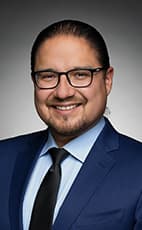
Billy Morin
In the 90 days to October 1, 2026, 5 organizations lobbied Billy Morin across 5 meetings — most often about Aboriginal Affairs. The most frequent visitor was Emergent BioSolutions Canada Inc. (1 meeting, via Kait LaForce of Counsel Public Affairs Inc.). Its registration describes the goal as “Engagement as part of the federal pre-budget consultation process regarding supply chain priorities, challenges and recommendation for…”. That's about the same as the average MP, who had 6 meetings over the same period.
Based on federal lobbying registry data to October 1, 2026
In the House · Oct 5–9
Billy Morin this week
“I want to recognize the minister's work on the file. It is a very difficult file. She referenced the work that has been done by the Liberal government since 2015. I have a quick comment about the work done by government.”
- Spoke 13 times in the House · the average MP spoke 5 times
- FORC-39, second reading — Respecting certain measures to strengthen the economy · passed 296–26
- FORC-218, second reading — Medical assistance in dying · defeated 141–187
- FOROpposition Motion (Diesel prices) · defeated 133–196
- AGAINSTFifth report of the Standing Committee on Health · passed 196–132
Get Billy Morin's week in your inbox every Monday
What they said, how they voted, and who lobbied them. Free, no ads, unsubscribe anytime.
How Billy Morin actually voted
Their recorded positions on the issues Canadians care about — pulled straight from the parliamentary record.
- Voted For
- Voted Against
Healthcare
Fifth report of the Standing Committee on Health
Oct 2026 · Passed
- Voted For
Labour & Employment
Establish a national framework respecting skilled trades and labour mobility
C-266 · Sep 2026 · Passed · Tell your MP what you think
- Voted Against
Criminal Justice
Hate propaganda, hate crime and access to religious or cultural places
C-9 · Jun 2026 · Passed · Tell your MP what you think
- Voted Against
Overall leanings
100%
voted with the Conservative line this Parliament
93%
vote attendance (166/178, missed 12)
Who's lobbying Billy
Individual meeting records from the federal lobbying registry
| Organization | |
|---|---|
| Emergent BioSolutions Canada Inc.2026-09-28 · Government Procurement; Health; Aboriginal Affairs; Justice and Law Enforcement; Budget | |
| National Association of Friendship Centres2026-09-23 · Aboriginal Affairs; Infrastructure; Housing | |
| Metis Nation of Alberta2026-09-03 · Energy; Aboriginal Affairs; Internal Trade; Economic Development; Natural Resources | |
| Gwich'in Tribal Council2026-08-05 · Government Procurement; Aboriginal Affairs; Economic Development; Constitutional Issues; Defence | |
| Inuit Heritage Trust2026-07-21 · Aboriginal Affairs; Infrastructure; Budget; Arts and Culture |
Write to Billy Morin
Pick what it's about. You'll get a letter you can edit, then send it from your own email.
Other ways to reach Billy
613-992-4211 is the House of Commons switchboard — ask to be connected to your MP's office. For constituency office contact details, or if billy.morin@parl.gc.ca bounces, visit their Parliament profile.
Committee Memberships
Top Lobbying Clients
Companies with the most meetings with this MP since July 2008
What Billy talks about
- Making Life More Affordable for Canadians Act11 speeches · 2025
- First Nations Clean Water Act10 speeches · 2026
- Red River Métis Self-Government Recognition and Implementation Treaty Act10 speeches · 2026
- Indian Act9 speeches · 2026
- Commissioner for Modern Treaty Implementation Act6 speeches · 2026
Recent Speeches
Madam Speaker, I want to recognize the minister's work on the file. It is a very difficult file. She referenced the work that has been done by the Liberal government since 2015. I have a quick comment about the work done by government. In the House, just this week, when asked about affordability, th… Read full speechShow less
Madam Speaker, I want to recognize the minister's work on the file. It is a very difficult file. She referenced the work that has been done by the Liberal government since 2015. I have a quick comment about the work done by government. In the House, just this week, when asked about affordability, the Prime Minister said, “I just got here.” In 2015, the Liberals promised to end boiled water advisories. The fact is that they did not just get here. I am wondering if the minister can confirm, yes or no, if they are going to keep their promise to end boil water advisories.
Madam Speaker, the government appealed a 2025 ruling against it when it came to its failures on first nations clean drinking water. The Liberals immediately appealed the decision. Can the minister explain why they appealed and why they are still fighting first nations in court regarding clean drinki… Read full speechShow less
Madam Speaker, the government appealed a 2025 ruling against it when it came to its failures on first nations clean drinking water. The Liberals immediately appealed the decision. Can the minister explain why they appealed and why they are still fighting first nations in court regarding clean drinking water in first nations?
Madam Speaker, I ask for unanimous consent to split my time with the member for Cowichan—Malahat—Langford.
Madam Speaker, the Liberals said no relationship is more important to Canada than the one with indigenous peoples. On October 2015, the Liberal government promised to end boil water advisories on first nations by March 31, 2021, which was in approximately 2,000 days or six years. Like so many things… Read full speechShow less
Madam Speaker, the Liberals said no relationship is more important to Canada than the one with indigenous peoples. On October 2015, the Liberal government promised to end boil water advisories on first nations by March 31, 2021, which was in approximately 2,000 days or six years. Like so many things with reconciliation, the Liberals never lived up to their word. Since their deadline came and passed, an additional 2,018 days, or nearly six years, have come and gone. Now it has been over 11 years, over 4,000 days, since they promised to deal with clean water on first nations. There are still boil water advisories on first nations. There are still first nations wondering when the Liberals will live up to their word. The Minister, on behalf of the Government of Canada, must fulfill Canada’s obligations and implement Canada’s commitments set out in the Settlement Agreement, I highlight the words “settlement agreement”, which of course refers to a 2021 class action lawsuit regarding first nations' clean drinking water, a lawsuit started in 2019 by several first nations that were, and still are, tired of the government's negligence on water. This legislation is not derived from Liberal government leadership to do right by first nations people or water, but by the first nations seeing no other alternative but to take the government to court and force action for clean drinking water. Again, that is not the end of this. As we note today, the Liberal government continues to fight first nations in court to deny Canada has a legal duty to ensure they have safe drinking water on reserve, even as the Liberals advance this legislation. Shamattawa First Nation v. Canada was launched in court in 2022. The outstanding action by first nations is still arguing in court to this day that the government still fails in its obligations to provide safe drinking water. After failing to pass clean water legislation last Parliament as a priority, their third as the government, for the third consecutive time, it took the Liberals over a year on the last day before summer break to reintroduce their clean water legislation, much of it basically the same as Bill C-61, their previous bill in the last Parliament. That is how the Liberals treat what is, according to them, their most important relationship in the country. That is the Liberal record on reconciliation. I ask them, is this the Liberal way of keeping their word? Let us also not forget why this legislation is here in the first place. It talks about it right in the legislation itself. Section 33 of this bill says: It is no wonder that first nations like Shamattawa, St. Theresa and others in rural northern Manitoba feel they have no other option but to fight in court. Since April 2025, at the same time that the Liberal government was re-elected, those nations have been devastated from an ongoing hepatitis A outbreak, exacerbated by long-standing challenges such as a lack of clean drinking water, adequate sewage and plumbing systems. In 2025, the court sided with those first nations and the Liberals immediately appealed and are still fighting first nations in court today over clean, safe drinking water. In the appeal filing, the Liberal defence via government lawyers denied that first nations have distinctly indigenous interest in the drinking water. They asserted that first nations' interest in their own reserve land does not include water because water is not attached to the land, but flows around it and under it. I am not sure what to make of that argument. The draft of the Liberals' Bill C-37, which we are discussing here today, in section 6 says, “jurisdiction of First Nations...[is recognized over] water, source water, drinking water, wastewater, related infrastructure on, in and under First Nation lands.” The Liberals propose to recognize first nations jurisdiction in and under first nations lands, but are in court at this moment saying first nations' interest does not include water on their land because it is not attached to the land. Where are the principles of the government? At what point are the Liberals going to put in the real work to do right by first nations and clean drinking water? They should stop going around in circles wasting money on endless conflicting dialogues. They should stop fighting in court and go beyond the bare minimum ordered by that court to have kids and families gain access to life's basic necessity. What does this legislation actually do? How will it lead to them keeping their promise and how will it get the kids and families that life-giving necessity? How will it help end a boil water advisory for Neskantaga, which has been under a boil water advisory now for 30-plus years? Entire generations of a community know no reality of what it means to turn on a tap and drink safely. First, this bill says that first nations should have substantive equality, which means they should have the same accessibility to clean, safe drinking water as non-first nations communities. That is a good thing, but when you consider the policies that Indigenous Services Canada has implemented today, those policies already acknowledge that Health Canada standards, such as for effluent quality and waste-water treatment, and federal guidelines for Canadian drinking water quality apply. Will turning a policy into legislation regarding standards actually change anything the government is doing? No. As many first nations leaders have said already regarding this bill, it is a watered-down version of the previous legislation that says it will make best efforts to do the bare minimum. After 11 years, this is the best the Liberals can do to an already long-time policy and say it is now legislation. Next, this legislation has the government's favourite word to give first nations to imply the government is actually doing something when it is really not. It is “framework”. First nations wanted to be empowered yesterday on upskilling more clean water and waste-water operators. They want to know their new and old systems will be adequately supported by the fiduciary responsibility of the government. They want to know if they can enforce accountability in the system. Remote communities want to build faster and more effectively. They want testing capacity. They want adequate, predictable funding beyond two-year ISC contribution agreements and/or beyond one government budget cycle. In the case of northern Manitoba rural first nations, they want things in place to stop a hepatitis A outbreak. A framework does not do that. Kids and families cannot drink or bathe in frameworks. Saying a policy is now legislation will do nothing to stop their hepatitis A outbreak. Finally, the government told first nations and Canadians it is committed to meaningfully implementing UNDRIP, including the aspects of clean water. Evidence shows that, just like its promise in 2015, this was all just political talk with no real intention of ever living up to its word. When it comes to Liberals keeping their promises of ending boil water advisories, this legislation now says the government will make best efforts. When it comes to implementing UNDRIP, this legislation now says it is “guided by”, key words distinctly different from “according to our direct implementation record”. This reflects their 2026 report on the implementation of UNDRIP, Bill C-15, where the government said it would make all laws compatible with UNDRIP. With its fifth report, which was just released a few months ago, we now know that 125 of 181 action plan items the government developed alongside a handful of just a few first nations people are either paused, not started or incomplete. The Liberals know they say UNDRIP just because they think it is politically convenient and advantageous to say so, but their rhetoric is catching up to them, and it is becoming more divisive, especially in B.C., for all Canadians. Take, for instance, the funding announced. This is not statutory funding, by the way, as part of this legislation. The Liberals announced this alongside the bill as part of the budget. The minister said it was the largest historic investment in water, but the immediate reaction of first nations was that they had heard this before, in fact a number of times. How many consultants who exploit first nations have been made rich off these Liberal money announcements while families on reserve go without? What the Liberals do not seem to understand is that it is not just about a podium announcement, consultations or money contributed. First nations are focused on the results and accountability. First nations are no longer judging the government by its fake photo ops and announcements. As Chief Mercredi warned them last week, first nations leaders at announcements does not mean a vote of confidence. I will come full circle. I stand here speaking not for all first nations, but as one first nations person in this House holding the government accountable. My voice reflects the disappointment, frustration and lack of hope many first nations feel regarding the Liberal government on its record on reconciliation and water. Conservatives believe first nations deserve respect, clean drinking water and a government that keeps its word. Too much time has passed. There are still crises 30 years old regarding water. Despite the shortcomings of this bill, we would like to see it get through this House to the next stage at committee, where first nations voices again will help us keep the government accountable.
Madam Speaker, this bill is, as first nations leaders have said, the bare minimum. The Liberals are going to take best efforts to do the bare minimum, and it is a watered-down version of Bill C-61. When the member talks about standards, those standards already exist in the policies implemented. When… Read full speechShow less
Madam Speaker, this bill is, as first nations leaders have said, the bare minimum. The Liberals are going to take best efforts to do the bare minimum, and it is a watered-down version of Bill C-61. When the member talks about standards, those standards already exist in the policies implemented. When it comes to the funds, the Liberals announced big funding. For the first nations, the funding announcements and the billions of dollars go over their heads because they are still suffering from water shortages, hepatitis A outbreaks and kids and families going without. When it comes to money, I would like to see the government be more accountable. Maybe this legislation could be more empowered to keep the government accountable to taxpayers, to first nations and to those kids and families who are suffering the most.
MyMP is free and run by one person in Edmonton. Reader support keeps it that way. Chip in