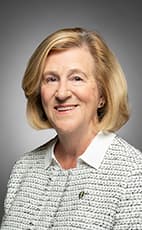
Helena Jaczek
In the 90 days to September 18, 2026, 1 organization lobbied Helena Jaczek across 1 meeting — most often about Industry. The most frequent visitor was Medical Technology Association of Canada (Medtech Canada) (1 meeting, via their in-house lobbyist Nicole DeKort). Its registration describes the goal as “Medical Device Regulations (SOR/98-282) that require compliance by the medical device technology industry. Addressing issues and providing…”. That's fewer than the average MP, who had 6 meetings over the same period.
Based on federal lobbying registry data to September 18, 2026
In the House · Sep 21–25
Helena Jaczek this week
- No speeches in the House · the average MP spoke 4 times
- FORC-266, second reading — Establish a national framework respecting skilled trades and labour mobility · passed 295–21
Get Helena Jaczek's week in your inbox every Monday
What they said, how they voted, and who lobbied them. Free, no ads, unsubscribe anytime.
How Helena Jaczek actually voted
Their recorded positions on the issues Canadians care about — pulled straight from the parliamentary record.
- Voted For
Labour & Employment
Establish a national framework respecting skilled trades and labour mobility
C-266 · Sep 2026 · Passed · Tell your MP what you think
- Voted For
Economy & Taxation
Implement certain provisions of the spring economic update tabled in Parliament on April 28, 2026
C-30 · Jun 2026 · Passed · Tell your MP what you think
- Voted For
Housing
Authorize certain payments to be made out of the Consolidated Revenue Fund for the purpose of improving housing supply
C-26 · Jun 2026 · Passed · Tell your MP what you think
- Voted For
Criminal Justice
Hate propaganda, hate crime and access to religious or cultural places
C-9 · Jun 2026 · Passed · Tell your MP what you think
- Voted For
Overall leanings
100%
voted with the Liberal line this Parliament
100%
vote attendance (174/174)
Who’s in Helena’s ear
214
lobbying meetings
146
companies & groups
68
speeches in Parliament
Top lobbying relationship: Canadian Medical Association — met 15 times · most lobbied on Health.
See who’s lobbying Helena →Who's lobbying Helena
Individual meeting records from the federal lobbying registry
| Date | Organization | |
|---|---|---|
| 2026-07-06 | Medical Technology Association of Canada (Medtech Canada) | |
| 2026-06-18 | MS Canada | |
| 2026-06-09 | Canadian Anesthesiologists' Society | |
| 2026-05-26 | Canadian Organization for Rare Disorders | |
| 2026-05-22 | Vimy Pharmaceuticals Inc. |
Write to Helena Jaczek
Pick what it's about. You'll get a letter you can edit, then send it from your own email.
Other ways to reach Helena
613-992-4211 is the House of Commons switchboard — ask to be connected to your MP's office. For constituency office contact details, or if helena.jaczek@parl.gc.ca bounces, visit their Parliament profile.
Committee Memberships
Top Lobbying Clients
Companies with the most meetings with this MP
What Helena talks about
- Public Services and Procurement22 speeches · 2022–2023
- Canada Post Corporation3 speeches · 2022–2023
- Labour3 speeches · 2023
- Small Business2 speeches · 2022
- Adam's Ride to Recovery1 speeches · 2025
Recent Speeches
Mr. Speaker, we have lost a great Canadian. Khalid Usman was a legend for his leadership in and dedication to his community. For decades, he served in countless senior roles in organizations in Markham and York region, including 14 years as a Markham councillor. A chartered accountant by profession,… Read full speechShow less
Mr. Speaker, we have lost a great Canadian. Khalid Usman was a legend for his leadership in and dedication to his community. For decades, he served in countless senior roles in organizations in Markham and York region, including 14 years as a Markham councillor. A chartered accountant by profession, he was a champion of the Pakistani and Muslim communities and of interfaith and intercultural dialogue. The first time I visited a mosque, some 20 years ago, it was at Khalid's invitation. He helped raise funds in support of hospitals in Canada and Pakistan, including for the Markham Stouffville Hospital in my riding. Always greeting people with an infectious smile, he gave in so many ways. With kindness, energy, passion and good humour, he was truly larger than life. Many of my colleagues here in this House and I are honoured to have known him and sad to have lost a friend. He will be sorely missed. I give my sincere condolences to Abida, his daughters and their families, and so many friends.
Mr. Speaker, although we call them rare diseases, cumulatively they affect over 3.2 million Canadians. They are debilitating and potentially life-threatening. One Canadian family watched their healthy 14-year-old child suddenly begin suffering from severe headaches, vision problems and exhaustion. A… Read full speechShow less
Mr. Speaker, although we call them rare diseases, cumulatively they affect over 3.2 million Canadians. They are debilitating and potentially life-threatening. One Canadian family watched their healthy 14-year-old child suddenly begin suffering from severe headaches, vision problems and exhaustion. After months of uncertainty, the child was diagnosed with glioblastoma, an aggressive and deadly brain cancer. Through early intervention, surgery, treatment and extraordinary courage, that child survived and today continues to inspire others facing rare diseases. Our government has committed $1.4 billion through agreements with all provinces and territories under the national strategy for drugs for rare diseases, to improve access to affordable and life-saving treatments. The Canadian Organization for Rare Disorders is calling on Parliament to strengthen the next phase of the strategy beyond 2027 by improving access to diagnostics, treatments, research and care for all Canadians living with rare diseases. No family should lose hope because help came too late.
Mr. Speaker, May is Polish Heritage Month in Canada, and Poland's May 3, 1791, constitution is one of the most important events in Poland's history. It has inspired generations of Poles hoping to keep alive aspirations for independence and democracy. Canada's first recorded Polish immigrant arrived … Read full speechShow less
Mr. Speaker, May is Polish Heritage Month in Canada, and Poland's May 3, 1791, constitution is one of the most important events in Poland's history. It has inspired generations of Poles hoping to keep alive aspirations for independence and democracy. Canada's first recorded Polish immigrant arrived in 1752, and since then, waves of immigration have formed Canada's Polish community, which is now a million people strong in communities from coast to coast to coast. As chair of the Canada-Poland Parliamentary Friendship Group, and with my own Polish roots, I am proud to say Canada's polish community is as strong and vibrant as ever. Poland has become Canada's close NATO ally and our largest trading partner in central and eastern Europe, and our ties continue to grow. Join us tomorrow at 9 a.m. for the Polish flag raising on Parliament Hill. Za naszą i waszą wolność, for our freedom and yours.
Mr. Speaker, this week marks World Immunization Week. Immunizations are the most effective tool against preventable diseases such as polio that have ended or changed the lives of millions of people. In Canada, it was only a few decades ago that we were finally able to eradicate polio. Since then, th… Read full speechShow less
Mr. Speaker, this week marks World Immunization Week. Immunizations are the most effective tool against preventable diseases such as polio that have ended or changed the lives of millions of people. In Canada, it was only a few decades ago that we were finally able to eradicate polio. Since then, through the efforts of advocates and mechanisms like the global polio eradication initiative, we are on the brink of eradicating polio globally. Nations around the world are pulling back their funding, yet polio anywhere remains a threat to people everywhere. Canada has continued to be a global leader in immunization, but we still need investments like the GPEI to stop outbreaks through surveillance and to ensure polio eradication through vaccinations. This World Immunization Week, we can be proud that Canada's continued support for immunizations and the global polio eradication initiative is helping ensure that future generations can live in a world free of polio.
Mr. Speaker, the Society of Gynecologic Oncology of Canada says we are in a national silent health crisis. Cervical cancer has become the fastest rising form of cancer in Canada. Last year an estimated 1,650 Canadian women were diagnosed with cervical cancer, and 430 will die from the disease. Cervi… Read full speechShow less
Mr. Speaker, the Society of Gynecologic Oncology of Canada says we are in a national silent health crisis. Cervical cancer has become the fastest rising form of cancer in Canada. Last year an estimated 1,650 Canadian women were diagnosed with cervical cancer, and 430 will die from the disease. Cervical cancer had been in decline for decades, but in recent years, rates have been on the rise. This is a disease that is almost entirely preventable through human papillomavirus vaccination, easily diagnosed through cervical screening and highly curable when treated early. Last July, our government released an action plan to eliminate cervical cancer by 2040. During this April, Cancer Prevention and Early Detection Month, Canadian women need to know that HPV vaccination and cervical screening can save lives.
Bills Sponsored
Recent activity
22 activities across speeches, bills, and lobbying communications.
June 2026
Statements by Members
Mr. Speaker, we have lost a great Canadian. Khalid Usman was a legend for his leadership in and dedication to his community. For decades, he served in countless senior roles in organizations in Markha… Read full speechShow less
Mr. Speaker, we have lost a great Canadian. Khalid Usman was a legend for his leadership in and dedication to his community. For decades, he served in countless senior roles in organizations in Markham and York region, including 14 years as a Markham councillor. A chartered accountant by profession, he was a champion of the Pakistani and Muslim communities and of interfaith and intercultural dialogue. The first time I visited a mosque, some 20 years ago, it was at Khalid's invitation. He helped raise funds in support of hospitals in Canada and Pakistan, including for the Markham Stouffville Hospital in my riding. Always greeting people with an infectious smile, he gave in so many ways. With kindness, energy, passion and good humour, he was truly larger than life. Many of my colleagues here in this House and I are honoured to have known him and sad to have lost a friend. He will be sorely missed. I give my sincere condolences to Abida, his daughters and their families, and so many friends.
Statements by Members
Mr. Speaker, although we call them rare diseases, cumulatively they affect over 3.2 million Canadians. They are debilitating and potentially life-threatening. One Canadian family watched their healthy… Read full speechShow less
Mr. Speaker, although we call them rare diseases, cumulatively they affect over 3.2 million Canadians. They are debilitating and potentially life-threatening. One Canadian family watched their healthy 14-year-old child suddenly begin suffering from severe headaches, vision problems and exhaustion. After months of uncertainty, the child was diagnosed with glioblastoma, an aggressive and deadly brain cancer. Through early intervention, surgery, treatment and extraordinary courage, that child survived and today continues to inspire others facing rare diseases. Our government has committed $1.4 billion through agreements with all provinces and territories under the national strategy for drugs for rare diseases, to improve access to affordable and life-saving treatments. The Canadian Organization for Rare Disorders is calling on Parliament to strengthen the next phase of the strategy beyond 2027 by improving access to diagnostics, treatments, research and care for all Canadians living with rare diseases. No family should lose hope because help came too late.
May 2026
Statements by Members
Mr. Speaker, May is Polish Heritage Month in Canada, and Poland's May 3, 1791, constitution is one of the most important events in Poland's history. It has inspired generations of Poles hoping to keep… Read full speechShow less
Mr. Speaker, May is Polish Heritage Month in Canada, and Poland's May 3, 1791, constitution is one of the most important events in Poland's history. It has inspired generations of Poles hoping to keep alive aspirations for independence and democracy. Canada's first recorded Polish immigrant arrived in 1752, and since then, waves of immigration have formed Canada's Polish community, which is now a million people strong in communities from coast to coast to coast. As chair of the Canada-Poland Parliamentary Friendship Group, and with my own Polish roots, I am proud to say Canada's polish community is as strong and vibrant as ever. Poland has become Canada's close NATO ally and our largest trading partner in central and eastern Europe, and our ties continue to grow. Join us tomorrow at 9 a.m. for the Polish flag raising on Parliament Hill. Za naszą i waszą wolność, for our freedom and yours.
April 2026
Statements by Members
Mr. Speaker, this week marks World Immunization Week. Immunizations are the most effective tool against preventable diseases such as polio that have ended or changed the lives of millions of people. I… Read full speechShow less
Mr. Speaker, this week marks World Immunization Week. Immunizations are the most effective tool against preventable diseases such as polio that have ended or changed the lives of millions of people. In Canada, it was only a few decades ago that we were finally able to eradicate polio. Since then, through the efforts of advocates and mechanisms like the global polio eradication initiative, we are on the brink of eradicating polio globally. Nations around the world are pulling back their funding, yet polio anywhere remains a threat to people everywhere. Canada has continued to be a global leader in immunization, but we still need investments like the GPEI to stop outbreaks through surveillance and to ensure polio eradication through vaccinations. This World Immunization Week, we can be proud that Canada's continued support for immunizations and the global polio eradication initiative is helping ensure that future generations can live in a world free of polio.
Statements by Members
Mr. Speaker, the Society of Gynecologic Oncology of Canada says we are in a national silent health crisis. Cervical cancer has become the fastest rising form of cancer in Canada. Last year an estimate… Read full speechShow less
Mr. Speaker, the Society of Gynecologic Oncology of Canada says we are in a national silent health crisis. Cervical cancer has become the fastest rising form of cancer in Canada. Last year an estimated 1,650 Canadian women were diagnosed with cervical cancer, and 430 will die from the disease. Cervical cancer had been in decline for decades, but in recent years, rates have been on the rise. This is a disease that is almost entirely preventable through human papillomavirus vaccination, easily diagnosed through cervical screening and highly curable when treated early. Last July, our government released an action plan to eliminate cervical cancer by 2040. During this April, Cancer Prevention and Early Detection Month, Canadian women need to know that HPV vaccination and cervical screening can save lives.
March 2026
House of Commons
191 communications with 131 clients
Top clients: [{"name": "Canadian Medical Association", "count": 13}, {"name": "York Universit…
February 2026
Statements by Members
Mr. Speaker, March 4 is World Obesity Day, and we should be aware of the serious situation that Canada is facing. In 1981, just 9% of Canadians lived with obesity. Now, according to a recent study in … Read full speechShow less
Mr. Speaker, March 4 is World Obesity Day, and we should be aware of the serious situation that Canada is facing. In 1981, just 9% of Canadians lived with obesity. Now, according to a recent study in the Canadian Medical Association Journal, this has risen to roughly a third of Canadians. We have one of the highest rates of obesity in the OECD. What is troubling is that obesity is a strong predictor of health complications, including cardiovascular disease, diabetes, liver and kidney diseases and cancer. Obesity is a chronic disease that is placing enormous pressure on an already overburdened health care system, but by taking action to prevent and treat obesity, we can improve our health care systems. Personalized lifestyle changes such as diet and exercise and, when necessary, medical interventions like pharmacotherapy or bariatric surgery can all help to improve the health of Canadians.
December 2025
Statements by Members
Mr. Speaker, we recently lost a great Canadian. I first knew Alan Wells when we worked together at The Regional Municipality of York. A chartered accountant by profession, he served there with dedicat… Read full speechShow less
Mr. Speaker, we recently lost a great Canadian. I first knew Alan Wells when we worked together at The Regional Municipality of York. A chartered accountant by profession, he served there with dedication for 27 years, including as commissioner of social services and finally as chief administrative officer and my boss. After his retirement, our paths crossed again when I was the member of provincial Parliament appointed to serve on the Rouge Park Alliance, of which he was chair. Under his leadership, along with our colleague the member for Wellington—Halton Hills North, we were finally able to establish the Rouge National Urban Park. Alan was a dedicated environmentalist, Blue Jays fan, fishing enthusiast, former Uxbridge town councillor, engaged supporter of the Oak Ridges Moraine Land Trust and so much more. His contributions will benefit our communities for generations to come. I offer my sincere condolences to Alan's family and friends, and to everyone who had the privilege of working alongside him. We will miss Alan's twinkling eyes.
November 2025
Oral Questions
Madam Speaker, Canada has what the world needs and wants: the best-educated workforce in the world, free trade agreements with every G7 country, an abundance of natural resources, and world-class inno… Read full speechShow less
Madam Speaker, Canada has what the world needs and wants: the best-educated workforce in the world, free trade agreements with every G7 country, an abundance of natural resources, and world-class innovators, entrepreneurs and exporters. Thanks to budget 2025, Canada will also have the lowest marginal effective tax rate in the G7. Unlike the members opposite, I am proud to have voted in favour of a budget that will boost productivity and attract investments. Can the parliamentary secretary remind the House exactly what those—
October 2025
Statements by members
Mr. Speaker, today marks the fourth Young Polonia Leadership Summit, hosted in Ottawa by the Canadian Polish Congress, in collaboration with the Polish embassy and the Canada-Poland Parliamentary Frie… Read full speechShow less
Mr. Speaker, today marks the fourth Young Polonia Leadership Summit, hosted in Ottawa by the Canadian Polish Congress, in collaboration with the Polish embassy and the Canada-Poland Parliamentary Friendship Group. This summit brings together over 30 young Polish-Canadian leaders from across the country who represent the future of Polonia in Canada, a community whose contributions have enriched our country for generations. As chair of the Canada-Poland Parliamentary Friendship Group, and with my own Polish roots, I am honoured to be part of it because Poland is Canada's close ally, one of the fastest-growing economies in the European Union and our largest trading partner in central and eastern Europe. Our Prime Minister and Prime Minister Tusk affirmed in August that our countries are committed to strengthening our strategic partnership. This summit supports that effort for the benefit of both Poles and Canadians now and for years to come.
Statements by Members
Mr. Speaker, during this Women's History Month, members of this House may be surprised to know that until 1969, it was criminal in Canada for physicians to prescribe oral contraceptives for women for … Read full speechShow less
Mr. Speaker, during this Women's History Month, members of this House may be surprised to know that until 1969, it was criminal in Canada for physicians to prescribe oral contraceptives for women for the purpose of contraception. However, some brave physicians who felt that every child should be a wanted child were defying this prohibition before 1969. One of them was Dr. Marion Powell. Dr. Powell established the first municipally funded birth control clinic in Canada in 1966 when she was the country's first-ever female medical officer of health. I worked with Marion in the 1970s and 1980s when she was director of the Bay Centre for Birth Control, a clinic that is still operated by the Women's College Hospital in Toronto to this day. She was my mentor, and she encouraged me to become a medical officer of health. As we celebrate Women's History Month, I wish to express my gratitude to Dr. Powell for her pioneering work in advancing women's health in Canada.
Oral Questions
Mr. Speaker, I am proud to be part of a new government that has championed trade diversification since day one. We have broken down internal trade barriers within Canada, and we have signed new trade … Read full speechShow less
Mr. Speaker, I am proud to be part of a new government that has championed trade diversification since day one. We have broken down internal trade barriers within Canada, and we have signed new trade agreements with Ecuador and Indonesia. We are moving at a pace and an intensity that Canadians expect of us. Can the Minister of International Trade update the House on our government's latest action to expand and grow our trade relationship with the United Kingdom and on what it means for Canadians?
September 2025
Statements by Members
Mr. Speaker, I thank you for allowing me to tell the House about a remarkable constituent of mine from Markham—Stouffville. In 2023, Adam Shah was just nine years old when he came up with the idea of … Read full speechShow less
Mr. Speaker, I thank you for allowing me to tell the House about a remarkable constituent of mine from Markham—Stouffville. In 2023, Adam Shah was just nine years old when he came up with the idea of organizing “Adam's ride to recovery”, a charity event to raise money for Markham Stouffville Hospital. He encouraged his family members and his friends at Wendat Village Public School to take part. Now, Adam is 11 and the “ride to recovery” has become an annual event. I was happy to be there this summer to see 150 participants on bikes and on foot. The ride is supported by the phenomenal people at the Markham Stouffville Hospital Foundation. Each year, the ride has raised more money than the year before, now totalling $3,185. Adam has shown an incredible example of leadership and commitment to community service at such a young age. I congratulate Adam and the “ride to recovery” team. Keep up the amazing work.
June 2025
Statements By Members
Mr. Speaker, it is a tremendous honour to rise again in the House as the member of Parliament for Markham—Stouffville. I am thankful to my wonderful campaign team and to the people of Markham—Stouffvi… Read full speechShow less
Mr. Speaker, it is a tremendous honour to rise again in the House as the member of Parliament for Markham—Stouffville. I am thankful to my wonderful campaign team and to the people of Markham—Stouffville for the privilege of serving them. Markham—Stouffville is an extraordinary place due to the contributions of countless exceptional individuals, whom I recognized earlier this year with the King's coronation medals. Congratulations to Mark Atikian, Allan Bell, Lina Bigioni, Shaowen Chen, Mike Clare, Glenn Crosby, Wayne Emmerson, Margaret Grandison, Ray McNeice, Jack Heath, Sivan Ilangko, Dr. Fareen Karachiwalla, Dr. Emilie Lam, Madge Logan, Mayor Iain Lovatt, Jo-anne Marr, Rev. Joan Masterton, Haresh Mehta, Ignacio “Mogi” Mogado, Marlene Mogado, Dr. Najmul Siddiqui, Chief Bill Snowball, Susan Tucker, Dr. Rui Wang, John Webster, Tupper Wheatley. Congratulations to them all.
October 2024
Oral Questions
Madam Speaker, Canadians deserve reliable and safe travel options. That means efficient airports that can adapt to high demand. It also includes targeted investments in regional airports, such as at t… Read full speechShow less
Madam Speaker, Canadians deserve reliable and safe travel options. That means efficient airports that can adapt to high demand. It also includes targeted investments in regional airports, such as at the Billy Bishop Toronto City Airport located on the beautiful Toronto Islands. Could the Minister of Transport update this House about a recent announcement that will benefit Canadian travellers and improve connectivity?
May 2024
Oral Questions
Madam Speaker, every year, approximately 4,500 people die by suicide in Canada. That is equivalent to 12 deaths every day. The impacts of suicide extend far beyond the individual. It affects families,… Read full speechShow less
Madam Speaker, every year, approximately 4,500 people die by suicide in Canada. That is equivalent to 12 deaths every day. The impacts of suicide extend far beyond the individual. It affects families, friends and communities. Canadians need timely access to suicide prevention supports, no matter where they live. Can the Minister of Mental Health and Addictions tell the House how we are working with all partners to strengthen our suicide prevention framework?
February 2024
Statements by Members
Mr. Speaker, the Yee Hong Centre for Geriatric Care provides high-quality and culturally appropriate services to enable seniors of different backgrounds and needs to live their lives to the fullest. R… Read full speechShow less
Mr. Speaker, the Yee Hong Centre for Geriatric Care provides high-quality and culturally appropriate services to enable seniors of different backgrounds and needs to live their lives to the fullest. Recently, a very special person, the former CEO of Yee Hong, Florence Wong, passed away. Arriving in Canada in 1987 from Hong Kong, Florence discovered her executive experience was not valued here, but that did not deter her. Hired by Yee Hong in 1994, she led the expansion from one site to a network of long-term care centres and support services across the GTA, including one in my riding of Markham—Stouffville. I sat on their board for a number of years and feel part of the Yee Hong extended family. As Yee Hong's founder, Dr. Joseph Wong, said, “[H]er impact on the senior-care sector [was] unmatched”. I was always impressed by her hard work, resilience and positive attitude. I give my sincere condolences to her family and all her many friends.
December 2023
Oral Questions
Mr. Speaker, our government has made it clear that dental care coverage is a priority, but in this House last week the Conservatives were the only party to vote against funding for the Canada dental c… Read full speechShow less
Mr. Speaker, our government has made it clear that dental care coverage is a priority, but in this House last week the Conservatives were the only party to vote against funding for the Canada dental care plan. Instead, the Conservatives want Canadians to pay for their care out of pocket. Today, the Minister of Health announced the next steps of our work to provide a historic dental care program in this country. Can he tell Canadians what this means for them?
November 2023
Private Members' Business
Madam Speaker, on September 19, Bill C-354, an act to amend the Canadian Radio-television and Telecommunications Commission Act regarding the cultural specificity of Quebec and the Francophonie was ta… Read full speechShow less
Madam Speaker, on September 19, Bill C-354, an act to amend the Canadian Radio-television and Telecommunications Commission Act regarding the cultural specificity of Quebec and the Francophonie was tabled and read for the first time. From the outset, I would like to thank the member for La Pointe-de-l'Île for giving me the opportunity to reiterate our government's commitment to supporting the French language. Bill C-354 aims to amend the Canadian Radio-television and Telecommunications Commission Act, and this is closely tied to the government's ongoing work to ensure a broadcasting system in Canada that reflects the evolution of our digital world and in which all Canadians, including Quebeckers and members of the Canadian Francophonie, see themselves represented. In fact, closely linked is an understatement. The government's efforts have already been going very much in the same direction as the objective of this bill. On February 2, 2022, our government introduced Bill C-11, aimed at reforming the Broadcasting Act so that Canadian laws reflect the evolution of our digital world. The latter aimed to clarify that online broadcasting services fall under the act, to ensure that the CRTC has the appropriate tools, to encourage greater diversity and inclusion in the broadcasting sector and to better reflect Canadian society. The legislative process surrounding Bill C-11 took a very long time. Indeed, one year to the day passed between the initial tabling of the bill in the House and its adoption at third reading by the Senate. Both the Standing Committee on Canadian Heritage and the Standing Senate Committee on Transport and Communications spent many hours dissecting, analyzing, hearing from witnesses and refining Bill C-11. During the same legislative process, several modifications were made to Bill C-11 to strengthen the commitment to the French language and official language minority communities. The Broadcasting Act, as recently amended, put in place new guarantees to ensure continued support for the production and broadcast of original French-language productions, the majority of which are produced in the province of Quebec. What is more, the CRTC is required to interpret the Broadcasting Act in a manner that respects the Government of Canada's commitment to promoting the vitality of Canada's French-speaking and English-speaking minorities and supporting their development. Added to this is the fact that the act provides that regulations must take into account regional concerns and needs. It should also be noted that the government is already actively consulting the provinces and territories, particularly when it comes to broadcasting. At each stage of the process surrounding the implementation of the Online Streaming Act, the provinces and territories were consulted. In particular, the government consulted its provincial and territorial counterparts as part of the consultations related to the decree of instructions proposed to the CRTC concerning the implementation of the law. The final decree also contains various instructions to support the official languages of Canada and official language minority communities. The decree recognizes, among other things, the minority nature of the French language in Canada and North America and the fact that the broadcasting system should promote the development of Canada's official language minority communities and promote full recognition and use of French and English in Canadian society. A section was even added to the final version of the decree to support the creation and availability of programming in French. In addition, for its part, the CRTC has published a road map describing the main stages of the implementation of the act and is already actively consulting the public. It should be noted that as an administrative tribunal, the CRTC already holds in-depth consultations before making decisions under the rules of practice and procedure that it adopted in order to respect the principles of procedural fairness and of natural justice incumbent upon it. Provinces and territories have the opportunity to participate in CRTC consultations. To this end, the provinces and territories, including Quebec, can already present observations to the CRTC on issues of provincial interest during hearings and consultations. It is important to specify that the Government of Quebec has the right and already uses its right to intervene in the CRTC's consultative processes. The Broadcasting Act provides for three forms of consultation, depending on the decisions it is considering. They are, in no particular order, one, with official language minority communities on any decision likely to have a detrimental effect on them; two, with CBC/Radio-Canada on its conditions of services; and three, with any interested party for decisions regarding conditions of services. The latter is an open consultation, where provinces and territories and, in fact, any interested intervenor can put forward their opinions and concerns. In other words, the addition of the consultation obligation provided for by Bill C-354 could raise concerns that are being addressed in the course of the work of the CRTC and under the requirements of the Broadcasting Act. An obligation for the CRTC to consult elected provincial governments could also have an impact on public confidence and the independence of the CRTC. It is important that we are all mindful of not just the independence of the CRTC but the importance of that independence. As outlined, “The CRTC is an administrative tribunal that regulates and supervises broadcasting and telecommunications in the public interest. [It is] dedicated to ensuring that Canadians have access to a world-class communication system that promotes innovation and enriches [the] lives [of Canadians].” Further to this, under the section of the CRTC's own website entitled “We listen and collaborate”, it states that, in order to “fulfill [its] mandate, [it] must understand the needs and interests of Canadians who make use of broadcasting and telecommunications services.” In conclusion, the government supports and will continue to support the French language. The Online Streaming Act and the act to amend the Official Languages Act are concrete examples of our commitment to the French language. Once more, the government regularly consults the provinces and territories, including Quebec. The minister has consulted her counterparts on numerous occasions when it comes to regulating the broadcasting sector. The government will welcome any questions from members regarding Bill C-354 as the debate on this legislation continues.
Statements by Members
Mr. Speaker, last year, the UN's Secretary-General wrote, “Violence against women and girls is the most pervasive human rights violation in the world.” Here in Canada, 184 women and girls were violent… Read full speechShow less
Mr. Speaker, last year, the UN's Secretary-General wrote, “Violence against women and girls is the most pervasive human rights violation in the world.” Here in Canada, 184 women and girls were violently killed last year, and our government is taking action. In 2017, we launched our whole-of-government strategy to end gender-based violence. We are working with provinces and territories by supporting crisis hotlines in every jurisdiction, and we are funding over 1,400 women's shelters and sexual assault centres. Local organizations in York region and across the country are making a difference, including the 20-plus agencies that are part of York Region's Violence Against Women Coordinating Committee. I would like to salute all those working in this field in York region, including the early pioneers: Yellow Brick House, Sandgate and Belinda's Place. We know that girls and women cannot reach their full potential if they are not safe. Working together, we can help bring about positive change in Canada and around the world.
October 2023
Statements by Members
Mr. Speaker, across Canada, there are phenomenal organizations advocating for and supporting people with disabilities. A great example in the developmental sector is Christian Horizons. Since 1965, it… Read full speechShow less
Mr. Speaker, across Canada, there are phenomenal organizations advocating for and supporting people with disabilities. A great example in the developmental sector is Christian Horizons. Since 1965, it has helped people with disabilities accomplish their goals. I became familiar with its work as Ontario's minister of community and social services and met its CEO, Janet Noel-Annable. It recently changed its name to Karis Disability Services. This new name will help people know everyone belongs. Karis is one of many exceptional organizations in Canada's developmental sector making a difference in people's lives. For decades, the sector has been advocating for a disability benefit to provide people with disabilities with greater financial security. Our government took action. In June, the Canada Disability Benefit Act received royal assent. We are working with the sector to co-design the benefit, and I am hopeful it will make an important difference in the communities these extraordinary organizations serve.