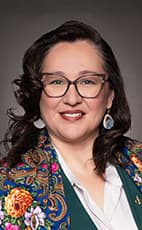
Mandy Gull-Masty
In the 90 days to September 18, 2026, 3 organizations lobbied Mandy Gull-Masty across 3 meetings — most often about Budget. The most frequent visitor was Women's Network PEI (1 meeting, via Lynne Lund of Leading Impact Consulting Inc). Its registration describes the goal as “Guaranteed Livable Income as a solution to poverty in Canada”. That's fewer than the average MP, who had 6 meetings over the same period.
Based on federal lobbying registry data to September 18, 2026
In the House · Sep 21–25
Mandy Gull-Masty this week
“Reconciliation means working in full partnership with indigenous communities. We are doing that work by advancing child and family services reform and working on clean drinking water, health care and education.”
- Spoke 1 time in the House · the average MP spoke 4 times
- FORC-266, second reading — Establish a national framework respecting skilled trades and labour mobility · passed 295–21
Get Mandy Gull-Masty's week in your inbox every Monday
What they said, how they voted, and who lobbied them. Free, no ads, unsubscribe anytime.
How Mandy Gull-Masty actually voted
Their recorded positions on the issues Canadians care about — pulled straight from the parliamentary record.
- Voted For
Labour & Employment
Establish a national framework respecting skilled trades and labour mobility
C-266 · Sep 2026 · Passed · Tell your MP what you think
- Voted For
Economy & Taxation
Implement certain provisions of the spring economic update tabled in Parliament on April 28, 2026
C-30 · Jun 2026 · Passed · Tell your MP what you think
- Voted For
Housing
Authorize certain payments to be made out of the Consolidated Revenue Fund for the purpose of improving housing supply
C-26 · Jun 2026 · Passed · Tell your MP what you think
- Voted For
Criminal Justice
Hate propaganda, hate crime and access to religious or cultural places
C-9 · Jun 2026 · Passed · Tell your MP what you think
- Voted For
Overall leanings
100%
voted with the Liberal line this Parliament
99%
vote attendance (173/174, missed 1)
Who’s in Mandy’s ear
46
lobbying meetings
39
companies & groups
48
speeches in Parliament
Top lobbying relationship: Misipawistik Cree Nation — met 2 times · most lobbied on Aboriginal Affairs.
See who’s lobbying Mandy →Who's lobbying Mandy
Individual meeting records from the federal lobbying registry
| Date | Organization | |
|---|---|---|
| 2026-09-10 | Women's Network PEI | |
| 2026-07-16 | Treaty 8 Urban Child and Family Services | |
| 2026-07-14 | James Smith Cree Nation 100 | |
| 2026-06-11 | First Nations Finance Authority | |
| 2026-06-01 | City of Prince Albert |
Write to Mandy Gull-Masty
Pick what it's about. You'll get a letter you can edit, then send it from your own email.
Other ways to reach Mandy
613-992-4211 is the House of Commons switchboard — ask to be connected to your MP's office. For constituency office contact details, or if mandy.gull-masty@parl.gc.ca bounces, visit their Parliament profile.
What Mandy talks about
- Indigenous Affairs21 speeches · 2025–2026
- Indian Act8 speeches · 2026
- The Economy4 speeches · 2025–2026
- Commissioner for Modern Treaty Implementation Act3 speeches · 2026
- Wildfires in Manitoba and Saskatchewan3 speeches · 2025
Recent Speeches
Mr. Speaker, reconciliation means working in full partnership with indigenous communities. We are doing that work by advancing child and family services reform and working on clean drinking water, health care and education. This includes supporting Canada's first Inuit-led university and also doing … Read full speechShow less
Mr. Speaker, reconciliation means working in full partnership with indigenous communities. We are doing that work by advancing child and family services reform and working on clean drinking water, health care and education. This includes supporting Canada's first Inuit-led university and also doing the critical work on tuberculosis elimination and strengthening food security for children and families across this country. This is our enduring commitment to reconciliation and the calls to action. This is what we recognize on September 30 and every day after that.
Mr. Speaker, it was a pleasure and an honour to introduce the water bill, because we know that the $4.6 billion of resources attached to that bill are going to help communities do the work that they need to do in community, supporting their members with clean drinking water. It was a pleasure to mee… Read full speechShow less
Mr. Speaker, it was a pleasure and an honour to introduce the water bill, because we know that the $4.6 billion of resources attached to that bill are going to help communities do the work that they need to do in community, supporting their members with clean drinking water. It was a pleasure to meet with Chief Ackabee and Chief Fisher to speak about their file. If this member wants to do meaningful work in helping those communities, she should support the meaningful collaboration that we need to do to push communities forward to have access to clean drinking water.
Mr. Speaker, I am happy that my colleague has asked that question. It is one of great importance, because we know that first nations have to do the work of expanding the minimum standards that are now applicable in their communities and setting the regulatory gaps for in communities and out of commu… Read full speechShow less
Mr. Speaker, I am happy that my colleague has asked that question. It is one of great importance, because we know that first nations have to do the work of expanding the minimum standards that are now applicable in their communities and setting the regulatory gaps for in communities and out of communities, working, negotiating and collaborating in partnership with provincial and territorial governments. For the first time ever, this government has been able to secure that in collaboration. We will support them in community and out, in partnership, at all tables, because we want to honour the work we do with them.
moved for leave to introduce Bill C‑37, An Act respecting water, source water, drinking water, wastewater and related infrastructure on First Nation lands. (Motions deemed adopted, bill read the first time and printed)
Mr. Speaker, I am really proud to be here and do the work, and I invite my colleague to work with us in advancing the things we are determining: $5.9 billion to support on-reserve housing, ensuring that over 55% of first nations have housing plans, ensuring that communities have housing managers and… Read full speechShow less
Mr. Speaker, I am really proud to be here and do the work, and I invite my colleague to work with us in advancing the things we are determining: $5.9 billion to support on-reserve housing, ensuring that over 55% of first nations have housing plans, ensuring that communities have housing managers and ensuring that they are accessing the training and certification to build those homes, because we are not only building homes, but we are equipping first nations with the resources they need to do the job. Only this government has done that. We can look at the track record of the opposition. I think it is 99 homes, maybe fewer.
Bills Sponsored
Recent activity
22 activities across speeches, bills, and lobbying communications.
September 2026
Oral Questions
Mr. Speaker, reconciliation means working in full partnership with indigenous communities. We are doing that work by advancing child and family services reform and working on clean drinking water, hea… Read full speechShow less
Mr. Speaker, reconciliation means working in full partnership with indigenous communities. We are doing that work by advancing child and family services reform and working on clean drinking water, health care and education. This includes supporting Canada's first Inuit-led university and also doing the critical work on tuberculosis elimination and strengthening food security for children and families across this country. This is our enduring commitment to reconciliation and the calls to action. This is what we recognize on September 30 and every day after that.
June 2026
Oral Questions
Mr. Speaker, it was a pleasure and an honour to introduce the water bill, because we know that the $4.6 billion of resources attached to that bill are going to help communities do the work that they n… Read full speechShow less
Mr. Speaker, it was a pleasure and an honour to introduce the water bill, because we know that the $4.6 billion of resources attached to that bill are going to help communities do the work that they need to do in community, supporting their members with clean drinking water. It was a pleasure to meet with Chief Ackabee and Chief Fisher to speak about their file. If this member wants to do meaningful work in helping those communities, she should support the meaningful collaboration that we need to do to push communities forward to have access to clean drinking water.
Oral Questions
Mr. Speaker, I am happy that my colleague has asked that question. It is one of great importance, because we know that first nations have to do the work of expanding the minimum standards that are now… Read full speechShow less
Mr. Speaker, I am happy that my colleague has asked that question. It is one of great importance, because we know that first nations have to do the work of expanding the minimum standards that are now applicable in their communities and setting the regulatory gaps for in communities and out of communities, working, negotiating and collaborating in partnership with provincial and territorial governments. For the first time ever, this government has been able to secure that in collaboration. We will support them in community and out, in partnership, at all tables, because we want to honour the work we do with them.
Routine Proceedings
moved for leave to introduce Bill C‑37, An Act respecting water, source water, drinking water, wastewater and related infrastructure on First Nation lands. (Motions deemed adopted, bill read the first… Read full speechShow less
moved for leave to introduce Bill C‑37, An Act respecting water, source water, drinking water, wastewater and related infrastructure on First Nation lands. (Motions deemed adopted, bill read the first time and printed)
Oral Questions
Mr. Speaker, I am really proud to be here and do the work, and I invite my colleague to work with us in advancing the things we are determining: $5.9 billion to support on-reserve housing, ensuring th… Read full speechShow less
Mr. Speaker, I am really proud to be here and do the work, and I invite my colleague to work with us in advancing the things we are determining: $5.9 billion to support on-reserve housing, ensuring that over 55% of first nations have housing plans, ensuring that communities have housing managers and ensuring that they are accessing the training and certification to build those homes, because we are not only building homes, but we are equipping first nations with the resources they need to do the job. Only this government has done that. We can look at the track record of the opposition. I think it is 99 homes, maybe fewer.
Oral Questions
Mr. Speaker, that was an important question. Bill C-37 would ensure that first nations have the authority and means to deliver safe, reliable drinking water in their communities. By affirming jurisdic… Read full speechShow less
Mr. Speaker, that was an important question. Bill C-37 would ensure that first nations have the authority and means to deliver safe, reliable drinking water in their communities. By affirming jurisdiction over water sources and by also ensuring drinking water and waste water for first nations, we would be enabling the development of clear, consistent, first nations-led standards. The authority—
Oral Questions
Mr. Speaker, the authority, clear standards, historic funding and sustained support are at the core of the bill. I am proud to have ensured that this government, the only government, has pushed forth … Read full speechShow less
Mr. Speaker, the authority, clear standards, historic funding and sustained support are at the core of the bill. I am proud to have ensured that this government, the only government, has pushed forth the bill to support real jurisdiction over water systems, to create standards, and to govern these systems according to their rights, priorities and lived reality.
Oral Questions
Mr. Speaker, the process of enfranchisement unjustly stripped thousands of first nations individuals of their status. While the practice was ended 35 years ago, the harmful legacy still remains. That … Read full speechShow less
Mr. Speaker, the process of enfranchisement unjustly stripped thousands of first nations individuals of their status. While the practice was ended 35 years ago, the harmful legacy still remains. That member knows that this bill is before study at the committee. That member knows that there are witnesses, and we want to respect those first nations witnesses' rights to come to defend and speak for themselves and their communities. I am willing to work with that member to respect those first nations rights, because this is what we are committed to doing.
Oral Questions
Mr. Speaker, I want to thank my hon. colleague for that important question. As an Eeyou iskwew from the community of Waswanipi, which is celebrating its 50th anniversary today, I know we are taking mo… Read full speechShow less
Mr. Speaker, I want to thank my hon. colleague for that important question. As an Eeyou iskwew from the community of Waswanipi, which is celebrating its 50th anniversary today, I know we are taking moments this month to honour who we are as part of National Indigenous History Month. We are here to celebrate our strength, resilience and culture. I am proud to work with my colleagues who are first nations, Inuit and Métis, demonstrating the fierce resistance representing every part of this country. [Member spoke in Cree and provided the following translation:] I want to acknowledge all first nations, Inuit and Métis people and I honour them.
Oral Questions
Mr. Speaker, I am glad to hear a question on such an important issue, which is a first. We know that housing is a top priority in indigenous communities. That is why I am proud to be working with my c… Read full speechShow less
Mr. Speaker, I am glad to hear a question on such an important issue, which is a first. We know that housing is a top priority in indigenous communities. That is why I am proud to be working with my colleagues to launch the program to build Canada strong and build homes in indigenous communities. We will build these homes together with them, to meet their needs. I am proud to be doing this work with them, and we will stay the course.
Oral Questions
Mr. Speaker, for decades, there was underfunding and discrimination in this file. I am proud to work with the only government that has decided to take a stand and add funding to this file to meet the … Read full speechShow less
Mr. Speaker, for decades, there was underfunding and discrimination in this file. I am proud to work with the only government that has decided to take a stand and add funding to this file to meet the needs of indigenous nations in Quebec and across Canada. I am proud to be doing this work. I am very pleased to note that, under urban and rural programs, in big cities and in the north, we are doing this work together, not only with the nations, but also with people in urban centres. That is very important.
Oral Questions
Mr. Speaker, I think the member is well aware that Bill S-2 is in front of the committee for study. I welcome her input. We are there to ensure that enfranchisement, the intention of the bill, is resp… Read full speechShow less
Mr. Speaker, I think the member is well aware that Bill S-2 is in front of the committee for study. I welcome her input. We are there to ensure that enfranchisement, the intention of the bill, is responded to. We continue to work closely with groups across the country, hearing their input. I am open to supporting these communities, because enfranchisement quantifies who indigenous people are under the Indian Act. We are trying to ensure that we remove the barriers of the Indian Act for first nations people in this country. I am working on that.
Oral Questions
Mr. Speaker, that is an important question. I want to sincerely congratulate the Chiefs of Ontario, the Nishnawbe Aski Nation and the Ontario first nations that have worked tirelessly to be the ones m… Read full speechShow less
Mr. Speaker, that is an important question. I want to sincerely congratulate the Chiefs of Ontario, the Nishnawbe Aski Nation and the Ontario first nations that have worked tirelessly to be the ones making the decisions for their own children. On May 29, we honoured the start of this work, based not only in culture but also in ceremony, to undertake this work. Through this historic investment, $8.5 billion means predictable, stable funding. It will also go to ensuring that prevention efforts are a priority. We are supporting this critical work. We are committed to continuing—
May 2026
Oral Questions
Mr. Speaker, we have just signed a historic, first-of-its-kind, multilateral emergency management agreement among the Abegweit First Nation, the Government of P.E.I. and our new government. I want to … Read full speechShow less
Mr. Speaker, we have just signed a historic, first-of-its-kind, multilateral emergency management agreement among the Abegweit First Nation, the Government of P.E.I. and our new government. I want to thank Chief Gould and his council for hosting this important event. The agreement recognizes Abegweit First Nation as a full and equal partner in emergency management. It strengthens planning, preparedness and coordination in regionally specific ways that are culturally appropriate and responsive to community needs. Working in partnerships with indigenous people is something I am proud of doing.
March 2026
Oral Questions
Mr. Speaker, we have launched a new path forward to long-term reform of child and family services, one that acknowledges regional realities and puts first nations children and families first. This app… Read full speechShow less
Mr. Speaker, we have launched a new path forward to long-term reform of child and family services, one that acknowledges regional realities and puts first nations children and families first. This approach is supported by an ongoing commitment of over $35 billion for a seven-year period and $4.4 billion ongoing afterwards. I want to ensure that children are connected to their families, cultures and communities. By seeking regional agreements, we are able to respect the distinct realities of first nations across the country. We are committed to moving ahead with urgency, care and responsibility.
February 2026
Government Orders
moved that Bill S-2, An Act to amend the Indian Act (new registration entitlements), be read the second time and referred to a committee. Mr. Speaker, I seek unanimous consent to share my time with th… Read full speechShow less
moved that Bill S-2, An Act to amend the Indian Act (new registration entitlements), be read the second time and referred to a committee. Mr. Speaker, I seek unanimous consent to share my time with the member for Nunavut.
Government Orders
Mr. Speaker, kwe, kwe. Ulaakut. Tansi. Waajiye. Bonjour. Hello. Before I begin, I would like to acknowledge that we are gathered on the unceded, unsurrendered territory of the Algonquin Anishinabe peo… Read full speechShow less
Mr. Speaker, kwe, kwe. Ulaakut. Tansi. Waajiye. Bonjour. Hello. Before I begin, I would like to acknowledge that we are gathered on the unceded, unsurrendered territory of the Algonquin Anishinabe people. The Indian Act of 1876 is a remnant of our colonial history and an attempt to completely assimilate first nations peoples. It sought to absorb our languages, cultures, governance structures and, ultimately, our identity as first nations. Through a process called “enfranchisement”, first nations individuals were told that they would gain the basic rights that other Canadians already had. They simply had to give up who they were. They would have the capacity to vote, to own property, to practise law and to become a doctor. Imagine having to make that choice. I recognize that for many individuals who did choose enfranchisement, it was truly not a choice at all. Imagine someone being told that their education, profession or ambition would cost them everything: their identity and their children's identity. I stand here to speak to Bill S-2, a vital step towards addressing inequities in the Indian Act. It is worth remembering that before 1960, a first nations woman like me would never have had the opportunity to sit in this chamber as a member of Parliament unless she first gave up her status. To serve in Canada's democracy, she would have been required to renounce legal recognition of who she was. That was the price of enfranchisement: participation in exchange for erasure. Now, for the first time, the indigenous Minister of Indigenous Services is standing before members to advance reform on the very injustices of enfranchisement. It is an honour for me to help move forward Bill S-2, which specifically addresses these inequalities. This legislation would restore entitlement to approximately 3,500 first nations individuals and their descendants who gave it up or lost it. These are not just numbers on a page. There are more than 3,500 mothers, fathers, children, aunties and grandparents who are all looking for the restoration of identity, dignity and recognition, what they should have always had and what belongs to them. Across this country, thousands of first nations individuals are waiting for enfranchisement decisions, waiting for their identity to be restored, waiting for their children to be recognized and waiting to be told by Canada what they have always known: that they belong. I have heard first-hand the impacts of enfranchisement on individuals, on their families and on their communities. They have been clear that it is imperative to avoid delay and that changes are needed in the Indian Act. Their message is that they cannot, will not and should not continue to be deterred or denied their rightful entitlement any longer. This bill gives first nations peoples back the power to have their name removed from the Indian register and take back control of their identity. It also amends the act to remove outdated and offensive language related to dependent persons, language that is a legacy of colonial mindsets. In addition, it makes it easier to reaffiliate individuals, particularly women, with their natal first nations band. These changes matter because they correct real harms and bring people home. Bill S-2 is a step in the right direction. I want to share and state clearly that I recognize that it does not address all inequities in the Indian Act. The second-generation cut-off rule continues to harmfully erode entitlement over generations. Under the rule, if an entitled person marries someone who is not entitled, their children hold entitlement, but their future children, the second generation, do not. This is a critical issue that must be addressed the right way. I want to reiterate today that the question is not how we will do it, but when we will do it. We need to follow the lead of the community to ensure that the solutions we bring forward are not only supported by the community but have the consensus of rights holders. That is why we launched the collaborative process in November 2023 to address the second-generation cut-off and section 10 voting thresholds. Many first nations and organizations have developed proposals for solutions to these very issues, and through the advisory council, the proposals are presently being studied and evaluated based on legal viability. This work is grounded in lived experience, community knowledge and the realities of administering membership systems. Broad consultation, the second phase, will focus on these solutions and be quickly launched in the coming weeks. Advancing these amendments to Bill S-2 without meeting the legal duty to consult would repeat outdated processes that unilaterally impose a legislative solution, not to mention further jeopardizing the status of thousands of individuals who have been waiting in limbo for the bill to pass, to address enfranchisement. I am firmly committed to addressing the second-generation cut-off, but we must respect this fundamental principle or we risk repeating the very wrongs we are seeking to right. Getting this next step right is important. Legislative change without implementation readiness is not reconciliation. That is why addressing the second-generation cut-off requires a distinct legislative path forward, one that allows space for meaningful engagement with partners and also for government and communities to be prepared to support the changes that need to be made. While we are engaging in the collaboration process with first nations on broader reforms, we cannot ignore the urgent need to help people who are waiting right now, people who have applied to register and been denied because of enfranchisement, people whose parents or grandparents were forced to choose between their identity and their children's safety. People have lived in this system without recognition, because the system was designed to erase their rights. The court decision in the Nicholas case found that certain registration provisions in the Indian Act violated the equality rights guaranteed under the Canadian Charter of Rights and Freedoms. The court gave Parliament a deadline to act. That April 2026 deadline is fast approaching. If we fail to pass the bill in this time, we risk leaving 3,500 people behind. We risk creating uncertainty for families who have already endured too much. Further, we risk unequal application of the Indian Act across the country, and we risk allowing unconstitutional provisions to remain in force. This cannot happen. While I know and address this as a colonial policy, I want to ensure that the solutions that we bring forward are going to be based in further protecting the implementation process of what they are designed to do to ensure that we bring forward equality. We want to also make sure that we are fighting to protect community, and that they are leading the solutions, the true message of reconciliation. Experience grounds me and reminds me that this work is deeply personal, including for me and for my own family. I carry that with me every time I stand in this place. We have the opportunity before us to correct a painful legacy, to restore the rights that were unjustly taken from thousands of people asked to make a simple choice that perpetuated further harm. Bill S-2 is necessary, it is urgent, and it is a meaningful step towards justice. I urge for the passing of the bill as it was originally introduced to Parliament, so those who have waited far too long do not have to wait any longer.
Government Orders
Mr. Speaker, Bill S-2 in its original form was intended to look at enfranchisement, one of the challenges with the Indian Act. I can answer that there are many cases of discrimination under the Indian… Read full speechShow less
Mr. Speaker, Bill S-2 in its original form was intended to look at enfranchisement, one of the challenges with the Indian Act. I can answer that there are many cases of discrimination under the Indian Act. I am looking for a solution that is going to ensure we are able to reach consensus on what the solution truly is. In this case, the amendments put forward are looking to implement a one-parent solution, but is that truly the only solution that we can bring forward? Is it blood quantum? Is it the one-parent rule? Are there alternatives? We should challenge ourselves to do more and allow communities to maintain jurisdiction over their lists and make decisions for themselves.
Government Orders
Mr. Speaker, once again, the intention of Bill S-2 was to address the enfranchisement and the return of 3,500 people. This is how the bill was framed. I want to commend the Senate for the work they do… Read full speechShow less
Mr. Speaker, once again, the intention of Bill S-2 was to address the enfranchisement and the return of 3,500 people. This is how the bill was framed. I want to commend the Senate for the work they do and the important history of speaking to this file and the discrimination that the Indian Act has in place. At the same time, I also want to ensure that it is clear with my colleagues that we have launched a collaborative process that is engaging with community and asking them to submit proposals that are presently being looked at for legal risk and legal validity, to ensure the solutions we bring forward are going to be upheld and truly meet the standard of what a solution should be for community. While we are doing this consultation process, it is imperative that their voice be part of the solution, building well beyond what is offered in the amendments.
Government Orders
Mr. Speaker, I can honestly say that this is one of the biggest challenges I face as Minister of Indigenous Services. I have to work with a law that is highly discriminatory against Canada's indigenou… Read full speechShow less
Mr. Speaker, I can honestly say that this is one of the biggest challenges I face as Minister of Indigenous Services. I have to work with a law that is highly discriminatory against Canada's indigenous peoples. That is why my approach to finding solutions will be based on the guidance I receive from the community. We must prioritize including indigenous peoples to ensure that solutions are adopted by and for them.
Indigenous Services Canada (ISC)
24 communications with 20 clients
Top clients: [{"name": "Misipawistik Cree Nation", "count": 2}, {"name": "Y\ufffdnonhchia\uff…