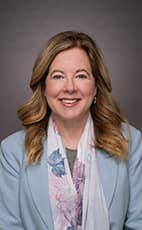
Viviane Lapointe
In the 90 days to October 1, 2026, 2 organizations lobbied Viviane Lapointe across 2 meetings — most often about Aboriginal Affairs. The most frequent visitor was Vale Canada Limited (1 meeting, via their in-house lobbyist Shaun Usmar). Its registration describes the goal as “Federal funding programs, investment tax credits, policy and regulatory improvements aimed at supporting research & development…”. That's fewer than the average MP, who had 6 meetings over the same period.
Based on federal lobbying registry data to October 1, 2026
In the House · Oct 5–9
Viviane Lapointe this week
“Critical minerals and mining projects are very important to Canada's economy. Can my colleague explain how this bill can help advance these projects, which are very important for moving Canada's economy forward?”
- Spoke 1 time in the House · the average MP spoke 5 times
- FORC-39, second reading — Respecting certain measures to strengthen the economy · passed 296–26
- AGAINSTC-218, second reading — Medical assistance in dying · defeated 141–187
- AGAINSTOpposition Motion (Diesel prices) · defeated 133–196
- FORFifth report of the Standing Committee on Health · passed 196–132
Get Viviane Lapointe's week in your inbox every Monday
What they said, how they voted, and who lobbied them. Free, no ads, unsubscribe anytime.
How Viviane Lapointe actually voted
Their recorded positions on the issues Canadians care about — pulled straight from the parliamentary record.
- Voted Against
- Voted For
Healthcare
Fifth report of the Standing Committee on Health
Oct 2026 · Passed
- Voted For
Labour & Employment
Establish a national framework respecting skilled trades and labour mobility
C-266 · Sep 2026 · Passed · Tell your MP what you think
- Voted For
Economy & Taxation
Implement certain provisions of the spring economic update tabled in Parliament on April 28, 2026
C-30 · Jun 2026 · Passed · Tell your MP what you think
- Voted For
Housing
Authorize certain payments to be made out of the Consolidated Revenue Fund for the purpose of improving housing supply
C-26 · Jun 2026 · Passed · Tell your MP what you think
Overall leanings
100%
voted with the Liberal line this Parliament
100%
vote attendance (178/178)
Who's lobbying Viviane
Individual meeting records from the federal lobbying registry
| Organization | |
|---|---|
| Vale Canada Limited2026-08-21 · Employment and Training; Energy; Environment; Fisheries; Forestry | |
| CNIB (CANADIAN NATIONAL INSTITUTE FOR THE BLIND)2026-08-12 · Consumer Issues | |
| Brothers Marketing Inc2026-06-25 · Forestry; Industry; Infrastructure; Mining | |
| Nieuport Aviation2026-06-02 · Environment; Infrastructure; International Trade; Regional Development; Tourism | |
| Marshall Canada Holdings Inc dba Marshall Land Systems2026-05-28 · Government Procurement; Industry; Infrastructure; National Security/Security; Economic Development |
Write to Viviane Lapointe
Pick what it's about. You'll get a letter you can edit, then send it from your own email.
Other ways to reach Viviane
613-992-4211 is the House of Commons switchboard — ask to be connected to your MP's office. For constituency office contact details, or if viviane.lapointe@parl.gc.ca bounces, visit their Parliament profile.
Committee Memberships
Top Lobbying Clients
Companies with the most meetings with this MP since July 2008
What Viviane talks about
- Canada's Auto Industry8 speeches · 2025
- Criminal Code7 speeches · 2025–2026
- Military Justice System Modernization Act6 speeches · 2025
- Cost of Living Relief Act, No. 25 speeches · 2022
- Budget Implementation Act, 2024, No. 14 speeches · 2024
Recent Speeches
Mr. Speaker, critical minerals and mining projects are very important to Canada's economy. Can my colleague explain how this bill can help advance these projects, which are very important for moving Canada's economy forward?
Mr. Speaker, in Sudbury, we know that our natural resources are the core of our economy. They support thousands of jobs and keep our local businesses alive. In order for these benefits to materialize, projects need to move forward efficiently. Could the Minister responsible for One Canadian Economy … Read full speechShow less
Mr. Speaker, in Sudbury, we know that our natural resources are the core of our economy. They support thousands of jobs and keep our local businesses alive. In order for these benefits to materialize, projects need to move forward efficiently. Could the Minister responsible for One Canadian Economy explain why it is so important to create a regulatory environment that makes it possible to carry out these projects, which are essential for communities like Sudbury and for Canada's economic future?
Mr. Speaker, I am pleased to recognize National Mining Week. When we talk about mining, we are not just talking about extraction. We are talking about an important foundation for Canada's economic security, defence and global competitiveness. In 2025, the sector contributed $157 billion to Canada's … Read full speechShow less
Mr. Speaker, I am pleased to recognize National Mining Week. When we talk about mining, we are not just talking about extraction. We are talking about an important foundation for Canada's economic security, defence and global competitiveness. In 2025, the sector contributed $157 billion to Canada's GDP, demonstrating its importance to our economy and the scale of opportunity as demand for critical minerals accelerates worldwide. From exploration to manufacturing, this sector supports over 700,000 jobs across the country, and it is poised to create even more opportunities in the years to come. From the Major Projects Office to important investments and strategic international alliances, we are accelerating projects by streamlining approvals, unlocking investment, developing infrastructure and strengthening partnerships. As we mark National Mining Week, we recognize the workers, communities, indigenous partners, innovators and industry leaders helping build Canada's mining future.
Mr. Speaker, I rise today to honour the memory of Vinod and Shilpa Patel, two constituents of Sudbury who tragically lost their lives on April 7 in a highway accident on Highway 69. This is not an isolated tragedy. Sadly, Highway 69 has claimed too many lives. For years, the people of Sudbury and no… Read full speechShow less
Mr. Speaker, I rise today to honour the memory of Vinod and Shilpa Patel, two constituents of Sudbury who tragically lost their lives on April 7 in a highway accident on Highway 69. This is not an isolated tragedy. Sadly, Highway 69 has claimed too many lives. For years, the people of Sudbury and northern Ontario have been promised that this dangerous corridor would be completed. Those promises have gone unfulfilled, and families are paying for that inaction with their lives. I have written to Premier Ford urging him to finally deliver on this long overdue commitment. The four-laning of Highway 69 is, in every way, a matter of life and death. Vinod and Shilpa Patel deserved to come home. Their families deserve better. Every driver on that road deserves better. I call on the Government of Ontario to act before another family is torn apart on a highway that should have been made safe years ago.
Mr. Speaker, I would like to begin by thanking my colleagues from all parties who have spoken to Bill C-238. What we have heard during debate across all party lines is something important. There is broad agreement on the problem. Members spoke about the toll of addiction, trafficking and exploitatio… Read full speechShow less
Mr. Speaker, I would like to begin by thanking my colleagues from all parties who have spoken to Bill C-238. What we have heard during debate across all party lines is something important. There is broad agreement on the problem. Members spoke about the toll of addiction, trafficking and exploitation in their communities. They spoke about first responders, outreach workers and volunteers stretched to the limits. They spoke about the real and growing pressure on the very people who step in when others cannot. On that, we all agree. Where we differ is on the solution. Some have suggested that the bill would add process without value, that it would create administrative burden or that it offers a promise that cannot be delivered. I would like to address those concerns this evening directly. First, the bill would not create a new system. Restitution already exists in the Criminal Code. Judges already have the discretion to order it. Bill C-238 would clarify that restitution can include community organizations when they can demonstrate measurable costs tied to the offence. This is not duplication, but direction. It reflects what we already know, which is that harm from these crimes does not stop with one individual; it ripples outwards, into shelters, emergency rooms and counselling services, the very organizations that hold communities together. Second, on the question of administrative burden, we have heard the concern that organizations would be required to track and document costs in ways they cannot manage, but the organizations themselves are telling us something very different. I have met with frontline workers who already track detailed data every day for funding and for reporting. They know exactly what it costs to respond to an overdose. They know what it costs to keep a shelter open overnight. They know what it costs to support a survivor of trafficking. These are not abstract numbers. These are real and documented costs. The bill would not ask them to create something new. It would give legal recognition to what already exists. Third, there have been concerns about enforceability and that restitution orders may not always be collected. That is true today, and it is also true, unfortunately, for individual victims as well, but we do not abandon restitution because it is imperfect. We improve it because accountability matters, and even when restitution is partial, it is meaningful. It tells victims and those who support them that the justice system recognizes their loss. It tells offenders that the harm they caused has consequences beyond their sentence. This is not symbolic. It is restorative. Finally, there has been concern that the bill could somehow take away from individual victims. Let me be clear. It would not. Individual victims remain the priority. Judges retain full discretion. The bill would simply add an additional pathway, not a competing one. At its core, the bill is about something very simple. It is about fairness. Right now, community organizations absorb the cost of crime every single day, with limited resources and little recognition within the justice system. At the same time, those who profit from that harm are not being held accountable in a way that reflects the full scope of the damage they have caused. The bill would close that gap. Police respond to the same overdose calls night after night. Outreach workers are stretched to the breaking point. Organizations have said clearly they are carrying these costs and the system does not see them. This is the reality that the bill responds to. It would not add burden, but it would recognize reality. It would not create bureaucracy, but it would enable accountability. It would not replace existing tools, but it would make them work better. Bill C-238 would ensure that, when harm is proven, repair can follow. We all agree that these crimes have devastating impacts. We all agree that frontline organizations are under strain. The bill is an opportunity to act on that shared understanding, to give our courts a clearer tool, to support the people doing the work and to ensure that justice reflects the full reality of the harm. I ask colleagues to allow the bill to go to committee so we can hear directly from victims, survivors, police and frontline organizations. Rather than deciding for them, here in the House, what works for them, we must ensure their voices are part of this process.
Bills Sponsored
1 since 2001
MyMP is free and run by one person in Edmonton. Reader support keeps it that way. Chip in