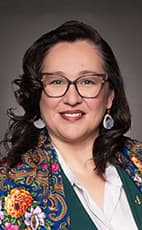
Mandy Gull-Masty
In the 90 days to October 1, 2026, 3 organizations lobbied Mandy Gull-Masty across 3 meetings — most often about Economic Development. The most frequent visitor was MISA Group (1 meeting, via their in-house lobbyist Alain Beauséjour). Its registration describes the goal as “Valoriser l’innovation technologique accélérant la décarbonation des opérations minières en obtenant un soutien financier fédéral pour le…”. That's fewer than the average MP, who had 6 meetings over the same period.
Based on federal lobbying registry data to October 1, 2026
In the House · Oct 5–9
Mandy Gull-Masty this week
“Moved that Bill C-37, An Act respecting water, source water, drinking water, wastewater and related infrastructure on First Nation lands, be read the second time and referred to a committee. Madam Speaker, waachiyeh, meesuuyeh, kwe, ulaakut, tansi and hello.”
- Spoke 8 times in the House · the average MP spoke 5 times
- FORC-39, second reading — Respecting certain measures to strengthen the economy · passed 296–26
- AGAINSTC-218, second reading — Medical assistance in dying · defeated 141–187
- AGAINSTOpposition Motion (Diesel prices) · defeated 133–196
- FORFifth report of the Standing Committee on Health · passed 196–132
Get Mandy Gull-Masty's week in your inbox every Monday
What they said, how they voted, and who lobbied them. Free, no ads, unsubscribe anytime.
How Mandy Gull-Masty actually voted
Their recorded positions on the issues Canadians care about — pulled straight from the parliamentary record.
- Voted Against
- Voted For
Healthcare
Fifth report of the Standing Committee on Health
Oct 2026 · Passed
- Voted For
Labour & Employment
Establish a national framework respecting skilled trades and labour mobility
C-266 · Sep 2026 · Passed · Tell your MP what you think
- Voted For
Economy & Taxation
Implement certain provisions of the spring economic update tabled in Parliament on April 28, 2026
C-30 · Jun 2026 · Passed · Tell your MP what you think
- Voted For
Housing
Authorize certain payments to be made out of the Consolidated Revenue Fund for the purpose of improving housing supply
C-26 · Jun 2026 · Passed · Tell your MP what you think
Overall leanings
100%
voted with the Liberal line this Parliament
99%
vote attendance (177/178, missed 1)
Who's lobbying Mandy
Individual meeting records from the federal lobbying registry
| Organization | |
|---|---|
| MISA Group2026-09-25 · Environment; Industry; Mining; Regional Development; Science and Technology | |
| Treaty 8 Urban Child and Family Services2026-07-16 · Aboriginal Affairs; Child Services | |
| James Smith Cree Nation 1002026-07-14 · Environment; Health; Aboriginal Affairs; Infrastructure; Justice and Law Enforcement | |
| First Nations Finance Authority2026-06-11 · Financial Institutions; Aboriginal Affairs; Regional Development; Taxation and Finance; Budget | |
| City of Prince Albert2026-06-01 · Employment and Training; Environment; Forestry; Government Procurement; Aboriginal Affairs |
Write to Mandy Gull-Masty
Pick what it's about. You'll get a letter you can edit, then send it from your own email.
Other ways to reach Mandy
613-992-4211 is the House of Commons switchboard — ask to be connected to your MP's office. For constituency office contact details, or if mandy.gull-masty@parl.gc.ca bounces, visit their Parliament profile.
What Mandy talks about
- Indigenous Affairs21 speeches · 2025–2026
- First Nations Clean Water Act8 speeches · 2026
- Indian Act8 speeches · 2026
- The Economy4 speeches · 2025–2026
- Commissioner for Modern Treaty Implementation Act3 speeches · 2026
Recent Speeches
moved that Bill C-37, An Act respecting water, source water, drinking water, wastewater and related infrastructure on First Nation lands, be read the second time and referred to a committee. Madam Speaker, waachiyeh, meesuuyeh, kwe, ulaakut, tansi and hello. I rise today as a proud eeyou iskwew from… Read full speechShow less
moved that Bill C-37, An Act respecting water, source water, drinking water, wastewater and related infrastructure on First Nation lands, be read the second time and referred to a committee. Madam Speaker, waachiyeh, meesuuyeh, kwe, ulaakut, tansi and hello. I rise today as a proud eeyou iskwew from the community of Waswanipi, and also as the Minister of Indigenous Services, to speak to Bill C-37, the first nations clean water act. I understand first-hand the importance of protecting water in our communities, and I understand the impact of losing it. I grew up in a nation where water was never something to take for granted. Whenever we needed fresh water, I remember being sent with a small pot to collect it and bring it back to our camp. This was a communal responsibility, and carrying water for my grandmother was simply part of daily life. That water gave her what she needed to make sure that she was able to cook, clean and sometimes even bathe babies. From that, I learned very early on that water is much more than a resource. It is something to respect, protect and take care of. It connects us to one another, to our families and to the earth. That is why, as minister, ensuring access to clean and safe drinking water is one of my highest priorities. No parent should have to question whether the water coming from their tap is safe to drink. No child should have to grow up believing that clean water is something they may not have, yet for far too many families, this has been a reality for far too long in communities. I am therefore rising today in support of Bill C-37, the first nations clean water act, which I had the honour of introducing earlier this year. The bill before us would establish a lasting framework to protect and recognize first nations jurisdiction and ensure that the resources needed are there to sustain safe water for future generations. The main purpose of this bill is to create an environment where children can safely drink tap water, where families can trust the quality of water in their homes and where communities get the opportunities they deserve. To achieve the critical goal of Bill C-37, we are proposing a robust plan that empowers first nations with tools, authority and the support to protect water in their communities and build systems that are going to serve generations to come. Across Canada, laws and regulations set strong minimum standards for drinking water, yet for far too long, first nations communities have been left without the same protections. That is unacceptable. Bill C-37 is designed to change that. It would establish a legislative framework with enforceable protections for safe drinking water that reflect first nations priorities. It would establish national principles and minimum standards. It would ensure that drinking water standards meet, at a minimum, the guidelines for Canadian drinking water quality. The bill is about much more than setting standards. It is about protecting water, recognizing first nations authority, supporting communities and ensuring that governments are accountable for the work that must continue. Rights holders have been clear and have told us that communities know what they need and they should have the authority, tools and resources to protect the water that they depend on. Bill C-37 would recognize and affirm that first nations' inherent right to self-government includes jurisdiction over water, source water, drinking water, waste water and related infrastructure in and under first nations lands. It also seeks to help first nations develop their own approaches to water governance based on the knowledge of elders, leaders, technicians, engineers and youth. This is a fundamental part of the bill. This legislation establishes clear standards for safe drinking water, while recognizing that first nations must play a key role in decisions concerning water governance in their communities. It gives first nations the tools they need to develop and enforce their own laws and to make decisions in the best interests of their members. This is what self-determination is all about. The legislation would also establish lasting obligations. It would create accountability, clarify responsibility and bind future governments to the duty of working with first nations to advance access to clean water. We know that there is more work to do. We are continuing to do that work with first nations, but we should also recognize what has been accomplished by first nations-led solutions. This progress has only been made possible with their involvement. Together, we have lifted 157 long-term drinking water advisories. We have prevented more than 335 short-term advisories from becoming long-term. As a result of these lifts, more than 10,000 homes and over 700 community buildings, such as schools and health centres, now have access to clean drinking water. Today, nearly 80% of long-term drinking water advisories have been lifted, and this progress matters. This progress means that children who were waiting for clean drinking water can now count on the water coming out of their taps and can have access to great things for the future in terms of the systems put in place for the community. Our responsibility now is to build on that progress to eliminate the advisories that are still in place, prevent new advisories where possible and ensure that the systems we put in place today remain safe and reliable for generations to come. However, 38 long-term water advisories remain in effect in 36 communities. It is a reminder that our work is not over. It is still ongoing. Despite the progress that has been made, we realize we still have 38 advisories too many. That confirms the need for sustained efforts and long-term solutions. For many years, first nations have called for change. They have called for legislation that follows their direction and respects self-determination, legislation that recognizes their role as stewards of water, establishes clear standards and reflects the realities of their communities. Those calls have been steady and they have guided this work. Bill C-37 answers those calls. Progress like this does not happen on its own. It requires sustained investment and partnership with first nations. In June, we were able to announce $4.6 billion over five years to support water and waste-water initiatives in first nations communities, the largest investment a Canadian government has ever made in first nations water. This builds on the additional $2.3 billion provided in our government's budget announced in 2025, as well as the $7.1 billion from 2015 to 2024. So far with these investments, since I was appointed, we have supported more than 1,700 water and waste-water projects in nearly 600 communities, helping meet the needs of almost half a million people in this country. This funding will continue to build, operate, maintain and upgrade the systems that families rely on every single day. These investments will also help support communities that are facing vastly different realities. Not all communities are starting from the same starting point. Communities need to be able to plan. They need to know that when they build infrastructure, they will have the necessary resources to maintain it. Bill C-37 would commit the federal government to working with first nations to co-develop a long-term funding framework so that decisions about water and waste-water funding are not made in isolation from the communities that are affected by them. Every community has a different reality, and every family deserves a water system they can rely on. The funding framework would also reflect the full picture of what communities need for safe drinking water. This includes infrastructure, operations, maintenance, operator training, retention, and the long-term supports needed for water systems and the people who must operate them every day. Communities know what they need, and Bill C-37 has been shaped and guided by the decisions they have made concerning water. Safe drinking water does not just begin at the tap. It also begins at the source: in the rivers, lakes, wetlands and groundwater systems that first nations have been protecting since time immemorial. For generations, first nations have known that protecting water is more than just an environmental responsibility. It is also a responsibility towards the community, culture and future generations. That is why Bill C-37 includes provisions to protect water sources by establishing protection zones that will be developed jointly with first nations, the provinces, the territories and federal partners. Through the pathway to mutually agreed upon protection zones set out in this legislation, first nations, provinces, territories and the federal government would work together to protect critical shared water resources. The bill also affirms that the first nations' inherent right to self-government includes jurisdiction to protect water in and under their lands. I would also like to make one thing clear: Passing this bill does not mean that drinking water advisories will become a thing of the past. Water systems are dynamic. Infrastructure ages. Weather events happen. Climate change is affecting communities across the country, and unforeseen challenges can arise, even in the best-managed systems. This bill establishes a more robust legislative framework to address these challenges. It fosters continuous improvement, strengthens partnerships, provides more predictable funding and clarifies responsibilities, ensuring that communities have the resources they need to resolve problems quickly and can take the necessary steps to serve the best interests of their members. This legislation reflects Canada's commitment to realizing the human right to safe drinking water on first nations lands. This commitment means taking action and making concrete steps to improve access to safe and clean drinking water on first nations lands. As I mentioned before, not every community is starting from the same place. Many communities have strong systems in place, while others face greater infrastructure capacity needs and operational challenges and need necessary support. Bill C-37 recognizes all those different realities. It would help communities move forward from where they are today and would support long-term progress toward safe and reliable drinking water. This is our government's commitment through this legislation, and it is an obligation we will pass on to all future governments. Bill C-37 also proposes the creation of a first nations-led water commission. This commission would serve as a centre of expertise to support and implement the act. Its mandate, structure and services would be defined by first nations. Across the country, first nations are already leading in water stewardship. Water operators, technicians and community leaders are protecting source water, operating systems, restoring watersheds and sharing knowledge with the next generation. This bill would recognize that leadership and build on it. The proposed water commission aligns with that approach. The commission would be a first nations-led centre of expertise where communities can share knowledge, technical advice and best practices. Bill C-37 will help strengthen this resource so that communities can continue to support one another for many years to come. First nations leadership across the country has shared their stories with me about water since my appointment. These stories are of persistence, leadership and hope. I cannot help but think of those communities, where families have lived under boil water advisories for years. Access to safe drinking water will depend entirely on the work we do together. I think of children who grow up without knowing what it means to simply turn on the tap and drink. I think of that moment when change happens: when a parent no longer has to question the water, a grandmother can fill the kettle without hesitation and a child can drink freely from the tap. That is what progress looks like, and that is what we are working towards. I think of Northwest Angle No. 33 first nation in Ontario, where families lived for 12 years under a boil water advisory that was finally lifted, and where the return of safe water meant trusting the tap again in daily life. I think of Bonaparte First Nation in British Columbia, where children who have never known anything else could finally drink from the tap after more than 14 years. I think of Star Blanket Cree Nation in Saskatchewan, whose dedication and commitment to providing clean and safe drinking water helped lift a boil water advisory that had been in place since 2007. The opening of a new water treatment plant brought a 17-year advisory to an end, marking a meaningful milestone for the community. This legislation reflects more than six years of consultation and engagement with first nations leaders, technicians, water operators and communities across the country. It carries forward what first nations have told us, which is that solutions must be built together. We have made real progress since 2015, including lifting 156 long-term boil water advisories, preventing more than 335 further advisories from becoming long-term advisories, and supporting over 1,700 projects in nearly 600 communities. We still have a lot of work to do, and we need to get started right away. I believe we have an opportunity before us today. We have an opportunity to close the long-standing legislative gap, to recognize first nations jurisdiction over water and to strengthen source water protection. It is also an opportunity to create accountability in a sustainable funding framework. It is an opportunity to strengthen first nations-led governance and put historic resources to work for them. I am here to work with and for first nations that want to build this reality together. My journey as a mother, a leader and a member of my nation has shown me that real progress comes from doing things right, building trust, sharing responsibility and listening to the voices that guide our work and turning it into action. Today we have the opportunity to do exactly that. I ask all members of the House to support Bill C-37. We need to move this bill forward and continue to work in partnership with first nations. Let us build a future where every child and community can turn on the tap with confidence, and where every first nations community has the authority, resources and protections it needs to sustain clean, safe and reliable drinking water.
Madam Speaker, the objective of this law is to do that. I want to remind my colleague that it is the Liberal government that put forward this promise. We have done intense capital project planning, invested in community, lifted a number of boil water advisories and prevented a number of boil water a… Read full speechShow less
Madam Speaker, the objective of this law is to do that. I want to remind my colleague that it is the Liberal government that put forward this promise. We have done intense capital project planning, invested in community, lifted a number of boil water advisories and prevented a number of boil water advisories. Now we seek to target the 38 remaining boil water advisories. I hope that my colleague will vote for the bill so that the communities waiting for this will be able to complete the remaining work.
Madam Speaker, I took the time to study things and speak with the communities. One very important aspect of this bill is the government's historic investment to ensure that the communities benefiting from this bill have all the essentials, including funds to invest in the work involved in lifting bo… Read full speechShow less
Madam Speaker, I took the time to study things and speak with the communities. One very important aspect of this bill is the government's historic investment to ensure that the communities benefiting from this bill have all the essentials, including funds to invest in the work involved in lifting boil water advisories.
Madam Speaker, Bill C-37 is seeking, first and foremost, to establish the minimum standards that are in place for many residents in ridings that are not first nations communities. This is the base. If first nations communities want to do the additional work to define what that standard should be for… Read full speechShow less
Madam Speaker, Bill C-37 is seeking, first and foremost, to establish the minimum standards that are in place for many residents in ridings that are not first nations communities. This is the base. If first nations communities want to do the additional work to define what that standard should be for them, they are able to do that, and we would support them through Bill C-37.
Madam Speaker, I want to inform my colleague that, in government, we have to do the work of responding and ensuring that the government fully represents all of the positions that are presented to it, and while we do this incredible work, we are also making decisions to ensure that the historic inves… Read full speechShow less
Madam Speaker, I want to inform my colleague that, in government, we have to do the work of responding and ensuring that the government fully represents all of the positions that are presented to it, and while we do this incredible work, we are also making decisions to ensure that the historic investment that we have put forward in this space will meet their needs. Every community that has met with me this year has spoken to me about how they want to undertake this work. They support this position, and I hope that my colleague will make sure that he creates that pathway alongside me to be sure that we can offer them those tools.
Bills Sponsored
1 since 2001
MyMP is free and run by one person in Edmonton. Reader support keeps it that way. Chip in